Sunday, 29 January 2023

Athavallie House

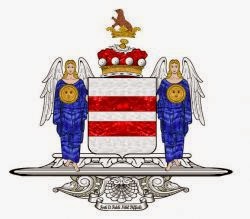
THE LYNCH-BLOSSE BARONETS WERE MAJOR LANDOWNERS IN COUNTY MAYO, WITH 22,658 ACRES


The family of LYNCH was of great antiquity in the province of Connaught, being amongst the very early settlers, denominated the Tribes of GalwayIn an old manuscript in Ulster King-of-Arms' office, William le Petit is stated to be the common progenitor of all the Lynches of Ireland.

The founder of the honours of the family, however, was

HENRY LYNCH, Mayor of, and MP for Galway (eldest of twelve sons of Nicholas Lynch, also Mayor of Galway).

Mr Lynch was created a baronet in 1622, designated of Galway.
This gentleman was the son of Nicholas Lynch fitz Stephen (Mayor 1584–1585) and great-grandson of Mayor Arthur Lynch (died 1539); land agent for Richard, 4th Earl of Clanricarde; mentor to Patrick D'Arcy and Richard Martyn, later senior political figures of Confederate Ireland.
He was stepfather to D'Arcy and married to an aunt of Martyn. He was among the first of his family to become a lawyer, and several of his younger sons followed him into this profession, as did, under his influence, D'Arcy, Martyn, Geoffrey Browne and subsequent generations of The Tribes of Galway.
Sir Henry married Elizabeth, daughter of Richard Martin, and widow of James D'Arcy, by whom he had three sons and three daughters.

He died in 1635, and was succeeded by his eldest son,

SIR ROBUCK LYNCH, 2nd Baronet, MP for Galway Borough, 1639-42, and was resident counsel for Connaught during the rebellion.

He wedded Ellis, daughter of Sir Peter French, Knight, by whom he had two sons, and was succeeded on his decease, 1667, by the elder, 

SIR HENRY LYNCH, 3rd Baronet, a lawyer of eminence, and one of the barons of the exchequer, in 1689, wedded firstly, Margaret, daughter of Sir Theobald Bourke, 3rd Viscount Mayo, but by that lady had no issue; and secondly, and had (with a younger son) his successor,

SIR ROBERT LYNCH (-c1720), 4th Baronet, who espoused Catherine, daughter of Henry Blake, of County Mayo, by whom he had, with two daughters, a son and heir,

SIR HENRY LYNCH (-1762), 5th Baronet, of Carracastle, who married Mary, daughter of John Moore, of Brees [sic], County Galway, and had one daughter and an only son, his successor,

SIR ROBERT LYNCH-BLOSSE, 6th Baronet, who wedded Elizabeth, daughter and heir of Francis Barker, heir of Tobias Blosse, of Little Belstead, Suffolk.

He assumed the surname of BLOSSE, in addition to, and after, that of LYNCH.

It was a condition of the marriage that Robert would assume the additional surname of BLOSSE and conform to Protestantism.

The issue of this marriage were, HENRY, who succeeded to the title; and Francis, who wedded Hatton, daughter of John Smith, and had issue, Robert, who, succeeding his uncle, became the 8th Baronet.

Sir Robert died in 1775, and was succeeded by his elder son,

SIR HENRY LYNCH-BLOSSE, 7th Baronet (1749-88), MP for Tuam, 1776-83, upon whose demise, without issue, the title reverted to his nephew, 

SIR ROBERT LYNCH-BLOSSE, 8th Baronet (1774-1818), who wedded firstly, Elizabeth, daughter of William Gorman, of Carlow, by whom he had FRANCIS, the next baronet, with several other children.

He married secondly, Charlotte, daughter of John Richards, of Cardiff.

Sir Robert  was succeeded by his son,

THE REV SIR FRANCIS LYNCH-BLOSSE, 9th Baronet (1801-40), who wedded, in 1824, Elizabeth, eldest daughter of Lord Plunket, and had issue,
ROBERT, 10th Baronet;
William Conyngham, b 1826.
*****

Sir Richard Hely Lynch-Blosse (b 1953), 17th and present Baronet, lives in Oxfordshire.


ATHAVALLIE HOUSE, near Castlebar, County Mayo, is a long, low, plain, two-storey residence, its main block of five bays, with an entrance door set in a broad stone arch.

The front is extended by a four-bay range of the same height, though set back.

In 1894, Athavallie House was recorded as the seat of Sir Henry Lynch-Blosse, 11th Baronet (1857-1918), and most likely the last of the family to reside there.

In 1920, the Sisters of St Louis founded a school which catered for girls only.

It was a boarding school-cum-day school until the St Louis Sisters left in 1978 and the school became co-educational under the control of the local community.

Balla Secondary School is based here now.

Athavallie House still stands but is no longer used for educational purposes.

It was used as a military hospital during the 1st World War.

Other former seat ~ Castle Carra, County Mayo.

First published in April, 2013.

Thursday, 26 January 2023

Glyde Court

THE FOSTER BARONETS WERE MAJOR LANDOWNERS IN COUNTY LOUTH, WITH 3,442 ACRES

JOHN FOSTER (1665-1747), of Dunleer, County Louth, Mayor of Dunleer, married, in 1704, Elizabeth, youngest daughter of William Fortescue, of Newrath, County Louth, and had issue,
Anthony (1705-79), ancestor of Lord Oriel;
THOMAS, of whom presently;
John William, MP, of Dunleer;
Margaret; Alice; Charlotte.
The second son,

THE REV DR THOMAS FOSTER (1709-84), Rector of Dunleer, wedded, in 1740, Dorothy, daughter of William Burgh, of Birt, County Kildare, and had issue, an only child,

JOHN THOMAS FOSTER (1747-96), of Dunleer, MP for Dunleer, 1776-83, who espoused, in 1776, the Lady Elizabeth Hervey, daughter of Frederick, 4th Earl of Bristol and Lord Bishop of Derry, and had issue,
Frederick Thomas, born 1777;
AUGUSTUS JOHN, of whom hereafter;
Elizabeth.
His younger son, 

THE RT HON SIR AUGUSTUS VERE FOSTER GCH (1780-1848), of Stonehouse, County Louth, married, in 1815, Albina Jane, daughter of the Hon George Vere Hobart, and had issue,
FREDERICK GEORGE, his successor;
CAVENDISH HERVEY, 3rd Baronet;
Vere Henry Lewis.

Mr Foster was knighted 1825 for his diplomatic services (which were not particularly distinguished, since his manners were not conciliating).

Sir Augustus was created a baronet in 1831, designated of Glyde Court, County Louth.

The influence of his stepfather William, 5th Duke of Devonshire, was exercised at the instance of his mother, the Duke's second wife.

The 1st Baronet, who committed suicide, was succeeded by his eldest son,

SIR FREDERICK GEORGE FOSTER, 2nd Baronet (1816-1857), who died unmarried, and was succeeded by his next brother,

THE REV SIR CAVENDISH HERVEY FOSTER, 3rd Baronet (1817-1890), who married, in 1844, Isabella, daughter of the Rev John Todd, and had issue,
JOHN FREDERICK, his successor;
Hervey;
Jane Vere.
Sir Cavendish was succeeded by his eldest son,

SIR AUGUSTUS VERE FOSTER, 4th Baronet (1873-1947), JP DL, Captain, Norfolk Yeomanry, who married, in 1894, Charlotte Philippa Marion, daughter of the Rev Henry Edward Browne ffolkes, and had issue,
ANTHONY VERE (1908-34);
Philippa Eugenie Vere; Dorothy Elizabeth Charlotte Vere.
The baronetcy became extinct in 1947 following the decease of the 4th and last Baronet.


GLYDE COURT, near Tallanstown, County Louth, was a late 18th century house with a long elevation, remodelled in the 19th century in Jacobean style.

The long elevation had curvilinear gables and two curved bows.


The main entrance was at one end of the house, where there was a shorter front with two gabled projections joined by an arcaded cloister.


The last baronet to live at Glyde Court, Sir Augustus, features in a romantic Edwardian family portrait by Sir William Orpen KBE, on display at the National Gallery of Ireland.

First published in April, 2013.

Tuesday, 24 January 2023

Ardagh House

THE FETHERSTON BARONETS, OF ARDAGH, WERE MAJOR LANDOWNERS IN COUNTY LONGFORD, WITH 8,711 ACRES

The founder of this family, CUTHBERT FETHERSTON, of the ancient stock of the Fetherstons of Heathery Cleugh, County Durham, settled in Ireland after the battle of Worcester, in which Sir Thomas Fetherstonhaugh was made prisoner, and afterwards beheaded at Chester.

The eldest son of this Cuthbert, 

CUTHBERT FETHERSTON, had three sons,
Cuthbert, ancestor of Fetherston of Bracklyn;
THOMAS, of whom hereafter;
Francis.
The second son,

THOMAS FETHERSTON, settled at Ardagh, County Longford, and marrying Miss Sherlock, had four sons,
John (Very Rev), Dean of Raphoe;
William, of Carrick;
Francis;
RALPH, of whom we treat.
The youngest son,

RALPH FETHERSTON (c1731-80), of Ardagh, High Sheriff of County Longford, 1756, MP for Longford County, 1765-6, was created a baronet in 1776, designated of Ardagh, County Longford.

He wedded firstly, Elizabeth, eldest daughter of Samuel Achmuty, of Brianstown, County Longford, by whom he had an only daughter, Elizabeth; and secondly, Sarah, daughter of Godfrey Wills, of Will's Grove, County Roscommon, by whom he had issue,
THOMAS, his heir;
Godfrey, killed in the East Indies;
John;
Francis;
Sarah; Maria; Letitia; Elizabeth.
Sir Ralph was succeeded by his eldest son,

SIR THOMAS FETHERSTON, 2nd Baronet (1759-1819),  High Sheriff of County Longford, 1781, MP for County Longford, 1783-1800, who married Catherine, daughter of George Boleyn Whitney, of New Pass, County Westmeath, and had issue,
GEORGE RALPH, his successor;
John;
THOMAS, succeeded his brother;
Elizabeth; Catherine; Isabella; Sarah; Octavia.
Sir Thomas was succeeded by his eldest son,

SIR GEORGE RALPH FETHERSTON, 3rd Baronet (1784-1853), High Sheriff of County Longford, 1834, MP for County Longford, 1819-30, who espoused, in 1821, Frances Elizabeth, eldest daughter of Richard Solly, of York Place, Portman Square, London, though the marriage was without issue.
Sir George and Lady Fetherston landscaped the demesne grounds and the village of Ardagh. The conversion of the old house into the mansion within its demesne may have been completed at this time, and involved the re-siting of the village street or road. The village clock-tower and surrounding buildings were erected in 1863 in remembrance of Sir George and of his life-long devotion to the moral and social improvement of his tenantry, and the site whereon they stand purchased by Frances Elizabeth, his widow. A memorial stone in the old church records his death on 12th July 1853, and that his wife died in London twelve years later and was buried in Walthamstow. 
Sir George was succeeded by his youngest brother,

THE REV SIR THOMAS FRANCIS FETHERSTON, 4th Baronet (1800-53), who married firstly, in 1823, Adeline Godley; and secondly, Anne L'Estrange, of Moystown, County Offaly, and had issue,
George Ralph, died in infancy;
THOMAS JOHN, his successor;
Edmund Whitney;
John Henry;
Albert William Boleyn;
Boleyn Henry Francis;
Henry Ernest Wiliam;
Rosa Elizabeth; Catherine.
Sir Thomas was succeeded by his eldest surviving son,

SIR THOMAS JOHN FETHERSTON, 5th Baronet (1824-69), High Sheriff of County Longford, 1858, who espoused, in 1848, Sarah, daughter of Henry Alcock, and had issue,
GEORGE RALPH, his successor;
Adeline Margaret; Caroline Louisa.
Sir Thomas was succeeded by his only son,

THE REV SIR GEORGE RALPH FETHERSTON (1852-1923), 6th and last Baronet, High Sheriff of County Longford, 1897,  who died unmarried, when the baronetcy expired.

Sir George was born in Dublin and educated at Brighton College.

In his mid-twenties he entered Salisbury Theological College to prepare for ordination into the ministry of the Church of England.  

He served as curate in Tenby and Worcester City, and for six years as Rector or Vicar of the Parish of Pydeltrenthide in Dorset.

He served also as an honorary chaplain to Millbank Military Hospital, London, during the 1914-18 War.

He was one of the first two men in Holy Orders to serve as Sheriff in their Counties until the disestablishment of the Church of Ireland clerics of the Anglican Communion were not permitted to hold such Office.

Being Sheriff in 1897 he received the Diamond Jubilee Medal and preached his Jubilee Sermon in St. Patrick's Church, Ardagh.

Sir George was a man of many interests and hobbies — music, travel, cycling, fishing, photography, collecting ancient china and stamps, bird-watching and study of insects.

He travelled widely in Europe, Africa, North and South America.

This must have absorbed some of the Ardagh estate income.

He was Fellow and Vice-President of the Guild of Church Musicians and of the Victoria College of Music London. 

Who's Who credited him with the composition of 150 alternative tunes for Hymns Ancient & Modern, various chants, songs and other music, but none of these are to be found in current chant and Hymn books.

His publications have been listed as The Malvern Hills, Through Corsica with a Pencil. The Mystery of Maple Street, A Poem: The Rose of England. An Incident in the Siege of Antwerp, A Legend of Corpus Christi College, and four books of Sermons and Addresses.

These may have been published privately for limited sale or distribution.

Sir George may not have had much interest in the ownership and management of the estate.

He entered into voluntary agreements with over 300 tenants to sell to them the freehold of their farms, under the Irish Land Act 1903. 

The Ardagh estate was not acquired or purchased by the Irish Land Commission, which, however, advanced the money required by the tenants and others, and the holdings were vested in them by the Commission in 1922-23.

An area of 427 acres of bog land was vested in trustees for the use of purchasing new freeholders.

Sir George retained Ardagh House and demesne acres until his death in a Worcester City Nursing Home, and burial in Tenby, South Wales, in 1923. 


An attempt to destroy the house by fire in 1922 may have been a local expression of dissatisfaction with allocation of estate land or an effort to hasten sale of the last remnants of the estate.

Manuscripts written in Irish were salvaged from the 1922 flames of Ardagh House.


ARDAGH HOUSE is an eight-bay, two-storey (originally three-storey) over-basement house, originally built ca 1730 and altered ca 1826 and ca 1863. 

A Three-bay, two-storey block (formerly the ballroom) was attached to the south-east end, having hipped slate roof with overhanging bracketed eaves.

A single-bay porch with tetra-style porch to the centre of the front façade (south), adjoined to the east by a four-bay single-storey additional conservatory with pilasters and lean-to roof. 


(Image: Longford Tourism)

Ardagh House was acquired as training college by the Sisters of Mercy ca 1927, with multiple extensions to the east and the north-east.

It retains much of its early character despite a fire in 1948 that resulted in it being reduced to two storeys in height.

Much interesting fabric remains, such as some timber sliding sash windows, and console brackets to the porch. 

Although probably early-to-mid 18th century in date, this structure now has a predominantly early-to-mid 19th century appearance.

The elegant porch and conservatory, and the former ballroom/block to the east, were also added at this time. 

It also retains some of its early fabric to the interior, despite the fire in 1948, including plasterwork and fireplaces.

THE POET and novelist Oliver Goldsmith (1728-74), when a young man, once loitered on his way between Ballymahon and Edgeworthstown, strayed from the direct road, and found himself benighted on the street  of Ardagh.

Wishing to find an inn, but inquiring "for the best house in the place", he was wilfully misunderstood by a wag and directed to the large, old-fashioned residence of Sir Ralph Fetherston, 1st Baronet.

Sir Ralph, whom the poet found seated by a good fire in the parlour, immediately perceived the young man's mistake; and being humorous and well-acquainted with Goldsmith's family, he for some time encouraged the deception.

The incidents of the occasion form the groundwork of Goldsmith's well-known comedy "Mistakes of a Night."

First published in December, 2011.

Monday, 23 January 2023

Springfield Castle

THE BARONS MUSKERRY WERE MAJOR LANDOWNERS IN COUNTY WEXFORD, WITH 9,412 ACRES


This family possessed large estates in Somerset as far back as the reign of HENRY II.

The third son of MOSES DEANE, of Deane's Fort, Somerset,

MATTHEW DEANE (c1626-1711), settled in Ireland during the reign of JAMES I, and took up his abode at Dromore, County Cork, where he purchased considerable estates.

Mr Deane, who bequeathed large sums towards the erection of almshouses and other charitable purposes, was created a baronet in 1710, designated of Muskerry.

He married firstly, Mary, daughter of Thomas Wallis, of Somerset; secondly, Martha, daughter of the Most Rev Richard Boyle, Lord Archbishop of Tuam; and thirdly, Dorothy, Countess of Barrymore; by the first of whom he left, at his decease, in 1711, a son and heir,

SIR ROBERT DEANE, 2nd Baronet, who wedded Anne, daughter and co-heir of William Boltridge, one of CROMWELL'S officers; and dying in 1712, was succeeded by his son,

SIR MATTHEW DEANE, 3rd Baronet, MP for Charleville, 1713-14, County Cork, 1728-47, who espoused Jane, only daughter of the Rev William Sharpe, son of the Archbishop of St Andrew's, the ill-fated primate of Scotland, and had issue,
MATTHEW, his successor;
Thomas, dsp;
ROBERT, 4th Baronet;
Meliana; Dorothy; Jane.
Sir Matthew died in 1747, and was succeeded by his eldest son,

SIR MATTHEW DEANE, 4th Baronet (c1706-51), MP for Cork City, 1739-51, who wedded Salisbury, daughter and sole heir of Robert Davis, of Manley Hall, Cheshire, by whom he had three daughters, viz.
Salisbury; Mary; Charlotte.
Sir Matthew dying thus without male issue, the title devolved upon his brother,

THE RT HON SIR ROBERT DEANE, 5th Baronet (c1707-70), Barrister, Privy Counsellor, MP for Tallow, 1757-68, Carysfort, 1769-70, who married, in 1738, Charlotte, second daughter of Thomas Tilson (uncle to Lord Castlecoote), and had issue,
ROBERT, his successor;
Jocelyn;
Charlotte; Grace; Eliza Salisbury; Jane; Alicia; Frances.
Sir Robert was succeeded by his eldest son,

SIR ROBERT TILSON DEANE, 6th Baronet (1745-1818), MP for Carysfort, 1771-6, County Cork, 1776-81, who was raised to the peerage, in 1781, in the dignity of BARON MUSKERRY.

He wedded, in 1775, Anne, daughter of John Fitzmaurice, and sole heir of her grandfather, John Fitzmaurice, of Springfield Castle, County Limerick (nephew of Thomas, 1st Earl of Kerry), and had issue,
JOHN THOMAS FITZMAURICE, his successor;
William;
MATTHEW, 3rd Baron.
His lordship was succeeded by his elder son,

JOHN THOMAS FITZMAURICE (1777-1824), 2nd Baron, CB, Major-General in the army, who married, in 1815, the second daughter of M Haynes, of Bishop's Castle; but died in 1824, without male issue, when the honours devolved upon his only brother,

MATTHEW FITZMAURICE (1795-1868), 3rd Baron, who wedded, in 1825, Louisa Dorcas, second daughter of Henry Deane Grady, of Lodge, County Limerick, and Stillorgan Castle, County Dublin, and had issue,
ROBERT TILSON FITZMAURICE, his successor;
Henry Standish Fitzmaurice;
Matthew James Fitzmaurice.
The heir apparent is the present holder's only son, the Hon Jonathan Fitzmaurice Deane.

ARDCANDRISK HOUSE, near Wexford, County Wexford (above), is a two-storey Regency villa of about 1833, comprising three polygons of differing sizes.

It has eaved roofs and Wyatt windows at one end.

It was built by the Grogan-Morgans, though was acquired by the Deanes, Lords Muskerry, though marriage.


SPRINGFIELD CASTLE, Drumcolliher, County Limerick, is the ancestral seat of the Barons Muskerry.

The Castle features a Neo-Gothic style main residential building, cornered by two towers, one of which is the large Norman keep built in the 15th Century; and the smaller tower, built later in the 18th Century, enclosing a large central courtyard.

A younger son of the 20th Lord of Kerry, William Fitzmaurice, bought Springfield.

His son John built a very large, three-storey, early Georgian mansion attached to the existing buildings

The Fitzmaurices occupied Springfield Castle until Sir Robert Tilson Deane, 1st Baron Muskerry, married Ann Fitzmaurice, the sole heiress, in 1780.

The Lords Muskerry owned 3,161 acres in County Limerick during the Victorian era.


The castle was burnt in 1921 and rebuilt by the 5th Baron.

Robert, 9th Baron, lives and works in South Africa presently.

His sister Betty and her husband Jonathan run Springfield Castle.

First published in June, 2013.   Muskerry arms courtesy of European Heraldry.

Friday, 13 January 2023

The Hermitage

THE BARONS MASSY WERE THE GREATEST LANDOWNERS IN COUNTY LEITRIM, WITH 24,571 ACRES


The first of this noble family that settled in Ireland was GENERAL HUGH MASSY, who had a military command to repress the rebellion of 1641. General Massy was descended from Hamon de Massey, one of the companions in arms of WILLIAM THE CONQUEROR, who obtained large grants in the counties of Durham and Cheshire, and was created Baron of Dunham Massy.

General Massy wedded Margaret Percy, and had a son,

HUGH MASSY, of Duntrileague, who espoused Amy, daughter of John Benson, and had issue,
HUGH, his heir;
John, of Knockaneevan, County Limerick;
William, of Stoneville, County Limerick;
Charles (Very Rev), Dean of Limerick, ancestor of the Massy Baronets;
Margaret, m William Baker.
The eldest son,

COLONEL HUGH MASSY (1685-1757), of Duntrileague, married Elizabeth, daughter of the Rt Hon George Evans, and had issue,
HUGH, his successor;
George (Ven), Archdeacon of Ardfert;
John, killed in a duel;
Godfrey, in holy orders;
William; 
EYRE, 1st LORD CLARINA;
Charles;
Amy; Elizabeth; Catharine.
Colonel Massy was succeeded by his eldest son,

HUGH MASSY (1700-88), of Duntrileague, who, having represented County Limerick in several parliaments, was raised to the peerage, 1776, in the dignity of BARON MASSY, of Duntrileague, County Limerick.

His lordship espoused firstly, Mary, daughter and heir of James Dawson, of Ballinacourty, County Tipperary, and had issue,
HUGH, his successor;
James;
John;
Elizabeth.
He married secondly, Rebecca, daughter of Francis Dunlap, of Antigua, and had further issue,
Francis Hugh;
Eyre;
George;
Margaret; Rebecca Frances; Caroline; Amy.
His lordship was succeeded by his eldest son,

HUGH, 2nd Baron (1733-90), who wedded, in 1760, Catherine, eldest daughter and co-heir (with her sister Sarah, Countess of Carrick) of Edward Taylor, of Ballymore, County Limerick, and had issue,
HUGH, his successor;
Edward;
George Eyre;
John;
Catherine; Mary Anne; Jane; Sarah.
His lordship was succeeded by his eldest son,

HUGH, 3rd Baron (1761-1812), who married, in 1792, Margaret, youngest daughter of William Barton, of Grove, County Tipperary, and had issue,
HUGH HAMON, his successor;
George William;
John;
Dawson, in holy orders;
Grace Elizabeth; Catherine; Susan Maria; Margaret Everina; Elizabeth Jane Sarah Anne.
His lordship was succeeded by his eldest son,

HUGH HAMON, 4th Baron (1793-1836), who wedded, in 1826, Matilda, daughter of LUKE WHITE, of Luttrellstown Castle, County Dublin, and had issue,
HUGH HAMON INGOLDSBY, his successor;
John George Hugh.
The 5th Baron died young, and the 6th Baron, a young man of 19, inherited up to 38,000 acres.

He was said to have an affluent lifestyle with little regard to pecuniary matters.

Grand parties took place at Killakee, and numerous hunting expeditions both there and in Limerick. 

His great-grandson, the 6th Baron, sat in the House of Lords from 1876 to 1915.

As of 2010, the title is held by the latter's great-great-grandson, the 10th Baron, who succeeded his father in 1995.
 

THE HERMITAGE, Castleconnell, County Limerick, was an imposing Georgian house built about 1800 for George Evans Bruce, a disgraced banker.

It was situated in a spectacular location overlooking the Falls of Doonass on the River Shannon.

The Hermitage had a five bay entrance front with a pediment supported by paired huge Corinthian pilasters which framed the centre bay.

There was a balustraded roof parapet.

The garden front consisted of five bays, the end bays having quoins. 

There was a modest, though richly decorated hall with statue niches.

The Hermitage is now demolished.

Seemingly only the foundations now remain of the once beautiful house; broken steps, old kitchen garden walls and the dilapidated fountain all indicating that this was once a very wealthy estate.

During the 18th century, Duntrileague was the seat of the Massys, but in the 19th century their main residence was The Hermitage, close to Limerick city.
In the 1870s Lord Massy owned 8,568 acres in County Limerick and 1,120 acres in County Tipperary; however, his largest estate was in County Leitrim, amounting to over 24,000 acres in 1878.
The Massy family had property in north County Leitrim following the bequest of the White estate at Lareen to John, 6th Lord Massy.

In the 1830s, the Massy estate also comprised property in the parish of Killora, County Galway, where the agent was George Falkner.

This property seems to have been leased by Richard Rathbourne, of Ballymore.

It was offered for sale in the Encumbered Estates court in 1852.

Most of the Massy lands were sold in the last two decades of the 19th century; followed by the family residences in the early years of the 20th century.

There is a good article about the Massy family here.

First published in May, 2011.  Massy arms courtesy of European Heraldry.

Thursday, 12 January 2023

New Lord-Lieutenant

The King is pleased to appoint Mr Ian Crowe MBE DL as His Majesty’s Lord-Lieutenant for the County Borough of Londonderry to succeed Dr Angela Garvey who retired in March, 2022.

The Downing Street website remarks:
"Mr Crowe is a local business man, now retired."

"He was awarded an MBE in the Queen’s Birthday 2019 Honours List for his committed service to the community of Northern Ireland, having supported numerous organisations such as Air Ambulance NI(AANI), Past President of the Londonderry Chamber of Commerce, City of Derry Rugby Club and others in a voluntary capacity over the last forty years."

"Mr Crowe has lived and worked in Northern Ireland since the beginning of his career, with his first leadership role as Captain of City of Derry Rugby 1st XV in 1978 a position he held for four years. Ian also represented Ulster between 1978 to 1985."

"He has been leading CPC Office Supplies as Managing Director since 1984 and his success in business led to several non-executive roles in business and charity organisations."

"He has dedicated himself to supporting organisations across Northern Ireland in sectors ranging from Sport, Peace and Reconciliation, Business and the Charity sector and cites the most notable achievement is being part of a team, including Northern Ireland Ambulance Service (NIAS), who successfully delivered a fully operational Helicopter Emergency Medical Service (HEMS) providing a lifesaving service for Northern Ireland."

"In 2009, he was appointed a Deputy Lieutenant for the County Borough of Londonderry and Vice Lord-Lieutenant in 2021."

Sunday, 8 January 2023

The Belmont Thumbstick

One of Sir Max Hastings' favourite pieces of kit happens to be his treasured thumbstick.

 I happen to possess one myself.

A pal and follower of the blog, Stephen Knox, most generously offered to make me a thumbstick several months ago, following my tweet about Sir Max's walking-stick.

I am sure that Stephen shan't mind me remarking that he is considerably leaner and fitter since the photograph below was taken in 2016.


Accordingly, I decided to mark the occasion with dinner at Michael Deane's fish restaurant in Howard Street, Belfast, on the 3rd December, 2016.

Coincidentally it also happened to be the ninth anniversary of the blog.


I arrived slightly early, so I was shown to the champagne bar (which happens to be adjacent to Deane's Eipic.


When Stephen arrived he presented me with my handsome new thumbstick, made mostly of chestnut wood and antler horn.


It has a distinctive, engraved, sterling silver collar band.

I can only imagine the amount of time that Stephen spent on such a handsome item; unsurpassed craftsmanship.

At Mount Stewart (Timothy Ferres, January, 2023)

More recently I went for a walk in Mount Stewart's magnificent woodland with my thumbstick.

First published in December, 2016.

Friday, 6 January 2023

Sheriffs, 2023

APPOINTMENTS BY THE SECRETARY OF STATE FOR NORTHERN IRELAND 
OF SHERIFFS FOR 2023


County Antrim

Mr Peter Thomas Watts Mackie DL


County Armagh

Mr Gary Myles Dickson


County Down

Professor William Michael Mawhinney MBE TD


County Fermanagh

Ms Noelle Mary McAlinden


County Londonderry

Mr Peter Arnold Wilson BEM


County Tyrone

Mrs Helen Irene Anderson


County Borough of Belfast

Councillor Samuel John Kyle 


County Borough of Londonderry

Mrs Angela Norma Mary Thompson MBE


Thursday, 5 January 2023

Londonderry House: II

A READER HAS SENT ME INFORMATION ABOUT THE SALE OF LONDONDERRY HOUSE, PARK LANE, LONDON, FORMER RESIDENCE OF THE MARQUESSES OF LONDONDERRY

LONDONDERRY HOUSE was sold by the Londonderry family trustees (of the 7th Marquess's Will Trust) in 1962 to a developer who built the "Londonderry Hotel" on the site, not the Hilton [it is thought that the Como Metropolitan Hotel now occupies the site].

The Hilton Hotel is on the other side of the street, and had already been opened.

The Londonderry family received a sale consideration of £500,000 in 1962 (equivalent to £10.7 million in today's money).

This sounds little for such a prestigious location, when considering London residential property values in 2018, but it should be remembered that the Londonderry family had been trying, unsuccessfully, to sell the property for many years prior to 1962.

The rates bill for the property was around £44,000 per annum in 1962 (equivalent to £946,000 in today's money) and, following the departure of the Royal Aero Club, which had occupied most of the property since the Second World War, the full amount of this impost was about to fall at the door of the Londonderry family once again, on a financially crippling recurring basis.

This was also at least a decade before the rise in the oil price created the type of Middle Eastern potentate private buyer, such as the Emir of Qatar, whose family eventually bought Dudley House further up Park Lane, retaining that aristocratic palace as a private residence.

The tragedy of the sale of Londonderry House was not the comparatively meagre price (by current standards) it fetched for the Londonderry family, but the fact that it was completely demolished.

The bland exterior concealed magnificently painted, and fresco-ceiling interiors by James "Athenian" Stuart who had, coincidentally, built the Temple of the Winds at the Londonderry's Ulster seat of Mount Stewart.

The magnificent state rooms where 7th Marquess and Marchioness had, in the inter-war years, hosted their annual Eve of the Opening of Parliament reception for 2,000 guests, succumbed to the wrecker's ball.

Fortunately, many of the fireplaces survived after being ripped out and sold separately by a salvage company.

The two final social events hosted by the Londonderry family in the House were the wedding reception of Hon Elizabeth Keppel, following her marriage to her cousin Alastair Villiers in June, 1962, and a final "farewell" party given by Alastair, 9th Marquess, which his friends Mick Jagger and Paul McCartney attended.

The following day all of the furniture was removed and either sold by the family Trustees (eg the Canova sculptures from the hall were sold to the V&A) or sent over to Mount Stewart, being the personal property of 9th Marquess's aunt, Lady Mairi Bury.

George Stubbs's masterpiece, the life size painting of the racehorse Hambletonian after his famous win at Newmarket, was one of the items which belonged to Lady Mairi Bury and it was taken down from the library in Londonderry House and rehung on the staircase at Mount Stewart, where it is to be seen today.

First published in July, 2018.

Wednesday, 4 January 2023

Moyne House

THE HAMILTON-STUBBERS WERE MAJOR LANDOWNERS IN THE QUEEN'S COUNTY, WITH 7,388 ACRES


HUGH HAMILTON settled at Lisbane, County Down, during the reign of JAMES I, and was made a denizen of Ireland in 1616.

He died in 1655 and was buried at Bangor, County Down, leaving issue,
John, of Ballymenoch;
ALEXANDER, of whom presently;
Robert.
The second son,

ALEXANDER HAMILTON, of Killyleagh, County Down, married Jean, daughter of John Hamilton, of Belfast, and had issue,
HUGH, his heir;
Jane, m William Sloane, of Chelsea.
Mr Hamilton died in 1676, and was succeeded by his son,

HUGH HAMILTON, of Ballybrenagh, who wedded Mary, sister of Robert Ross, of Rostrevor, and daughter of George Ross, of Portavo, by Ursula his wife, daughter of Captain Hans Hamilton, of Carnesure, and had issue,
ALEXANDER, his heir;
George, of Tyrella;
Jane.
Mr Hamilton died in 1728, and was succeeded by his elder son,

ALEXANDER HAMILTON, of Knock, County Dublin, and of Newtownhamilton, County Armagh, MP for Killyleagh, 1730-61, who espoused Isabella, daughter of Robert Maxwell, of Finnebrogue, County Down, by Jane, daughter of the Rev Simon Chichester, Vicar of Belfast (eldest son of Henry Chichester, of Marwood, by Jane, daughter of the Rt Rev Robert Maxwell, Lord Bishop of Kilmore).

He died in 1768, leaving four sons and three daughters, viz.
HUGH (Rt Rev), Lord Bishop of Ossory;
ROBERT, of whom we treat;
George;
Charles;
Isabella; Anne; Elizabeth.
The second son,

ROBERT HAMILTON, of Gloucester Street, Dublin, married Hester, daughter of Crewe Chetwood, of Woodbrook, Queen's County, and had issue,
ALEXANDER CHETWOOD, his heir;
Robert.
Mr Hamilton died in 1790, and was succeeded by his elder son,

THE REV ALEXANDER CHETWOOD HAMILTON, Rector of Thomastown, County Kilkenny, who married, in 1801, Eleanor, daughter and co-heir of the REV SEWELL STUBBER, and assumed, in 1824, the surname of STUBBER in lieu of Hamilton, and the arms of Stubber only.

By her he had issue,
ROBERT, his heir;
Sewell (Rev);
William, of Roundwood, father of
CHARLES PAULET HAMILTON;
Alexander Chetwood;
Richard Hugh (Rev);
Hester Maria; Harriet Anne; Sophia Elizabeth; Anne Matilda.
The Rev Alexander Chetwood Hamilton died in 1830, and was succeeded by his eldest son,

ROBERT HAMILTON STUBBER JP DL (1803-63), of Moyne, High Sheriff of Queen's County, 1831, who married, in 1840, Olivia, daughter of the Rev Edward Lucas, of the Castleshane family, and widow of Henry Smyth, of Mount Henry, Queen’s County, and had issue,
ROBERT HAMILTON, his heir;
Olivia Harriet Florence Hamilton; Eleanor Frances Beatrice Hamilton.
Mr Hamilton-Stubber was succeeded by his son and heir,

ROBERT HAMILTON HAMILTON-STUBBER JP DL (1844-1916), of Moyne and Castle Fleming, Queen’s County, High Sheriff of Queen's County, 1873, Lieutenant, Royal Dragoons, who espoused firstly, in 1877, Adèle Grainger, daughter of Alexander Duncan, of Knossington Grange, Leicestershire, and had issue,
ROBERT;
Olive.
He wedded secondly, in 1885, Georgina Alice Mary, youngest daughter of George Power, sixth son of Sir John Power Bt, of Kilfane, County Kilkenny, and had issue, a daughter, Margery.

Mr Hamilton-Stubber sold the Moyne estate to his cousin,

CHARLES PAULET HAMILTON (1834-1907), grandson of the Rev A C Hamilton, who wedded, in 1878, Emily Louise, daughter of William Smyth-King, and had issue,
Maurice William Chetwode (1882-1955);
HUBERT CHARLES;
Elinor Frances; Kathleen Elizabeth; Alice Maude; Mary Beatrice.
Mr Hamilton's younger son,

HUBERT CHARLES HAMILTON DSO (1887-1946), of Moyne, Barrister, wedded, in 1912, Honoria Eliza Sylvia Vera, daughter of Major Travers Robert Blackley, and had issue, an only child,

HUBERT CHARLES PAULET HAMILTON (1915-2007), of Moyne, Captain, Royal Irish Fusiliers, who married firstly, in 1941, Margaret Helen, daughter of Sir Owen Watkin Williams-Wynn Bt, and had issue,
ANDREW PAULET.
He espoused secondly, in 1950, Katharine Frances, daughter of William Evelyn Joseph Dobbs, and had further issue,
Hubert Kildare, b 1953;
Dominick Charles, b 1954;
Sophia Elinor, b 1960.


MOYNE HOUSE, near Durrow, County Laois, is a five-bay two-storey house with dormer attic, built ca 1730.

It has a pedimented central bay with a projecting porch.

Moyne was renovated and extended about 1880, with two-bay, two-storey wings and a dormer attic.

The house has a double-pitched and hipped slate roof, with rolled lead ridge tiles and limestone ashlar chimney-stacks.

The roof is gabled; rubble limestone walls; a Venetian-style window opening to entrance bay and oculus to pediment.

The house is set back from the main road in its own landscaped grounds.

It has a stable complex, including two-storey rubble stone ranges, one of which was renovated about 1970 to accommodate residential use.

Of its interior, the drawing-room is notable for its Adam-Revival ceiling; while the dining-room has a frieze of plasterwork in late 18th century style; and a carved wood chimney-piece in Elizabethan style. 

Moyne Polo Club, established in 1996, is affiliated to the Hurlingham Polo Association.

A Midsummer Ball and one-day tournament is held in June; a two-day tournament on the penultimate weekend in July; and a tournament in August with the emphasis on junior polo.

Moyne House became the Hamilton family home in the early part of the 19th century, when Robert Hamilton-Stubber (1803-63) moved there from Kilkenny.

The house then descended via Robert Hamilton-Stubber (1846-1916) to Major Robert Hamilton-Stubber DSO (d 1963), who sold Moyne to his cousin, Hubert Charles Hamilton, in the 1920s; from whom the present branch of the family is descended.

The Hamilton family still live at Moyne.

First published in December, 2012.