Friday, 29 September 2023

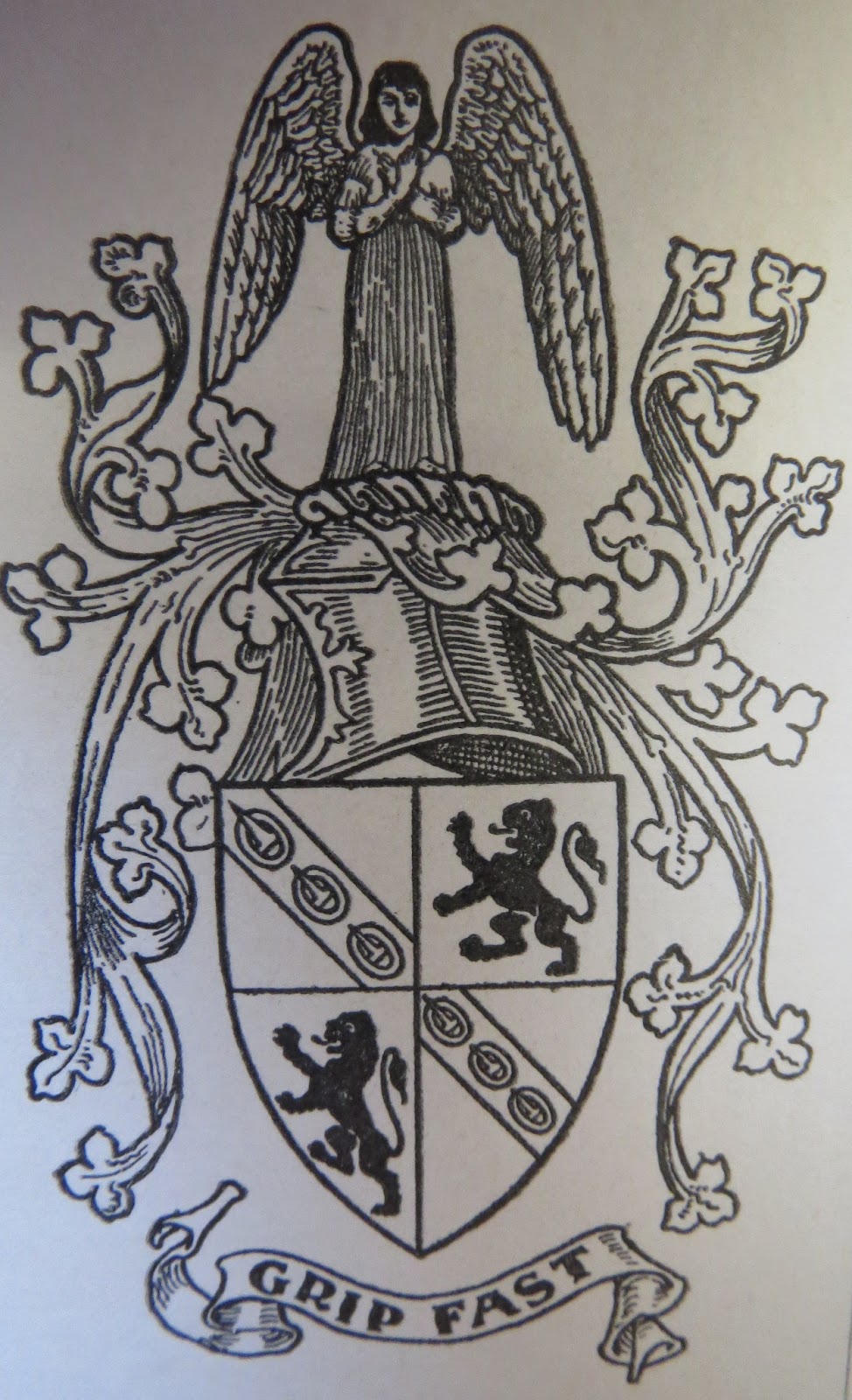
The Killynether Acquisition

SELECTIVE ACQUISITIONS IN NORTHERN IRELAND

PROPERTY: Killynether Woods and Buildings, near Newtownards, County Down

DATE: 1937

EXTENT: 42 acres

DONOR: Miss J H Weir

First published in January, 2015

Wednesday, 27 September 2023

Lismacue House

THE BAKERS OWNED 1,328 ACRES OF LAND IN COUNTY TIPPERARY

THOMAS BAKER, the first of this family who settled at Lattinmore, County Tipperary, went over to Ireland with the Lord Deputy, the Earl of Sussex. His widow, Anne Baker, who was living at Knockroid, Barony of Clanwilliam, 1642, put in her claim, and that of her son, Walter, as sufferers in 1641.

This son,

WALTER BAKER, entered Trinity College, Dublin, 1640, aged 17, as second son of Thomas Baker, of Lattin, born at Ballincallagh, 1623.

He obtained a re-grant from CHARLES II of the lands at Killenaliff, Lattinmore, and Lattinbeg, Yorticord and Kilpatrick, County Tipperary, containing 1,200 Irish acres.

This patent was enrolled in 1677, and it states that the lands were in Thomas Baker's possession "long before the Great Rebellion" of 1641.

He wedded Martha Osborne, and left issue, three sons and two daughters.

The second son,

RICHARD BAKER, of Lattinmore, County Tipperary, succeeded his father.

He married and left issue, a son,

WILLIAM BAKER, High Sheriff of County Tipperary, 1726, who purchased, in 1700 (from Colonel Blunt), the estate of Lismacue.

He espoused, in 1700, Margaret, eldest daughter of Hugh Massy, of Duntrileague, County Limerick, and had issue (with two daughters),
HUGH, his heir;
Charles;
Thomas;
Richard;
William;
Walter;
Godfrey.
The eldest son,

HUGH BAKER, of Lismacue, married, in 1730, Catherine, daughter of Robert Ryves, of Ryves Castle, Ballyskiddane, County Limerick, and died in 1772, having had issue,
WILLIAM, his heir;
Thomas;
Hugh;
Walter;
Edward;
Kilner;
Elizabeth; Margaret; Catherine.
The eldest son,

WILLIAM BAKER, of Lisnacue, Colonel, Irish Volunteers, wedded Elizabeth, second daughter of the Very Rev Charles Massy, Dean of Limerick, and sister of Sir Hugh Dillon Massy, 1st Baronet, of Donass, and had issue,
WILLIAM, his heir;
Hugh, father of HUGH;
Charles Massy;
Robert;
Elizabeth; Catherine; Grace; Margaret.
Mr Baker died in 1808, and was succeeded by his eldest son,

WILLIAM BAKER, of Lismacue, who espoused Elizabeth, daughter of Sir Thomas Roberts, 1st Baronet, of Britfieldstown, County Cork, but dsp.

Mr Baker was murdered in 1815, when he was succeeded by his nephew,

HUGH BAKER (1798-1868), of Lismacue, who married Marion, only child of Charles Conyers, of Castletown Conyers, County Limerick, and had issue,
HUGH, his heir;
CHARLES CONYERS MASSY, of Lismacue, which he purchased from his brother's heirs;
William;
Augustine Fitzgerald (Sir);
Marion Elizabeth; Anne; Elizabeth Henrietta; Mary Rachel.
Mr Baker was succeeded by his eldest son,

HUGH BAKER (1845-87), of Lismacue, who wedded, in 1879, Frances Elizabeth, daughter of John Massy, of Kingswell, County Tipperary, and had issue,
HUGH, b 1880;
Alice Maud Massy, b 1883.
Mr Baker's brother,

CHARLES CONYERS MASSY BAKER JP (1847-1905), of Lismacue, espoused, in 1880, Harriet Booth, daughter of George Allen, of Oakdale, Surrey, and had issue,
ALLEN, his heir;
Conyers;
Massy;
Dennis;
Irene.
Mr Baker was succeeded by his eldest son,

ALLEN BAKER (1881-1969), of Lismacue, who married firstly, in 1910, Frances Violet, eldest daughter of Lieutenant-Colonel William Cooper-Chadwick, of Ballinard, County Tipperary, and had issue,
WILLIAM, his heir;
Mary Rachel; Elizabeth Anne.
He wedded secondly, in 1935, Julia Dorothy, daughter of William Parry Evans.

Mr Baker was succeeded by his son and heir,

WILLIAM BAKER (1913-), of Lisnacue, who espoused, in 1950, Brenda Katherine, daughter of John Gillespie Aitken, and had issue, an only child,

KATHERINE (Kate) RACHEL BAKER (1952-), of Lismacue, who owns and manages the estate with her husband, James Nicholson.

Garden front

LISMACUE HOUSE, near Bansha, County Tipperary, was completed in 1813 to the design of William Robertson.

William Baker purchased Lismacue in 1705 from Charles Blount and the estate has been owned by his descendants ever since.

The house is two-storey building over a basement in a mildly Tudor-Gothic style that is far more restrained than his more exuberant later work.


The external walls are rendered with ‘eyebrows’ over the windows and restrained pinnacles and crenellations, including, most unusually, a single small battlemented pediment on each front.

The façade is three bays wide, with a single storied Gothick open porch supported on elegant square columns.

Its tripartite arrangement is echoed by the door-case behind.

Entrance front

The two other fronts are both five bays wide while the lower wing to the north, terminates in a gable, almost entirely filled with a single large window with robust Gothic tracery

The interior is classically late Georgian, covered with a thin Gothick layer.

The large rooms have good plasterwork, a fine wide staircase, and a wonderful set of mahogany doors on the ground floor.

Several rooms retain their early wallpaper, dating from the 1830s.

Outside is fine open parkland, with wonderful views of the Galtee Mountains and the Glen of Aherlow, and a superb (and unusually long) avenue of lime trees, dating from the 18th century.

The present owners are Jim Nicholson and his wife Kate, who inherited Lismacue from her father, William Baker.

First published in January, 2018.  Select bibliography ~ Irish Historic Houses Association.

Monday, 25 September 2023

The Florence Court Acquisition

SELECTIVE ACQUISITIONS IN NORTHERN IRELAND

PROPERTY: Florence Court House and Garden

DATE: 1954

EXTENT: 15.53 acres

DONOR: Michael, Viscount Cole

*****

PROPERTY: Land in front of Florence Court House

DATE: 1981

EXTENT: 2.21 acres

DONOR: Department of Agriculture for Northern Ireland

*****

PROPERTY: Land at Florence Court and Killymanamly House

DATE: 1985

EXTENT: 121.18 acres

DONOR: 6th Earl of Enniskillen

*****

PROPERTY: Walled Garden, Broad Meadow and Gate Lodges

DATE: 1995

EXTENT: 108.54 acres

DONOR: Department of Agriculture for Northern Ireland

First published in January, 2015.

Thursday, 21 September 2023

The Downhill Acquisition

SELECTIVE ACQUISITIONS IN NORTHERN IRELAND

PROPERTY: Mussenden Temple, Downhill Demesne, County Londonderry
DATE: 1949
EXTENT: 0.59 acres
DONOR: Frederick Smyth

*****

PROPERTY: The Black Glen, Downhill Demesne
DATE: 1961
EXTENT: 17.7 acres
DONOR: Richard Morrison

*****

PROPERTY: Downhill Ruin and Mausoleum
DATE: 1980
EXTENT: 3.1 acres
DONOR: Messrs Robert O'Neill and James Reid

*****

PROPERTY: Downhill
DATE: 2004
EXTENT: 5.98 acres
DONOR: Coleraine Borough Council

First published in December, 2014.

Tuesday, 19 September 2023

The Derrymore Acquisition

SELECTIVE ACQUISITIONS IN NORTHERN IRELAND

PROPERTY: Derrymore House, Bessbrook, County Armagh

DATE: 1953

EXTENT: 40.63 acres

DONOR: J S Richardson

*****

PROPERTY: Lands of Derrymore

DATE: 1988

EXTENT: 60.84 acres

DONOR: J S Richardson

First published in December, 2014.

Saturday, 16 September 2023

Princess Royal in NI

On Wednesday, 13th September, 2023, The Princess Royal attended the Department for Business and Trade's Northern Ireland Business Summit at the International Conference Centre Belfast, 2 Lanyon Place, Belfast, and was received by Mrs. Anne McGregor DL (Deputy Lieutenant of the County Borough of Belfast).

Her Royal Highness, Patron, International Sheep Dog Society, later attended the World Sheep Dog Trials at Gill Hall Estate, Lurgan Road, Dromore, and was received by His Majesty's Lord-Lieutenant of County Down (Mr Gawn Rowan-Hamilton).

The Princess Royal subsequently unveiled a Royal British Legion Community Bench in Dromore Square, Dromore, and was received by Mrs. Catherine Champion DL (Vice Lord-Lieutenant of County Down).

Her Royal Highness attended the Department for Business and Trade's Northern Ireland Business Summit Reception at Hillsborough Castle, County Down.

Botanic Gardens Visit


I spent a pleasant and relaxing hour at Belfast's Botanic Gardens this afternoon [6th April, 2015].

The Ulster Museum is a "must see" for visitors to Northern Ireland, particularly Belfast.

The Gardens themselves, with the magnificent Palm House, are well worth a visit.

The Tropical Ravine is temporarily closed [now reopened] for major restoration work.

The Palm House, however, is open and Big Urn (top) welcomes visitors!

In the Museum, it's a joy to wander through the various galleries.

Theodosia, Countess of Clanwilliam (1743-1817)

There's an exquisite Gainsborough of Theodosia Magill, 1st Countess of Clanwilliam.

It was delightful to see so many portraits of figures that I've written articles about, or their families.

1st Earl Macartney (1737-1806)

George, 1st Earl Macartney, is on display; as is James Stewart, of Killymoon Castle, County Tyrone.

John, 1st Viscount O'Neill (1740-98)

John, 1st Viscount O'Neill (1740-98), wore a fine tricorn hat for his sitting.

James Stewart
James Stewart (1742-1821), of Killymoon Castle, County Tyrone, was MP for the county from 1801-12.


My favourite portrait by Sir John Lavery is, I think, called The Bridge at Grez.

Can any readers recognize the coat-of-arms on the silver 18th century tureen? It bears a viscount's coronet.


It might have belonged to Clotworthy Skeffington, 4th or 5th Viscount Massereene.

Thursday, 14 September 2023

The Cushendun Acquisition

SELECTIVE ACQUISITIONS IN NORTHERN IRELAND


PROPERTY: Lands of Cushendun, County Antrim
DATE: 1954
EXTENT: 53.95 acres
DONOR: 8th Earl of Antrim
*****

PROPERTY: Milltown, Cushendun
DATE: 1971
EXTENT: 5.14 acres
DONOR: Gilbert McNeill-Moss
*****

PROPERTY: Foreshore of River Glendun, Cushendun
DATE: 1984
EXTENT: 0.43 acres
DONOR: Crown Estate Commissioners
*****

PROPERTY: Milltown Cottage, Cushendun
DATE: 1969
EXTENT: 0.46 acres
DONOR: Margaret Brook

First published in December, 2014.

Wednesday, 13 September 2023

Evans of Portrane

THE EVANSES WERE MAJOR LANDOWNERS IN COUNTY OFFALY, WITH 6,035 ACRES
AND 1,456 ACRES OF LAND IN COUNTY DUBLIN


The family of EVANS is originally from Wales, and claims descent from the renowned Elystan Glodrydd. In the 16th century, two of the family settled in Ireland: JOHN EVANS, ancestor of the Barons Carbery; and ROBERT EVANS, from whom derived the family of Evans of Baymount, County Dublin, and Robinstown, County Westmeath.

The former, JOHN EVANS, settled in the city of Limerick, where he was living in 1628.

Mr Evans left at his decease two sons and three daughters, viz.
GEORGE, his heir;
John;
Deborah; Catherine; Eleanor.
The elder son,

COLONEL GEORGE EVANS MP, of Ballygrennan Castle, served in the army raised to supress the rebellion of 1641, and at the restoration of tranquillity, settled at Ballygrennan Castle, County Limerick, where, and in the adjacent county of Cork, he acquired large estates by grants from the Crown, and by purchase.

He wedded Anne, daughter of Thomas Bowerman, of County Cork, and had issue,
GEORGE, his heir;
John, of Milltown Castle;
Anne.
Colonel Evans, MP for Limerick County, 1692, died in 1707, at a very advanced age, having passed a most eventful life, and was succeeded by his elder son,

THE RT HON GEORGE EVANS MP (1658-1720), of Caherass and Bulgaden Hall, County Limerick, MP for Limerick County, 1692-3, Askeaton, 1695-9, Charleville, 1703-20.

This gentleman was bred to the Bar, but following the example of his father and brother, became an active partisan of the revolution, and after the establishment of the new government in Ireland, was sworn of the Privy Council and returned to Parliament by the borough of Charleville

He wedded, in 1679,  Mary, daughter of John Eyre MP, of Eyre Court Castle, County Galway, and sister of the 1st Lord Eyre, and had issue,
GEORGE, 1st Baron Carbery;
EYRE, of Portrane, of whom we treat;
Thomas, of Milltown Castle, County Cork;
Jane, m Chidley Coote, ancestor of the Barons Castle Coote;
Elizabeth, m Hugh Massy, father of 1st Baron Massy and Clarina;
Dorothy; Emilia; Catherine.
The Right Hon George Evans, who was a distinguished public character, refused a peerage on the accession of GEORGE I, when the honour was conferred upon his eldest son.

His  embalmed body lay in state in the parliament house until the next month, when it was removed for interment at Ballygrennan.

His second son,

EYRE EVANS, of Portrane, County Dublin, MP for Limerick County, 1721-59, espoused Sarah, second daughter and co-heir (with her sister, Mrs Waller, of Castletown)  of Thomas Dixon, of Ballylackin, County Cork, and had six sons, all who dsp except the fourth; and three daughters, of whom the youngest, Elizabeth, the wife of William Evans, of Ardreigh, County Kildare, left issue.

The fourth son,

HAMPDEN EVANS, of Portrane, an officer in the army, succeeded his eldest brother, George Evans, MP for Queen's County, who married, in 1769, Margaret, daughter of Joshua Davis, and had issue,
GEORGE, his heir;
JOSHUA;
Eyre Dixon, of Liverpool;
Mary; Anne Dorothea; Sydney Elizabeth.
Mr Evans was succeeded by his eldest son,

THE RT HON GEORGE HAMPDEN EVANS, of Portrane, MP for County Dublin, 1832-7, who wedded, in 1805, Sophia, only daughter of the Rt Hon Sir John Parnell Bt, of Rathleague, Queen's County, but had no issue.

He died in 1842 and was succeeded by his brother,

JOSHUA EVANS, one of the commissioners of the Court of Bankruptcy, who wedded Eleanor, only child of Robert Harrison.

His next brother,

EYRE DIXON EVANS, a merchant in Liverpool, inherited his brother's estate.

He died in 1862, and was succeeded by his only son,

GEORGE EVANS (1831-73), of Portrane, who married, though died without issue, and was succeeded by his only sister,

MARGARET EVANS, who inherited the Portrane property on the death of her brother, George, without issue in 1873.

She married, in 1852, John Donald MacNeale.

Dying in 1874, she left three daughters, joint heiresses of her property, of whom the eldest,

MARGARET MacNEALE, married, in 1889, Captain S G Rathborne or Rathbourne, Royal Engineers, and had issue,

St George Ronald MacNeale Rathborne, born in 1893.


DESPITE owning a substantial amount of land in County Offaly, it would seem that the family of Evans never any notable residence in the county.

The family seat was Portrane House, or Mount Evans, Donabate, County Dublin.

When George Hampden Evans died in 1842, his widow erected an Irish round tower in his memory, at Portrane.

The Rev Patrick Comerford has written an article about Portrane Castle.

First published in June, 2013.

Tuesday, 12 September 2023

Ballybay House

THE LESLIES OWNED 5,556 ACRES OF LAND IN COUNTY MONAGHAN

GEORGE, 4TH EARL OF ROTHES, married thirdly, Agnes, daughter of Sir John Somerville, of Cambusnethan, and had issue,
Andrew, 5th Earl;
Peter;
JAMES, of whom we treat;
Janet; Helen.
His lordship's third son by his marriage to Agnes Somerville,

THE HON JAMES LESLIE, born in 1530, married Jane, daughter of Sir James Hamilton, of Evandale, and had issue,
George;
HENRY, of whom we treat.
The younger son,

THE MOST REV DR HENRY LESLIE (1580-1661), Lord Bishop of Meath, settled in Ireland, 1614, where he was ordained in 1617.

His lordship was chaplain to CHARLES I, with whom he shared his great adversities.

He espoused Jane Swinton, and had issue,
Robert (Rt Rev Dr);
JAMES, of whose line we treat;
William, of Prospect, Co Antrim;
Mary; Margaret.
The second son,

JAMES LESLIE (1624-1704), of Leslie Hill, County Antrim, wedded, in 1650, Jane, daughter of John Echlin, of Ardquin, County Down, and was succeeded by his eldest son,

THE VEN DR HENRY LESLIE (1651-1733), Archdeacon of Down, Chaplain to the Duke of Ormonde, Lord Lieutenant of Ireland.

In 1680 he obtained a Prebend in Down Cathedral, which he resigned, 1695, for the Archdeaconry.

Dr Leslie espoused, in 1676, Margaret, daughter and heiress of Peter Beaghan, of Ballibay, and had issue,
PETER, his heir;
Edmund, MP for Antrim;
Penelope.
The Archdeacon was succeeded by his elder son,

THE REV PETER LESLIE, born in 1686, Rector of Ahoghill, who married Jane, daughter of the Most Rev Dr Anthony Dopping, Lord Bishop of Meath, and had issue,
HENRY, his heir;
James, of Leslie Hill, Co Antrim;
Samuel;
EDMOND (Ven), Archdeacon of Down;
Margaret; Jane.
The eldest son,

THE REV HENRY LESLIE (1719-1803), of Ballybay, County Monaghan, Prebendary of Tullycorbet, Clogher, and afterwards prebendary of Tandragee, in Armagh Cathedral.

Dr Leslie married, in 1753, Catherine, daughter of the Very Rev Charles Meredyth, Dean of Ardfert, and had issue,
Peter Henry, b 1755; k/a in America;
CHARLES ALBERT, of whom hereafter;
Catherine Letitia.
The surviving son,

CHARLES ALBERT LESLIE (1765-1838), of Ballybay, High Sheriff of County Monaghan, 1805, married, in 1799, Ellen, youngest daughter of Richard Magenis MP, of Waringstown, County Down, and left at his decease an only surviving child,

EMILY ELEANOR WILHELMINA LESLIE, of Ballybay, who married firstly, in 1828, her cousin, Arthur French, of Clonsilla, County Dublin, and had issue,
ROBERT CHARLES (now LESLIE), of Ballybay;
Charles Albert Leslie Attila FRENCH;
Helena Charlotte; Albertine Caroline; Henrietta Victoria Alexandria.
She wedded secondly, in 1844, her cousin, the Rev John Charles William Leslie, son of James Leslie, of Leslie Hill, by whom she had issue,
Ferdinand Seymour;
Marion Adelaide.
Mrs Leslie died in 1844, and was succeeded by her eldest son,

ROBERT CHARLES LESLIE JP DL (1828-1904), of Ballybay, and Kilclief, County Down, High Sheriff of County Monaghan, 1854, who married, at Paris, 1867, Charlotte Philippa Mary, daughter of Captain Edward Kelso, of Kelsoland, and Horkesley Park, Essex, and had issue,
Theordore Barrington Norman;
EDWARD HENRY JOHN, succeeded his brother;
Mabel Edith.
He assumed, in 1885, the surname and arms of LESLIE, in compliance of his maternal grandfather's will.

Mr Leslie was succeeded by his second son,

EDWARD HENRY JOHN LESLIE CMG MVO JP DL (1880-1966), of Ballybay, High Sheriff of County Monaghan, 1908, who entered the Foreign Office, 1902.


BALLYBAY HOUSE, Ballybay, County Monaghan,  was a fine Classical house of 1830 by JB Keane, for Charles Albert Leslie.

It comprised two storeys over a high basement, with a three-bay entrance front, the centre of which was recessed, with a Wyatt window above a single-storey Doric portico.

The adjoining front had five bays.

Practically all of the windows in the lower storey were set in arched recesses.

A three-storey, gable-ended range was added behind the house later in the 19th century.

Ballybay House was burnt and the contents were sold in 1920.

Nothing remains.

Former London residence ~ 10 Douro Place, Kensington.

First published in July, 2013.

Saturday, 9 September 2023

Campbell College Charter


CAMPBELL COLLEGE stands in its own grounds on the outskirts of east Belfast.

It is located on the site of what was once Belmont House, seat of Sir Thomas McClure Bt.


The 1st June, 1951, was a very special day for Campbell: The presentation of a Royal Charter by Her Majesty The Queen (Queen Elizabeth The Queen Mother) on behalf of The King (GEORGE VI).

The Chairman of the Governors was the Rev J K L McKean; the Headmaster, Ronald Groves MA BSc.

Major Lytle was Commanding Officer of the Corps.

Among those presented to the Royal Party included:
  • Major R D Williams MC BA
  • The Rev Canon L W Crooks MA 
  • The Rev R Hyndman DD BA
  • W H Niall Nelson
  • R Watts MC 
  • The Rt Hon the Lord MacDermott MC PC
  • John Archer MA 
  • The Ven C I Peacocke TD MA
  • Lieutenant-Colonel J R H Greeves TD BSc 
  • Dr James Boyd CBE MD BSc 
  • R S Brownell CBE (Permanent Secretary, Dept of Educ.) 
  • Mrs Dermot Campbell 
  • The Headmaster of Cabin Hill School & Mrs Sutton 
  • Major C A Bowen TD MA (Second Master) 
  • C B Mitchell MA (President, Old Campbellian Society) 
  • Major T B Dunn (Chairman, OC Council)
HM Queen Elizabeth and HRH The Princess Margaret

The weather was clement; the grounds were at their best; the College, "the warm red brick building [standing] out nobly against the background of the trees" (W V Thomas).


Guest began to arrive shortly after two o'clock; the Boys took up position along one side of the Quadrangle under the Masters' Common-room windows.

The Guard of Honour, drawn from the College's CCF, stood on the east side of the Quadrangle.


At three twenty-five, the Royal Standard of Her Majesty was broken over Campbell.

The Royal Party had arrived: HM The Queen; HRH The Princess Margaret; HE the Governor of Northern Ireland, the 4th Earl Granville; the Chairman of the Governors, the Rev JKL McKean; the Headmaster and Mrs Groves.


ADDRESS OF WELCOME BY THE HEAD PREFECT


It is with great pride that we welcome Your Majesty and Her Royal Highness The Princess Margaret to Campbell College. Since its foundation in 1894, boys have gone forth from this school to serve the Empire and their generation in many and varied walks of life - in Church and State, the Armed Forces, the liberal professions, the commercial and industrial life of Northern Ireland, and in your Dominions at home and overseas ... in the two world wars 236 Old Boys laid down their lives for God, King and Country; it is with pride that we remember that two of these were awarded the Victoria Cross.
      
In many other ways its sons have enriched the Ulster heritage and helped to forge the link between Great Britain and Northern Ireland ... which will inspire us and those who follow to even greater efforts to serve Your Majesty and your people with equal loyalty in the future.


ADDRESS OF HER MAJESTY THE QUEEN TO CAMPBELL COLLEGE, BELFAST

The King has asked me to say how very sorry he is not to be able to be here today, as he had been looking forward to the opportunity which his visit to Northern Ireland afforded of coming to one of its most eminent schools, and of seeing some of the boys who will hold many important positions in the varied life of the country in the future ... the notable record to which you have referred prompted your Governors to propose the Campbell College should be given a Royal Charter. The King was very glad to approve this...
      
On His Majesty's behalf I now present this Charter of Incorporation to the Chairman of the Governors. The King would like to mark this occasion in a form which boys most readily understand and I would therefore ask your Headmaster to add a week to your summer holidays.

Thereafter the Chairman of the Governors replied with a brief word of gratitude.

The Head Boy, Stewart Johnston, came forward and was presented to The Queen.

 The Royal Party were shown the Central Hall and the War Memorials.


Afterwards, the Royal Party walked round the front of the Quadrangle; HM spoke to some of the masters and boys; HM and HRH kindly posed for the rows of boys with cameras; and, as the Royal Salute was played once more, and The Queen's Standard was hauled down, HM and HRH bade farewell.


So ended in every way a golden day in the history of Campbell College.

First published in June, 2011.

Friday, 8 September 2023

Headfort House

THE MARQUESSES OF HEADFORT WERE MAJOR LANDOWNERS IN COUNTY MEATH, WITH 7,544 ACRES
THEY ALSO OWNED 14,220 ACRES IN COUNTY CAVAN AND 12,851 ACRES IN WESTMORLAND


THOMAS TAYLOR (1559-1629), of Ringmore, Battle, East Sussex, purchased lands at Skircorner in Stoneham, in the same county, and died in 1629, aged 70, having had issue,
JOHN, his heir;
Nicholas, of Watling, Sussex.
The elder son,

JOHN TAYLOR, of Thorndance, Battle, Sussex, left, with four daughters, an only son,

THOMAS TAYLOR (1631-82), of Kells, County Meath,
Who removed to Ireland, in 1653, in the train of Sir William Petty, in order to undertake the Down Survey, in which kingdom he purchased lands in 1660, of which the town and townlands of Kells formed a portion, having disposed of his estates in England. 
After the Restoration, Mr Taylor was appointed one of the sub-commissioners of the court of claims. In 1669-70, he was deputy receiver-general under Sir George Carteret, and immediately before his death he officiated as vice-treasurer and treasurer-at-war.
Mr Taylor married, in 1658, Anne, daughter of William Axtell, of Berkhamstead, Hertfordshire, and had one surviving son, THOMAS, his heir, and one daughter, Anne, married to Sir Nicholas Acheson Bt.

He was succeeded by his son,

THE RT HON THOMAS TAYLOR (1662-1736), MP for Kells, 1692-1736, Belturbet, 1703-13.

Mr Taylor was created a baronet in 1704, designated of Kells, County Meath, and sworn of the Privy Council, 1726.

He wedded Anne, daughter of Sir Robert Cotton Bt, of Combermere, and had issue,
THOMAS, his heir;
Robert (Very Rev), Dean of Clonfert;
Henry;
James;
Henrietta; Salisbury; Anne.
Sir Thomas was succeeded by his eldest son,

THE RT HON SIR THOMAS TAYLOR, 2nd Baronet (1657-96), MP for Kells, 1692-5, Privy Counsellor, who married Mary, daughter of John Graham, of Platten, County Meath, and left, with a daughter, Henrietta, an only son, 

SIR THOMAS TAYLOR, 3rd Baronet (1724-95), KP PC, MP for Kells, 1747-60, who wedded, in 1754, Jane, eldest daughter of the Rt Hon Hercules Langford Rowley, by Elizabeth, Viscountess Langford, and had issue,
THOMAS;
Robert, a general in the army;
Clotworthy, created Baron Langford;
Henry Edward, in holy orders;
Henrietta.
Sir Thomas was elevated to the peerage, in 1760, in the dignity of Baron Headfort.

He was advanced to a viscountcy, in 1762, as Viscount Headfort; and further advanced, in 1766, to the dignity of an earldom, as Earl of Bective.

Lord Bective was installed, in 1783, a Founder Knight of the Most Illustrious Order of St Patrick (KP), and sworn of the Privy Council of Ireland.

He was succeeded by his eldest son,

THOMAS, 2nd Earl (1757-1829), who espoused, in 1778, Mary, only daughter and heir of George Quin, of Quinsborough, County Clare, and had issue,
THOMAS, his successor;
George;
Mary; Elizabeth Jane.
His lordship was advanced to a marquessate, in 1800, as MARQUESS OF HEADFORT.

He was succeeded by his eldest son,

THOMAS, 2nd Marquess, KP (1787-1870), KP, MP for County Meath, 1812-29, Lord-Lieutenant of County Cavan, 1831-70, who wedded firstly, in 1822, Olivia, daughter of Sir John Stevenson, and had issue,
THOMAS, his successor;
Robert;
John Henry;
Olivia; Mary Juliana; Virginia Frances Zerlina.
His lordship espoused secondly, in 1853, Frances, daughter of John Livingstone Martyn.

He was succeeded by his eldest son,

THOMAS, 3rd Marquess, KP PC (1822-94),
High Sheriff of Meath, 1844, and of Cavan, 1846, State Steward to the Lord Lieutenant of Ireland, 1852-3; High Sheriff of Westmorland, 1853; MP for Westmorland, 1854-70; Lord Lieutenant of Meath, 1876-94; Privy Counsellor, 1879; Knight of St Patrick 1885.
GEOFFREY THOMAS, 4th Marquess, Senator of the Irish Free State, 1922-28.
The heir apparent is the present holder's son, Thomas Rupert Charles Christopher Taylour, styled Earl of Bective (b 1989).
The Taylour family became very much involved in the political life of the locality, and several members of the family served as MPs for Kells and the county of Meath.

They were also a "Patrick Family," the 1st Earl, and 1st, 2nd and 3rd Marquesses all having been installed Knights of St Patrick.


HEADFORT HOUSE, near Kells, County Meath, is a large, austere mansion, built in the early 1770s.

Sir Thomas Taylour, 1st Lord Headfort and afterwards 1st Earl of Bective, commissioned Irish architect George Semple to build the house.

It was designed in a severe, unadorned neo-classical style with an impressive scale and position.

The mansion house has three storeys, eleven bays and long, single-storey side wings.

The façade of the house is a severe, almost drab grey.


It is built of Ardbraccan limestone in an extremely plain style. The interiors were designed by the Scottish architect Robert Adam.

Much of the interior remains in very good condition, thanks mainly to Headfort School's occupancy.

In a previous era, there were three large estates surrounding the town.

Of these, Headfort was until recently the sole survivor.

The others had been split or large portions sold off in face of financial pressure.


In the 1980s, Lord Headfort sold Headfort House and estate to a Canadian multi-millionaire, B.J. Kruger. Mr Kruger's twin passions in life were shooting and fishing.

Headfort's 1,000 acres provided ample scope for the rearing of pheasant and duck.

Mr Kruger also undertook extensive renovation of the estate until his death.

Land was reclaimed, fencing replaced and the 8 miles of roadway were all resurfaced.

After Mr Kruger's death, the estate was split into three lots: a farm, the woodlands and the school and its environs.

The estate formerly stretched from Kells to Virginia.
The land found its way into the Headfort family as a result of the Down Survey, being granted to Thomas Taylour, 1st Earl of Bective, as a result of his helping Sir William Petty in that survey. Gradually the estate shrank is size and chunks were sold off to pay debts.
Most recently, Headfort Golf Club bought its course from Mr Kruger.

The present 7th Marquess is thought to live in the Far East and his son, Lord Bective, in the UK.

Headfort remained the private residence of the Taylour family until 1949, when the family removed to one wing and the central pavilion was leased to the newly formed Headfort School.

In 1996, ownership of the buildings was transferred to a building preservation trust, the Headfort Trust, and the buildings are currently leased back to Headfort School.

This relationship has saved the interiors from the fate of many similar sized properties which have suffered from alteration and over-repair.

The Headforts also had homes at Virginia Park Lodge, County Cavan, and Underley Hall, Lancashire.

First published in January, 2013.  Headfort arms courtesy of European Heraldry.

Thursday, 7 September 2023

1st Viscount Dillon

THE VISCOUNTS DILLON WERE MAJOR LANDOWNERS IN COUNTY MAYO, WITH 83,749 ACRES


SIR HENRY DE LÉON, a cadet of the noble house of De Léon, Viscounts De Léon of Brittany, accompanying the Count of Mortain (afterwards KING JOHN) into Ireland, in 1185, obtained those extensive territorial grants in the counties of Longford and Westmeath. These lands were denominated Dillon's County, but altered by statute, in the reign of HENRY VIII, to the Barony of Kilkenny West.

Sir Henry married a daughter of Sir John de Courcy, Earl of Ulster, and was afterwards styled "Premier Dillon, Lord Baron of Drumraney." He completed the Franciscan monastery at Kilkenny West, and was interred in the church there (1244).

From this feudal lord lineally sprang

GERALD DILLON, of Drumraney, County Westmeath, chief of the family of Dillon towards the end of the 14th century, who left two sons, the elder of whom,

SIR MAURICE DILLON was ancestor of the Viscounts Dillon; and the younger, SIR JAMES, of the Earls of Roscommon.

Sixth in descent from Sir Maurice was

SIR THEOBALD DILLON, of Costello-Gallen, County Mayo, LORD PRESIDENT OF CONNAUGHT, who was elevated to the peerage, in 1622, in the dignity of VISCOUNT DILLON, of Costello-Gallen, County Mayo.

His lordship married Eleanor, daughter of Sir Edward Tuite, Knight, of Tuitestown, County Westmeath, and sister of William Tuite, of Tuitestown, County Westmeath.

He died at an advanced period of life, in 1624, leaving so numerous a progeny that he assembled, at one time, in his house at Killenfaghny, more than one hundred of his descendants.

His lordship was succeeded by his grandson,

LUCAS, 2nd Viscount (1610-29), who wedded, in 1625, but when fifteen years of age, the Lady Mary MacDonnell, second daughter of Randal, 1st Earl of Antrim, by whom he left at his decease an only son, his successor,

THEOBALD, 3rd Viscount (1629-30), who died in infancy, when the title reverted to his uncle,

THOMAS, 4th Viscount (1615-72), who espoused Frances, daughter of Nicholas White, of Leixlip; and was succeeded at his decease by his by his eldest surviving son,

THOMAS, 5th Viscount, who married Elizabeth, eldest daughter of Sir John Burke, Knight, of County Galway; but left no issue.

His lordship died in 1674, when the title reverted to his kinsman,

LUCAS, 6th Viscount, great-grandson of the 1st Viscount, being the eldest son of Theobald Dillon, third son of his lordship's eldest son, Sir Christopher Dillon, Knight.

His lordship, High Sheriff of County Mayo, 1662,  dying without issue in 1682, the title devolved upon

THEOBALD DILLON, of Kilmore, as 7th Viscount (refer to Sir Lucas Dillon, 2nd son of 1st Viscount), an officer in the army, attached himself to the falling fortunes of JAMES II, who was outlawed in 1690.

His lordship wedded Mary, daughter of Sir Henry Talbot, of Templeoge, County Dublin, and had, with other issue,
HENRY, his successor;
Arthur, father of 10th and 11th Viscounts.
After the decease of his lordship, in 1691, the outlawry was reversed in favour of his son and successor,

Henry, 8th Viscount Dillon

HENRY, 8th Viscount, who espoused Frances, second daughter of George, Count Hamilton, and was succeeded at his decease, in 1713, by his son,

RICHARD, 9th Viscount (1688-1737), who married the Lady Bridget Burke, second daughter of John, 9th Earl of Clanricarde, by whom he left at his decease an only daughter, Frances, who wedded her first cousin, and his lordship's successor,

CHARLES, 10th Viscount (1701-41), who died without issue and was succeeded by his brother,

HENRY, 11th Viscount (1705-87), a colonel in the French service, who espoused, in 1744, the Lady Charlotte Lee, eldest daughter of George Henry, 2nd Earl of Lichfield, of Ditchley Park, Oxfordshire, and had issue,
CHARLES, his successor;
Arthur, a general in the French service;
Henry;
Frances; Catherine; Laura; Charlotte.
His lordship was succeeded by his eldest son,

CHARLES, 12th Viscount (1745-1813), who conformed to the established church in 1767, and claimed, and was allowed the viscountcy, as 12th Viscount, by the Irish House of Lords in 1778.

His lordship, High Sheriff of County Mayo, 1787, married firstly, in 1776, Henrietta Maria Phipps, only daughter of Constantine, 1st Lord Mulgrave, and had issue,
HENRY AUGUSTUS, his successor;
Frances Charlotte.
He wedded secondly, a French lady, and by her, who died in 1833, he had a daughter, Charlotte, married in 1813 to Lord Frederick Beauclerk.

Charles, 12th Viscount Dillon. Photo Credit: The National Trust

His lordship was succeeded by his son,

HENRY AUGUSTUS, 13th Viscount (1777-1832), who espoused, in 1807, Henrietta, eldest daughter of Dominick Geoffrey Browne MP, and had issue,
CHARLES HENRY, his successor;
Theobald Dominick Geoffrey;
Arthur Edmund Denis;
Constantine Augustus;
Gerald Normanby;
Henrietta Maria; Margaret Frances Florence; Louisa Anne Rose; Helena Matilda.
His lordship, assuming the additional surname and arms of LEE, was succeeded by his eldest son,

CHARLES HENRY, 14th Viscount (1810-65).
  • Charles Henry Robert Dillon, 21st Viscount (1945–82);
  • Henry Benedict Charles Dillon, 22nd Viscount (b 1973);
The heir is his cousin, Thomas Arthur Lee Dillon (b 1983), the son of his uncle, the Hon Richard Arthur Louis Dillon (1948–2014).

LOUGHGLYNN HOUSE, County Roscommon, is a five-bay, two-storey mansion house, built ca 1715.

Although Loughglynn is in County Roscommon, the vast majority of the Dillon estate straddled the border with County Mayo.

A third attic storey was built in the 1820s, though suffered a disastrous fire in 1904, when the top storey was not replaced, nor the end bays on the garden front which were reduced to a single storey.

There are ashlar limestone walls with quoins and a with roughly tooled limestone basement.

The entrance front has a pediment and a pedimented Doric door-case.

In 1903, Loughglynn was sold to the Catholic Bishop of Elphin, who invited the Franciscan Missionaries of Mary to establish a convent.

The sisters established a dairy, and Loughglynn butter and cheese was famous all over the world until they ceased this activity in the 1960s.

They subsequently opened a nursing home.
In 2003, the property developer Gerry Gannon bought the convent for under €2m, intending to turn it into a hotel.
In 2009, it was transferred to his wife's name.
THE DILLON FAMILY lived mainly at their Oxfordshire seat, Ditchley Park.
Dillon arms courtesy of European Heraldry.