Showing posts with label Illustrious Families. Show all posts

Thursday, 16 July 2026

Dalway of Carrickfergus

THE DALWAYS OWNED 2,477 ACRES OF LAND IN COUNTY ANTRIM


JOHN DALLWAYE
 (1550-1618) went over to Ulster from Devon in 1573, a cornet in the army of ELIZABETH I under Walter Devereux, Earl of Essex.

John Dallwaye was Mayor of Carrickfergus, 1592 and 1600, and in 1613 was MP for Bangor in the Parliament of Ireland.

The Common Seal of Carrickfergus

He married Jane, granddaughter of Hugh O'Neill, Earl of Tyrone, and related by the mother to Shane MacBrian O'Neill, of Lower Clandeboye.

John Dallwaye obtained from Shane MacBrian O'Neill a grant of the greater part of the Tough of Bradenisland, or Broad Island (Ballycarry), and the lands of Kilroot.

On O'Neill's death, his lands became forfeited to the Crown; but in 1603, John Dallwaye, being then Constable of Carrickfergus Castle, obtained from JAMES I for ever "the Barony of Bradiland, at the rent of xiii Engl., to hold in free and common socage, as of the Castle of Carrickfergus." 

These lands, together with those purchased from James Hamilton, Lord Claneboye, were, in 1608, erected by letters patent, into the Manor of Dallwaye.

By his marriage with Jane he had an only child, Margaret (who wedded, ca 1603, John Dobbs, of Castle Dobbs).

Dallwaye made a freehold lease to Dobbs of the lands now called Castle Dobbs.

John Dallwaye was succeeded by his nephew,

JOHN DALLWAY, the elder son of his brother Giles (he had a younger brother also named John, who was captain in the army, and High Sheriff of County Antrim, 1636).

He married a daughter of William Edmonstone, of Red Hall, and had issue,
ALEXANDER, his heir;
Robert;
John;
Archibald;
Henry;
Helen.
John Dallway was Mayor of Carrickfergus, 1660 and 1661.

He died in 1665, and was succeeded by his eldest son,

ALEXANDER DALWAY, High Sheriff of County Antrim, 1662, who espoused Anne, daughter of John Parkes, of Carrickfergus, and had issue,
JOHN, his heir;
Robert;
Elinor; Mary; Jane.
He died in 1668, and was succeeded by his eldest son,

JOHN DALWAY, who dsp 1687, and left his estates to his uncle,

COLONEL ROBERT DALWAY (1645-99), MP for Antrim Borough, 1696-9, who married, in 1695, Mary, daughter and heir of Sir John Williams, 2nd Baronet, of Minster, in Thanet, Kent, and widow of Charles, 1st Baron Shelburne, by whom he had issue,
ALEXANDER, his heir;
Henry;
John;
Anne; Elinor.
His eldest son,

ALEXANDER DALWAY (1669-1718), MP for Carrickfergus, 1715-18, wedded, in 1695, Anna Helena, daughter of Archibald Edmonstone, of Red Hall, and had issue,
ROBERT, his heir;
Archibald;
Alexander;
Elizabeth; Anne; Helena; Emily; Lettice.
He was succeeded by his eldest son,

ROBERT DALWAY, who married, in 1718, Mary, daughter of Joseph Marriott, a brewer, of Francis Street, Dublin, and secondly, Jane Steele, of Craig's Castle, Ballymena.

By his first wife he had issue,
Robert, died in infancy;
MARRIOTT, his heir;
Mehetabella, m Noah Webb, and had issue, NOAH, of whom presently;
Anne; Eleanor; Mary.
Robert Dalway, High Sheriff of County Dublin, 1740, and a burgess in Parliament for the borough of Newry, 1721, died in 1761, and was succeeded by his son,

MARRIOTT DALWAY (c1725-95), MP for Carrickfergus, 1761-8, colonel of a volunteer battalion raised by himself, 1784; who dsp 1795, leaving his estates to his nephew, NOAH WEBB (see above), who in accordance with the will of his uncle assumed the name and arms of DALWAY.

This NOAH DALWAY (c1746-1820), of Bella Hill, Kilroot, County Antrim, espoused, in 1795, Ellen, daughter of the Ven. Conway Benning, Archdeacon of Dromore, and had issue,
MARRIOTT, his heir;
Noah, Lieutenant RN;
John Benning;
Henry;
George Montague;
Anne; Mary Margaret; Ellen; Millicent Jane; Jane; Lucy; Mehetabella.
Noah Dalway, a Commander in the Royal Navy, was MP for Carrickfergus, 1799-1800, Mayor of Carrickfergus, 1806, 1809, 1811, and 1816; and was the first MP for Carrickfergus in the UK Parliament, 1801.

He was succeeded by his eldest son,

MARRIOTT DALWAY (1798-), of Bella Hill, who married, in 1827, Euphemia, daughter of Thomas Henry, of Castle Dawson, County Londonderry, and had issue,
MARRIOTT ROBERT, his heir;
Euphemia.
Mr Dalway was four times High Sheriff for the county of the town of Carrickfergus, and Mayor of Carrickfergus, 1838-42.

He was succeeded by his son,

MARRIOTT ROBERT DALWAY DL (1832-1914), MP for Carrickfergus, 1868-80, High Sheriff of County Antrim, 1859, who married, in 1859, Elizabeth, daughter of Andrew Armstrong Barnes, and had issue,
MARRIOTT WILLIAM;
Robert;
John;
Elizabeth.
Marriott Robert Dalway and his family emigrated to Australia in 1886, where he died at Lorne, Victoria.

Dalway's Bawn and Bellahill (historic OS map)

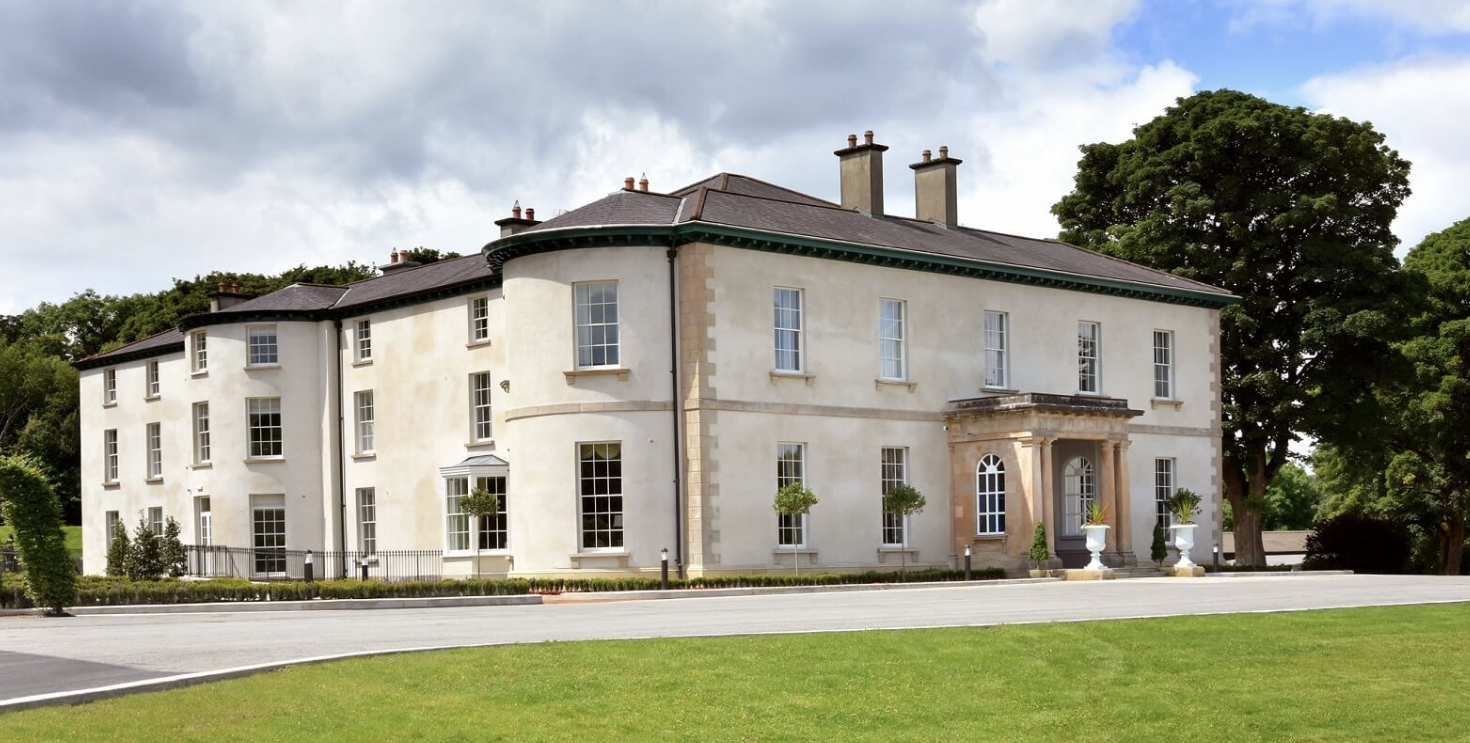
BELLA HILL, according to the Parliamentary Gazetteer of Ireland in 1844, was a demesne in the parish of Kilroot, barony of Lower Belfast, County Antrim.

Bellahill House (Green Collection/NMNI)

It was situated 4½ miles north-east by north of Carrickfergus, close to the road thence to Larne.

"The modern mansion occupies a commanding site a little west of the road; and the old castellated mansion, consisting of two large towers, connected by a curtain wall, which is perforated with the entrance gateway, stands on the roadside, and is now used as stables."
The original dwelling is today known as "Dalway's Bawn."

Dalway's Bawn (Green Collection/NMNI)

The Northern Ireland Department of Communities website describes it thus:
"A well-preserved example of an early 17th century planter’s fortified enclosure, built in about 1609 by John Dalway, constable of Carrickfergus Castle, to secure his royal grant of land in the area." 
"Now enmeshed with a working farm, only part of the bawn is in State Care – the roadside wall and three flanker towers, viewable only from the road. A dwelling house formerly stood inside the bawn, but it was demolished in the 19th century."

Thursday, 9 July 2026

McCance of Suffolk

THE McCANCES OWNED 1,522 ACRES OF LAND IN COUNTY ANTRIM

The family of McCance is said to have moved from Scotland to Ulster about 1710.


DAVID McCANCE
(1684-1747), of Woodbourne, Dunmurry, County Antrim, married Isabella __________ (c1669-1724), and had issue,

JOHN McCANCE (1711-86), of Dunmurry, who wedded firstly, Rachel _______, and had issue,
David (1736-93), of KNOCKNAGONEY, County Down;
JOHN, of whom presently;
William (1746-1810), of Wellington Place, Belfast; and of Suffolk House.
Mary, m James Stouppe.
He espoused secondly, Easter _____.

Mr McCance was buried at Drumbeg parish church.

The second son,

JOHN McCANCE (1744-1811), of Farmhill (Blacks Road today), Dunmurry, married Jane, daughter of JOHN CHARLEY, of Seymour Hill, and had issue,
JOHN;
Mary.
The only son,

JOHN McCANCE JP (1772-1835), of Farmhill, and Suffolk House, Dunmurry, High Sheriff of County Antrim, 1825, MP for Belfast, 1835.
Mr McCance inherited the family linen business as well as becoming chairman of the Northern Banking Company. He was involved with the various activities of his times, being a magistrate, high sheriff, a Police Commissioner, Vice-President of the Royal Belfast Academical Institution (Inst), and a Trustee of the Botanic Gardens, Belfast. He also became MP for Belfast, following a strenuous contest with Lord Arthur Chichester.
He wedded, in 1799, Maria, daughter of William Finlay, of Carrickfergus, County Antrim, and had issue,
WILLIAM, his heir.
His first wife died, possibly as a result of childbirth, in the same year; and, ca 1800, John McCance wedded, secondly, Jane, daughter of William Russell, who died, without issue, in 1812.

John McCance (Image: Ulster Museum)

He espoused thirdly, in 1813, Sarah, daughter of James Law, by whom he had further issue,
James Law;
John Wellington Stouppe, JP (1816-63);
Joseph;
David;
George;
Henry Jones, JP DL (1829-1900);
Jane; Mary; Elizabeth; Charlotte.
A stained-glass window in memory of John and Henry McCance adorns First Dunmurry Presbyterian Church.

Henry Jones McCance (Image: Ulster Museum)

The eldest son,

WILLIAM McCANCE JP (1801-65), of Glenville, and Suffolk House, Dunmurry, married, in 1824, Isabella, daughter of John Russell, of New Forge, County Down, and had issue,
John (1826-69), died unmarried;
William;
FINLAY, of whom hereafter;
Holmes;
William;
Catherine Helen; Isabella; Isabella; Maria; Jane.
The third son,

FINLAY McCANCE JP (1829-90), of Suffolk House and Glenville, wedded, in 1860, Annie Lillias, daughter of James Macaulay, of Strathearn, Dunmurry, and had issue,
JOHN STOUPPE FINLAY;
Isabella; Susan Evelyn.
The only son and heir,

JOHN STOUPPE FINLAY McCANCE JP DL (1865-1926), of Suffolk House, Dunmurry, married, in 1890, Mary Letitia, daughter of James Thomson Bristow, and had issue,
Finlay (1891-1915), killed in action;
Henry Bristow, father (?) of Reginald Finlay McCance (d 2008);
Elizabeth Lillias.
Suffolk House (Image: Planet Suffolk)

SUFFOLK HOUSE, Dunmurry, County Antrim, faced south-east across the Lagan Valley with its back to Collin Mountain. 

Though not the oldest part of the mansion, the main front block with its hipped roof was most impressive.

It was re-built in 1824, with a modest portico and two columns, stepped quoins at each corner; regular bays of windows, with a projecting band of stone dividing the storeys.

In the middle of the small park was a planted pond.

Suffolk House from an engraving by E K Proctor, 1832 (Image: Ebay)

Suffolk House was inhabited by the McCances until 1923, when the house and grounds were leased (or purchased) by the family of Gaffikin.

The Gaffikins lived at Suffolk until 1927, when it remained vacant for ten years.

Suffolk was purchased by Mr Cameron in 1937.

He leased part of the house, and several rooms were utilized for the storage of food during the 2nd World War.

Suffolk House ca 1830 (Historic OS map)

At the end of the war, in 1945, one wing of the house was leased to Otto Harriman, of London.

A section of Suffolk house was demolished about 1958 to make way for road improvements; and in the late 1970s the remainder of the house was completely demolished (a reader informs me that they recall delivering the Belfast Telegraph newspaper to the house about 1979-80)         .

The mansion house stood near the site of Margaretta Park; and the grounds today form part of Colin Glen Park.


First published in July, 2022.

Monday, 6 July 2026

The Crossley Baronets

This family is descended from CROSSLEY of Scaitcliffe, Lancashire, which is said to have been settled at  Todmorden, Yorkshire, during the reign of EDWARD III.


JOHN CROSSELEY, of Stansfield in Rochdale, born 1474; living in 1524, was succeeded by his son,

RICHARD CROSSLEY, of Scaitcliffe, who died in 1548, leaving, by his wife Alice, a second son,

RICHARD CROSSLEY (1537-88), of Scaitcliffe, who left, by Elizabeth his wife,

ANTHONY CROSSLEY, of Scaitcliffe, who purchased Hollinrake Holme in 1586; he died in 1624, leaving, with other issue by Mary his wife, an eldest son,

JOHN CROSSLEY, of Scaitcliffe, who married, in 1615, Dorothea, daughter of Richard Lorde, of Hundersfield, and had, with other issue,

JOHN CROSSLEY (1620-46),  of Frailcroft in Todmorden, who wedded, in 1640, Mary, daughter of Cæsar Jackson, of Worsthorne, Lancashire, and dvp 1646, having had, with other issue,

ANTHONY CROSSLEY
, of Scaitcliffe, Lancashire, married firstly, in 1664, Anne Eastwood; and secondly, in 1702, Grace _______.

He died in 1707, and by his first wife he had issue,

ANTHONY CROSSLEY (-1757), of Further Scaitcliffe, and of Dromore, County Down, the first of the family to move to Ulster, who fought at the battle of the Boyne, 1690, and was father of

ANTHONY CROSSLEY, who married the daughter of  _______ Brown, and had issue,
William, of Lisburn, born in 1745;
JOHN, of whom presently.
The younger son,

JOHN CROSSLEY (1746-1830), of Lisburn, County Antrim, wedded Elizabeth Alcott, and had a younger son,

FRANCIS CROSSLEY (1787-1846), of Glenburn, Dunmurry, County Antrim, a Major in the East India Company, Governor of the Andaman Islands, who espoused firstly, Miss Stewart, of Lisburn; and secondly, in 1837, Elizabeth Helen, daughter of William Irwin, of Mount Irwin, County Armagh, by whom he had issue,
Francis Williamof Annagola, near Middletown, Co Armagh;
WILLIAM JOHN, of whom we treat;
Thomas Hastings Henry (1846-1926), Professor of Greek, QUB;
Emmeline.
The second son,

WILLIAM JOHN CROSSLEY JP (1844-1911), MP for Altrincham, 1906-10, married, in 1876, Mabel Gordon, daughter of Francis Anderson, and had issue,
KENNETH IRWIN, his heir;
Eric, OBE; grandfather of the 3rd and 6th Baronets;
Brian;
Lettice; Cicely.
Mr Crossley was created a baronet in 1909, designated of Glenfield, Dunham Massey, Cheshire.

Sir William was succeeded by his eldest son,

SIR KENNETH IRWIN CROSSLEY, 2nd Baronet (1877-1957), JP, High Sheriff of Cheshire, 1919, who wedded firstly, in 1901, Florence Josephine, daughter of Joseph Nash Field, and had issue,
ANTHONY CROMMELIN, his heir;
Fidelia Josephine; Ruth Irwin; Catherine Pamela Field.
He espoused secondly, in 1954, Elizabeth Joyce, daughter of Enoch Shenton, without further issue.

Sir Kenneth's only son and heir,

ANTHONY CROMMELIN CROSSLEY (1903-39), MP for Oldham, 1931-35, Stretford, 1935-39, married, in 1927, Clare, daughter of Brigadier A F Thomson, and had issue,
FRANCIS PATRICK IRWIN;
Penelope Georgina; Virginia Charlotte Theresa.
Mr Crossley was accidentally killed in an air crash on the 15th August, 1939.

His only son and heir,

FRANCIS PATRICK IRWIN CROSSLEY (1929-53), Lieutenant, Grenadier Guards, died unmarried, when the title reverted to his cousin,

SIR CHRISTOPHER JOHN CROSSLEY, 3rd Baronet (1931-89), grandson of Eric Crossley OBE (see above), Lieutenant-Commander RN, who wedded firstly, in 1959, Carolyne Louise, daughter of Lesoie Grey Sykes, and had issue,
NICHOLAS JOHN;
JULIAN CHARLES.
He married secondly, in 1977, Lesley, daughter of Dr K A J Chamberlain.

Sir Christopher was succeeded by his elder son,

SIR NICHOLAS JOHN CROSSLEY, 4th Baronet (1962-2000), who died unmarried, when the title devolved upon his brother,

SIR JULIAN CHARLES CROSSLEY, 5th Baronet (1964-2003), who died unmarried, when the baronetcy reverted to his cousin,

SIR SLOAN NICHOLAS CROSSLEY, 6th Baronet (1958-), grandson of Eric Crossley OBE (see above), who wedded, in 1999, Jane Elizabeth, daughter of Harold Tyycross.

Glenburn House: entrance front to the south (Timothy Ferres, 2022)


GLENBURN HOUSE, Dunmurry, Belfast, is a two-storey, five-bay Georgian house of ca 1745.

Owners and Tenants of Glenburn
  • Wolfenden
  • Hogg
  • Darby
  • Curtis
  • Crossley
  • McConnell
  • Murphy
  • Clarke
  • Richardson
  • Belfast Bible College
The Glenburn demesne, including the house and bleach green, was established by John Wolfenden; and subsequently Mr Hogg; followed by Mr Darby.

Glenburn House was thereafter extended by Mr Darby, and is thought to have been further enlarged by Edward Curtis about 1811.

Glenburn House: west elevation (Timothy Ferres, 2022)

It became Major Francis Crossley's residence in 1835, and his son, Sir William John Crossley, 1st Baronet, appears to have been born at Glenburn.

The house was occupied in the early 1850s by James McConnell, of McConnell & Kennedy, Flax and Tow Spinners. 

Entrance portico with paired columns (Timothy Ferres, 2022)

In an auction sales brochure of 1861 Glenburn House and demesne was described thus:
"Being suitable in every respect for a gentleman's country seat, having a demesne of 75 acres, and a tastefully laid-out garden which was well stocked with fruit trees. On the south side of the house was a water damn which had been ornamented by the planting of shrubs and nearby a tea house surrounded by a garden.”
Between 1862-65 the owner is recorded as being the Liverpool Borough Bank, with Issac J Murphy, of John Murphy & Co, flax spinners, residing at Glenburn.

Glenburn became vacant in 1884, and five years later, in 1889, it was purchased by the Northern Banking Company, and a Major-General Clarke lived there until 1889.

Glenburn: east elevation  (Timothy Ferres, 2022)

George Richardson occupied the house in 1893.

In 1983 the Belfast Bible College moved to Glenburn, and the original Georgian mansion serves as administrative offices.

Former Crossley residence ~ Combermere Abbey, Whitechurch, Shropshire.

First published in July, 2022.

Wednesday, 17 June 2026

Montgomery of Grey Abbey

This is the Braidstane line of the noble house of EGLINTON.

ROBERT MONTGOMERIE, second son of Alexander, Master of Montgomerie, and brother of Alexander, 2nd Lord Montgomerie, ancestor of the Earls of Eglinton, obtained for his patrimony, from his grandfather, Alexander, 1st Lord, in 1452, the lands of Braidstane, and thus became its laird.

Mr Montgomerie was succeeded by his eldest son, 

ROBERT, 2nd Laird of Braidstone, who dsp and was succeeded by his brother,

ROBERT, 3rd Laird, who dsp and was succeeded by his only surviving brother,

ADAM, 4th Laird, who was succeeded by his son,

ADAM JOHN MONTGOMERY5th Laird, who married the eldest daughter of Sir John Colquhoun, of Luss.

He died about 1550, having had four sons, viz.
ADAM, ancestor of the EARLS OF MOUNT ALEXANDER;
George (Very Rev), Dean of Norwich, afterwards Bishop of Meath;
Patrick, colonel in the French army during the reign of HENRY IV;
ROBERT, of whom hereafter.
The youngest son, 

ROBERT MONTGOMERY, was father of 

JOHN MONTGOMERY,
Who went over to Ulster in the early part of the reign of JAMES I with his cousin Hugh, 6th Laird of Braidstane, afterwards VISCOUNT MONTGOMERY, of the Great Ardes, his lordship having brought several of his clan from Scotland, that they might settle upon his new estates, and assist upon the plantation of the country. 
To this John he granted lands at Gransha, in the Ards, where he settled, where he was esteemed a man of opulence, which supposition caused his house to be attacked by robbers, himself, his wife, and all his servants were inhumanely murdered, save one, who escaped with his son HUGH. This John espoused an heiress of the family of Stewart, in Scotland.
His son,

HUGH MONTGOMERY, of Maghera, County Londonderry,
Who had been left for dead in attempting to defend his father, but recovering from his wounds, he lived to an old age, on his property at Maghera, to which he removed after the attack on his paternal dwelling. 
He represented the borough of Newtownards in Parliament, from 1634-39, and lies buried with his father in the church of Donaghadee.
Hugh Montgomery left two sons,
HUGH;
John.
The elder son,

HUGH MONTGOMERY, of Maghera, wedded a daughter of Sir Robert McClelland, by whom he had several daughters and an only son, his successor,

WILLIAM MONTGOMERY, of Maghera, who married Mary, eldest daughter and co-heir of Captain James Magill, of Kirkistown, County Down, and had, with one daughter, Lucy, an only son, his successor,

WILLIAM MONTGOMERY (1700-55), who wedded firstly, in 1719, Catherine, daughter of Edward Hall, of Strangford, and by her had,
Edward, died 1726;
WILLIAM, his successor.
He wedded secondly, in 1725, Elizabeth, daughter of Samuel Hill, of Buckinghamshire, by whom he had further issue (with three daughters), four sons,
Hugh, died unmarried 1765;
James, died unmarried 1796;
Robert, died unmarried 1758;
Samuel, dsp.
Mr Montgomery purchased, ca 1715, the estate of Grey Abbey from his kinsman, James Montgomery, and rebuilt the mansion-house, the former having been burnt accidentally in 1695.

He was succeeded by his second son,

WILLIAM MONTGOMERY (1721-99), of Grey Abbey, MP for Hillsborough, 1761-99, who espoused, in 1749, Susanna, daughter and sole heir of John Jelly, of Rathmullen, County Down, and had issue,
William, killed in America, 1781;
HUGH, heir to his father;
Edward, Royal Navy, died unmarried;
Francis, died unmarried 1808;
Dorcas, died unmarried 1824.
Mr Montgomery was succeeded by his eldest surviving son,

THE REV HUGH MONTGOMERY (1754-1815), of Grey Abbey, who married, in 1782, Emilia Ward, youngest daughter of Bernard, 1st Viscount Bangor (by his wife, the Lady Anne Bligh, daughter of John, Earl of Darnley), and had issue,
WILLIAM, his successor;
Hugh Bernard;
Edward (Rev), Rector of Portaferry;
Arthur Hill, of Tyrella, Co Down;
John Charles;
Francis Octavius;
George Augustus Frederick Sandys;
Anne Catherine; Emilia Georgiana Susanna.
Mr Montgomery died at Grey Abbey, and was succeeded by his eldest son,

WILLIAM MONTGOMERY JP DL (1786-1831), of Grey Abbey, High Sheriff of County Down, 1824, who wedded, at Brussels, 1817, the Lady Amelia Elizabeth Parker, second daughter of Thomas, 5th Earl of Macclesfield.

Mr Montgomery was succeeded by his only child,

HUGH MONTGOMERY JP DL (1821-94), of Grey Abbey, High Sheriff of County Down, 1845, who wedded, in 1846, the Lady Charlotte Elizabeth Herbert, second daughter of Edward, 2nd Earl of Powis KG, and had issue,
WILLIAM EDWARD, his successor;
ROBERT ARTHUR, succeeded his brother;
Percy Hugh Seymour, Chinese Imperial Customs Service (CICS);
FRANCIS HENRY, succeeded his brother;
George Fitzmaurice, CICS, father of HUGH EDWARD
;
Lucy Florentia; Edith Cecilia; Charlotte Henrietta Emily; Evelyn Mary.
Mr Montgomery was succeeded by his eldest son,

MAJOR-GENERAL WILLIAM EDWARD MONTGOMERY JP DL (1847-1927), of Grey Abbey, High Sheriff of County Down, 1900, who married, in 1891, Alberta Victoria, daughter of Major-General the Rt Hon Sir Henry Ponsonby GCB, though the marriage was without issue.

General Montgomery was succeeded by his brother,

MAJOR-GENERAL ROBERT ARTHUR MONTGOMERY CB CVO JP DL (1848-1931), of Grey Abbey, who was succeeded by his brother,

FRANCIS HENRY MONTGOMERY (1857-1941), of Grey Abbey, who died unmarried, when the estate devolved upon his nephew,

HUGH EDWARD MONTGOMERY JP DL (1906-69), of Grey Abbey, Major, 43rd and 52nd Light Infantry, High Sheriff of County Down, 1955, who married, in 1938, Anne, only daughter of Brigadier Charles Graeme Higgins CMG DSO DL, of Badbury Hill, Faringdon, and had issue,

WILLIAM HOWARD CLIVE MONTGOMERY, (1940-),who married, in 1965, Daphne, daughter of Brigadier the Hon Geoffrey John Orlando Bridgeman, and has issue,
Hugh Geoffrey Clive, b 1966;
Rose Evelyn, b 1968;
Frances Mary, b 1970;
Flora Anne Selina, b 1974.
First published in February, 2012.

Thursday, 11 June 2026

Agnew of Kilwaughter

THE AGNEWS WERE MAJOR LANDOWNERS IN COUNTY ANTRIM, WITH 9,770 ACRES

This ancient family held for many generations the office of hereditary sheriff of Wigtownshire, from 1451 until the jurisdiction was abolished in 1747.


PATRICK AGNEW, of Lochnaw, Wigtownshire, said to be a kinsman of the Agnew Baronets, Collector of Rents for the EARL OF ANTRIM, married, in 1622, JANET SHAW, and built a castle at KILWAUGHTER, County Antrim.

Mr Agnew was succeeded by his son,

JOHN AGNEW, who wedded his cousin, Eleanor Shaw, and was succeeded by his son,

PATRICK AGNEW, who married and purchased the remaining lands at Kilwaughter which, until 1660, had been in the possession of the Agnews of Lochnaw:
Sir Patrick Agnew, 1st Baronet, 8th Hereditary Sheriff of Galloway, father of Colonel Alexander Agnew, of Whitehills, who, with Andrew Agnew, his brother, afterwards the 9th Sheriff, was frequently in Ulster.
Mr Agnew, High Sheriff of County Antrim, 1669, was succeeded by his son,

PATRICK AGNEW, who married and had issue,
PATRICK, of whom we treat;
Margaret, m James Crawford;
Jean, m Robert Blair, of Blairmount;
Helen, m James Stewart.
Mr Agnew died in 1724, and was succeeded by his eldest son,

PATRICK AGNEW, who espoused Martha Houston (or Houseton) and had issue,
WILLIAM, of whom we treat;
Frances;
John;
James (?);
Patrick (?);
Henry;
Hugh (?).
The eldest son,

WILLIAM "SQUIRE" AGNEW, High Sheriff of County Antrim, 1744, married his cousin, Margaret Stewart, of KILLYMOON CASTLE, Cookstown, County Tyrone, and had issue,
James, died unmarried;
William, died unmarried;
MARIA, of whom we treat;
Jane, m Henry Shaw, later of Ballygally.
MARIA AGNEW wedded firstly, James Ross; and secondly, in 1763, VALENTINE JONES, by whom she had issue, one son, Edward; and a daughter, Margaret.
Valentine Jones (1712-1806) was a merchant with West Indian interests and founding member of the Belfast Charitable Society. He was at the Society’s inaugural meeting in August 1752. 
The Valentine Jones dynasty, which had premises at Winecellar Entry off High Street, Belfast, were wine merchants and rum and sugar importers who had established a thriving agency in Barbados where they bought goods from the planters and also sold goods to them.
The only son,

EDWARD JONES (1767-1834), MP for Antrim County, 1792-96, High Sheriff of County Antrim, 1803, succeeded his grandfather and assumed the additional surname of AGNEW.

He married Eleanor Galbraith and had issue,
WILLIAM, his heir;
Maria, m Dr T C Simon; mother of MARIA AUGUSTA.
Mr Jones Agnew was succeeded by his son and heir,

WILLIAM AGNEW (1824-91), who died unmarried, and was succeeded in the Kilwaughter estate by his niece,

(MARIA) AUGUSTA, COUNTESS BALZANI (1847-95), only child of Thomas Collins Simon and Maria (née Agnew) Simon, who wedded Count Ugo Balzani, and had issue, two daughters,
Gendoluni, Madame Valensin;
Nora.
First published in June, 2016.

Friday, 5 June 2026

Ingoldsby of Carton

The Family of INGOLDSBY was of ancient standing in Lincolnshire, and derived in direct descent from Sir Roger Ingoldsby, Lord of Ingoldsby, in that county, in 1230.


SIR RICHARD INGOLDSBY, Knight, of Lethenborough, Buckinghamshire, High Sheriff of Buckinghamshire, 1606, was found, by an inquisition taken at the demise of his father, Francis Ingoldsby, in 1634, to be his eldest son and heir.

He married Elizabeth, daughter of William Palmer, of Waddesdon, Buckinghamshire, and had issue,
RICHARD, his heir;
Dorothy; Agnes; Martha.
Sir Richard died in 1635, and was succeeded by his son,

SIR RICHARD INGOLDSBY, of Lethenborough, knighted by JAMES I in 1617, when that monarch visited Hinchingbrooke, the seat of Sir Richard's father-in-law, Sir Oliver Cromwell KB.

He wedded Elizabeth, daughter of Sir Oliver, and had issue,
Francis;
Richard;
Oliver;
John;
Henry, created a baronet, 1661, of Lethenborough;
GEORGE, of whom we treat;
Thomas;
William;
Elizabeth; Sarah; Ann; Mary.
The sixth son,

SIR GEORGE INGOLDSBY (1624-1701), of Lenborough Manor, Buckinghamshire, a colonel in Cromwell's army in Ireland, Mayor of Limerick, 1672, married Mary, daughter of James Gould, of Ludden Castle, Corbally, County Limerick, and had a son,

THE RT HON RICHARD INGOLDSBY (c1664-1712), MP for Limerick City, 1703-12, Lieutenant-General in the army, a Lord Justice of Ireland, 1709-10.

General Ingoldsby purchased CARTON HOUSE and demesne for the sum of £1,800 (equivalemt to about £304,000 in 2021) in 1703 from the TALBOTS.

He wedded Frances, daughter of Colonel James Naper, of LOUGHCREW, County Meath, and had issue, 

HENRY INGOLDSBY (c1692-1731), MP for Limerick City, 1713-31, who married Catherine, daughter of Sir Constantine Phipps.

Ingoldsby crest

Henry Ingoldsby squandered most of his father's accumulated fortune on a lavish lifestyle in London, and following his death, his estates were sold to pay off his debts; and, in 1738, Carton returned to its ancestral owners, the FitzGeralds of Kildare, premier dukes, marquesses, and earls of Ireland.

First published in June, 2022.

Monday, 1 June 2026

Stewart of Rockhill

THE STEWARTS, OF ARDS, OWNED 39,306 ACRES OF LAND IN COUNTY DONEGAL


ALEXANDER STEWART (1746-1831), second son of Alexander Stewart MP, of MOUNT STEWART, County Down, and younger brother of Robert, 1st Marquess of Londonderry, purchased the estate of ARDS from the Wray family, and settled there in 1782.

Mr Stewart, High Sheriff of County Donegal, 1791, espoused, in 1791, the Lady Mary Moore, younger daughter of Charles, 1st Marquess of Drogheda, by the Lady Anne Seymour his wife, daughter of Francis, 1st Marquess of Hertford, and had issue (with other children, who died young),
Alexander Robert, of Ards, his heir;
Charles Moore (Rev);
JOHN VANDELEUR, of whom we treat;
Maria Frances; Gertrude Elizabeth.
The youngest son,

JOHN VANDELEUR STEWART DL (1802-72), of Rock Hill, near Letterkenny, County Donegal, High Sheriff of County Donegal, 1838, wedded, in 1837, the Lady Helen Graham-Toler, daughter of Hector John, 2nd Earl of Norbury, and had issue,
ALEXANDER CHARLES HECTOR, his heir;
Hector Brabazon (Rear-Admiral);
Robert Seymour;
CHARLES JOHN, of whom hereafter;
Elizabeth Georgina.
Mr Stewart was succeeded by his eldest son,

ALEXANDER CHARLES HECTOR STEWART (1838-1917), of Rock Hill, a major-general in the army, High Sheriff of County Donegal, 1881, who married, in 1872, Gertrude Mary, daughter of Eric Carrington Smith, and had issue, an only child,
Kathleen, b 1875; m, 1904, Captain P A MacGregor DSO.
John Vandeleur Stewart's youngest son,

SIR CHARLES JOHN STEWART KBE (1851-1932), of Rockhill, espoused, in 1884, the Lady Mary Catherine Graham-Toler, daughter of Hector John, 3rd Earl of Norbury, and had issue,
Gerald Charles (1888-1915), killed in action;
John Maurice (1895-1915), killed in action;
Helen Margaret; Eirene Mary; Marjorie Alice.
Rockhill House (Rockill House website, 2021)

ROCK HILL HOUSE, near Letterkenny, County Donegal, was originally a three-storey Georgian house of ca 1760, with basement, comprising three bays on either side of a central curved bow.

Its new owner, John Vandeleur Stewart, built a two-storey, five-bay addition to the original house about 1853.

The Victorian building was the same height as the Georgian one.

The present mansion appears to have replaced an earlier Plantation dwelling of the early 1600s, associated with the Pratt family of CABRA, County Cavan.

Captain Thomas Chambers acquired the lands in 1660, and the Chambers remained there until 1832, when Daniel Chambers sold the house and its 237 acre estate to John Vandeleur Stewart for £900 (equivalent to about £70,000 in 2021).

Rockhill House (Robert French/Lawrence Collection/NLI)

J V Stewart proceeded to build a large two-storey block, attached to the original Georgian house, ca 1853. 

His son,  Major-General Alexander Charles Hector Stewart, used Rockhill occasionally; as did his son, Sir Charles John Stewart, KBE, a barrister based in London.

Sir Charles and Lady Stewart were bereft by the deaths, in 1915, of their two sons, both killed in action during the 1st World War, and Rockhill was abandoned in 1927.

Many of the house contents were shipped to the Stewarts' new home in Scotland, and they authorized the sale of the estate.

Rockhill House: Georgian block (Rockhill House website, 2021)

With nobody occupying the estate, Rockhill was taken over by Anti-Treaty IRA forces upon the outbreak of Civil War in Ireland in 1922.

In 1927-30 Rockhill became a Preparatory College for student teachers; the estate, however, thereafter fell into decline and, in 1937, was sold in various lots to the Irish Commissioners of Public Works.

The Irish Department of Defence occupied 29 acres of grounds from the 1940s, and accommodated the Irish Army on a permanent basis from 1969 until 2009, when it closed due to government cutbacks.

Rockhill House has recently been extensively renovated and re-opened as a country house hotel.

First published in May, 2022.  Stewart arms courtesy of the NLI.

Monday, 25 May 2026

Magan of Killyon

THE MAGANS OWNED 5,604 ACRES OF LAND IN COUNTY WESTMEATH

The family of MAGAN claims descent from the ancient Irish sept of MacCEAN or MacGEAN, latterly written MacGAN and MAGAN, a collateral branch of the sept of MacDermot Roe. Six successive generations of the MAGANS resided in the townland of Umma More or Emoe, about two and a half miles in distance from Ballymore, County Westmeath.


MORGAN MAGAN
, of Clonearl, County Westmeath, brother of Richard Magan, of Emoe, had issue,
THOMAS, his heir;
MORGAN, successor to his brother;
Susannah.
The elder son,

THOMAS MAGAN, of Togherstown, County Westmeath, a commissioner in the years 1695, 1697 and 1698 for raising a supply in County Westmeath for WILLIAM III, married Sarah Morgan, and dsp 1710, when he was succeeded by his brother,

MORGAN MAGAN, of Togherstown, who wedded Elizabeth ________, and had issue,
Thomas, dsp;
Hubert, dsp;
William, dsp;
Edward, dsp;
Morgan, dsp;
ARTHUR, his heir;
Eliza; Sarah; Ann; Frances.
The sixth son,

ARTHUR MAGAN (1721-77), of Clonearl, Philipstown, King's County (Offaly), High Sheriff of County Westmeath, 1759, MP for Newtown Limavady, 1765, espoused, in 1754, Anne, daughter of Hugh Henry, of Straffan, County Kildare, and had issue,
Edward, dsp 1779;
Hugh Henry;
ARTHUR, who carried on the line;
Anne; Harriet.
The youngest son,

ARTHUR MAGAN (1756-1808), of Clonearl and Togherstown, married Hannah Georgina, daughter and co-heir (with her sister, Elizabeth Anne, wife of Charles, 2nd Baron Castle Coote) of the Rev Dr Henry Tilson, of Eagle Hill, County Kildare, and had issue,
Edward, died young;
WILLIAM HENRY, his heir;
Arthur, Captain RN;
Thomas Tilson, Captain in the army;
GEORGE PERCY, ancestor of GEORGE, cr BARON MAGAN OF CASTLETOWN;
Henry (Rev), dsp;
Charlotte; Eliza; Harriett; Louisa; Emily; Henrietta.
Mr Magan was succeeded by his eldest surviving son,

WILLIAM HENRY MAGAN (1790-1840), of Clonearl, High Sheriff of County Westmeath, 1827, who wedded, in 1817, Elizabeth Georgina, widow of Colonel Thomas Lowther Allen, and second daughter and co-heir of Dudley Loftus, of Killyon, head of the ancient and distinguished house of LOFTUS, and had issue,
WILLIAM HENRY, his heir;
Dudley, died unmarried;
AUGUSTA ELIZABETH, of whom hereafter.
The elder son,

WILLIAM HENRY MAGAN (1819-60), of Clonearl, Captain, 4th Light Dragoons, MP for Westmeath, 1847-57, espoused, in 1849, the Lady Georgiana Charlotte Keppel, youngest daughter of WILLIAM CHARLES, 4TH EARL OF ALBEMARLE; though dsp 1860, and was succeeded eventually by his sister,

MISS AUGUSTA ELIZABETH MAGAN (1825-1905), of Clonearl, King's County, and Killyon, County Meath, who died unmarried.

Her estates included 5,604 acres in County Westmeath, 4,418 acres in County Meath, 2,374 in County Kildare, 1,023 in the King's County, and 165 acres of land in County Dublin.

Miss Magan's paternal uncle,

GEORGE PERCY MAGAN (1799-1857), of County Carlow,  married, in 1824, Ellen, daughter of Valentine O'Connor, and had issue,
PERCY TILSON, his heir;
Thomas Tilson;
Henry;
Henry Augusta;
Edward William;
Hugh Tilson;
Albert Edward;
Valentine John;
Arthur;
Georgina; Mary Monica; Ellen; Charlotte Elizabeth;
Henrietta; Flora Emily; Harriet Honoria.
Mr Magan was succeeded by his eldest son,

PERCY TILSON MAGAN JP (1828-1903), of Correal, County Roscommon, Marlfield House, County Wexford, and Kilcleagh Park, County Meath, who wedded, in 1865, Anne Catherine, daughter of the Rev Edward Richards, and had issue,
Percy Tilson (1867-1947);
ARTHUR TILSON SHAEN, of whom we treat;
Emily Georgina; Muriel Rozel; Rachel Evelyn; Violet Augusta.
The younger son,

ARTHUR TILSON SHAEN MAGAN CMG (1880-1965), of Killyon Manor, Hill of Down, County Meath, Lieutenant-Colonel, Royal Army Service Corps, married, in 1906, Kathleen Jane, daughter of Assheton Biddulph, and had issue,
WILLIAM MORGAN TILSON, his heir;
Francis Shaen;
Annie Sheelagh; Violet Mary; Maureen.
Colonel Magan was succeeded by his eldest son,

BRIGADIER WILLIAM MORGAN TILSON MAGAN CBE (1908-2010), of Killyon Manor, and St Michael's House, Tonbridge, Kent, who wedded, in 1940, Maxine, daughter of  Sir Kenneth Grant Mitchell KCIE, and had issue,
Thomas Kenneth Shaen Biddulph (1941-3);
GEORGE MORGAN, of whom hereafter;
Hugh William;
James Henry.
The eldest surviving son,

GEORGE MORGAN MAGAN (1945-), married, in 1972, Wendy Anne, daughter of Major Chilton, and has issue,
Patrick G B;
Edward William Morgan.
Mr Magan, formerly of CASTLETOWN COX, County Kilkenny, was created a life peer, in 2011, as BARON MAGAN OF CASTLETOWN, of Kensington in the Royal Borough of Chelsea.


In 1876, Mrs Elizabeth Georgina Loftus Magan, of Killyon Manor (above), owned 4,418 acres in County Meath, 5,604 acres in County Westmeath, 2,374 acres in County Kildare, 1,023 acres in County Offaly, and 165 acres in County Dublin, totalling 13,584 acres.

Mrs Magan managed the estates until she died, in 1880, designating her only surviving child Elizabeth Augusta Magan as her heir.

When the Magan family's main residence, Clonearl, was destroyed by fire in 1846, Killyon Manor became their seat.

Killyon was sold about 1970 to Sir Rivers Verain Carew Bt, who lived there for a time until it was purchased by the Purcell family, who have restored the house and gardens.

First published in April, 2018.