
THE MARQUESSES OF BUTE WERE THE SECOND LARGEST LANDOWNERS IN AYRSHIRE, WITH 43,734 ACRES
This noble family claims direct descent from the royal and unfortunate house of STUART. JOHN STEWART, the founder of this family, was a son of ROBERT II, King of Scots. There is a tradition that his mother's name was Leitch.
About 1385, the King put together the seven islands of Bute, Arran, Great and Little Cumbrae, Holy Isle, Pladda, and Inchmarnock, into a county, and conferred the office of hereditary sheriff thereof on John Stewart his son, with a considerable grant of land.
This grant was subsequently confirmed by charter of ROBERT III, dated 1400.
This John Stewart wedded Jean, daughter of Sir John Sempill, of Eliotstoun, and had issue,
JAMES, his heir;William;Robert;John;Andrew.
The eldest son,
JAMES STEWART, who succeeded his father as Sheriff of Bute between 1445 and 1449. He died between 1454 and 1464.
His line appears to have died with him, for he was succeeded by his brother,
WILLIAM STEWART, who received a charter of the lands of Fennok from his parents, 1444-45.
He was Keeper of the castle of Brodick in Arran, 1444-53; married Margaret Stewart.
William died ca 1465, and left three sons,
JAMES;William;Alexander.
The eldest son,
JAMES STEWART, Sheriff of Bute, succeeded to that office probably in 1468; and died in 1477, leaving issue,
JAMES;NINIAN, successor to his brother;James;Robert;Janet.
The eldest son,
JAMES STEWART, Sheriff of Bute, succeeded in 1477, while still a minor.
He died about 1488, and was succeeded by his brother,
NINIAN STEWART, having succeeded his father in the sheriffdom of Bute, obtained, in 1498, a new grant of the hereditary custody of Rothesay Castle, with a salary of eighty marks yearly out of the Lordship of Bute.
He died in 1539, and was succeeded by his son,
JAMES STEWART, who was installed in his estate and heritable constabulary of Rothesay Castle.
He died in 1539, and was succeeded by his son,
JAMES STEWART, who was installed in his estate and heritable constabulary of Rothesay Castle.
The family favoured the French spelling of the name as Stuart, which was introduced by Mary, Queen of Scots, and is still used today.
The grandson of this James,
SIR JAMES STUART, Knight, of Bute, married Elizabeth, daughter and co-heir of Robert Hepburn, of Foord, by whom he acquired the estate of Foord, with several other lands in Haddingtonshire, and was succeeded by his son,
SIR JAMES STUART, of Bute, who was created a baronet in 1627; and adhering to the royal cause during the civil wars, suffered considerably both by fines and sequestration.
Sir James wedded Grizel, daughter of Sir Dugald Campbell, of Auchinbreck, and had, with other issue, his eldest son and successor,
SIR DUGALD STUART, 2nd Baronet (1630-70), who married, in 1658, Elizabeth, daughter John Ruthven, of Dunglass, and granddaughter, maternally, of Alexander, 1st Earl of Leven, by whom he had (besides daughters), two sons, of whom the elder,
THE RT HON SIR JAMES STUART, 3rd Baronet (1661-1710), who, being of the privy council to ANNE, and one of the commissioners appointed to treat of a union with England, in 1702, which did not then take effect, was elevated to the peerage, in the following year, in the dignities of Earl of Bute, Viscount Kingarth, and Lord Mount Stuart, Cumra, and Inchmarnock, to himself and his heirs male whatever.
In 1706, his lordship opposed the union with all his might; and when he discovered that a majority of parliament was in favour of the measure, withdrew from the house, and retired to his country seat.
His lordship was succeeded by the only son of his first marriage,
JAMES, 2nd Earl; who, after the demise of his maternal uncle, and much litigation, succeeded to the estate of Rosehaugh.
His lordship espoused Anne, daughter of Archibald, 1st Duke of Argyll; and dying in 1723, this nobleman was succeeded by his elder son,
JOHN, 3rd Earl (1713-92), KG, who married Mary, only daughter of Edward Wortley-Montagu, of Wortley, Yorkshire, and great-granddaughter of Edward, 1st Earl of Sandwich.
Her ladyship was created, in 1761, suo jure Baroness Mount Stuart, with remainder to her male issue by the Earl of Bute.
His lordship was a minister of the crown from 1737, when he was made a lord of the police, until his resignation of the high office of 1st Lord of the Treasury, in 1763.
He died in 1792, and was succeeded by his eldest son,
JOHN, 4th Earl (1744-1814), who had succeeded upon the demise of his mother, in 1794, to the barony of Mount Stuart, having been previously (1776) created Baron Cardiff, of Cardiff Castle.
His lordship was advanced, in 1796, to the dignities of Viscount Mountjoy, in the Isle of Wight; Earl of Windsor, and MARQUESS OF BUTE.
He espoused firstly, in 1766, Charlotte Jane Hickman-Windsor, eldest daughter and co-heir of Herbert, 2nd and last Viscount Windsor, of the Kingdom of Ireland.
The heir apparent is the present holder's son, John Bryson Crichton-Stuart, styled Earl of Dumfries.
- John Stuart, 1st Marquess (1744–1814);
- John Crichton-Stuart, 2nd Marquess (1793–1848);
- John Patrick Crichton-Stuart, 3rd Marquess (1847–1900);
- John Crichton-Stuart, 4th Marquess (1881–1947);
- John Crichton-Stuart, 5th Marquess (1907–56);
- John Crichton-Stuart, 6th Marquess (1933–93);
- John Colum Crichton-Stuart, 7th Marquess (b 1958).
*****
Earldom of Dumfries
(NOW UNITED WITH THE MARQUESSATE OF BUTE)
SIR ROBERT CRICHTON, of Sanquhar, Dumfriesshire, probably descended from a son of Alexander Crichton, of Crichton, Edinburgh, 1296, signalized himself at Lochmaben, against the Duke of Albany and the Earl of Douglas, when they made an incursion into Scotland, in 1484.
This Sir Robert was created a peer of parliament, in 1488, by the title of Lord Crichton of Sanquhar.
From his lordship descended lineally
WILLIAM, 7th Lord, who was advanced to a viscountcy, in 1622, as Viscount of Ayr, and Lord Sanquhar; and further advanced, 1633, to the dignity of an earldom, as EARL OF DUMFRIES.
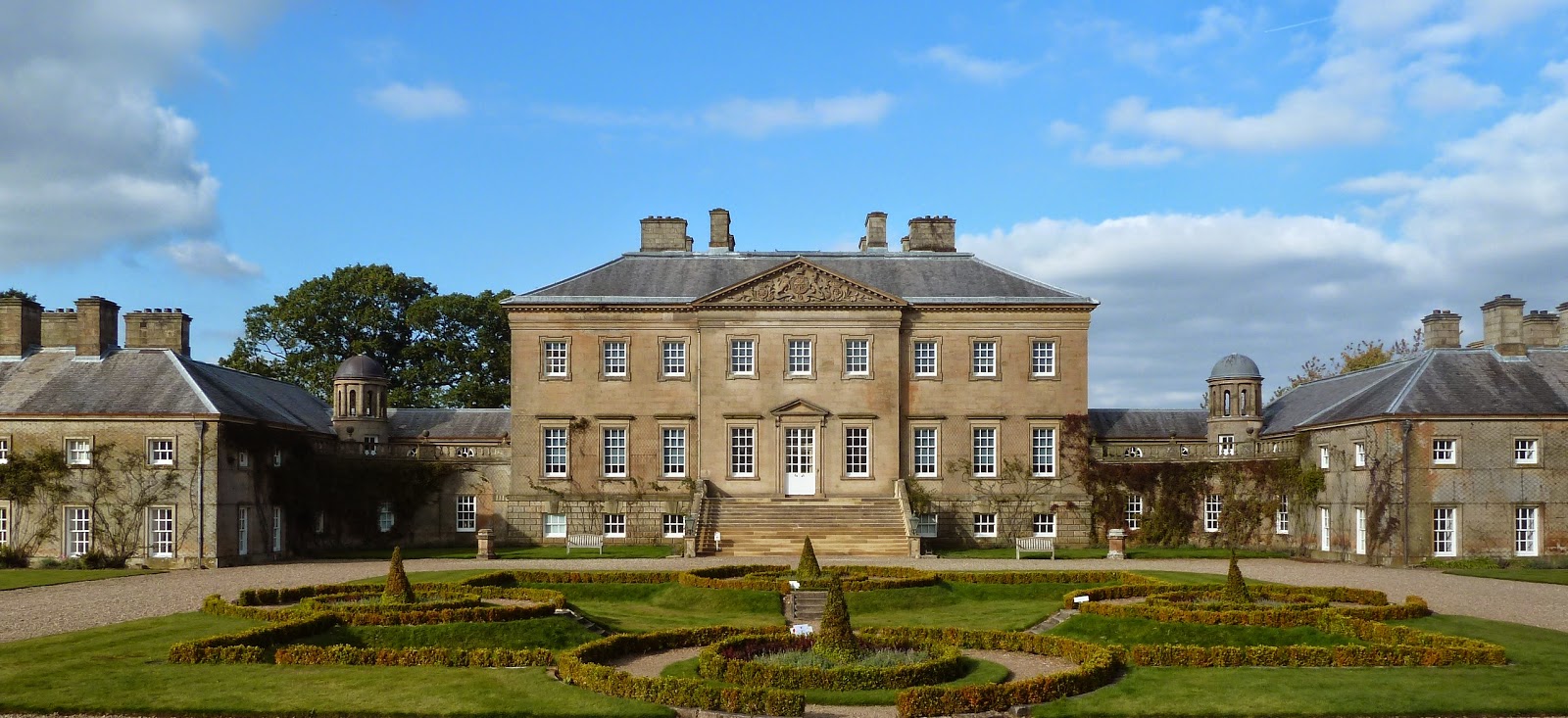
DUMFRIES HOUSE, near Cumnock, Ayrshire, was built in 1760 for William Crichton-Dalrymple, 5th Earl of Dumfries.
The 5th Earl's antecedent, William Crichton, 7th Lord Crichton of Sanquhar and 1st Earl of Dumfries, purchased the estate in 1635 from the Crawford family.
The 5th Earl died died eight years after the House had been completed, when the estates passed to his nephew, Patrick McDouall (1726-1803), 6th Earl.
The 6th Earl's only daughter and heir, Lady Elizabeth McDouall-Crichton, wedded John, Lord Mount Stuart, eldest son of John 1st Marquess of Bute.
John, 2nd Marquess of Bute, was the eldest son of this marriage, which combined the estates and titles of the Crichtons and Stuarts.
Dumfries House, Palladian in style, is noted as being one of the few such houses with much of its original 18th-century furniture still present, including specially commissioned Thomas Chippendale pieces.
The house and estate is now owned in charitable trust by the The Great Steward of Scotland's Dumfries House Trust, who maintain it as a visitor attraction and hospitality and wedding venue.
Both the House and the gardens are listed as significant aspects of Scottish heritage.
The estate and an earlier house was originally called Leifnorris, owned by the Crawfords of Loudoun.
The present house was built in the 1750s for William Dalrymple, 5th Earl of Dumfries, by John and Robert Adam.
Having been inherited by the 2nd Marquess of Bute in 1814, it remained in his family until 7th Marquess decided to sell it due to the cost of upkeep.
Due to its significance and the risk of the furniture collection being distributed and auctioned, after three years of uncertainty, in 2007 the estate and its entire contents was purchased for £45m for the country by a consortium headed by His Royal Highness The Prince of Wales, Duke of Rothesay, including a £20m loan from the Prince's charitable trust.The intention was to renovate the estate to become self-sufficient, both to preserve it and regenerate the local economy.
As well as donors and sponsorship, funding is also intended to come from constructing the nearby housing development of Knockroon, a planned community along the lines of the Prince's similar venture, Poundbury in Dorset.
The house duly re-opened in 2008, equipped for public tours.
Since then various other parts of the estate have been re-opened for various uses, to provide both education and employment, as well as funding the trust's running costs.
The Marquesses of Bute owned a further 29,279 acres of land in Bute, 21,402 acres in Glamorganshire, and 20,157 acres in Wigtownshire.
Seat ~ Mount Stuart, Isle of Bute.
Former seats ~ Luton Hoo, Bedfordshire; Cardiff Castle, Glamorganshire; Dumfries House, Ayrshire.
First published in April, 2014.


