Wednesday, 24 September 2025

Castle Leslie

THE LESLIE BARONETS, OF GLASLOUGH, WERE MAJOR LANDOWNERS IN COUNTY MONAGHAN, WITH 13,674 ACRES

THE RIGHT REV DR JOHN LESLIE (1571-1671), Lord Bishop of Clogher, founder of the Glaslough branch of the Leslie family in Ireland, was the son of George Leslie, of Crichie, Aberdeenshire, second son of William Leslie, of Wardis, Falconer to JAMES VI, King of Scotland.

His lordship was born in northern Scotland, and educated first at Aberdeen and then at Oxford, of which he was Doctor of Divinity.
Of this distinguished divine, there is an interesting account in Sir James Ware's History of Ireland, edited by Harris. He was consecrated, in 1628, Bishop of the Isles in Scotland, whence he was translated to Raphoe in 1633, and thence translated to the see of Clogher, in 1661.

He died at Glaslough in 1671, aged 100 years, all but five weeks, leaving two sons, of whom John the elder, then 26 years of age, succeeded to the estate at his seat at Castle Leslie, otherwise Glaslough, in 1671.
The Bishop's second son and successor, 

THE REV CHARLES LESLIE (1650-1722), of Glaslough, County Monaghan, Chancellor of Connor Cathedral, 1686, married Jane, daughter of the Very Rev Richard Griffith, Dean of Ross, and had an only child,

ROBERT LESLIE, of Glaslough, who wedded, in 1730, Frances, daughter of Stephen Ludlow, and had issue,
CHARLES POWELL, his heir;
Annabella.
Mr Leslie died in 1743, and was succeeded by his son,

CHARLES POWELL LESLIE (1731-1800), of Glaslough, MP for Hillsborough, 1771-6, County Monaghan, 1783-1800, who married firstly, in 1765, Prudence Penelope, daughter of Arthur, 1st Viscount Dungannon, and had issue,
CHARLES POWELL, his heir;
John (Rt Rev), Lord Bishop of Elphin.
Mr Leslie wedded secondly, in 1785, Mary Anne, daughter of the Rev Joshua Tench, and had further issue,
Edward (Rev);
Emily Jane; Harriet; Mary Anne; Isabella Frances.
He was succeeded by his eldest son,

CHARLES POWELL LESLIE JP (1769-1831), Colonel, County Monaghan Militia, High Sheriff of County Monaghan, 1788, MP for County Monaghan, 1801-26, New Ross, 1830-1, who espoused firstly, Anne, daughter of the Rev Dudley Charles Ryder, and had issue, three daughters.

He married secondly, in 1819, Christiana, daughter of George Fosbery, and had further issue,
Charles Powell (1821-71);
JOHN, his heir;
Thomas Slingsby;
Prudentia Penelope; Christiana; Julia; Emily.
Colonel Leslie was succeeded by his eldest surviving son,

JOHN LESLIE JP DL (1822-1916), of Glaslough, Captain, the Life Guards, MP for County Monaghan, 1871-80, and a noted painter.

Mr Leslie was created a baronet in 1876, designated of Glaslough, County Monaghan.
The heir is the present holder's nephew, Shaun Rudolf Christopher Leslie (b 1947).
The heir's heir is his brother, (Christopher) Mark Leslie (b 1952).
The 2nd Baronet was the last Lord-Lieutenant of County Monaghan, from 1921 until 1922.

Sir John Leslie, 4th Baronet (Image: Irish Independent Newspaper)

The Leslie Baronets owned a total of 44,481 acres of land, including 28,827 acres in County Donegal, 13,674 in County Monaghan, 1,103 in County Tyrone, and 877 in County Fermanagh.


CASTLE LESLIE is adjacent to Glaslough, County Monaghan.

The mansion is fashioned in the Scottish-Baronial style, and was designed by Lanyon, Lynn and Lanyon in 1870 for Sir John Leslie, 1st Baronet, MP.

It is situated where an earlier castle stood and never had a defensive purpose.


The house presents a rather dour and austere façade and is sited in such a way so as to mask the gardens to an approaching visitor.

To the rear of the house the gardens are relieved by a Renaissance-style cloister which links the main house to a single storey wing containing the library and billiards-room.

In contrast to the exterior designed by W H Lynn, the interior shows the hands of Lanyon and John Leslie himself through its strong Italian Renaissance feel.

The estate has three lakes: the largest, Glaslough, shares its name with the local village; Kilvey Lake is to the north; and, finally, Dream Lake, which features a crannóg.

The 1,000-acre estate comprises park land, meandering streams and several forests.

The house remains the seat of the Leslies and is run by Samantha (Sammy) Leslie.

Other family members still assert their influence on the running of the estate through a family trust.

The estate is open to paying guests, who can stay in the former Hunting Lodge, the main house itself, the recently constructed traditional-style holiday cottages located in the village or the fully restored and refitted "Old Stable Mews".

While restoration of the house and grounds is ongoing, many new features have been added to the estate, including a spa, a bar and restaurant, and a cookery school.

A new pavilion, adjacent to the long gallery of the main house, facilitates conferences, weddings and other large events.

Work on restoring the walled garden is also continuing, though for now they remain overgrown and locked.

2004 saw the return to the estate of the Equestrian Centre and Hunting Lodge which had been sold out of the family twenty years previously.

The estate now features miles of new horse trails and jumps, a state-of-the-art indoor horse arena and new stabling.

Walkers are also catered for with many trails upgraded and clearly signposted, a new estate map being available from the Hunting lodge.

2005 saw five new sub-ground floor bedrooms being added to the castle, the Desmond Leslie room, the Agnes Bernelle Room, the Helen Strong Room, Sir Jack's Room and the only room in the castle not named after a family member, The Calm Room.

Castle Leslie hit the headlines in 2002 when Sir Paul McCartney married Heather Mills in the family church located on the estate.

In 2008, the castle was the venue of the launch of RAPID IRELAND (Rescue and Preparedness in Disasters, Ireland), a sister rescue charity to RAPID UK.

The event was hosted by Sir Jack and the Lord Oranmore and Browne, and attended by a number of ambassadors and dignitaries, including HRH The Duke of Gloucester.

Throughout the years many famous faces have frequented the house, including the poet WB Yeats, Sir Mick Jagger, Sir Patrick Moore and the several members of the Churchill family (to whom the Leslies are related). 

The Leslie Papers are deposited at PRONI.

Former London residence ~ 11 Stratford Place, Oxford Street.

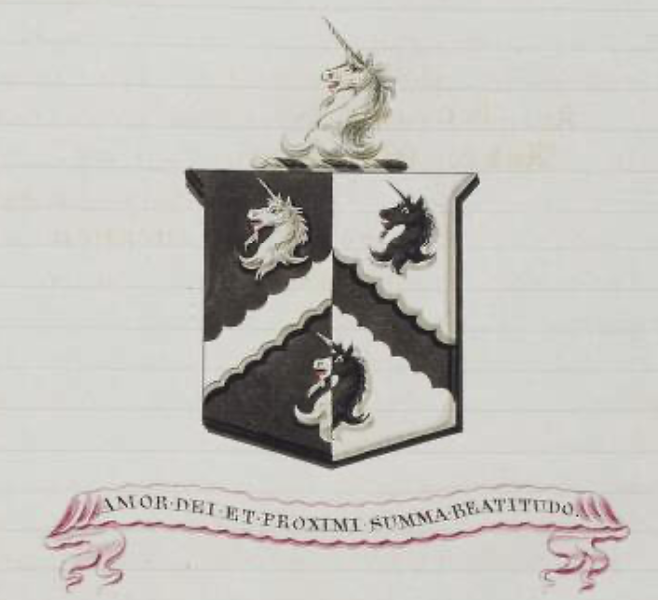
First published in April, 2012. Leslie arms courtesy of European Heraldry.

The Dixon Baronets

THE DIXON BARONETCY, OF BALLYMENOCK, WAS CREATED IN 1903 FOR DANIEL DIXON, LORD MAYOR OF BELFAST

THOMAS DIXON (1770-1849), of Bun-na-Mairge or Bonamargy, near Ballycastle, County Antrim, married, in 1804, Mary McNeill, and had an only son,

THOMAS DIXON (1805-68), of Larne, County Antrim, timber merchant and shipowner, who wedded, in 1834, Sarah, daughter of Daniel McCambridge, and had issue,
Francis McCambridge (c1836-66);
Thomas S;
DANIEL, of whom hereafter;
Alexander McCambridge;
Mary McNeill; Sarah.
Mr Dixon's third son,

THE RT HON DANIEL DIXON JP DL (1844-1907), Lord Mayor of Belfast, 1893, 1901-3, 1905-6, High Sheriff of County Antrim, 1896, MP for Belfast North, 1905-7, Privy Counsellor, espoused firstly, in 1867, Eliza, daughter of James Agnew, and had issue,
THOMAS JAMES, his heir.
He married secondly, in 1870, Annie, daughter of James Shaw, and had issue,
Daniel;
Frank;
HERBERT, 1ST BARON GLENTORAN;
Percy;
Evelyn Annie; Kate; Edith Sarah; Louise; Beatrice.
Photo Credit: Belfast Harbour Commissioners

Mr Dixon was created a baronet in 1903, designated of Ballymenock, County Antrim.

He was succeeded by his eldest son,

THE RT HON  SIR THOMAS JAMES DIXON (1868-1950), 2nd Baronet, JP, of Graymount and Drumadarragh, who wedded, in 1906, Edith Stewart, daughter of Stewart Clark, though the marriage was without issue.

Sir Thomas, High Sheriff of County Antrim, 1912, County Down, 1913, Lord-Lieutenant of Belfast, 1924-50, Privy Counsellor, was succeeded by his brother,

THE RT HON SIR HERBERT DIXON, 3rd Baronet (1880-1950), OBE PC, High Sheriff of County Kildare, 1916, who espoused, in 1905, Emily Ina Florence, daughter of John George Barry, 5th Baron Clanmorris, and had issue,
DANIEL STEWART THOMAS BINGHAM, his successor;
Daphne Maude; Anne Lavinia; Angela Ierne Evelyn; Patricia Clare.
Sir Herbert was elevated to the peerage, in 1939, in the dignity of BARON GLENTORAN, of Ballyalloly, County Down.

His lordship was succeeded by his only son,

DANIEL STEWART THOMAS BINGHAM (1912-95), 2nd Baron and 4th Baronet, KBE, who wedded, in 1933, the Lady Diana Mary Wellesley, daughter of Henry Arthur Mornington, 3rd Earl Cowley, and had issue,
THOMAS ROBIN VALERIAN, his successor;
Peter Herbert;
Clare Rosalind.
His lordship was succeeded by his elder son,

THOMAS ROBIN VALERIAN, 3rd Baron and 5th Baronet (1935-).

First published in August, 2010.

Tuesday, 23 September 2025

1st Duke of Bridgewater

DUKEDOM OF BRIDGEWATER
1720-1803

WILLIAM LE BELWARD, feudal lord of Malpas, who married Beatrix, daughter of Hugh de Kevelioc, 5th Earl of Chester (1147-81), left three sons,
David (surnamed LE CLERC, from being secretary to the Earl of Chester);
Robert;
Richard.
William Le Belward was succeeded by his eldest son,

DAVID LE CLERC, who, after the earldom of Chester was annexed to the Crown, was sheriff of that county, a Justice, and held three knights' fees therein.

This powerful baron wedded Margaret, daughter and heir of Ralph Ap Eynon, and granddaughter maternally of the aforesaid Hugh, Earl of Chester; and thus became possessed of the entire barony of Malpas, a moiety by descent, and a moiety in right of his wife.

Of this marriage there were four sons, the second of whom,

PHILIP, surnamed Gough (or the Red), having obtained the manor of Egerton Malpas from Wion de Egerton, and taking up his abode there, assumed, according to the custom of the age, the surname of EGERTON, and from him directly descended (the sixth or seventh in lineal succession),

PHILIP EGERTON, of Egerton, who espoused Margery, daughter of William Mainwaring; and dying in the thirteenth year of EDWARD IV's reign, left two sons,
John, his heir;
RALPH, of whom we treat.
The younger son,

SIR RALPH EGERTON, had a son,

RICHARD EGERTON, who left a natural son,

THOMAS EGERTON (1540-1617), a distinguished statesman, LORD CHANCELLOR OF ENGLAND, who was elevated to the peerage, 1603, in the dignity of Baron Ellesmere.

Thomas, 1st Viscount Brackley, Photo Credit: Bodeian Libraries

His lordship was advanced to a viscountcy, in 1616, as Viscount Brackley.

He wedded Elizabeth, daughter of Thomas Ravenscroft, had had issue,
Thomas (1577-99);
JOHN, his successor;
Mary.
The 1st Viscount married secondly, in 1596, Mrs Elizabeth Wolley; and thirdly, in 1600, Mrs Alice Stanley.

He was succeeded by his surviving son,

JOHN, 2nd Viscount, KB (1579-1649), who wedded, in 1602, the Lady Frances Stanley, daughter of the 5th Earl of Derby, and had issue,
James, died young;
Charles, died young;
JOHN, his successor;
Thomas;
Elizabeth; Mary; Frances; Alice; Arabella; Penelope; Catherine; Magdalen.
His lordship was created Earl of Bridgewater in 1617.

He was succeeded by his eldest surviving son,

JOHN, 2nd Earl (1623-86), who espoused, in 1641, the Lady Elizabeth Cavendish, second daughter of William, 1st Duke of Newcastle, and had issue,
JOHN, his successor;
William;
Thomas;
two other sons;
Charles;
Elizabeth; two other daughters.
His lordship was succeeded by his eldest son,

JOHN, 3rd Earl, KB (1646-1701), who wedded firstly, Elizabeth, only daughter and heir of James, 2nd Earl of Middlesex, and had issue, a son,
John (1688-70).
He wedded secondly, in 1673, the Lady Jane Paulet, daughter of Charles, 1st Duke of Bolton, and had issue,
Charles, died young;
Thomas, died young;
SCROOP, his successor;
William;
Henry;
John;
Charles;
Mary; Elizabeth.
His lordship was succeeded by his eldest surviving son,

SCROOP, 4th Earl (1681-1744), who married firstly, 1703, the Lady Elizabeth Churchill, third daughter and co-heir of John, 1st Duke of Marlborough, and had issue,
John (1703-18);
Anne.
His lordship espoused secondly, in 1722, the Lady Rachel Russell, eldest daughter of Wriothesley, 3rd Duke of Bedford, and had issue,
Charles (1725-31);
JOHN, 2nd Duke;
William;
Thomas;
FRANCIS, 3rd Duke;
Louisa; Caroline; Diana.
The 4th Earl was advanced, in 1720, to the the dignities of Marquess of Brackley and DUKE OF BRIDGEWATER.

His Grace was succeeded by his eldest surviving son,

JOHN, 2nd Duke (1727-48), who died unmarried, and was succeeded by his brother,

FRANCIS, 3rd Duke (1736-1803), who died a bachelor.

The marquessate of Brackley and the dukedom of Bridgewater expired and his other peerages passed to his cousin and heir male, John William Egerton, who succeeded as 7th Earl of Bridgewater.

Former seat ~ Ashridge House, Berkhamsted, Hertfordshire.
Former London residence ~ Bridgewater House.

First published in July, 2017.

Castle Dobbs

THE DOBBS' OWNED 5,060 ACRES OF LAND IN COUNTY ANTRIM

This family was established in Ulster by JOHN DOBBS, only son of Sir Richard Dobbs (a founder of Christ's Hospital and Lord Mayor of London, 1551), who accompanied Sir Henry Docwra to the Province in 1596, and was subsequently his deputy as treasurer for Ulster.

Richard Dobbs, Photo Credit: Christ's Hospital Foundation

This JohnDobbs married, in 1603, Margaret, only child of John Dalway, of Ballyhill, and had two sons, Foulk, who was lost at sea with his father in returning from England, 1622; and

HERCULES DOBBS (1613-34), who, succeeding to his father's property, wedded Magdalen West, of Ballydugan, County Down, and left an only son,


RICHARD DOBBS (1634-1701), of Castle Dobbs, High Sheriff of County Antrim, 1664, who espoused, in 1655, Dorothy, daughter and co-heir of Bryan Willans, of Clints Hall, Richmond, Yorkshire, and had issue (with three daughters), two sons.

Mr Dobbs left his estate to his younger son,

RICHARD DOBBS (1660-1711), of Castletown, who married firstly, Mary, daughter of Archibald Stewart, of Ballintoy, and had, with two daughters (Jane and Elizabeth), three sons,
ARTHUR, his heir;
Richard;
Marmaduke;
Clareville Grove.
He married secondly, Margaret Clugston, of Belfast, and by her had three daughters.
This gentleman served in WILLIAM III's army in Ireland until the 2nd siege of Limerick and the Treaty of Surrender.He was Mayor of Carrickfergus. 
On the 14th June, 1690, he welcomed William of Orange on his landing in Ulster as Mayor of Carrickfergus; High Sheriff of County Antrim, 1694.
 His eldest son and heir,

ARTHUR DOBBS (1689-1765), of Castle Dobbs, High Sheriff of County Antrim, 1720, MP for Carrickfergus, 1727-60.

Arthur Dobbs, 6th Governor of North Carolina

Mr Dobbs, who was appointed Engineer and Surveyor-General of Ireland, by Sir Robert Walpole, was, 1753, sent out as Governor of North Carolina, where he acquired large possessions, including 400,000 acres in the colony.
It is, perhaps, a matter of some curiosity that Arthur Dobbs was not elevated to the peerage or, indeed, the baronetage, for his services.
He wedded Anne, daughter and heir of Captain Osborne, of Timahoe, County Kildare, and widow of Captain Norbury, and had issue.

He was succeeded by his eldest son,

CONWAY RICHARD DOBBS (1727-1811), of Castle Dobbs, MP for Carrickfergus, 1768-90, who espoused firstly, Anne, daughter of Alexander Stewart, in 1749, and had issue,
RICHARD, his heir.
He married secondly, Charity, widow of Stephen Rice, of Mount Rice, County Kildare, and daughter of Robert Burrowes, of Kildare, by Mary, his wife, daughter of John O'Neill, of Shane's Castle, County Antrim, and had further issue,

Edward Brice, twice Mayor of Carrickfergus;
Robert Conway (Rev);
Frances.
Mr Dobbs, High Sheriff of County Antrim, 1752, was succeeded by his son,

RICHARD DOBBS (1753-1840), of Castle Dobbs, who married, in 1792, Nichola, daughter of Michael Obins, of Portadown, by Nichola his wife, second daughter of Archibald, 1st Viscount Gosford, and had issue,
CONWAY RICHARD, his heir;
Archibald Edward, father of ARCHIBALD EDWARD DOBBS;
Acheson;
Nichola; Frances; Olivia.
Mr Dobbs was succeeded by his eldest son,

CONWAY RICHARD DOBBS JP DL (1796-1886), of Castle Dobbs, High Sheriff of County Antrim, 1841, MP for Carrickfergus, 1832, who wedded, in 1826, Charlotte Maria, daughter and co-heiress of Richard Sinclair, of Fort William, County Antrim, and had issue,
Richard Archibald Conway (1842-53);
MONTAGU WILLIAM EDWARD, of whom presently;
Olivia Nichola; Frances Millicent; Charlotte Louisa Mary; Alicia Hester Caroline;
Harriet Sydney; Nichola Susan; Millicent Georgina Montagu.
He married secondly, in 1875, Winifred Susannah, youngest daughter of Benjamin Morris, of Lewes, Sussex.

Mr Dobbs was succeeded by his eldest surviving son,

MONTAGU WILLIAM EDWARD DOBBS JP DL (1844-1906), of Castle Dobbs, High Sheriff for County Kildare, 1871, County Antrim, 1888, a barrister, who was succeeded by his cousin,

ARCHIBALD EDWARD DOBBS JP (1838-1916), of Castle Dobbs, High Sheriff of County Antrim, 1909, a barrister, who wedded, in 1875, Edith Mary, second daughter of Sir James Timmins Chance Bt, and had issue,
ARTHUR FREDERICK, his heir;
Francis Wellesley;
Archibald Edward.
Mr Dobbs' eldest son,

ARTHUR FREDERICK DOBBS DL (1876-1955), of Castle Dobbs, High Sheriff of County Antrim, 1921, Member of the NI Senate, 1929-33 and 1937, married, in 1915, Hylda Louise, daughter of Captain Conway Richard Dobbs Higginson, and had issue,
RICHARD ARTHUR FREDERICK, his heir;
Joan Kathleen, b 1917.
Major  Dobbs was succeeded by his only son,

SIR RICHARD ARTHUR FREDERICK DOBBS KCVO JP (1919-2004), Judge of the Circuit Court, 1951-55, Lord-Lieutenant of County Antrim, 1959-94, who married, in 1953, Carola Day, daughter of Christopher Clarkson, and had issue,
Richard Francis Andrew Dobbs, b 1955; m the Lady Jane Alexander, sister of 7th Earl of Caledon, 1990; div. 1999; has issue, three daughters;
Nigel Christopher Dobbs, b 1957, High Sheriff of Co Antrim, 2009;
Matthew Frederick Dobbs b 1959;
Sophia Carola Dobbs b 1965;
Nicholas Arthur Montagu Dobbs b 1973.

CASTLE DOBBS, near Carrickfergus, County Antrim, remains the seat of the Dobbs family and is one of the most significant houses of its kind in Northern Ireland.
An 18th century mansion in the manner of Sir Edward Lovett Pearce, Castle Dobbs was built in 1730 by Arthur Dobbs, 
Surveyor-General of Ireland; Governor of North Carolina; agriculturalist; and organizer of expeditions to discover the North-West Passage from Hudson's Bay to the Pacific. As Surveyor-General, Arthur Dobbs supervised  the construction of the Irish Parliament House in Dublin. While a member of the Irish Parliament (for Carrickfergus), Dobbs purchased 400,000 acres of North Carolina in 1745.
An authority on country houses, Professor Rowan, has said that,
"For its date, 1750-54, it is quite without an equal in Ulster; while its perfect Palladian plan with flanking wings ... is hard to match in a house of this scale anywhere in Ireland."
Castle Dobbs House consists of two storeys over a high basement with a seven-bay front with a three-bay pedimented break-front centre.

There is an entablature over the lower storey and a high solid parapet to the roof.

Later, there were single-storey wings added over the basement with bracket cornices, extending the front by three bays on either side.

The garden front can be seen above; while the entrance front is below.

The demesne was established in the 16th century. The house stands in a commanding position overlooking Belfast Lough and the County Down shore across the lough.

There is remaining evidence of the formal gardens for the 17th century house, now in ruins adjacent to the later house.

The present layout is in relation to the 18th century house and takes the form of a landscape park, with a lake, bridge and cascade.

The whole demesne contains fine mature trees in shelter belts, parkland, woodland and avenues.

There are informal glen-side walks, with recent planting by the lake and ornamental areas near the house.

One walled garden is no longer cultivated but another, to the west of the house, is fully maintained and the potting sheds are still in use.

A remaining glasshouse backs onto these.

The design of this garden was created to commemorate the tercentenary of Arthur Dobbs' birth in 1689.

Arthur Dobbs was a plantsman and noted for recognition of Dionaea muscipula (Venus fly-trap) whilst governor of North Carolina.

The site has been in the continuous ownership of the Dobbs family and there is good documentary evidence as to its development.

There have been successful adaptations through the years to suit the style of the times.

Two late 19th century gate lodges remain, but two from earlier in the century have gone.

First published in March, 2010.

Monday, 22 September 2025

Slane Castle

THE MARQUESSES CONYNGHAM OWNED 7,060 ACRES OF LAND IN COUNTY MEATH

The family of CONYNGHAM was originally of Scottish descent, and of very great antiquity in that part of the Kingdom.

THE HON WILLIAM CUNNINGHAM, Bishop of Argyll in 1539, a younger son of William, 4th Earl of Glencairn, left a son,

WILLIAM CUNNINGHAM, of Cunninghamhead, Ayrshire, who had two sons, WILLIAM, who succeeded at Cuninghamhead, and was created a baronet; and

ALEXANDER CUNNINGHAM, who entered into Holy Orders, and removing into Ireland from Scotland, was appointed, in 1611, the first Protestant minister of Enver and Killymard, County Donegal.

Mr Cunningham was appointed to the deanery of Raphoe on the consecration of Dean Adair as Lord Bishop of Killaloe in 1630.

Dean Cunningham settled at Mount Charles, County Donegal, which estate he held by lease from the Earl of Annandale, and wedded Marion, daughter of John Murray, of Broughton, by whom he had twenty-seven children, of whom four sons and five daughters survived infancy.

He died in 1660, and was succeeded by his eldest surviving son,

SIR ALBERT CUNNINGHAM, or CONYNGHAM, Knight, who was appointed, in 1660, Lieutenant-General of the Ordnance in Ireland.

This officer fought on the side of WILLIAM III at the Boyne, Limerick etc, and fell in a rencounter with the Rapparees, near Colooney in County Sligo.

He espoused Mary, daughter of the Rt Rev Robert Leslie, Lord Bishop of Raphoe, and was succeeded by his only surviving son,

MAJOR-GENERAL HENRY CONYNGHAM, of Slane Castle, MP for Killybegs, 1692-3, Donegal County, 1695-99, 1703-06, who served during the reign of JAMES II as a captain in Mountjoy's Regiment.

When JAMES II desired his army to shift for itself, Conyngham prevailed upon 500 of his regiment to remain united, and with them offered his services to WILLIAM III.

He became subsequently a major-general, and fell, in 1706, at St Estevan, in Spain.

General Conyngham wedded Mary, daughter of Sir John Williams Bt, of Minster Court, Kent, and widow of Charles, Lord Shelburne, by whom he got a very considerable property, and had issue,
WILLIAM, his successor;
Henry;
Mary.
He was succeeded by his elder son,

WILLIAM CONYNGHAM, of Slane (an estate forfeited, in 1641, by Lord Slane), who was succeeded at his decease by his brother,

THE RT HON HENRY CONYNGHAM (1705-81), MP for Killybegs from 1727 until raised to the peerage, in 1753, in the dignity of Baron Conyngham, of Mount Charles.

Coat-of-arms of 1st Baron Conyngham

His lordship was advanced to a viscountcy, in 1756, as Viscount Conyngham; and further advanced, in 1781, to the dignity of an earldom, as Earl Conyngham, the barony to descend, in case of failure of issue, to Francis Pierpoint Burton, the eldest son of his sister Mary, by Francis Burton.

The 1st Earl married, in 1774, Ellen, only daughter and heir of Solomon Merret; but dying without an heir, in 1781, all his honours became extinct, except the barony of Conyngham, which devolved, according to the limitation, upon the above-mentioned

FRANCIS PIERPOINT BURTON (c1725-87), as 2nd Baron; who wedded, in 1750, Elizabeth, eldest daughter of the Rt Hon Nathaniel Clements, and sister of Robert, Earl of Leitrim, and had issue,
HENRY,  his successor;
Francis Nathaniel (Sir), GCH;
Catherine; Ellena; Henrietta.
His lordship, on inheriting the title and estates of his uncle, assumed the surname and arms of CONYNGHAM.

He was succeeded by his son,

HENRY, 3rd Baron (1766-1832), who, in 1787, was created Viscount Conyngham, of Slane, County Meath.

He was also created, in 1797, Viscount Mount Charles, of Mount Charles, County Donegal, and Earl Conyngham.

Lord Conyngham was appointed a Knight of St Patrick in 1801.

In 1803, he was appointed Governor of County Donegal, a post he held until 1831, and Custos Rotulorum of County Clare in 1808, which he remained until his death.

His lordship was created, in 1816, Viscount Slane and Earl of Mount Charles; and further advanced to the dignity of a marquessate, as MARQUESS CONYNGHAM.

In 1821, he was created Baron Minster, of Minster Abbey, Kent, sworn of the Privy Council, and appointed Lord Steward, a post he retained until 1830.

From 1829 until his death in 1832, the 1st Marquess served as Constable and Governor of Windsor Castle.

His lordship married, in 1794, Elizabeth, daughter of Joseph Denison, and had issue,
Henry Francis, Earl of Mount Charles (1795-1824);
FRANCIS NATHANIEL, of whom hereafter;
Albert Denison, created Baron Londesborough;
Elizabeth Henrietta; Maria Harriet.
His lordship was succeeded by his eldest surviving son,

FRANCIS NATHANIEL, 2nd Marquess (1797-1876), KP GCH PC, a General in the army, Vice-Admiral of Ulster, 1849-76, who wedded, in 1824, the Lady Jane Paget, daughter of Henry William, 1st Marquess of Anglesey, and had issue,
GEORGE HENRY, his successor;
Francis Nathaniel;
Cecilia Augusta; Jane; Frances Caroline Maria; Elizabeth Georgiana.
His lordship was succeeded by his eldest son,

GEORGE HENRY, 3rd Marquess (1825-82), a General in the army, Vice-Admiral of Ulster, who espoused, in 1854, the Lady Jane St Maur Blanche Stanhope, daughter of Charles, 4th Earl of Harrington, and had issue,
HENRY FRANCIS, his successor;
Charles Arthur;
Blanche; Constance Augusta; Jane Seymour; Elizabeth Maud; Florence.
His lordship was succeeded by his eldest son,

HENRY FRANCIS, 4th Marquess (1857-97), DL, who married, in 1882, Frances Elizabeth Sarah, daughter of Dayrolles Blakeney, 4th Baron Ventry, and had issue,
VICTOR GEORGE HENRY FRANCIS, his successor;
FREDERICK WILLIAM BURTON, succeeded his brother;
Blanche Frances; Mildred Martha; Hersey Constance Evelyn; Edina Dorothy Hope; Barbara Helen.
His lordship was succeeded by his eldest son,

VICTOR GEORGE HENRY FRANCIS, 5th Marquess (1883-1918), who died unmarried, when the family honours devolved upon his brother,

FREDERICK WILLIAM BURTON, 6th Marquess (1890-1974), who wedded firstly, in 1914, Bessie Alice, daughter of William Andrew Tobin; and secondly, in 1922, Antoinette Winifred, daughter of John William Howard Thompson, by whom he had issue,
FREDERICK WILLIAM HENRY FRANCIS, his successor;
John Victor Albert Blosse;
Antionette Frederika Hersey Cecilia.
His lordship was succeeded by his eldest son,

FREDERICK WILLIAM HENRY FRANCIS, 7th Marquess (1924-2009), of Ramsey, Isle of Man, Captain, Irish Guards, who espoused firstly, in 1950, Eileen Wren, daughter of Charles Wren Newsam, and had issue,
HENRY VIVIEN PIERPONT, his successor;
Simon Charles Eveleigh Wren;
Frederick William Patrick.
His lordship was succeeded by his eldest son,

HENRY VIVIEN PIERPONT, 8th Marquess (1951-2025), who wedded firstly, in 1971, Juliet Ann, daughter of Robert Richard Buller Kitson, and had issue,
ALEXANDER BURTON, his successor; styled Earl of Mount Charles;
Henrietta Tamara Juliet.
He married secondly, in 1985, the Lady Iona Charlotte Grimston, daughter of John, 6th Earl of Verulam, and had further issue,
Tamara Jane (b 1991).
The 8th Marquess's only son,

ALEXANDER BURTON CONYNGHAM, 9th Marquess (1975-), married Carina Suzanne, daughter of Nicholas George Bolton, and has issue,
Rory Nicholas Burton, styled Earl of Mount Charles;
Caspar;
Laragh.

SLANE CASTLE, Slane, County Meath, stands augustly above the River Boyne in County Meath.

During Victorian times Lord Conyngham owned about 7,060 acres in County Meath.

His lordship was, however, the greatest landowner in County Donegal, where he owned 122,230 acres.

It has been the principal seat of the Marquesses Conyngham since it was built in 1785 by Francis, 2nd Baron Conyngham, to the designs of Francis Johnston.

The Castle was completed by his son Henry, 3rd Baron and 1st Marquess Conyngham.

It is said that "Capability" Brown, James Gandon, Thomas Hopper and other architects were consulted at the time.


Slane Castle comprises three storeys over a basement, which serves as a lower ground floor at the river, where the ground falls away quite steeply.

There is a bow in the centre of the river front, elevated to form a massive round tower.


With the exception of this round tower and lesser square towers at each corner, the house is essentially a battlemented Georgian block.

The interior is Classical in style.

The hall boasts Tuscan columns; while the drawing-room has a frieze of late-Georgian plasterwork, terminating in a kind of apse.

The great circular library or ballroom encompasses two lower storeys of the round tower and is reputed to be the finest of its kind in Ireland, with its exquisite and delicate Gothic plasterwork.

The upper storey of the round tower is divided into three bedrooms.

The floor below, however, contains the two grandest bedrooms in the house, which were designed for King George IV and the Lord Lieutenant of Ireland.

His Majesty stayed at Slane as Prince of Wales and again as the Sovereign in 1821.

The 1st Marquess's wife was a favourite of the King; even the straight road from Dublin to Slane is said to have been specially made for him.


This approach affords elaborate Gothic entrance gates; though the entrance from the north, through the village, is particularly striking.

Conyngham arms courtesy of European Heraldry.

Lady Alice's Temple

LADY ALICE'S TEMPLE, Hillsborough Castle, County Down, stands most elegantly in the castle grounds.

This exquisite and delightful neo-classical temple was built about 1880.

It was said to be inspired by Sir John Vanbrugh’s creation of a temple garden at Castle Howard, Yorkshire, in the early 18th century.


Garden temples had become fashionable during this era.

The temple was built using masonry and cast-iron.

The copper-cladding is likely a replacement; the structure, however, seems to retain mainly original materials.


It affords a picturesque focal point at the end of the Yew Walk to the east, and the Lime Walk to the north.

Lady Alice's Temple replaced a summer-house which occupied the same site.

The Lady Alice Maria Hill (Countess of Bective) was the sister of the 5th Marquess of Downshire and Lord Arthur Hill, who lived at Hillsborough Castle in the last quarter of the 19th century during the 6th Marquess's minority.

Many garden temples were designed as seats to provide shade, shelter and a fine prospect of the grounds.

Moreover, Lady Alice’s Temple provides a focal point at the end of the striking Yew Walk, which approaches it.

First published in August, 2017.

Sunday, 21 September 2025

Old Belfast Castles

OLD CASTLES SURROUNDING BELFAST: FROM THE ULSTER JOURNAL OF ARCHÆOLOGY.


AN OLD CASTLE existed until lately on one of the Castlereagh hills (from which, indeed, those hills obtained their name), belonging to the celebrated Conn O'Neill; but it met with a truly Irish fate.

Not many years ago the occupying tenant of the land received orders from his landlord, Lord Downshire, to build a wall round the ruins, with the laudable intention of preserving them from further dilapidation.

The tenant, indeed, built a good and substantial wall, but unluckily he employed the materials of the old castle itself for the purpose!
The name Castlereagh, which far pre-dates the beginning of local government, is derived from the ‘Grey Castle’ of the O’Neills that once perched on the Castlereagh Hills. 
The castle is said to have been built in about 1350 by Aodh Flann O’Neill during the reign of EDWARD III.
The Grey Castle, once called the ‘Eagles Nest’ due to its situation and the powerful influence of Conn O’Neill, the last great chieftain of the Clandeboye O’Neills, was lost to the family in the early 17th Century. 
The Castle, town and lands of Castlereagh were sold to Sir Moyses Hill, the founder of the family of the Marquessses of Downshire, in 1616, along with most of Conn’s remaining lands.
The Castle fell into ruins after this, but survived until the early years of the 19th Century. 
It is said that the landowner directed his agent to build a wall around the site and the mason who was entrusted with the work demolished the remains of the castle in order to find sufficient stones to build the wall.
Nothing now remains of the castle, and it is impossible to identify the site even though it must have been a substantial building. 
It was said to have been a ‘square building, one hundred feet square each way and with turrets at the angles.’
ANOTHER CASTLE was at STRANMILLIS, on the River Lagan, which was the property of the Hill family, and of which some vestiges remained at the close of the last century, under the name of Sir Moyses Cellars.

The Stranmillis castle was designed to guard the ancient fording place on the River Lagan, close to the present King’s Bridge.

AT THE SPOT where Shaw's Bridge now crosses the Lagan, there was formerly a ford, protected by two high forts, one on each bank of the river.

There was afterwards a strong castle built there (it is believed by Sir Moyses Hill), near Malone House, which was called Castle Combe.

In 1610 it had been called Freerstone.

The principal part of the walls was removed when Shaw's Bridge was built. 

LISBURN CASTLE is too well known to need particular notice. 

Castle Robin

THERE STILL REMAINS the square tower or "keep" of CASTLE ROBIN, two miles north of Lisburn, which was built by Sir Robert Norton in the reign of ELIZABETH I, the same individual who built Castle Upton, Templepatrick.

The [aforementioned], with the two castles erected to defend the fords, are all of which we have any record on the south side of Belfast. 

ON THE NORTH there was a chain of FORTS, apparently for the purpose of keeping up a communication with Carrickfergus, as well as defending the Antrim side of the Lough; viz. Greencastle, where appears also to have been a fortified camp; Whitehouse, at the site of the present church, the remains of which are now converted into a stable.

It seems to have been merely a large square tower. An immense fire-place still remains.

ANOTHER CASTLE, of which the name is now lost, was about three miles further down along the shore: and there was lastly Carrickfergus Castle itself.

THE RUINS of a castle in Islandmagee, at the mouth of Belfast Lough, are still visible, and are known as Castle Chichester or, vulgarly, Castle Chester.

First published in July, 2012.