Wednesday, 28 January 2026

1st Baron Bloomfield

BENJAMIN BLOOMFIELD or BLUMFIELD (c1682-1737), of Eyre Court, County Galway, married Dorothy _________, and had issue,
John, his heir; ancestor of JOHN COLPOYS BLOOMFIELD;
Joseph, b 1710;
BENJAMIN, of whom hereafter;

Richard;
Dorothy; Anne.

Mr Bloomfield's third son,


BENJAMIN BLOOMFIELD, of Meelick, County Galway, was father of

JOHN BLOOMFIELD, of Newport, County Tipperary, who married Charlotte, daughter of Samuel Waller (by Anne, sister to LORD CHANCELLOR JOCELYN), and had issue,
BENJAMIN, his heir;
Anne, m Thomas Ryder Pepper;
Charlotte, m Very Rev T B Gough.
Mr Bloomfield was succeeded by his son,

THE RT HON SIR BENJAMIN BLOOMFIELD GCB GCH (1762-1846), who wedded, in 1797, Harriott, daughter of John Douglas, of Grantham, Lincolnshire, and had issue,
JOHN ARTHUR DOUGLAS, his successor;
Georgina Mary Amelia; Harriott Mary Anne.
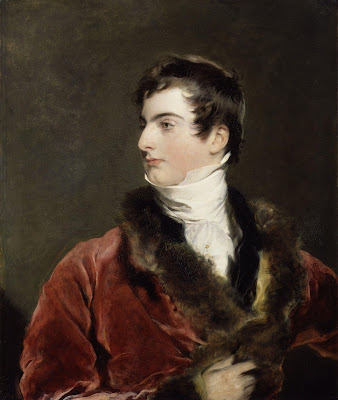
1st Baron Bloomfield (Wikipedia)

Sir Benjamin was elevated to the peerage, in 1825, in the dignity of BARON BLOOMFIELD, of Oakhampton and Redwood, County Tipperary.

His lordship was succeeded by his eldest son,

2nd Baron Bloomfield (National Portrait Gallery)

JOHN ARTHUR DOUGLAS (1802-79), 2nd Baron, GCB PC DL, who wedded, in 1845, Georgiana, daughter of Thomas, 1st Baron Ravensworth, in a childless marriage.

In 1871 his lordship was created BARON BLOOMFIELD of Ciamaltha, County Tipperary (second creation), on his retirement as British ambassador to Austria.


His lordship dsp in 1879, when the titles expired.


CASTLE CALDWELL passed to the Bloomfields through the marriage, in 1817, of Frances Arabella, daughter and co-heiress of Sir John Caldwell, 5th Baronet, of Castle Caldwell, to John Colpoys Bloomfield. High Sheriff of County Fermanagh, 1825.

Bloomfield arms' courtesy of European Heraldry and the NLI.  First published in January, 2012.

Belvedere House

THE EARLS OF BELVEDERE WERE MAJOR LANDOWNERS IN COUNTY WESTMEATH, WITH 9,059 ACRES

The ancient and noble family of ROCHFORT, in old deed and writings styled De Rupe Forti, is stated to have been established in Ireland since its first conquest by the English. Sir Richard de Rochfort was Lord of Crom and Adare, 1243.

Sir Maurice Rochfort was Lord Justice of Ireland, 1302. His son, Sir William, was father of Edmund Rochfort, whose son, Sir John, lord of Tristledelan, 1384, was father of John, who became settled at Kilbride, County Meath, in 1415, and was father of Thomas, whose son, Robert of Kilbride, 1464 and 1472, was father of Christopher of Kilbride, lord of Castledelan, who was succeeded by his son Robert, who was living at Kilbride in 1569.

This Robert Rochfort's second son, Walter, was seated at Brennanstown, and died in 1630.

Walter Rochfort's second son, James Rochfort, of Aughrim, County Wicklow, had a second son,

JAMES ROCHFORT, named Prime-iron, Lieutenant-Colonel in CROMWELL's army, youngest son of James Rochfort, of Agherry, County Wicklow (ninth in descent from Sir William Rochford, Lord of the Manor of Killadoon at the beginning of the 14th century), was executed, under a court-martial, for killing Major Turner in a duel in 1652.

By Thomasine his wife, daughter of Colonel Sir Robert Piggott, he left three daughters and two sons, of whom the youngest,

ROBERT ROCHFORT (1652-1727),  MP for Westmeath, 1692-1707, chosen Speaker of the Irish house of commons, 1695, Chief Baron of the Exchequer, 1707, wedded Hannah, daughter of William Handcock MP, of Twyford, County Westmeath, and left two sons, the elder of whom,

THE RT HON GEORGE ROCHFORT
, MP for Westmeath, 1707-13, Chief Chamberlain of the Court of Exchequer, wedded, in 1704, the Lady Elizabeth Moore, daughter of Henry, 3rd Earl of Drogheda, and had issue,
ROBERT, his heir;
Arthur, MP for Westmeath, 1738;
George;
John;
William;
Mary; Hannah; Elizabeth; Alice; Thomasina; Anne.
The eldest son,

ROBERT ROCHFORT (1708-74), MP for Westmeath, 1731, married, in 1736, Mary, eldest daughter of Richard, 3rd Viscount Molesworth, and had issue,
GEORGE, his heir;
Richard;
Robert, MP;
Jane.
Mr Rochfort was elevated to the peerage, in 1737, in the dignity of Baron Bellfield; and advanced to a viscountcy, in 1751, as Viscount Bellfield.

His lordship was further advanced to the dignity of an earldom, in 1756, as EARL OF BELVEDERE.

He was succeeded by his eldest son,

GEORGE, 2nd Earl (1738-1814), MP for Westmeath, 1761-8, who married firstly, in 1775, Dorothea, second daughter of John Bloomfield, of Redwood; and secondly, in 1803,  Jane, daughter of the Rev James Mackay.

The 2nd Earl died without issue, in 1814, when the titles became extinct.


BELVEDERE HOUSE, near Mullingar, County Westmeath, is an exquisite villa of about 1740, by Richard Castle, on the shores of Lough Ennell.

It was built for Robert Rochfort, 1st Earl of Belvedere, whose original seat was Gaulston, about five miles away.

The house comprises two storeys over a basement; a long frontage; and curved end bows.


The front has a three-bay recessed centre between projecting end bays.

Belvedere itself has only a few rooms, though they are well-proportioned, with rococo ceilings on the ground floor of exceptional quality, including cherubim gazing down from the clouds.


Belvedere House passed, by inheritance, to the Marlay family; thence to Lieutenant-Colonel Charles Howard-Bury DSO JP DL, leader of the 1921 Mount Everest expedition.

In the period following the 2nd World War, Colonel Howard-Bury restored the house and gardens.

He never married and, on his death in 1963, the estate was inherited by Rex Beaumont, who had been Howard-Bury's friend and companion for 30 years.

Mr Beaumont sold the estate to Westmeath County Council in 1982.

Following a multi-million pound restoration the house and gardens have been opened to visitors.

Belvedere also hosts weekend music festivals and intimate garden theatre performances.

First published in June, 2013.  

Tuesday, 27 January 2026

Woodbourne House

THE CHARLEYS OWNED 348 ACRES OF LAND IN COUNTY ANTRIM

The family of Charley, or Chorley, passing over from the north of England, settled in Ulster in the 17th century, firstly at Belfast, where they were owners of house property for two hundred years; and afterwards at Finaghy, County Antrim, where 

RALPH CHARLEY (1664-1746), of Finaghy House, had a son, 

JOHN CHARLEY (1712-93), of Finaghy, who left a son and successor, 

JOHN CHARLEY (1744-1812), of Finaghy House, who married, in 1783, Anne Jane, daughter of Richard Wolfenden, of Harmony Hill, County Down, and had issue, 
JOHN, of Finaghy House (1784-1844), died unmarried;
MATTHEW, of Finaghy House;
WILLIAM, of Seymour Hill
The third son,

WILLIAM CHARLEY, of Seymour Hill, Dunmurry, married, in 1817, Isabella, eldest daughter of William Hunter JP, of Dunmurry, and died in 1838, having had issue,
JOHN, of Seymour Hill;
WILLIAM, succeeded his brother;
Edward, of Conway House;
Mary; Anne Jane; Eliza; Isabella; Emily.
The eldest son,

JOHN CHARLEY, of Seymour Hill, died unmarried in 1843, aged 25, and was succeeded by his brother, 

WILLIAM CHARLEY JP DL (1826-1904), of Seymour Hill, who married, in 1856, Ellen Anna Matilda, daughter of Edward Johnson JP, of Ballymacash, near Lisburn, and granddaughter of Rev Philip Johnson JP DL, and had issue,
William, 1857-1904;
EDWARD JOHNSON, of Seymour Hill;
John George Stewart, 1863-86;
Thomas Henry FitzWilliam, 1866-85;
Arthur Frederick, of Mossvale, b 1870;
Harold Richard;
Ellen Frances Isabella; Elizabeth Mary Florence; Emily Constance Jane; Wilhelmina M Isabel.
The second son,

EDWARD JOHNSON CHARLEY (1859-1932), of Seymour Hill, was succeeded by his sixth son,

COLONEL HAROLD RICHARD CHARLEY CBE DL (1875-1956), of Seymour Hill, 1st Battalion, Royal Irish Rifles; fought in the Boer War and First World War, with the 2nd Battalion, Royal Irish Rifles, and was wounded and became a PoW.

In 1916 he started workshops for interned British servicemen at Murren. He was Officer-in-Charge for Technical Instruction for servicemen interned in Switzerland in 1917; Commissioner of British Red Cross Society, Switzerland, 1918; commander of the 1st Royal Ulster Rifles, 1919-23.

He was appointed CBE, 1920; City Commandant, Ulster Special Constabulary, 1924-52; originator of the British Legion Car Park Attendants scheme (adopted throughout Great Britain); Honorary Colonel, 1938, Antrim Coast Regiment (Territorial Army). 

His eldest son, 

COLONEL WILLIAM ROBERT (Robin) HUNTER CHARLEY OBE (1924-2019), married Catherine Janet, daughter of William Sinclair Kingan, in 1960.


In 1943 he was enlisted in the Royal Ulster Rifles; fought in 2nd World War, and the Korean War; Commanding Officer, OTC Queen's University, Belfast, 1965-68; Officer, Most Venerable Order of the Hospital of St. John of Jerusalem.

He retired from the army in 1971; was on Staff in 1972 at Northern Ireland Polytechnic; lived in 1976 at Seymour Lodge, Larch Hill, Craigavad, County Down.

Colonel Charley was appointed OBE (civil) in 1989, for services to The Forces Help Society and Lord Roberts' Workshops.


WOODBOURNE HOUSE, Dunmurry, came into the possession of the Charleys when it was given to Mrs Mary Anne Charley (1797-1866) by her father on her marriage, in 1819, to Matthew Charley.
 

When Matthew and Mary moved to Finaghy House in 1844, Woodbourne was taken over by their son John Stouppe Charley.

In 1851, he married Mary Stewart (1832-1915), a daughter of Francis Foster JP, of Roshin Lodge, County Donegal.

Woodbourne House was said to have been a happy home.

It was named after a wood on one side and a burn, the Lady's River, on the other.

There was also a walled garden; an apple orchard; large yards and stables; byres for cows; barns for grain; a pigeon loft, a greenhouse, a pheasantry and a carpenter's shop.

The house had a large entrance hall with folding doors across it to screen off the stairs and back passages.

The Charley coat-of-arms adorned the folding screen.

Woodbourne House was closely associated with local shoots and it later became a hotel before development swamped the area. 

Having suffered bomb damage in the 1970s, the site became a fortified police station.  

First published in March, 2011.

1st Earl of Gosford

THE EARLS OF GOSFORD WERE MAJOR LANDOWNERS IN COUNTY ARMAGH, WITH 12,177 ACRES

The founder of this noble family in Ulster,

ARCHIBALD ACHESON (1583-1634), descended from a good family in Scotland, was seated at Gosford, Haddingtonshire, previous to his settlement in the Province, where we find him in 1610.

Sir Archibald Acheson, 1st Baronet
(Image: Scottish National Portrait Gallery)

In the following year he had passed patent for a large proportion of land in County Armagh, and at the same time his younger brother, Henry, passed patent for a smaller proportion in the said county, which lands he afterwards assigned to Sir Archibald.

Mr Acheson returned to Scotland and there died unmarried.

He was "so steady and zealous a friend" of the protestant interest in Ulster that seven years after he obtained this grant (according to the survey made by Nicholas Pynnar) he had 203 men upon his estate capable of bearing arms.

In 1612, he obtained another grant from JAMES I of a small proportion of land in County Cavan containing 1,000 acres.

Mr Acheson was created a baronet of Nova Scotia in 1628, designated of Market Hill, County Armagh.

In 1630 Sir Archibald obtained, in conjunction with Pierce and Walter Crosbie, a tract of land in Nova Scotia, Canada, called Bonavia.

He was also Solicitor-General, a Senator of Justice, and many years Secretary of State for Scotland, which latter office he continued to fill until his decease in 1634.

He died at Letterkenny, County Donegal, at his nephew's house, Sir William Semple, Knight.

Sir Archibald was succeeded in the title and estates by his eldest son,

SIR PATRICK ACHESON, 2nd Baronet (c1611-38), at whose decease, without issue, the title devolved upon his half-brother,

SIR GEORGE ACHESON, 3rd Baronet (1629-85), High Sheriff of County Armagh, 1655-6, who was succeeded by his only son,

SIR NICHOLAS ACHESON, 4th Baronet (c1655-1701), MP for County Armagh, 1695-9, High Sheriff of County Armagh, 1695, who wedded, in 1676, Anne Taylor, and had issue,
ARTHUR, his successor;
Alexander;
Nichola Anne.
Sir Nicholas was succeeded by his eldest son,

SIR ARTHUR ACHESON, 5th Baronet (1688-1749),  High Sheriff of County Armagh, 1728, MP for Mullingar, 1727-48, who wedded, in 1715, Anne, daughter of the Rt Hon Philip Savage, Chancellor of the Exchequer in Ireland, and had issue,
Nicholas;
Philip;
ARCHIBALD, his successor;
Nichola; Anne.
Sir Arthur was succeeded by his eldest surviving son,

SIR ARCHIBALD ACHESON, 6th Baronet (1718-90), High Sheriff of County Armagh, 1751, who was elevated to the peerage, in 1776, in the dignity of Baron Gosford, of Market Hill, County Armagh; and advanced to a viscountcy, 1785, as Viscount Gosford.

His lordship married, in 1740, Mary, youngest daughter of John Richardson, of RICHHILL CASTLE, County Armagh, and had issue,
ARTHUR, his successor;
Anna Maria; Nicolas; Julia Henrietta;
Lucinda; Mary.
Sir Archibald was succeeded by his eldest son,

ARTHUR, 2nd Viscount (c1745-1807), who was advanced to the dignity of an earldom, in 1806, as EARL OF GOSFORD.

Arthur, 1st Earl of Gosford (Image: The National Trust, Florence Court)

His lordship espoused, in 1774, Millicent, daughter of Lieutenant-General Edward Pole, and had issue,
ARCHIBALD, his successor;
Edward, CB, lieutenant-colonel in the army;
Olivia, m Brigadier R B Sparrow, of Brampton Park;
Mary, m Lieutenant-General Lord William Bentinck GCB;
Millicent, m Rev J H Barber MA.
 His lordship was succeeded by his only son,

ARCHIBALD, 2nd Earl (1776-1849), GCB, PC, Governor of Canada, MP for County Armagh, 1797-1807, Lord-Lieutenant of County Armagh, 1831-49, who married, in 1805, Mary, only daughter of Robert Sparrow, of Worlingham Hall, Suffolk, and had issue,
ARCHIBALD, his successor;
Mary; Millicent French.
His lordship was succeeded by his son,

ARCHIBALD, 3rd Earl (1806-64), KP, MP for County Armagh, 1830-47, Lord-Lieutenant of County Armagh, 1864, who wedded, in 1832, the Lady Theodosia Brabazon, only daughter of John, 10th Earl of Meath, of KILRUDDERY HOUSE, and had issue,
ARCHIBALD BRABAZON SPARROW, his successor;
Edward Archibald Brabazon, Major-General in the army);
Mary; Gertrude Emily; Ruthanne; Edith; Katherine French.
His lordship was succeeded by his eldest son,

ARCHIBALD BRABAZON SPARROW, 4th Earl (1841-1922), KP, Lord-Lieutenant of County Armagh, 1882, who wedded, in 1876, the Lady Louisa Augusta Beatrice Montagu, second daughter of William, 7th Duke of Manchester, KP, of TANDRAGEE CASTLE, County Armagh, and had issue,
ARCHIBALD CHARLES MONTAGU BRABAZON, his successor;
Patrick George Edward Cavendish;
Alexandra Louise Elizabeth; Mary; Theodosia Louisa Augusta.
His lordship was succeeded by his eldest son,

ARCHIBALD CHARLES MONTAGU BRABAZON, 5th Earl (1877-1954), MC, DL, who espoused firstly, in 1910, Caroline Mildred, daughter of John Ridgely Carter, and had issue,
ARCHIBALD ALEXANDER JOHN STANLEY, his successor;
Patrick Bernard Victor Montagu;
Patricia; Camilla Mildred Nicola; Mary Virginia Shirley.
He married secondly, in 1928, Beatrice, daughter of Arthur Clafin.

His lordship was succeeded by his elder son,

ARCHIBALD ALEXANDER JOHN STANLEY, 6th Earl (1911-66), who married firstly, in 1935, Francesca Augusta Maria, daughter of Francesco Cagiati, and had issue,
CHARLES DAVID ALEXANDER JOHN SPARROW, his successor;
Francesca Georgina Caroline; Isabella Augusta.
He wedded secondly, in 1960, Cynthia Margaret, daughter of Henry Cave West.
His lordship was succeeded by his son,

CHARLES DAVID ALEXANDER JOHN SPARROW, 7th and present Earl (1942-), who married, in 1983, Lynette Redmond.

The heir presumptive is the present holder's first cousin, Nicholas Hope Carter Acheson (b 1947), eldest son of the Hon Patrick Bernard Victor Montagu Acheson (1915–2005), second son of the 5th Earl.

The Earls of Gosford owned 6,417 acres of land in County Cavan.


GOSFORD FOREST PARK, near Markethill, County Armagh, is one of the most beautiful demesnes in Northern Ireland.

There are woodland and forest walks; the walled garden; and a caravan and camping site within the park.


Gosford Castle is one of the largest houses in Northern Ireland.

The estate was sold to the NI Government shortly after the 2nd world war. 

The mansion was restored between 2006-8 and has been divided into a number of apartments.

The Gosford Papers are deposited at PRONI.

Former town house ~ 105, Harley Street.

First published November, 2009. 

Monday, 26 January 2026

Curraghmore

THE MARQUESSES OF WATERFORD WERE THE GREATEST LANDOWNERS IN COUNTY WATERFORD, WITH 39,883 ACRES 

Lineage of Le Poer

The ancient and noble family of DE POWER, or LE POER, was established in Ireland by ROBERT DE POHER, Knight Marshal, and Joint Governor of Ireland with Hugh de Lacy, 1179.

He obtained a grant of that portion of the present county of Waterford, extending from the River Suir to the sea, excepting the cantred of the Danes, and the city of Waterford. From him descended the BARONS OF DONISLE, the POWERS of Iverk, and the POWERS of Curraghmore.

The representative of the last-mentioned house,

RICHARD POER, Lord of Curraghmore, living 1452-76, was Sheriff for County Waterford. 

He married Catherine, daughter of Sir Richard Butler, Knight, of Polestown, second son of 3rd Earl of Ormonde, and died in 1483, having had issue,
PIERS, his heir;
Richard, of Feddans;
Edmond (Sir).
The eldest son,

PIERS POER, Lord of Curraghmore, Sheriff of County Waterford, wedded a daughter of Gerald FitzGerald, Lord of the Decies, and had issue,
RICHARD, his heir;
Piers;
Nicholas;
William;
Katherine.
The eldest son,

SIR RICHARD POWER, Lord of Curraghmore, Sheriff of County Waterford, was created by patent, 1535, LORD LE POWER and Coraghmore (Curraghmore).

He espoused the Lady Katherine Butler, second daughter of Piers, Earl of Ormonde and Ossory, and by her had, with other issue,
PIERS, his successor;
JOHN, heir to his brother;
Katherine; Elice.
He was slain in battle by Owen O'Callaghan, 1539, and was succeeded by his son,

PIERS, 2nd LORD POWER AND CURRAGHMORE, who served at the siege of Boulogne, and died there unmarried, of wounds, 1545, and was succeeded by his brother,

SIR JOHN, 3rd Lord, born in 1516, who married firstly, the Lady Eleanor FitzGerald, third daughter of 14th Earl of Desmond, by whom he had six sons and two daughters, of whom,
RICHARD, his successor;
Piers;
Katherine; Margaret.
His lordship wedded secondly, Ellen, widow of 3rd Viscount Buttevant.

He died in 1592, when he was succeeded by his son,

RICHARD, 4th Lord, who married Katherine, only daughter and heiress of James, Viscount of Buttevant, and had issue,
JOHN "Oge," killed by the White Knight;
Piers;
Julia; Elizabeth; Eleanor.
His lordship died in 1607, and was succeeded by his grandson,

JOHN, 5th Lord, who wedded Ruth, daughter and heiress of Robert Phypoe, of St Mary's Abbey, Dublin, and had, with other issue,
RICHARD, his successor;
Piers;
Katherine.
His lordship died in 1661-2, and was succeeded by his son,

RICHARD, 1ST EARL OF TYRONE (1630-90), created Viscount Decies and Earl of Tyrone, 1672; who espoused, in 1654, the Lady Dorothy Annesley, daughter of 1st Earl of Anglesey, and had issue,
JOHN, his successor;
JAMES, 3rd Earl.
His lordship died a Jacobite prisoner in the Tower of London, 1690, and was succeeded by his elder surviving son,

JOHN, 2nd Earl, who died unmarried, 1693, and was succeeded by his brother,

JAMES, 3rd Earl (1667-1704), who wedded, in 1692, Anne, eldest daughter and co-heir of Andrew Rickard, of Dangan Spidoge, County Kilkenny, and left an only daughter and heiress,

THE LADY CATHARINE POWER, who espoused, in 1717, SIR MARCUS BERESFORD, created Earl of Tyrone, 1746, by whom she had, with other issue, a son,

GEORGE DE LA POER BERESFORD, 1ST MARQUESS OF WATERFORD, so created, 1789.

Her ladyship was allowed the Barony of LA POER in fee by resolution of the Irish House of Lords, 1767, confirmed by THE KING, 19th December following.

His lordship died in 1704, when the Viscountcy and Earldom became extinct, while the Barony, created in 1535,  would, but for the attainders against him, have been held by

JOHN POWER, 9TH LORD POWER AND CURRAGHMORE.


Lineage of Beresford

The surname of BERESFORD was assumed from Beresford, in the parish of Alstonefield, Staffordshire, of which manor JOHN DE BERESFORD  was possessed in 1087, during the reign of WILLIAM II, and was succeeded therein by his son, HUGH DE BERESFORD, from whom lineally descended

JOHN BERESFORD, Lord of Beresford and Enson, who married Elizabeth, daughter of William Basset, of Blore, Staffordshire, and had, with other issue,
JOHN, his heir;
THOMAS, of whom hereafter.
Mr Beresford died in 1475, and was succeeded at Beresford by his eldest son; while the second,

THOMAS BERESFORD, seated himself at Newton Grange, Derbyshire, where he was resident in the reigns of HENRY VI and EDWARD IV; the former of whom he served in his French wars, and according to tradition, mustered a troop of horse at Chesterfield, consisting alone of his sons, and his own and their attendants.

Mr Beresford wedded Agnes, daughter and heiress of Robert Hassal, of Arclid, Cheshire, by whom he had sixteen sons and five daughters, and was succeeded by his eldest son, Aden; but we pass to the seventh,

HUMPHREY BERESFORD, who eventually became of Newton Grange.

This gentleman espoused Margery, daughter of Edmond Berdesey, or Beresley,  and was succeeded by his second son (the eldest having left a daughter only at his decease),

GEORGE BERESFORD, whose eldest son,

MICHAEL BERESFORD, was an officer in the Court of Wards, and was seated at Oxford, and The Squerries, in Kent.

Mr Beresford, who was living in 1574, married Rose, daughter of John Knevitt, and had seven sons and four daughters; of whom

TRISTRAM BERESFORD (c1574-1666), the third son,
Going into Ulster in the reign of JAMES I, as manager of the Corporation of London, known by the name of the Society of the New Plantation in Ulster, settled at Coleraine, County Londonderry, and was succeeded by his elder son,
SIR TRISTRAM BERESFORD (1595-1673), who was created a baronet in 1665, designated of Coleraine, County Londonderry.

He married firstly, Anne, eldest daughter of John Rowley, of Castleroe, County Londonderry, by whom he had one son, RANDAL, his heir, and two daughters; and secondly, Sarah Sackville, and had three sons and three daughters, viz.
Tristram;
Michael;
Sackville;
Susanna; Sarah; Anne.
Sir Tristram was succeeded by his eldest son,

SIR RANDAL BERESFORD, 2nd Baronet (c1636-81), MP for Coleraine, 1661-68, who married Catherine, younger daughter of Francis, Viscount Valentia, and niece, maternally, of Philip, 1st Earl of Chesterfield; and dying in 1681, left issue,
TRISTRAM, his heir;
Jane; Catherine.
Sir Randal was succeeded by his eldest surviving son,

SIR TRISTRAM BERESFORD3rd Baronet (1669-1701), MP for Londonderry County, 1692-99, who commanded a foot regiment against JAMES II, and was attainted by the parliament of that monarch.

Sir Tristram wedded, in 1687, Nichola Sophia, youngest daughter and co-heiress of  Hugh Hamilton, 1st Viscount Glenawly, and had issue,
MARCUS, his heir;
Susanna Catherina; Arabella Maria; Jane; Aramintha.
He was succeeded by his son,

SIR MARCUS BERESFORD, 4th Baronet (1694-1763), MP for Coleraine, 1715-20, who espoused, in 1717, Catherine, BARONESS LE POER, daughter and heiress of James, 3rd Earl of Tyrone, and in consequence of that alliance, was elevated to the peerage, in 1720, in the dignity of Baron Beresford and Viscount Tyrone.

His lordship was further advanced to an earldom, in 1746, as EARL OF TYRONE.

He had surviving issue,
GEORGE DE LA POER, his successor;
John;
William (Most Rev), created BARON DECIES;
Anne; Jane; Catherine; Aramintha; Frances Maria; Elizabeth.
His lordship was succeeded by his eldest son,

GEORGE, 2nd Earl (1735-1800), KP, who married, in 1769, Elizabeth, only daughter and heiress of Henry Monck, of Charleville, and the Lady Isabella Bentinck, daughter of Henry, 1st Duke of Portland, and had issue,
GEORGE DE LA POER, his successor;
John George (Most Rev), Lord Archbishop of Armagh;
George Thomas (Rt Hon), Lt-Gen, GCH;
Isabella Anne; Catherine; Anne; Elizabeth Louisa.
He inherited the ancient Barony of de la Poer at the decease of his mother in 1769.

George, 1st Marquess of Waterford KP

His lordship was enrolled amongst the peers of Great Britain, in 1786, as Baron Tyrone; and created, in 1789, MARQUESS OF WATERFORD.

He was succeeded by his eldest son,

HENRY, 2nd Marquess (1772-1826), who wedded, in 1805, Susanna, only daughter and heiress of George, 2nd Earl of Tyrconnell, and had issue,
HENRY, his successor;
William;
John;
James;
Sarah Elizabeth.
His lordship, who was a Knight of St Patrick, a Privy Counsellor in Ireland, Governor of County Waterford, and Colonel of the Waterford Militia, was succeeded by his eldest son,

HENRY, 3rd Marquess (1811-59), KP, who espoused, in 1842, Louisa, daughter of Charles, 1st Baron Stuart de Rothesay; the marriage, however, was without issue, and the titles devolved upon his brother,

THE REV JOHN, 4th Marquess (1814-66), Incumbent of Mullaghbrack, County Armagh, who wedded, in 1843, Christiana, daughter of Colonel Charles P Leslie, and had issue,
JOHN HENRY, his successor;
Charles William, created BARON BERESFORD;
William Leslie;
Marcus Talbot;
Delaval James.
His lordship was succeeded by his eldest son,

JOHN HENRY, 5th Marquess (1844-95), KP, PC, DL, 
The heir apparent is the present holder's son, Richard John de la Poer Beresford, styled Earl of Tyrone, a polo professional who is known as Richard Le Poer.
*****

The Waterfords were a Patrick family, four members of whom were Knights of the Most Illustrious Order of St Patrick.


CURRAGHMORE, near Portlaw, County Waterford, is the ancestral seat of the 9th and present Marquess of Waterford.

Some 2,500 acres of formal gardens, woodland and grazing fields make this one of the largest private demesnes in Ireland and one of the finest places to visit.

A Sitka Spruce planted on the estate in the 1830s is among the tallest tree in Ireland and stands guard over King John's Bridge.

Built in 1205, this stone-arched structure, spanning the Clodagh River, is the oldest bridge in Ireland.

Twelve miles of famine relief boundary wall and four sturdy wrought iron gates surround the estate.

Gnarled pink chestnut trees line the approach to the big house and original castle tower.

St Hubert's stag with crucifix between its antlers - genuine horns on the de la Poer family emblem - gazes across the large Courtyard from atop the old castle.

Today, the formal gardens surrounding Curraghmore House are open for the public to visit on Thursday afternoons from 2pm to 5pm between Easter and mid-October.

Group tours of the main reception rooms of Curraghmore House can be arranged by prior appointment.


This tour takes in some of the finest Neo-Classical rooms in Ireland which feature the magnificent plaster work of James Wyatt and grisaille panels by Peter de Gree.

Curraghmore, near Portlaw, meaning great bog, is the last of four castles built by the de la Poer family after their arrival in Ireland in 1167.

The Castle walls are about 12 feet thick and within one, a tight spiral stairway connects the lower ground floor with the roof above.


Of the many curious and interesting features of Curraghmore, the most striking is the courtyard front of the house, where the original castle is encased in a spectacular Victorian mansion with flanking Georgian ranges.

The combination of architectural features from several periods around the ancient core of the original castle produces a most striking composition; "immediately recognizable and undeniably moving", as it was described by Country Life magazine.

In more than 800 years the property has passed through the female line only once, and that was prior to Catherine de la Poer marrying Sir Marcus Beresford Bt in 1715, when she was a mere teenager.

Together with her husband, it was she who carried out much of the remodelling of the house and grounds and it was Catherine, Lady Beresford, who created the unique Shell-house herself.

The quality of the craftsmanship employed on the developments on Curraghmore through the ages, has secured the House's reputation as one of the most important country houses in Ireland.

In the late 18th century, the 2nd Earl, afterwards 1st Marquess of Waterford, secured the famous architect James Wyatt to design the next phase of modernisation of Curraghmore.

Here he created a series of rooms, with decoration considered by many to be among his most successful.

After Wyatt's Georgian developments, work at Curraghmore in the 19th century concentrated on the gardens and the Victorian refacing to the front of the house.

Formal parterre, tiered lawns, lake, arboretum and kitchen gardens were all developed during this time and survive to today.

At this time some of Ireland's most remarkable surviving trees were planted in the estate's arboretum.

Today these trees frame miles of beautiful river walks.

Developments in the gardens are still under-way and a Japanese garden has been laid out by the present Lady Waterford.

The present day Beresfords are country people by tradition.

Farming, hunting, breeding hounds and horses and an active social calendar continues as it did centuries ago.

Weekly game-shooting parties are held every season (November through to January); and in spring, calves, foals and lambs can be seen in abundance on Curraghmore's verdant fields.

Polo is still played on the estate in summer.

Throughout Ireland's turbulent history, this family have never been 'absentee landlords' and they still provide diverse employment for a number of local people.

Change comes slowly to Curraghmore - table linen, cutlery and dishes from the early 19th century are still in use.

Other former seat ~ Ford Castle, Northumberland.

I am grateful to Lord Waterford for the information provided from Curraghmore's website.

First published in July, 2011. 

Cooney's Court, Belfast

Cooney's Court, 1880, by George Trobridge (image: NMNI)

COONEY'S COURT was a large courtyard at 13, Ann Street, Marcus Patton, OBE, recounts in his guide, Central Belfast: A Historical Gazetteer.

It was beside the extant Freemasons' Hall at Arthur Square.

Cooney's Court, 1894, looking towards the entrance in Ann Street (Welch Collection/NMNI)

Belfast's first linen hall was established here by the 4th Earl of Donegall, and operated from 1739 until 1754; it was auctioned off in 1756.

Artillery Barracks, 1894 (Welch Collection/NMNI)

It subsequently became artillery barracks and a gaol: Henry Joy McCracken was incarcerated here till his execution in 1798.

Belfast's second bank was established at Cooney's Court in 1787, the partners being Messrs. John Ewing, John Holmes, John Brown, and John Hamilton.

It was commonly known as "the Bank of the Four Johns."

Cooney's Court at Ann Street, by Sinclair Ramsay ca 1889 (Image: NMNI)

In the late 18th century its tenements were acquired and sub-let by one Courteney Cooney.

Entrance to Cooney's Court in Ann Street, 1894 (Welch Collection/NMNI)

Part of the Court still existed in the early 20th century, having been cleared in 1894, and was redeveloped as Francis Curley's Whitehall Buildings ca 1900.

It subsequently became the location of a Littlewoods store. 

Sunday, 25 January 2026

Old Court Chapel

Photo Credit: Colin Boyle

BALLYCULTER, a parish in the barony of LECALE, County Down, is situated on Strangford Lough.

It is a rectory in the diocese of Down and Dromore.

There is a little chapel standing within the grounds of OLD COURT, the seat of LORD DE ROS, of which the Rector is chaplain.

This chapel of ease was built in 1629 by Valentine Payne (or Paine), agent to the 16th Earl of Kildare.

The chapel and adjacent stables can now be hired for wedding receptions and functions.

Seemingly it has been considerably altered down the years, as successive Barons de Ros have deemed it their duty to "make their mark".

It is thought that this little chapel, which can accommodate 110 worshippers, has remained open for worship during its 380-year history.

Photo Credit: Colin Boyle

In the 1830s, and since the chapel was outside the jurisdiction of the Lord Bishop of Down, the chaplain received a salary of £20 per annum (ca £2,400 today) from Lord de Ros.

The clerk received five pounds annually.

There was an attendance of one hundred worshippers, the congregation being separate from Ballyculter Parish Church.

The bell's whereabouts remain unknown to this very day, though it may have been destroyed when the original Old Court House was burnt in 1922.

Photo Credit: Colin Boyle

There was a period when the little chapel was attended by all denominations, since it was the only place of worship in the vicinity, Ballyculter and Kilclief both being ruinous.


THE PRESENT Old Court chapel is believed to have been constructed around a considerably smaller plainer structure, built in 1629 by Valentine Payne, the agent of George, 16th Earl of Kildare, the then owner of Strangford.

Little is known about the early history of the building, the next notable date being 1740-44, when Walter Harris remarked that it was "repaired and beautified" by Robert, the 19th Earl; and in 1814, when Lord Henry FitzGerald was said to have repaired the roof and paving.

The chapel is shown as a small rectangular structure on a map of 1833-34 and described as "a very small church of the plainest construction" with a congregation of "generally 100".

The memoir also describes a church bell which was inscribed
Valentine Payne Esquire, who hath to wife Elizabeth L.F. [shape of the cross], who builded this chapel and gave this bell in anno domini 1629.
Underneath there is a drawing representing a coat of arms, viz. three scallop shells, three crosses, and a half-moon; three beasts and three birds below; a kind of cup with a half-moon therein.

In 1835, the chapel was repaired throughout by Henry, 22nd Baron de Ros.

His successor William, 23rd Baron, appears to have taken considerable interest in the building.

Repairs to the walls and roof were undertaken in 1840; general repairs to the roof and interior in 1847; raising the walls; replacing the roof; adding the tower and chimney in 1848; and replacing the pews in 1849.

In 1855, Lord de Ros altered the pulpit, adding the chancel; and the west window was enlarged in 1857.

The 23rd Baron's final significant alterations were executed in 1866, when a cornice and bracket were added to the chancel and further work carried out to the tower.

In 1874, the present reading desk and lectern were installed and the transept was built.

New seating was installed in 1882; the east window enlarged in 1891; the pulpit removed and choir seats added in 1894.

In 1908, the chapel took on the its current form when the north aisle was constructed, the interior lined with dressed stone and stained glass added to the transept and east windows.

All of these new alterations were dedicated in 1909 by the Lord Bishop of Down, Connor and Dromore, the Rt Rev John Crozier.

Apart from the addition of some memorial panels, no major changes have taken place since then.

However, in 1940 many of the older headstones within the surrounding graveyard were placed against the boundary wall.

The graveyard, which lies to the south side of the church, is rarely used now and in 1940 almost all the stones were arranged round the sides.

These gravestones have been numbered consecutively, clockwise, from the east end of the church.

There are six stones still left in the body of the graveyard and one standing alone on the north of the church (de Ros).

All the gravestones have been copied, including three built into the west end of the church.

Modern memorial tablets in the church have not been copied.

The oldest stone dates from 1714 and almost all are in good condition.

Old Court Chapel features in Death In Holy Orders in the 2024 detective series, Dalgliesh, starring Bertie Carvel.

First published in December, 2012.