Showing posts with label Charley Family. Show all posts

Sunday, 15 February 2026

Huntley House

THE CHARLEYS OWNED 348 ACRES OF LAND IN COUNTY ANTRIM

The family of Charley, or Chorley, passing over from the north of England, settled in Ulster in the 17th century, firstly at Belfast, where they were owners of house property for two hundred years; and afterwards at Finaghy, County Antrim, where  

RALPH CHARLEY (1664-1746), of Finaghy House, was father of

JOHN CHARLEY (1712-93), of Finaghy, who left a son and successor,

JOHN CHARLEY (1744-1812), of Finaghy House, who married, in 1783, Anne Jane, daughter of Richard Wolfenden, of Harmony Hill, County Down, and had issue,

JOHN, of Finaghy House 1784-1844, died unm;
MATTHEW, of Woodbourne; father of SIR WILLIAM T CHARLEY QC MP;
WILLIAM, of Seymour Hill.
The third son,

WILLIAM CHARLEY, of Seymour Hill, Dunmurry, married, in 1817, Isabella, eldest daughter of William Hunter JP, of Dunmurry, and had issue,
JOHN, of Seymour Hill;
WILLIAM, succeeded his brother;
Edward, of Conway House;
Mary; Anne Jane; Eliza; Isabella; Emily.
Mr Charley died in 1838, and was succeeded by his eldest son,

JOHN CHARLEY, of Seymour Hill, who died unmarried, in 1843, aged 25, and was succeeded by his brother, 

WILLIAM CHARLEY JP DL (1826-90), of Seymour Hill, who married, in 1856, Ellen Anna Matilda, daughter of Edward Johnson JP, of Ballymacash, near Lisburn, and granddaughter of Rev Philip Johnson JP DL, and had issue,

William, 1857-1904;
EDWARD JOHNSON, of Seymour Hill;
John George Stewart, 1863-86;
Thomas Henry FitzWilliam, 1866-85;
Arthur Frederick, of Mossvale, b 1870;
Harold Richard;
Ellen Frances Isabella; Elizabeth Mary Florence;
Emily Constance Jane; Wilhelmina Maud Isabel.
The second son,

EDWARD JOHNSON CHARLEY (1859-1932), of Seymour Hill, was succeeded by his sixth son, 

HAROLD RICHARD CHARLEY CBE DL (1875-1956), of Seymour Hill, Colonel, 1st Battalion, Royal Irish Rifles; fought in the Boer War and First World War, with the 2nd Battalion, Royal Irish Rifles, and was wounded and became a PoW. 

In 1916 he started workshops for interned British servicemen at Murren. He was Officer-in-Charge for Technical Instruction for servicemen interned in Switzerland in 1917; Commissioner of British Red Cross Society, Switzerland, 1918; commander of the 1st Royal Ulster Rifles, 1919-23.

Appointed CBE, 1920; City Commandant, Ulster Special Constabulary, 1924-52; originator of the British Legion Car Park Attendants scheme (adopted throughout Great Britain); Honorary Colonel, 1938, Antrim Coast Regiment (Territorial Army).
His eldest son, 

COLONEL WILLIAM ROBERT (Robin) HUNTER CHARLEY OBE JP DL (1924-2019), married Catherine Janet, daughter of William Sinclair Kingan, in 1960. 


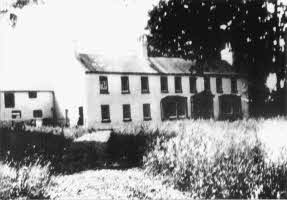
HUNTLEY, Dunmurry, originally known as Huntley Lodge, was built ca 1830 by William Hunter (1777-1856), of Dunmurry House, on land leased by the Stewarts of Ballydrain from the Donegall Estate.

His son William (1806-90) lived in Huntley for a time and brought up his family.

In the mid 1850s, he moved with his family to the Isle of Man.

The house was then left by his father William (1777-1856) to his widowed sister, Mrs Isabella Charley (1800-82). 
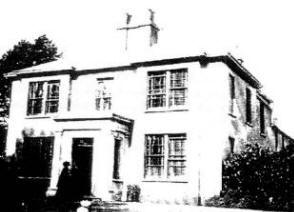
Isabella's husband, William Charley of Seymour Hill, had died in 1838 and she lived at Seymour Hill until her eldest son William was married in 1856.

Isabella then moved to Huntley, where she was joined by her late husband's sisters Mary (1820-86) and Anne Jane Stevenson (1822-1904), whose husband had died in 1855, and Emily (1837-1917).

The ladies at Huntley were talented artists, did embroidery and kept beautiful scrapbooks.

They supported many charities and gave generously to local churches, schools and church halls.

They founded the Charley Memorial School at Drumbeg in 1892 in memory of their brother William Charley (1826-90) of Seymour Hill; and also established the Stevenson Memorial School, Dunmurry.

They built the church hall in Dunmurry on the condition that a service must be held there every Sunday afternoon.

Huntley remained in the possession of the Charley family until 1932, when Edward Charley, of Seymour Hill, died.

The house was sold to Mr George Bryson, who had been a tenant there since just after the 1st World War.

Huntley now operates as a country guest house and outdoor venue for small parties.

First published in March, 2011.

Tuesday, 27 January 2026

Woodbourne House

THE CHARLEYS OWNED 348 ACRES OF LAND IN COUNTY ANTRIM

The family of Charley, or Chorley, passing over from the north of England, settled in Ulster in the 17th century, firstly at Belfast, where they were owners of house property for two hundred years; and afterwards at Finaghy, County Antrim, where 

RALPH CHARLEY (1664-1746), of Finaghy House, had a son, 

JOHN CHARLEY (1712-93), of Finaghy, who left a son and successor, 

JOHN CHARLEY (1744-1812), of Finaghy House, who married, in 1783, Anne Jane, daughter of Richard Wolfenden, of Harmony Hill, County Down, and had issue, 
JOHN, of Finaghy House (1784-1844), died unmarried;
MATTHEW, of Finaghy House;
WILLIAM, of Seymour Hill
The third son,

WILLIAM CHARLEY, of Seymour Hill, Dunmurry, married, in 1817, Isabella, eldest daughter of William Hunter JP, of Dunmurry, and died in 1838, having had issue,
JOHN, of Seymour Hill;
WILLIAM, succeeded his brother;
Edward, of Conway House;
Mary; Anne Jane; Eliza; Isabella; Emily.
The eldest son,

JOHN CHARLEY, of Seymour Hill, died unmarried in 1843, aged 25, and was succeeded by his brother, 

WILLIAM CHARLEY JP DL (1826-1904), of Seymour Hill, who married, in 1856, Ellen Anna Matilda, daughter of Edward Johnson JP, of Ballymacash, near Lisburn, and granddaughter of Rev Philip Johnson JP DL, and had issue,
William, 1857-1904;
EDWARD JOHNSON, of Seymour Hill;
John George Stewart, 1863-86;
Thomas Henry FitzWilliam, 1866-85;
Arthur Frederick, of Mossvale, b 1870;
Harold Richard;
Ellen Frances Isabella; Elizabeth Mary Florence; Emily Constance Jane; Wilhelmina M Isabel.
The second son,

EDWARD JOHNSON CHARLEY (1859-1932), of Seymour Hill, was succeeded by his sixth son,

COLONEL HAROLD RICHARD CHARLEY CBE DL (1875-1956), of Seymour Hill, 1st Battalion, Royal Irish Rifles; fought in the Boer War and First World War, with the 2nd Battalion, Royal Irish Rifles, and was wounded and became a PoW.

In 1916 he started workshops for interned British servicemen at Murren. He was Officer-in-Charge for Technical Instruction for servicemen interned in Switzerland in 1917; Commissioner of British Red Cross Society, Switzerland, 1918; commander of the 1st Royal Ulster Rifles, 1919-23.

He was appointed CBE, 1920; City Commandant, Ulster Special Constabulary, 1924-52; originator of the British Legion Car Park Attendants scheme (adopted throughout Great Britain); Honorary Colonel, 1938, Antrim Coast Regiment (Territorial Army). 

His eldest son, 

COLONEL WILLIAM ROBERT (Robin) HUNTER CHARLEY OBE (1924-2019), married Catherine Janet, daughter of William Sinclair Kingan, in 1960.


In 1943 he was enlisted in the Royal Ulster Rifles; fought in 2nd World War, and the Korean War; Commanding Officer, OTC Queen's University, Belfast, 1965-68; Officer, Most Venerable Order of the Hospital of St. John of Jerusalem.

He retired from the army in 1971; was on Staff in 1972 at Northern Ireland Polytechnic; lived in 1976 at Seymour Lodge, Larch Hill, Craigavad, County Down.

Colonel Charley was appointed OBE (civil) in 1989, for services to The Forces Help Society and Lord Roberts' Workshops.


WOODBOURNE HOUSE, Dunmurry, came into the possession of the Charleys when it was given to Mrs Mary Anne Charley (1797-1866) by her father on her marriage, in 1819, to Matthew Charley.
 

When Matthew and Mary moved to Finaghy House in 1844, Woodbourne was taken over by their son John Stouppe Charley.

In 1851, he married Mary Stewart (1832-1915), a daughter of Francis Foster JP, of Roshin Lodge, County Donegal.

Woodbourne House was said to have been a happy home.

It was named after a wood on one side and a burn, the Lady's River, on the other.

There was also a walled garden; an apple orchard; large yards and stables; byres for cows; barns for grain; a pigeon loft, a greenhouse, a pheasantry and a carpenter's shop.

The house had a large entrance hall with folding doors across it to screen off the stairs and back passages.

The Charley coat-of-arms adorned the folding screen.

Woodbourne House was closely associated with local shoots and it later became a hotel before development swamped the area. 

Having suffered bomb damage in the 1970s, the site became a fortified police station.  

First published in March, 2011.

Saturday, 24 January 2026

Mossvale House

THE CHARLEYS OWNED 348 ACRES OF LAND IN COUNTY ANTRIM


The family of CHARLEY, or CHORLEY, passing over from the north of England, settled in Ulster during the 17th century, at first in Belfast, where they were owners of house property for two hundred years; and afterwards at Finaghy, County Antrim, where

JOHN CHARLEY (c1659-1743), of Belfast, left a son,

RALPH CHARLEY (1674-1756), of Finaghy House, County Antrim, who wedded Elizabeth Hill, and had an only child,

JOHN CHARLEY (1711-93), of Finaghy House, who married Mary, daughter of John Ussher, and had issue,

Matthew, died unmarried;
JOHN, of whom hereafter;
Hill, died unmarried;
Jane, died unmarried.
The eldest surviving son,

JOHN CHARLEY (1744-1812), of Finaghy House, married, in 1783, Anne Jane, daughter of Richard Wolfenden, of Harmony Hill, County Down, and had issue,
John, of Finaghy House (1784-1844), dsp;
Matthew, of Finaghy House and Woodbourne;
WILLIAM, of whom we treat.
The third son,

WILLIAM CHARLEY (1790-1838), of Seymour Hill, Dunmurry, married, in 1817, Isabella, eldest daughter of William Hunter JP, of Dunmurry, and had issue,
JOHN, of Seymour Hill;
WILLIAM, succeeded his brother;
Edward, of Conway House;
Mary; Anne Jane; Eliza; Isabella; Emily.
The eldest son,

JOHN CHARLEY, of Seymour Hill, died unmarried in 1843, aged 25, and was succeeded by his brother, 

WILLIAM CHARLEY JP DL (1826-90), of Seymour Hill, who married, in 1856, Ellen Anna Matilda, daughter of Edward Johnson JP, of Ballymacash, near Lisburn, and granddaughter of Rev Philip Johnson JP DL, and had issue,

William, 1857-1904;
EDWARD JOHNSON, of Seymour Hill;
John George Stewart, 1863-86;
Thomas Henry FitzWilliam, 1866-85;
ARTHUR FREDERICK, of  whom hereafter;
Harold Richard;
Ellen Frances Isabella; Elizabeth Mary Florence;
Emily Constance Jane; Wilhelmina Maud Isabel.
The fifth son,

ARTHUR FREDERICK CHARLEY JP (1870-1944), of Mossvale House, Captain, Royal Irish Rifles, Chairman, J & W Charley and Company, married, in 1917, Clare, daughter of Patrick Burgess Fenn, though the marriage was without issue.


Mossvale House was adjacent to the Lagan Canal and originally belonged to the owners of the local mill.

It was acquired by the Charley family in 1820, when the mill and bleach works were purchased by William Charley (1790-1838) from Robert Johnstone.

Mossvale was encircled by trees and had stabling for ten horses.

Captain Arthur Frederick Charley lived here with his wife for several years after the Great War before moving into The Lodge at Dunmurry.

In 1936, Mossvale was rented out though sadly destroyed by arson.

The land and ruins remained in the family for another fifty years until it was sold in the 1980s.

A new house has been built on the site.

First published in March, 2011. Charley arms courtesy of the NLI.

Thursday, 6 February 2025

Finaghy House

WILLIAM CHARLEY OWNED 155 ACRES OF LAND AT SEYMOUR HILL, COUNTY ANTRIM

The family of CHARLEY, or CHORLEY, passing over from the north of England, settled in Ulster during the 17th century, at first in Belfast, where they were owners of house property for two hundred years; and afterwards at Finaghy, County Antrim, where

JOHN CHARLEY (c1659-1743), of Belfast, was father of

RALPH CHARLEY (1674-1756), of Finaghy House, County Antrim, who wedded Elizabeth Hill, and had an only child,

JOHN CHARLEY (1711-93), of Finaghy House, who married Mary, daughter of John Ussher, and had issue,

Matthew, died unmarried;
JOHN, of whom hereafter;
Hill, died unmarried;
Jane, died unmarried.
The eldest surviving son,

JOHN CHARLEY (1744-1812), of Finaghy House, married, in 1783, Anne Jane, daughter of Richard Wolfenden, of Harmony Hill, County Down, and had issue,
JOHN, his heir;
MATTHEW, succeeded his brother;
William;
Edward;
Hill;
Annabella; Eliza Jane.
Mr Charley was succeeded by his eldest son,

JOHN CHARLEY (1784-1844), of Finaghy House, who died unmarried, and was succeeded by his brother,

MATTHEW CHARLEY (1788-1846), of Finaghy House and Woodbourne, who married, in 1819, Mary Anne, daughter of Walter Roberts, and had issue,
JOHN STOUPPE, his heir;
Walter Matthew;
William Thomas (Sir);
Cecilia Anna; Suzanne Caroline; Letitia.
Mr Charley was succeeded by his eldest son,

JOHN STOUPPE CHARLEY JP DL (1825-78), of Finaghy House, High Sheriff of County Donegal, 1875, who espoused, in 1851, Mary Stewart, daughter of Francis Forster, and had issue,
John Francis Ralph (1853-55);
John Francis William (1857-99), k/a;
Walter Roberts Matthew, emigrated to Canada;
Ralph Mansfield, died in infancy;
Mary Grace Leader; Constance Stewart; Charlotte Elizabeth Forster.
FINAGHY HOUSE, Belfast, located in the townland of Ballyfinaghy, dates back to the late-17th century.

It is thought, indeed, that the original house was erected ca 1695.

It was first built as the residence of Richard Woods, but was bought in 1727 by the Charley family, who lived there for five generations.

The two-storey, thatched house was purchased by Ralph Charley.

A mural plaque on the south-west gable records that the Charleys first took possession of the site in 1727.

Finaghy House comprised six reception rooms and twelve bedrooms, and was described by a descendent of the family as 
"an imposing mansion in a large park, with extensive outhouses and stables … a remarkable feature [of the interior] being a revolving fireplace between the drawing-room and the dining-room."
Ralph Charley was a prosperous linen merchant who possessed a number of bleach greens in the Dunmurry area, and later established looms (for the weaving of linen) at Finaghy House.

In 1824 his descendants, John and William Charley, formed the partnership J & W Charley & Co.

Five generations of the Charleys subsequently resided at Finaghy House for more than 150 years.

In the 1830s the Ordnance Survey Memoirs described the house as a commodious two-storey dwelling that continued to possess a thatched roof, remarking that "the walls are nearly four feet thick and run together by grouted lime, similar to other ancient buildings."

The main (two-storey) building was depicted along its present layout, and also featured a number of outbuildings to the north-west side of the house.

It was recorded that these outbuildings were slated,  and had been erected by the Charley family during the last forty years.

The attached two-storey rear return and outbuilding (located to the north-west of the dwelling) had been constructed between the 1830-58.

John Stouppe Charley occupied Finaghy from 1866 until 1885.

Following his death in 1885, Charley’s widow sold the house and its contents to Major and Mrs Brewis.

The Brewises bred corgi dogs: one of which was called “The Queen Mother”.

The first corgi owned by Queen Elizabeth The Queen Mother was bred in this house. 

James Moore acquired the mansion during the 1890s, and it was during his residence that the formerly thatched building was probably re-roofed and altered into its present appearance.

The most discernible subsequent alteration was the construction of the current single-storey entrance porch.


The Irish census recorded that Finaghy House’s thatched roof was replaced with slate by at least 1901, so it's likely that the house was re-roofed shortly after the building was purchased by Moore about 1890.

The Moores continued to live at Finaghy House until 1930, when the property was acquired by Major and Mrs Tyler.

Finaghy House remained in use as a family home until 1960, when it was converted into a residential care home and renamed Faith House.

Faith House was listed in 1987.

Work was carried out to the two-storey return in 1989-90, when the original windows were replaced and the side porch (located in the courtyard to rear) was altered.

The outbuilding to the north-west side of the original building was replaced with the current two-storey wing at this time, too.

Despite the addition of the modern wing, the original two-storey gable bay to the north-west end of the return (which had been erected between 1833 and 1858) was retained.

Between 1991 and 2011 an additional number of modern extensions were constructed to the north-west and south-west sides of Faith House.

These extensions have considerably increased the capacity of the care home.

First published in March, 2011.
Sunday, 26 January 2025

Phœnix Lodge

WILLIAM CHARLEY OWNED 155 ACRES OF LAND AT SEYMOUR HILL, COUNTY ANTRIM

The family of CHARLEY, or CHORLEY, passing over from the north of England, settled in Ulster during the 17th century, at first in Belfast, where they were owners of house property for two hundred years; and afterwards at Finaghy, County Antrim, where

JOHN CHARLEY (c1659-1743), of Belfast, left a son,

RALPH CHARLEY (1674-1756), of Finaghy House, County Antrim, who wedded Elizabeth Hill, and had an only child,

JOHN CHARLEY (1711-93), of Finaghy House, who married Mary, daughter of John Ussher, and had issue,

Matthew, died unmarried;
JOHN, of whom hereafter;
Hill, died unmarried;
Jane, died unmarried.
The eldest surviving son,

JOHN CHARLEY (1744-1812), of Finaghy House, married, in 1783, Anne Jane, daughter of Richard Wolfenden, of Harmony Hill, County Down, and had issue,
John, of Finaghy House (1784-1844), dsp;
Matthew, of Finaghy House and Woodbourne;
WILLIAM, of whom we treat.

The third son,

WILLIAM CHARLEY (1790-1838), of Seymour Hill, Dunmurry, married, in 1817, Isabella, eldest daughter of William Hunter JP, of Dunmurry, and had issue,
JOHN, of Seymour Hill;
WILLIAM, succeeded his brother;
Edward, of Conway House;
Mary, of Huntley;
ANNE JANE, of whom hereafter;
Eliza; Isabella; Emily.
The second daughter,

ANNE JANE CHARLEY (1822-1904), of Phœnix Lodge, married William Stevenson, Junior, in 1842, by whom she had no issue.

IN 1837, the Ulster Railway Company opened its first line from Belfast to Lisburn. 

To encourage more use of the railway, free passes were offered to people if they built new homes near the stations and halts.

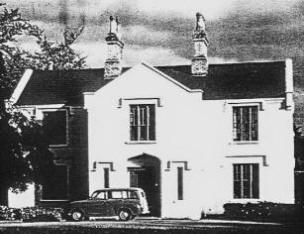
 It is thought that this may have influenced William Charley (1790-1838) to build PhÅ“nix Lodge for his daughter, Anne Jane, in 1837, shortly before he died.

In 1842, Anne married William Stevenson, of Belfast, and they lived at Phoenix Lodge until his death in 1855.

His widow then moved to live with her mother at Huntley.

In 1882, the name of the house was changed simply to The Lodge, following the notorious Phœnix Park murders in Dublin.

Captain Arthur Charley (1870-1944) lived there with his wife, Clare, after the Great War until his brother, Edward Charley (1859-1932) died and he moved into Seymour Hill House.

In the 1930s, The Lodge was rented by Lord and Lady Ampthill.

In 1940, Major-General Sir James and Lady Cooke-Collis lived there (he was the first Ulster Agent in London, but died in 1941 as the result of a German air raid on his club in London).

Thereafter it was occupied by Major-General Vivian Majendie, GOC Northern Ireland.

In 1947, The Lodge was bought by Mrs Harland, sister of Sir Milne Barbour Bt, of Conway House.

Despite being listed, the house was vested in the early 1960s, following Mrs Harland's death.

The grounds taken over for the expansion of a nearby factory. 

A large, weeping ash tree dominated the front lawn of the Lodge.

The information has been sourced from Lisburn Historical Society.    First published in March, 2011.

Monday, 6 January 2025

The Barbour Baronetcy

JOHN BARBOUR
(c1755-1823), of Paisley, Renfrewshire,  and The Plantation, Lisburn, County Antrim, appointed Honorary Freeman of the Borough of Paisley, 1811, married and had issue,
a son who died in 1825;
John, d 1831;
WILLIAM, of whom hereafter.
The surviving son,

WILLIAM BARBOUR JP (1797-1875), of Hilden, Lisburn, wedded Eliza Kennedy, of Grove Green, Lisburn, and had issue including,
JOHN DOUGHERTY;
Robert Kennedy;
Catherine Jane; Agnes Cowan; Eliza Fulton.
The eldest son,

JOHN DOUGHERTY BARBOUR JP DL (1824-1901), of Conway, Dunmurry, County Antrim, Hilden, Leamington, Warwickshire, and Wrentnall, Shrewsbury, Shropshire.

John D Barbour (Image: Irish Linen Centre & Lisburn Museum

He espoused, in 1864, Elizabeth Law, eldest daughter of John Milne, of Trinity Grove, Edinburgh, and had issue,
Frank;
JOHN MILNE, of whom hereafter;
William;
Harold Adrian Milne;
Helen Reilly Harland.
The eldest surviving son,

THE RT HON JOHN MILNE BARBOUR JP DL MP (1868-1951), of Hilden, County Antrim, who wedded, in 1899, Eliza Barbour, of Paterson, New Jersey, USA.

Mr Barbour was created a baronet in 1943, designated of Hilden, County Antrim.

He was appointed a Privy Counsellor (NI) in 1925.
His father was Chairman of the William Barbour Linen Thread Company of Hilden, the largest linen thread manufacturers in the world for over twenty years; Sir Milne succeeded his father as Chairman for a further thirty years.
Lady Barbour was born in 1873 and died at Conway House, Dunmurry, in 1910.

In her short life she had three daughters and one son, John, who went missing when flying home over the Irish Sea one weekend just before the 2nd World War in 1937.

John Barbour: A posthumous portrait painted after his death in 1937
(Image: Irish Linen Centre and Lisburn Museum)

John (1906-37) worked at the Barbour factory in Glasgow and flew home most weekends.

Sir Milne's sister, Helen, married Thomas Andrews, the designer of RMS Titanic, who was drowned when the ship hit an iceberg and sank in 1912.

She later married Henry Harland of Harland & Wolff.

As an MP at Stormont, Sir Milne held various Ministries including Commerce (1925-41) and Finance (1941-43).

As well as being Chairman of the largest linen thread company in the world, whose head office was at Lisburn, the company had factories in Glasgow, Paisley and other places.

He was also Chairman of various other businesses including Insurance Companies, and was President of the Royal Ulster Agricultural Society.

Sir Milne was a keen freemason, being appointed Grand King of the Supreme Royal Arch Chapter of Ireland in 1933.


HILDEN HOUSE, near Lisburn, County Antrim, a five bay, two storey, late Georgian house, with side elevations, dates from 1824, and underwent minor remodelling ca 1850.

John Barbour arrived in Ireland in the late 18th century, from Scotland, and established a thread factory at the Plantation.

In 1824 his son William bought the former bleach green at Hilden and built a thread factory.

The premises are said to have belonged to the DE LA CHEROIS family, Huguenots who had fled religious persecution in France in the 1680s, and assisted in the development of the linen industry in the Lisburn area.

The home that the De La Cherois' had built was falling into decay, and William Barbour erected a new house next to his thriving business.

He took up residence in 1824 with his wife, Eliza Kennedy, and they brought up their large family (said to be fifteen children) in the house.

The Ordnance Survey Memoirs of the time remarked that,
"The house is a very commodious, square building, two storeys high and slated." 
"The yards are well enclosed, the offices extensive, all slated and chiefly two storeys high." 
"The garden, containing about two English acres, is enclosed by a stone and lime wall about 12 feet high and well stocked with fruit trees." 
"It is tastefully laid off in every particular and contains a handsome glass-roofed greenhouse, where good grape and a variety of cape flowers are annually reared and other glasshouses or hot beds for melons."
"It also contains a sundial, a good garden house, a good metal pump and water engine for watering the garden."
Various outbuildings included a ware-room and workshop, store and workshop, offices, byre, storehouse and workshop, and a porter’s lodge.

A garden house and piggery were also listed.

The nearby thread mill was also on his property.

Hilden was leased from the landlord, Lord Hertford.

Some improvements were undertaken during the 1850s, including the addition of a porch and a new doorway to the front facade, four outbuildings and a lodge.

By 1875 Hilden House has passed to John Dougherty Barbour, who had taken over the firm with his two brothers, Robert and Thomas.

The lessor was now Lord Hertford's son, Sir Richard Wallace, 1st (and last) Baronet.

During the early part of the 20th century Hilden House was occupied by the brothers' sister, Maria Pirrie, and subsequently her sons Malcolm and William Gordon, who were both involved in the Barbour company.

The outbuildings have been converted into Hilden Brewery.

Conway House

Conway House, Dunmurry, was another residence of the extended Barbour family, very generous benefactors to charities.

It became a hotel after Sir Milne Barbour's death in 1951, and has since been demolished.

The Barbours were connected to many local families, including the Harlands and Pirries of Harland and Wolff; the Duffins of Danesfort; the Andrews' of Comber; the McCances of Woodburn; the Gordons of Lisburn; and the Carsons of Cherryvalley, whose daughter Kerry married Dr Ian Adamson, a former Lord Mayor of Belfast.

The paving, in Irish marble, of the central aisle in the nave of Belfast Cathedral was laid in memory of Elise, Lady Barbour, by her husband, Sir Milne, and their children.

First published in May, 2010.  Barbour arms courtesy of the NLI.

Saturday, 21 December 2024

Conway House

EDWARD CHARLEY OWNED 35 ACRES OF LAND AT CONWAY HOUSE, COUNTY ANTRIM

The family of CHARLEY, or CHORLEY, passing over from the north of England, settled in Ulster during the 17th century, at first in Belfast, where they were owners of house property for two hundred years; and afterwards at Finaghy, County Antrim, where

JOHN CHARLEY (c1659-1743), of Belfast, left a son,

RALPH CHARLEY (1674-1756), of Finaghy House, County Antrim, who wedded Elizabeth Hill, and had an only child,

JOHN CHARLEY (1711-93), of Finaghy House, who married Mary, daughter of John Ussher, and had issue,

Matthew, died unmarried;
JOHN, of whom hereafter;
Hill, died unmarried;
Jane, died unmarried.
The eldest surviving son,

JOHN CHARLEY (1744-1812), of Finaghy House, married, in 1783, Anne Jane, daughter of Richard Wolfenden, of Harmony Hill, County Down, and had issue,
John, of Finaghy House (1784-1844), dsp;
Matthew, of Finaghy House and Woodbourne;
WILLIAM, of whom we treat.
The third son,

WILLIAM CHARLEY (1790-1838), of Seymour Hill, Dunmurry, married, in 1817, Isabella, eldest daughter of William Hunter JP, of Dunmurry, and had issue,
John, his heir;
William, succeeded his brother;
EDWARD, of whom we treat;
Mary; Anne Jane; Eliza; Isabella; Emily.
The third son,

EDWARD CHARLEY (1827-68), of Conway House, Dunmurry, County Antrim, wedded firstly, Mary, daughter of A Caldecott, of Woodford Hall, Essex, and had a daughter,
Mary Caldecott, m Captain George Leslie Poë JP DL RN.
He espoused secondly, Catherine Jane, daughter of Jonathan Richardson, and had issue,
Edward (Rev), dsp;
Ernest William Ralph (1864-9);
Edith Margaret; Kathleen Isabel Airth.
CONWAY HOUSE, Dunmurry, Belfast, was a two-storey Victorian mansion with a symmetrical front of two shallow, curved bows and a central projection.

A pillared and balustraded veranda ran on either side, joining to a single wing.

At the other end there was a pilastered conservatory.

An Italianate tower rose from the roof above a bracket cornice.

In 1852, William Charley, who had succeeded to Seymour Hill, gave land to his younger brother, Edward, to build a house for his first wife Mary.


Edward named it Conway after the local landowner, Lord Hertford (also Baron Conway).

The house was then occupied, until his death in 1892, by the Lord Bishop of Down, Connor and Dromore, the Rt Rev William Reeves.


Thereafter it was sold by the executors of Edward Charley's brother, William, to John D Barbour, of Hilden, father of Sir Milne Barbour Bt. 

Sir Milne lived at Conway for many years until his death in 1951.

At one time the Charley crest stood over the front door.

The Conway Hotel

Conway House operated for many years as a hotel operated by Trusthouse Forte.

First published in February, 2011.

Saturday, 7 December 2024

Seymour Hill

WILLIAM CHARLEY OWNED 155 ACRES OF LAND AT SEYMOUR HILL, COUNTY ANTRIM

The family of CHARLEY, or CHORLEY, passing over from the north of England, settled in Ulster during the 17th century, at first in Belfast, where they were owners of house property for two hundred years; and afterwards at Finaghy, County Antrim, where

JOHN CHARLEY (c1659-1743), of Belfast, left a son,

RALPH CHARLEY (1674-1756), of Finaghy House, County Antrim, who wedded Elizabeth Hill, and had an only child,

JOHN CHARLEY (1711-93), of Finaghy House, who married Mary, daughter of John Ussher, and had issue,

Matthew, died unmarried;
JOHN, of whom hereafter;
Hill, died unmarried;
Jane, died unmarried.
The eldest surviving son,

JOHN CHARLEY (1744-1812), of Finaghy House, married, in 1783, Anne Jane, daughter of Richard Wolfenden, of Harmony Hill, County Down, and had issue,
John, of Finaghy House (1784-1844), dsp;
Matthew, of Finaghy House and Woodbourne;
WILLIAM, of whom we treat.
The third son,

WILLIAM CHARLEY (1790-1838), of Seymour Hill, Dunmurry, married, in 1817, Isabella, eldest daughter of William Hunter JP, of Dunmurry, and had issue,
JOHN, of Seymour Hill;
WILLIAM, succeeded his brother;
Edward, of Conway House;
Mary; Anne Jane; Eliza; Isabella; Emily.
The eldest son,

JOHN CHARLEY (1818-43), of Seymour Hill, died unmarried, and was succeeded by his brother, 

WILLIAM CHARLEY JP DL (1826-90), of Seymour Hill, who wedded, in 1856, Ellen Anna Matilda, daughter of Edward Johnson JP, of Ballymacash, near Lisburn, and granddaughter of Rev Philip Johnson, and had issue,

William (1857-1904), dsp;
EDWARD JOHNSON, of Seymour Hill;
John George Stewart;
Thomas Henry FitzWilliam;
ARTHUR FREDERICK, of Mossvale;
HAROLD RICHARD, of whom hereafter;
Ellen Frances Isabella; Elizabeth Mary Florence;
Emily Constance Jane; Wilhelmina Maud Isabel.
Mr Charley was succeeded by his third son,

EDWARD JOHNSON CHARLEY JP (1859-1932), of Seymour Hill, High Sheriff of County Antrim, 1913, who died unmarried, and was succeeded by his brother,

ARTHUR FREDERICK CHARLEY JP (1870-1944), of Seymour Hill and Mossvale, who wedded, in 1917, Clare, daughter of Patrick Burgess Fenn, by whom he had no issue.

Mr Charley was succeeded by his brother,

COLONEL HAROLD RICHARD CHARLEY CBE DL (1875-1956), of Warren House and Seymour Hill, County Antrim, and The Trees, Helen's Bay, County Down, who married, in 1923, Phyllis, daughter of Robert Samuel Hunter, and had issue,
WILLIAM ROBERT HUNTER;
Maureen June (1926-54).
Colonel Charley's only son,

COLONEL WILLIAM ROBERT (Robin) HUNTER CHARLEY OBE (1924-2019)), of Craigavad, County Down, married, in 1960, Catherine Janet, daughter of William Sinclair Kingan, and had issue,
Catherine June, b 1961;
Elizabeth Jane, b 1962;
Jane Mary Isabella, b 1968.

SEYMOUR HILL HOUSE, Dunmurry, Belfast, was built ca 1790 by the son of Archibald Johnston, Robert Allen Johnston, who owned the Seymour Hill estate (which, by 1813, comprised 89 acres and included a bleaching green, mill, yard and a mill dam at the Derriaghy Burn).

Seymour was the Marquess of Hertford's family surname, and at the time Mr Charley owned 400 acres of land surrounding the house.

However, the house does not appear captioned as "Seymour Hill House" until 1858.

William Charley bought the estate in 1822 and quickly invested capital to improve the bleach works.

Mr Charley had also purchased and remodelled the Dunmurry and Mossvale Bleach Greens two years previously in 1820, and subsequently transferred his business to Seymour Hill.

The house itself by this stage was in a ruinous state, but by 1825 Charley expended almost £5,000 in remodelling and reconstructing the house, having engaged the architect, John McHenry.

It is thought that much of the detailing found on the building, such as the heavily vermiculated double quoins, was added as a result of the improvements.

By 1865, the additional buildings included a steward's house, a coachman's house and a gate lodge, suggesting that the family's linen business was flourishing.

William Charley was chairman of J&W Charley & Co, linen merchants, whose high quality work received several commissions from the Royal family.

He was also a founding member of the Northern Banking Company.

The Charley family continued to occupy Seymour Hill House throughout the 1800s, developing their linen business and bleaching techniques, eventually coming ownership of several bleach greens in the area.

They were credited with introducing the use of chlorine into the bleaching process.

The last of the Charley family to occupy Seymour Hill House was Captain Arthur Frederick Charley who, in 1944, met his death during an accident felling trees in the grounds.
Arthur's nephew, Colonel William Robert Hunter Charley, desired to pursue a military career rather the linen industry, which subsequently lead to the Charley business merging with Barbour Linen Thread Ltd; and the sale of Seymour Hill and the surrounding grounds to the Northern Ireland Housing Trust.
The once extensive kitchens, wine cellars, servants hall, dining rooms, morning rooms, bedrooms and library were converted into six apartments.

By this stage the house was losing much of its internal character.

Following further vandalising and extensive fire damage in 1986, a local account describes the house as being an empty shell with no roof.

In 1990, the house was transferred to the then named BIH housing association, which invited Colonel Robin Charley to open the fully-restored house providing six new one-person flats.

*****

SEYMOUR HILL stands on a hill with a wide view of the Lagan Valley.

The Charley estate on both sides of the River Lagan in counties Antrim and Down once comprised over 400 acres.

They were tenants of the Marquess of Hertford, who owned all the land from Dunmurry to the southern shore of Lough Neagh.

A large walled garden and grounds were maintained by a head gardener and five or six under-gardeners.

Between the house and the walled garden there were lawns with landscaped trees and shrubs.

Near the rock garden was the dogs' cemetery, all with their individual headstones.

Every day the head of the family would walk across the paddock field to the factory of J & W Charley & Company, which was hidden from the house by a line of trees.

Here he supervised the finishing and production of the finest Ulster Linen.

It was of a particularly high quality and for many years the usual gifts from Northern Ireland to any member of the Royal Family when they married were linen sheets from J & W Charley, specially embroidered with the relevant royal cypher.

Within the grounds of Seymour Hill was a lake and a waterfall leading into a fish ponds.

The River Derriaghy flowed under the main Belfast-Lisburn road into the lake and then was divided into two mill races to work the factory water wheels.

The top stream was known locally as 'Little Harry' because baby Harold Charley's (1875-1956) pram once ran away down the drive and ended up upside down in the river!

He was none the worse for the experience, it is said.

During the 2nd World War the laundry in the upper yard was occupied by up to 100 women and children evacuated from the centre of Belfast during the air raid blitzes of 1941-42. 

I am grateful to Lisburn Historical Society as a source of reference for this article.  First published in February, 2011.

Saturday, 16 November 2024

Warren House

THE CHARLEYS OWNED 348 ACRES OF LAND IN COUNTY ANTRIM

The family of CHARLEY or CHORLEY, passing over from the north of England, settled in Ulster in the 17th century, at first at Belfast, where they were owners of house property for two hundred years; and afterwards at Finaghy, County Antrim, where  

RALPH CHARLEY (1664-1746), of Finaghy House, County Antrim, left a son,

JOHN CHARLEY (1712-93), of Finaghy House, who died aged 81, leaving a son and successor,

JOHN CHARLEY (1744-1812), of Finaghy House, who married, in 1783, Anne Jane, daughter of Richard Wolfenden, of Harmony Hill, County Down.
 

His second son, 

MATTHEW CHARLEY (1788-1846), of Finaghy House, married, in 1819, Mary Anne, daughter of Walter Roberts, of Colin House. His eldest son,

JOHN STOUPPE CHARLEY JP (1825-78), of Finaghy House, and of Arranmore Island, County Donegal,

a magistrate for counties Donegal, Antrim, and Belfast; High Sheriff of County Donegal, 1875-6. Mr Charley owned 6,498 acres of land in County Donegal.
This gentleman married, in 1851, Mary, daughter of Francis Forster JP, of Roshine Lodge, County Donegal.

His third son,

WILLIAM CHARLEY, of Seymour Hill, Dunmurry, married, in 1817, Isabella, eldest daughter of William Hunter JP, of Dunmurry; and dying in 1838, was succeeded by his eldest son,

JOHN CHARLEY, of Seymour Hill,  who died unmarried in 1843, aged 25, and was succeeded by his brother, 

WILLIAM CHARLEY JP DL (1826-1904), of Seymour Hill, who wedded, in 1856, Ellen Anna Matilda, daughter of Edward Johnson JP, of Ballymacash, near Lisburn, and granddaughter of Rev Philip Johnson JP DL. 
Mr Charley was juror of Great Exhibition, 1851; chairman of J & W Charley & Company. He wrote the book Flax And Its Products.
He was succeeded by his son,

EDWARD JOHNSON CHARLEY (1859-1932), of Seymour Hill; whose sixth son, 

COLONEL HAROLD RICHARD CHARLEY CBE DL (1875-1956), of Seymour Hill,
officer, 1st Battalion, Royal Irish Rifles; fought in the Boer War, and 1st World War, with 2nd Battalion, Royal Irish Rifles; wounded and became a PoW. In 1916 he started workshops for interned British servicemen at Murren. He was Officer-in-Charge for Technical Instruction for servicemen interned in Switzerland, 1917; Commissioner, British Red Cross Society, Switzerland, 1918; commander, 1st Royal Ulster Rifles, 1919-23. CBE, 1920; City Commandant, Ulster Special Constabulary, 1924-52; originator of the British Legion Car Park Attendants scheme (adopted throughout Great Britain); Honorary Colonel, 1938, Antrim Coast Regiment (Territorial Army). 
His eldest son, 

COLONEL WILLIAM ROBERT (Robin) HUNTER CHARLEY OBE (1924-2019), married Catherine Janet, daughter of William Sinclair Kingan, in 1960.


WARREN HOUSE, originally called Warren View, formed part of the Charley estate though, until 1922, was occupied by different members of the Johnston family. 

In 1923, Edward Charley, of Seymour Hill, presented it to his brother, Colonel Harold Charley (1875-1956) on his marriage to Phyllis Hunter MBE (1893-1988). 

They extended the house and enlarged it over a number of years. 

Estate agents describe it thus:
Detached house; six bedrooms; three reception rooms; self-contained annex set on ca 1 acre of gardens; approved guest-house, full of potential. Once the home of flamboyant car magnate John De Lorean; also former home of the Charley family involved in the linen industry, this historic Edwardian dwelling is now run as a successful guest-house. Set in tranquil riverside gardens, the impressive façade gives way to a sumptuous living space. 
Warren House looks across the river Derriaghy to an ancient mound and rabbit warren.

The Charleys sold the house in 1951.

It was sold again thereafter, and is is understood that one later owner converted the large drawing-room into a Plymouth Brethren chapel.

In 1970, when the De Lorean factory was built in the nearby fields, Warren House became John De Lorean's residence.

A special road-way was made directly from the factory to the house.

First published in March, 2011.