Saturday, 31 October 2015

The Ugly Duckling


The Ugly Duckling remains one of my favourite restaurants in Corralejo. Reservations are essential because of its diminutive size.

It has, I think, seven tables inside; and the kitchen is very small, too; so small, indeed, that Henrik has to turn away many who haven't booked in advance.

I've written often about this special little establishment before.

Henrik, the proprietor, is Danish, and one of the most courteous hosts you are ever likely to meet.

I invariably email Henrik a few weeks before I visit, and last night was no exception; in fact I reserved for three dates.

Incidentally, they are relocating soon to a new and improved location at Calle El Pulpo, near the Dunas Club apartments and the harbour.


I opted for the signature Green Salad as a starter; followed by the salmon, with bearnaise butter, mashed potatoes, and spinach.

Henrik poured me a flute of well chilled cava.

His parents were seated at the table beside me. Henrik introduced me to them, a delightful couple.

The bill was about €25.


Thursday, 29 October 2015

Strong Alioli


I'm spending some time in Fuerteventura, Canary Islands, specifically the resort of Corralejo, which I know well.

Yesterday I acclimatised myself in the old town and revisited many familiar haunts.

The town's infrastructure is still being improved: a number of key streets have been pedestrianised to a high standard.

After lunch I had a refresher at Soul Bar-Café in Music Square, which has about one hundred varieties of gin.

Alas, our Shortcross gin does not, as yet, feature on the list; though I commended it to them.

I enjoyed a very simple dinner of chicken escalope with a few chips and salad at Avenida restaurant.

I'm convinced that they have possibly the best alioli in the town: it's strength does it credit; not for the faint-hearted!


At the conclusion of my evening I sat at the bijou Bar Bouganville, where I sipped a White Russian cocktail.

Tuesday, 27 October 2015

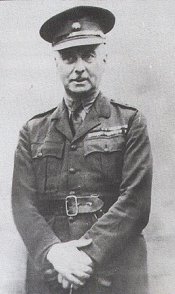
Robert Quigg VC

The possibility is being examined of having a dedicated memorial or sculpture in the admirable little  village of Bushmills, County Antrim, to honour Sergeant Robert Quigg VC, who was awarded the Victoria Cross for his valour at the Battle of the Somme.

Discussions have taken place at Moyle Council in Ballycastle and it was agreed to write to the Royal British Legion in Bushmills and the Macnaghten family, of Dundarave, to get their views.


Many, including self, would like to see a memorial in place in Bushmills ahead of 2016 which will be the centenary of Quigg's heroics in World War One.

A local historian, Robert Thompson, said:
"In July of 1916 Robert Quigg risked his life to rescue wounded soldiers at the Somme and was awarded the Victoria Cross for his efforts.
"He is the only Victoria Cross winner north of Belfast, yet he is ignored by his home town of Bushmills. If this was anywhere else in the world he would be feted and honoured forever."

North Antrim Assemblyman Robin Swann is also pushing for a memorial. He said:
"While Robert is acknowledged by the presence of a plaque at the War Memorial, the community have suggested that a more fitting tribute or a statue or sculpture could be provided in time for the centenary of his actions.
"I am sure the community will play a full part in planning such a tribute but clearly leadership from the Council in delivering such a memorial will be very important."

Robert Quigg, from the village, enlisted in the 12th Battalion, Royal Irish Rifles (Mid-Antrim Volunteers) during World War One.

His platoon commander was Lieutenant Harry Macnaghten (Sir Edward Harry Macnaghten, 6th Baronet, 1896–1916).

On 1 July Robert's platoon advanced three times only to be beaten back by the Germans. Many hundreds of the 12th Battalion were either killed or wounded.

In the confusion of battle it became known that Lieutenant Macnaghten was missing. Robert Quigg immediately volunteered to go out into no-man's land and search for his commander.

His actions during that fruitless search led him to receive the Victoria Cross.

His citation reads as follows:
Hearing a rumour that his platoon officer was lying wounded, he went out seven times to look for him, under heavy shell and machine-gun fire, each time bringing back a wounded man.

The last man he dragged on a waterproof sheet from within yards of the enemy's wire. He was seven hours engaged in this most gallant work, and was finally so exhausted that he had to give it up.
The body of Sir (Edward) Harry Macnaghten, 6th Baronet, was never found.
Most tragically for Edith, Lady Macnaghten, her two sons, the 6th and 7th Baronets, were both killed in action.

Robert Quigg returned to Bushmills to a hero's welcome. He died in 1955 and was buried with full military honours at Billy Church.

Councillor Joan Baird described Quigg as "a very famous hero of our area".

First published in August,  2011.

Monday, 26 October 2015

William John English VC

LIEUTENANT-COLONEL WILLIAM JOHN ENGLISH VC, born on 6 October 1882 in Cork, was the son of Major William English OBE; educated at Harvey Grammar School in Folkstone, Kent from 1894-98; and Campbell College, Belfast from 1898-99.

After a short spell in the Merchant Navy, he left it in South Africa and in November 1900 joined the the Scottish Horse.

In March, 1901, he received his commission as Lieutenant in the 2nd Scottish Horse.

The citation of his VICTORIA CROSS reads as follows:
This officer, with five men, was holding the position at Vlakfontein on 3 July 1901 during an attack by the Boers. Two of his men were killed and two wounded, but the position was still held, largely owing to the lieutenant's personal pluck. When the ammunition ran short, he went over to the next party and obtained more; to do so he had to cross some 15 yards of open ground, under a heavy fire at a range of from 20 to 30 yards.
After his retirement in 1930 he lived at Kings Road, Knock, in Belfast where he was the Northern Ireland organiser for the National Association for Employment of Regular Soldiers, Sailors and Airmen.

In August, 1939, he formed in Northern Ireland a Group of the National Defence Corps which in November of that year, became the 6th Battalion, The Royal Ulster Rifles.

In April, 1941, he left to take up an unknown appointment in the Middle East but died at sea on the 4th July. He is buried in Maala Cemetery in Aden. 

A researcher from the Imperial War Museum recently advised that the English VC medal group is leaving Campbell College, Belfast, and heading to the Lord Ashcroft VC & GC Gallery in the Imperial War Museum, London, on a ten year loan.

Gavin has sent the researcher over some photos from his English VC research.

An interesting video is here:


First published in November, 2010.

Thursday, 22 October 2015

Requisite Bung

There were ten of us on Island Taggart yesterday.

For those of you who might not have been following the narrative, Island Taggart belongs to the National Trust.

It lies on Strangford Lough, County Down, near Killyleagh.

At the moment we're using a dinghy to get to the island from an old quay on the mainland.

This dinghy has a four horse-power outboard motor; though we are apprised that the NT is giving us a new boat next year.


We presently have to use a cork bung to keep it afloat; modern technology is marvellous!

The island is merely five minutes' away from the mainland at any rate.

Today, as usual, we cut and burned gorse.

The hedgerows on Taggart are rich with blackthorn, hawthorn, rose-hips, blackberries and many other plants so essential to birds at this time of year.


Tomasz managed to pick some rose-hips at lunchtime.

Thursday, 15 October 2015

Summer House

I'm absolutely delighted that the adorable little summer-house or gazebo at Florence Court, County Fermanagh, has been rebuilt to its original specifications.

The first one was maliciously burnt just over a year ago.

I'd only wish to extend my compliments and cordial congratulations to all involved in this splendid and admirable feat; especially those in County Fermanagh and the Impartial Reporter newspaper.

Taggart Revisited

East Down Yacht Club from the island

I spent a terrific day on Island Taggart yesterday with about a dozen other National Trust volunteers.

This was my first visit since September, 2013.

The island has a considerable amount of gorse in places, so we were cutting and burning it.


The field we concentrated on was on the western side of the island, directly opposite East Down Yacht Club.

In fact we landed on the shore here; indeed it's a pity we can't use the yacht club as a base to get over to Taggart.

The field in question is below the old farmstead at the top of the island, which was last inhabited in 1967.


At lunchtime Hugh and Maureen arrived in Cuan Brig, the National Trust barge, in order to deliver parts of a cattle pen.

There are believed to be 28 cattle on the island, including one bull.