Wednesday, 19 June 2024

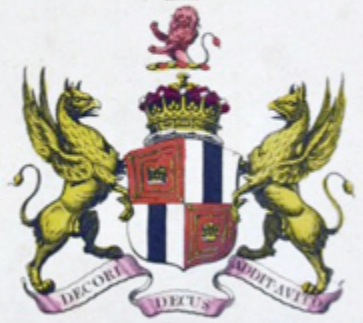
1st Earl of Mar and Kellie

THE EARLS OF MAR AND KELLIE WERE THE LARGEST LANDOWNERS IN CLACKMANNANSHIRE, WITH 6,143 ACRES


The family of Erskine probably took their name from the lands of Erskine, Renfrewshire.


THE RT HON SIR ALEXANDER ERSKINE OF GOGAR, Knight, third son of John, 5th Lord Erskine and 16th Earl of Mar de jure, by the Lady Margaret Campbell, daughter of Archibald, 2nd Earl of Argyll.

The house of Erskine, Earls and Countesses of Mar, is one of the most ancient families in the Scottish peerage; so old, indeed, that the date of the creation of its honours is lost in its antiquity.

This Alexander was sworn, in 1578, of His Majesty's privy council, nominated Governor of Edinburgh Castle, and constituted Vice-Chamberlain of Scotland.

He married Margaret, daughter of Lord Home, by whom he had three sons and three daughters.

The eldest son, Sir Alexander, fell at the surprise of Stirling Castle, in 1578, and the second,

SIR THOMAS ERSKINE, born in the same year with JAMES I, and educated with that monarch, having accompanied His Majesty to England, was created, in 1606, Baron Dirletoun and Viscount Fenton (the first viscountcy of Scotland).

His lordship was advanced to the dignity of an earldom, in 1619, as EARL OF KELLIE, installed a Knight of the Garter, and sworn of the privy councils of England and Scotland.

He married Anne, daughter of Sir Gilbert Ogilvie, of Powrie, by whom he had a daughter, and a son, Alexander, Viscount Fenton, who wedded the Lady Anne Seton, daughter of Alexander, 1st Earl of Dunfermline, by whom he left three sons:
ALEXANDER, 3rd Earl;
CHARLES;
THOMAS, the eldest.
THOMAS succeeded his grandfather in 1639, and dying unmarried in 1643, the family honours devolved upon his brother,

ALEXANDER, 3rd Earl, who was succeeded, in 1657, by his only son,

ALEXANDER, 4th Earl, who was also succeeded (in 1710) by an only son,

ALEXANDER, 5th Earl, who married twice and was succeeded, on his demise in 1756, by his eldest son,

THOMAS, 6th Earl, who died unmarried, in 1781, when the family honours devolved upon his brother,

ARCHIBALD, 7th Earl, who died, unmarried, in 1797, when the peerage reverted to his kinsman,

SIR CHARLES ERSKINE, Baronet, of Cambo, the direct descendant of Charles Erskine (who was created a baronet in 1666), youngest son of Alexander, Viscount Fenton, eldest son of Thomas, 1st Earl of Kellie.

His lordship dying unmarried in 1799, the family honours reverted to his uncle,

THOMAS, 9th Earl.
The heir presumptive is Lord Mar's brother, the Hon Alexander David Erskine, Master of Mar (b. 1952). It is known that the lineage survived in the Erskine-Kellies, with the current heir Andrew Erskine (b. 1998) estimated as the 17th Earl of Mar and 19th Earl of Kellie.
Cambo house (Image: Wikipedia/ Dr Richard Murray)


CAMBO HOUSE, near Kingsbarns, in Fife, was built between 1879-84, to designs by the architects Wardrop & Reid.
The estate of Cambo was granted to Robert de Newenham by a charter of King William the Lion. His descendents took the name "de Cambhou", and had settled in Fife by the early 14th century. In 1599, the estate was granted to Thomas Myretoun.
In 1668, Sir Charles Erskine Bt (d. 1677), the Lord Lyon King of Arms and brother of the 3rd Earl of Kellie, purchased the property from the creditors of Patrick Merton.

The estate passed through the Erskine family to the 5th Earl of Kellie, who forfeited his lands after supporting the Jacobite rising of 1745.

In 1759, Cambo was sold to the Charteris family, who bought it for their son who was studying at St Andrews University.

Thomas Erskine, 9th Earl of Kellie, bought the estate back in the 1790s.

A successful merchant in Sweden, he invested heavily in improving the estate, building the picturesque Georgian estate farms, and carrying out extensive land drainage.

The 9th Earl commissioned the architect Robert Balfour to remodel the house in 1795.

His descendents continued the improvement of the estate through the 19th century, laying out ornamental gardens, with a series of early cast iron bridges.
The old house comprised a tower house with numerous additions, including a first-floor conservatory. It was destroyed by fire in 1878, after a staff party when the Erskine family was away.
The present house was built on the same site between 1879-84, to designs by the architects Wardrop & Reid.

The house is operated as self-catering and bed & breakfast accommodation, while the walled garden and woodland gardens are open to the public year-round.

The estate woodlands have a significant collection of snowdrops, including over 300 varieties of Galanthus species.

The estate was awarded National Collection status by the National Council for the Conservation of Plants and Gardens.

Kingsbarns Golf Links was laid out in 2000 to designs by American golf course architects Kyle Phillips and Mark Parsinen.

The Alfred Dunhill Links Championship, an annual pro-am golf tournament, is played in October at Kingsbarns, St Andrews Old Course, and Carnoustie.


ERSKINE HOUSE, Glasgow,  was designed by Sir Robert Smirke, the architect of the British Museum.

During the 1st World War it became the Princess Louise Hospital for Limbless Sailors and Soldiers.

It is now the Mar Hall Hotel, its name recalling the estate’s former ownership by the Earl of Mar.
During the early 18th century, the Mar estate and old Erskine House came into the ownership of the Lords Blantyre. In 1828 Major General Robert W Stuart, the 11th Lord Blantyre and a distinguished veteran of the Wellington’s Peninsular campaigns during the Napoleonic Wars, commissioned the present house.
His architect, Sir Robert Smirke (1781-1867) was still engaged in designing the British Museum.

That, however, is a very classical design whereas Erskine House is more Gothic with touches of Tudor, in the small turrets and pointed arches in the principal windows and entrance porch.

The stone was quarried locally. Sir Charles Barry produced designs for the gardens.

The house was completed only in 1845.

The final cost was £50,000, about £2.5m today.

When the Blantyre line became extinct in 1900, the house was left derelict but in 1916 it re-opened as the Princess Louise Scottish Hospital of Limbless Sailors and Soldiers.

In recent years £15m has been invested in the refurbishment of the house and the restoration of its many original features as the Mar Hall Hotel.

First published in November, 2013.

Tuesday, 18 June 2024

Rokeby Hall

THE ROBINSON BARONETS OWNED 2,941 ACRES OF LAND IN COUNTY LOUTH

GRACE ROBINSON (1718-76), youngest daughter of Thomas Robinson, of Rokeby, Yorkshire, and sister of Sir Thomas Robinson, 1st Baronet, and of the Most Rev Richard Robinson, Lord Archbishop of Armagh (created BARON ROKEBY), married, in 1739, the Very Rev Dr William Freind, of Whitney, Oxfordshire, Dean of Canterbury, and had, with other issue,
William Maximilian;
Robert;
JOHN, of whom we treat;
Grace.
The youngest son,

JOHN FREIND (1754-1832), assumed, in 1793, his maternal surname of ROBINSON.

Mr Robinson was created a baronet in 1819, designated of Rokeby Hall.

This gentleman wedded, in 1786, Mary Anne, second daughter of James Spencer, of Rathangan, County Kildare, and had issue,
RICHARD, his successor;
William;
John;
Henry James;
Charles;
Robert Spencer (Admiral Sir), KCB;
Jane; Louisa; Charlotte; Mary Anne; Henrietta; Grace Alicia; Emily;
Caroline; Frances; Sophia; Selina; Isabella Esther.
Sir John was succeeded by his eldest son,

SIR RICHARD ROBINSON, 2nd Baronet (1787-1847), who espoused, in 1813, the Lady Eleanor Helena Moore, daughter of Stephen, 2nd Earl Mount Cashell, and had issue,
JOHN STEPHEN, his successor;
RICHARD HARCOURT, 5th Baronet;
Helena Esther Florence; Elizabeth Selina.
Sir Richard was succeeded by his eldest son,

SIR JOHN STEPHEN ROBINSON, 3rd Baronet (1816-95), JP DL, High Sheriff of County Louth, 1849, who married, in 1841, Sarah, only daughter of Anthony Denny, of Barham Wood, Hertfordshire, and granddaughter of the celebrated Lord Collingwood, and had issue,
Richard Collingwood;
GERALD WILLIAM COLLINGWOOD, his successor;
Maud Helena Collingwood.
Sir John was succeeded by his eldest surviving son,

SIR GERALD WILLIAM COLLINGWOOD ROBINSON, 4th Baronet (1857-1903), who was succeeded by his nephew,

SIR RICHARD HARCOURT ROBINSON, 5th Baronet (1828-1910), Lieutenant-Colonel, 60th Rifles, who died without male issue, when the baronetcy expired.


ROKEBY HALL, Dunleer, County Louth, is a mansion built in the neo-classical style ca 1785 for the Most Rev Richard Robinson, Lord Archbishop of Armagh (later 1st Baron Rokeby).

The original design of the house was probably by Thomas Cooley.

Rokeby Hall comprises two storeys over a rusticated basement.


There are two bays on either side of the central pedimented feature, which is of three bays.


The pediment apex is adorned with Lord Rokeby's coat-of-arms.

This elegant and noble house is topped by a high roof parapet.

The front is constructed with a fine, crisp ashlar; and the steps leading up to the front door curve elegantly, too.

First published in June, 2018.

Thursday, 13 June 2024

Mountshannon House

THE EARLS OF CLARE WERE MAJOR LANDOWNERS IN COUNTY LIMERICK, WITH 10,316 ACRES


The Earls of Clare are said to have represented a collateral branch of the Duke of Leinster's family; the FitzGibbons, the chief of whom was styled "The White Knight", being descended from the FitzGeralds, Barons Offaly, progenitors of the great houses of KILDARE and DESMOND; as were the Knights of Glin, of the Valley, and of Kerry, titles conferred on junior branches of the house of FitzGerald, by the Earl of Desmond, as Count Palatine.


JOHN FITZGIBBON (c1708-80), of Mount Shannon, County Limerick, fourth son of Thomas FitzGibbon, of Ballyseeda, County Limerick,and his wife, Honor, was an eminent barrister, who published a work entitled "Notes of Cases determined at Westminster", which was highly spoken of by Lord Chancellor Hardwicke.

He wedded Ellinor, daughter of John Grove, of Ballyhimmock, County Cork, and had issue,
JOHN, his successor;
Arabella; Elizabeth; Eleanor.
Mr FitzGibbon was succeeded by his son,

THE RT HON JOHN FITZGIBBON (1748-1802), who having been bred to the Bar, was appointed Attorney-General of Ireland, 1784; and, five years later, filled the high office of LORD CHANCELLOR OF IRELAND.

This gentleman was elevated to the peerage, in 1789, in the digniy of Baron FitzGibbon, of Lower Connello, County Limerick.


His lordship was advanced to a viscountcy, in 1793, as Viscount FitzGibbon, of Limerick; and further advanced to the dignity of an earldom, in 1795, as EARL OF CLARE.

He wedded, in 1786, Anne, eldest daughter of Richard Chapel Whaley, of Whaley Abbey, and had issue,
JOHN, his successor;
RICHARD HOBART, 3rd Earl;
Isabella Mary Anne; Louisa; Isabella.

His lordship was succeeded by his eldest son,

JOHN, 2nd Earl (1792-1851), KP, PC, who espoused, in 1826, Elizabeth Julia Georgiana, daughter of Peter, 1st Baron Gwydyr.

The 2nd Earl, Governor of Bombay, 1830-34, Privy Counsellor, 1830, Knight of St Patrick, 1845, Lord-Lieutenant of County Limerick, 1848-51, was succeeded by his brother,

RICHARD HOBART, 3rd Earl (1793-1864), who married, in 1825, Diana, daughter of Charles Brydges Woodcock, and had issue,
JOHN CHARLES HENRY, styled Viscount FitzGibbon (1829-54); killed in action at the Battle of Balaclava;
Eleanor Sophia Diana; Florence; Louisa Isabella Georgina.
His lordship, MP for County Limerick, 1818-41, Usher and Registrar of Affidavits in the Irish Court of Chancery 1810-36, Lord Lieutenant of County Limerick, 1831-48 and 1851-64, was pre-deceased by his son, and the titles expired. 


On display in the coach-house of Newbridge House is the sumptuous state coach made in London, in 1790, for John FitzGibbon, 1st Earl of Clare, Lord Chancellor of Ireland and a relation of the Cobbe family.

The coach had been painted black until restored by the Irish National Museum to its former golden magnificence - even the fresco panels had been painted out, probably for the funeral of Queen Victoria.


Entrance Front

MOUNTSHANNON HOUSE, near Castleconnell, County Limerick, was an 18th century mansion, bought from the White family by John FitzGibbon before 1780.

Seven-bay entrance front with pedimented porte-cochere of four massive Ionic columns; adjoining front of five bays.


The rooms were large and spacious, though boasted little internal ornament; a fine hall and library; French gilt furniture in the drawing-room and morning-room.

The 1st Earl was one of the most powerful men in Ireland at the time.

The house was re-modelled in neo-classical style after 1813 to the designs of Lewis Wyatt.

Mount Shannon appears to have been called Ballingown on the Taylor and Skinner map of the late 1770s.

Mark Bence Jones writes that it was enlarged by the 1st Earl of Clare and remodelled by the 2nd Earl.

The contents of the house were sold in 1888 and the house was purchased by the Nevin family ca 1893 (Bence Jones).

The 3rd and last Earl, who didn't have the government pension that his predecessors enjoyed, and who was most generous in providing financial succour to emigrants after the Irish famine, left the estate impoverished.

As a consequence, his daughter, who inherited the estate, was obliged to sell most of the precious contents of the house in 1888.

Abandoned Ireland has written an excellent article about the family and estate:
Lady Louisa Georgina FitzGibbon, daughter of the 3rd Earl, came into possession of Mountshannon on the death of her father. She was a very extravagant and over-charitable woman who gave lavish banquets and balls at the mansion to which all the aristocracy and landed gentry from Limerick and neighbouring counties were invited...

But the world of reality eventually took control as Lady Louisa frittered away the Fitzgibbon fortune and ran up huge debts in an effort to keep up the grand lifestyle to which she had become accustomed.

She became engaged to a Sicilian nobleman, The Marquis Della Rochella, thinking his wealth would rescue her from financial ruin, only to discover that her betroth was himself almost penniless and was marrying her for the same reason.

During a sumptuous party in the mansion to announce their engagement, the sheriff arrived to seize some of the mansion's valuable effects.

Two large paintings hanging in the main hall were among the items earmarked for confiscation, but were found to have holes burned through the canvas when the sheriff's men were removing them. The restored and still very valuable pictures were in later years hung in the hall of Dublin Castle.

It was on this occasion that the Marquis discovered that Lady Louisa, like himself, was bankrupt but, noble gentleman that he was, he went ahead with the marriage - even if it was a misguided union.

The Marquis, unaccustomed to the Irish climate, fell into bad health and died a few years later, still pining for his native sunny Sicily. Still struggling to keep face, Lady Louisa was forced to sell much of the contents of the mansion including the priceless collection of books from the family library.

Soon the lavish entertainment, the sumptuous feasting and the glittering balls were all gone and the magic that once was Mountshannon disappeared. Gone too were Lady Louisa's wealthy friends, leaving her at the mercy of her creditors who quickly foreclosed on her and she was forced to sell the mansion and the estate.

Lady Louisa left Mountshannon in 1887 and went to live in the Isle of Wight at St. Dominic's Convent where she spent the rest of her life .... The powerful FitzGibbon line that had stretched across one hundred and twenty years at Mountshannon had finally ended.

The next owner of Mountshannon was an Irishman, Thomas Nevins, who had made a large fortune in America and returned to Ireland with his wife and three daughters and purchased the mansion and estate. 

For the Nevins, who were a decent and honest Catholic family, their years at Mountshannon were fraught with trouble and ill-luck, so much so that people said the curse that many believed was on the place must surely have touched on these unfortunate people...

...Tom Nevins, like Lord Clare before him, was thrown from his horse while riding through the estate and died a few months after from his injuries. His body was also placed in the Cooling House, as was his wife's who died some years later the little building had by then become the family burial chamber ...

... So at last the tragic Nevins family rest undisturbed and entombed in what was once the cold storage house for Mountshannon Mansion.

Dermot O'Hannigan was the last owner of Mountshannon and in 1921, during the Troubles, in a spectacular and devastating fire, the flames of which could be seen, it is said, from many parts of Limerick city and county, the beautiful mansion was burned to the ground.
The estate was eventually taken over by the Irish Land Commission and divided up into several farm holdings.

Little remains of Mountshannon Mansion today but the ivy-clad shell of the great house, its four columns at the entrance still stand defiantly against the elements and even time itself, like some battle-scarred warriors still guarding the faded remnants of a grandeur that is no more.

First published in March, 2012.  

Tuesday, 11 June 2024

Lawderdale House

THE LAWDERS OWNED 3,748 ACRES OF LAND IN COUNTY LEITRIM

WILLIAM LAWDER, of West Barns, Dunbar, Haddingtonshire, younger son of Sir Robert Lauder of the Bass, and Isabella, his wife, daughter of John, 1st Lord Hay of Yester, married Jonet Liddell, and had issue,
MAURICE, his heir;
Robert;
Hugh;
William;
John.
Mr Lawder died in 1556, and was succeeded by his eldest son,

MAURICE LAWDER, of Balhaven and West Barns, Bailie of Dunbar, 1561, MP for Dunbar, 1585, who wedded firstly, Nichola Home, and had issue,
WILLIAM, his heir;
John;
Robert;
Jonet; Helen; Margaret; Nichola.
He espoused secondly, Margaret Hamilton, who dsp 1580; and thirdly, Alison Cass, by whom he had issue,
Jonet; Isobel.
Mr Lawder died in 1602, and was succeeded by his eldest son,

WILLIAM LAWDER, of Belhaven and West Barns, Bailie of Dunbar, 1602, who married firstly, Elizabeth Hepburn, and had issue,
ALEXANDER, his heir;
William.
He wedded secondly, Margaret, daughter of James Hume, of Friarlands, Dunbar, and had issue,
James.
Mr Lawder died in 1618, at Clonyen, Killeshandra, County Cavan, and was succeeded by his eldest son,

ALEXANDER LAWDER, of Balhaven, West Barns and Clonyen, who espoused Katherine Pringle, and had issue,
GEORGE, his heir;
Violet.
Mr Lawder died in 1631, and was succeeded by his only son,

GEORGE LAWDER, of Balhaven, West Barns, Haddingtonshire, and Mount Lawder, County Cavan, who married firstly, Elspeth Lawder, and had issue,
Robert;
Jane.
He wedded secondly, Agnes Bothwell, and had issue,
James, of West Barns;
Catherine.
Mr Lawder espoused thirdly, Isobel ________, and had issue,
WILLIAM, of whom hereafter;
Launcelot;
Andrew;
John;
George.
Mr Lawder died in 1649.

His third son,

WILLIAM LAWDER, of Bawnboy and Drumalee, County Cavan, High Sheriff of County Cavan, 1681, was, with his nephew Launcelot, attainted by the parliament assembled by JAMES II at Dublin in 1689.

He married Dorothy Trench, and had issue,
William;
FREDERICK, of whom hereafter;
James.
Mr Lawder's second son,

FREDERICK LAWDER, of Cor, County Cavan, High Sheriff of County Leitrim, 1705, wedded Rebecca, daughter of David Rynd, of Derryvolan, County Fermanagh, and had issue,
William;
Thomas;
FREDERICK, of whom we treat;
Christopher;
James.
The third son,

FREDERICK LAWDER, of Mough (or Lawderdale) House, County Leitrim, espoused, in 1744, Rebecca, daughter of Christopher Rynd, of Fenagh, County Leitrim, and had issue,
RYND, his heir;
Henry;
Frederick;
James;
Deborah; Phœbe; Rebecca.
The eldest son,

RYND LAWDER (1746-1811), of Mough House, married Mary, daughter of John Beatty, and had issue,
JOHN, his heir;
Frederick, settled in the USA;
Rynd, surgeon, 7th Hussars;
James, surgeon, East India Company;
William Henry;
Rebecca; Maria; Marcella; Margaret.
The eldest son,

JOHN LAWDER (1776-1853), of Mough, wedded, in 1816, Ellen, daughter of Matthew Nesbitt, of Derrycarne, County Leitrim, and had issue,
Rynd, dsp;
MATTHEW NESBITT (Rev), succeeded his brother William;
John, dsp;
James, dsp;
WILLIAM, of whom next;
Francis;
Henry;
Edward;
Ellen; Margaret.
The fifth son,

WILLIAM LAWDER JP DL (1824-76), of Mough, succeeded his father and changed the name of his residence to Lawderdale.

Mr Lawder died unmarried, and was succeeded by his brother,

THE REV MATTHRE NESBITT LAWDER (1820-81), of Lawderdale, who espoused, in 1848, Anne, daughter of John Gumley, though the marriage was without issue, and he was succeeded by his cousin,

JAMES ORMSBY LAWDER JP DL (1847-), of Lawderdale, High Sheriff of County Leitrim, 1909, who married, in 1872, Jane Eliza, daughter of the Rev Edwin Thomas, Vicar of Carlingford, County Louth, and had issue,
CECIL EDWARD;
Violet; Pearl Edith.
The only son and heir,

CECIL EDWARD LAWDER, born in 1877, Lieutenant, Royal Fleet Auxiliary, wedded, in 1909, Violet Wood, second daughter of J Basden Orr, of Kelvinside, Glasgow.


LAWDERDALE HOUSE, Ballinamore, County Leitrim, is a plain two-storey, three-bay house, built ca 1850, with a gabled projecting entrance bay.

A hipped, corrugated-iron roof with brick and ashlar chimneystacks, bargeboards and a tower, were built in 1983.

The walls are roughcast and cement rendered.

There are two-storey stone outbuildings to the rear yard.

A range to the east was built in 1875, abutted by a lean-to outbuilding built about 1980.

Walled garden to east of house.

Ruinous private chapel to adjacent field.

Part of the former estate is now the Lawderdale Furniture Company.

First published in June, 2018.

Friday, 7 June 2024

Ballykilcavan House

THE JOHNSON-WALSH BARONETS OWNED 3,131 ACRES OF LAND IN THE QUEEN'S COUNTY

OLIVER WALSH acquired the lands of Ballykilcavan, Queen's County, and the adjoining property in 1639 and 1640 from Robert Hartpole, of Shrule. 

He married the daughter of SIR ERASMUS BORROWES, 1st Baronet, of Gilltown, and died in 1685, having had issue,
OLIVER, his heir;
Mary; Katherine; Elizabeth.
His only son,

OLIVER WALSH, of Ballykilcavan, wedded, in 1661, Editha, daughter of Alderman Raphael Hunt, Mayor of Dublin, 1650-1, and died in 1697, leaving issue, four sons and three daughters, of whom,
HUNT, his heir;
John;
Rebecca; Mary.
The eldest son,

HUNT WALSH, of Ballykilcavan, espoused in 1705, Ellinor, daughter of John Tench, and dsp about 1754, when he was succeeded by his nephew,

GENERAL HUNT WALSH (1720-95), of Ballykilcavan, Colonel, 56th Regiment of Foot, who commanded the 28th Regiment of Foot at the siege of Quebec, MP for Maryborough, 1764-76, who died unmarried, and was succeeded by his brother,

THE VERY REV RAPHAEL WALSH, of Ballykilcavan, Dean of Dromore, who married firstly, 1762, Martha, daughter of Arthur French, of French Park, County Roscommon; and secondly, Anne, daughter of William Scott, of Limerick, and dsp 1808, when he was succeeded by his nephew,

JOHN ALLEN JOHNSON WALSH (1744-1831), High Sheriff of Queen's County, 1792, MP for Baltinglass, 1740-90, who espoused, in 1783, Sackvilla, eldest daughter of Edward Brereton, and had issue,
John Allen, High Sheriff of Queen's County, 1812; dsp;
EDWARD JOHN, 2nd Baronet;
HUNT HENRY, 3rd Baronet;
Olivia.
Mr Johnson was created a baronet, in 1775, designated of Ballykilcavan.

Sir John assumed, in 1809, upon the demise of his maternal uncle, the Dean Walsh, the surname and arms of WALSH.

He was succeeded by his eldest surviving son,

SIR EDWARD JOHN JOHNSON-WALSH, 2nd Baronet (c1785-1848), of Ballykilcavan, High Sheriff of Queen's County, 1825, who died unmarried, and was succeeded by his brother,

THE REV SIR HUNT HENRY JOHNSON-WALSH, 3rd Baronet (1787-1865), Vicar of Stradbally, who wedded firstly, in 1827, Frances, youngest daughter of William Monsell, of Tervoe, County Limerick (grandfather of 1st Baron Emly), and had issue,
JOHN ALLEN, his successor.
He wedded secondly, 1842, Jane, daughter of Savage Hall, of Narrow Water, County Down, without further issue.

The 3rd Baronet was succeeded by his only son,

SIR JOHN ALLEN JOHNSON-WALSH, 4th Baronet (1829-93), High Sheriff of Queen's County, 1854, who married, in 1859, Harriet Anna, youngest daughter of the Rev William Brownlow Forde, of Seaforde, County Down, and had issue,
HUNT HENRY ALLEN, his successor;
Allen William;
Helena Frances Jane; Frances Elizabeth; Kathleen Selina Blanche.
Sir John was succeeded by his elder son,

SIR HUNT HENRY ALLEN JOHNSON-WALSH, 5th Baronet (1864-1953), JP, DL, of Ballykilcavan, High Sheriff of Queen's County, 1900, who espoused, in 1910, Grace, daughter of the Rt Hon Henry Bruen, of Oak Park, County Carlow, and had issue, an only child,

OONAGH JOHNSON-WALSH, who married (William) Frederick Kemmis, of Shaen House.

Thereafter the family name was changed to WALSH-KEMMIS.

The baronetcy expired on the decease of the 5th and last Baronet.


BALLYKILCAVAN HOUSE, near Stradbally, County Laois, is a two-storey, seven-bay house with a dormer attic, with a centre gable and projecting end bays.

It was built about 1680 in wooded parkland just east of Stradbally.

The estate was acquired by Oliver Walsh in 1639 and the house was probably built by his son, also Oliver, who died in 1697.

The house has full-height wings like flanking towers at the corners of the entrance front; while similar towers on the rear of the house are now hidden by later extensions.

These towers were a feature of fortified houses of the 17th century and lingered on into the early 18th century as decorative features.


The house is comprised of a ground floor (unusually at ground level), an upper floor and an attic storey, where the dormer windows have been replaced by skylights.

It has been altered and extended many times over the centuries but many rooms retrain their late-17th century dimensions, though the decoration is later.

In the 18th century Ballykilcavan was given a more Georgian aspect with a ‘floating’ pediment-gable, a fine cut-stone doorcase and sash windows with thin glazing-bars.

There is decorative 1730s plasterwork on the hall ceiling, and even finer work above the staircase and landing.

The landing is Ballykilcavan's finest room and originally extended from front to back as a gallery before the main staircase was installed.

The first prominent member of the family was General Hunt Walsh, who commanded the 28th of Foot at the siege of Quebec.

He was awarded a valuable estate in Prince Edward Island in a lottery of lands after the Seven Years’ War before succeeding his uncle at Ballykilcavan and becoming MP for Maryborough.

General Walsh is likely to have commissioned the magnificent 18th century U-shaped stable block.

The next owner was the General's brother Raphael, Dean of Dromore, who began an ambitious remodelling of the house.

He planned a new front at the rear with a classical cornice and parapet, and a suite of south-facing rooms.

Unfortunately, work was disrupted by the 1798 Rebellion, and Dean Walsh only completed half the building vertically, leaving the remainder blank.

This provides a single, very large drawing room, entered at the half level from the staircase, and a pair of bedrooms overhead.

The drawing-room is particularly beautiful, with fine late-18th century woodwork, mahogany doors and a finely modelled cornice.

Dean Walsh was succeeded by his sister’s son, Sir John Allen Johnson-Walsh, 1st Baronet, who assumed the name Walsh and the estate passed in turn to his two sons.

The second son, Sir Hunt, Rector of Stradbally, was a keen gardener and built a tunnel to his walled garden at the far side of the Stradbally-Athy road.

He also employed a promising local man, William Robinson, to oversee his garden and plant collection.

The story is that master and servant fell out and Robinson doused the hot-house fires before quitting his position on a particularly cold winter’s night.

Nobody noticed his absence and, by the time the fires were re-lit, many precious plants had perished.

In Dublin and later in London, Robinson’s career took-off and he became the doyen of late 19th century garden designers, influencing a whole school of gardening with his ‘natural’ plantings.

Sir Hunt was succeeded by his son and grandson, whose only child Oonagh married a neighbour, William Kemmis of Shaen.

They subsequently changed their name to Walsh-Kemmis and their grandson, David, and his wife Lisa, are the thirteenth generation of the family to live at Ballykilcavan.

The 1700s layout and avenues were rearranged in the nineteenth century when a new road was built from Stradbally to Athy.

A distant section of this road is now on axis with the front door, and acts almost as an avenue with the spire of a First Fruits Church as an eye-catcher in far distance.

Much of the estate is given over to woodland, with some spectacular specimen oaks and Spanish chestnuts, and the record Irish black walnut.

First published in January, 2018.  Select Bibliography: Irish Historic Houses Association. Johnson-Walsh arms courtesy of the NLI.

Wednesday, 5 June 2024

Desart Court

THE EARLS OF DESART WERE MAJOR LANDOWNERS IN COUNTY KILKENNY, WITH 8,000 ACRES

This noble family was originally of the counties of Somerset and Northamptonshire.

Its founder in Ireland,

HUGH CUFFE, Secretary to the Earl of Essex, had a grant, during the reign of ELIZABETH I, of 6,000 acres of land in County Cork, and settled at Cuffe's Wood.

He left, at his decease, two daughters, his co-heirs; viz. Elizabeth, married to Sir Francis Slingsby; and Dorothea, to Sir Charles Coote.

The male line of the family was continued by his nephew,

MAURICE CUFFE, of Ennis, County Clare, merchant, who died in 1638, leaving a large family, of which the sixth son,

JOSEPH CUFFE (1621-79), having joined the army under Cromwell, in 1649, was rewarded for his services by considerable grants of lands.

He wedded Martha, daughter of Colonel Agmondesham Muschamp, by whom he had no less than twenty children.

The second son, Maurice, was of Cuffesborough, in Queen's County.

The eldest son,

AGMONDESHAM CUFFE (1650-1727), who was attainted by JAMES II's parliament, in 1689, and had his estates sequestered; but was restored by WILLIAM III.

He espoused Anne, daughter of Sir John Otway, of London, widow of John Warden, of Burnchurch, County Kilkenny, and was succeeded by his eldest son,  

JOHN CUFFE (1683-1749), of Desart, County Kilkenny, MP for Thomastown, 1715-27, who was elevated to the peerage, in 1733, in the dignity of Baron Desart, of Desart, County Kilkenny.

His lordship married firstly, Margaret, only daughter and heir of James Hamilton, of Carnesure (descended from the Hamiltons, Earls of Clanbrassil), but had no issue.

He espoused secondly, Dorothea, eldest daughter of General Richard Gorges, of Kilbrew, County Meath, and had issue,
JOHN, his successor;
OTWAY, succeeded his brother as 3rd Baron;
Hamilton, in holy orders;
William;
Nichola Sophia; Lucy Susanna; Martha; Margaretta; Catherine.
His lordship was succeeded by his eldest son,

JOHN, 2nd Baron (1730-67), who wedded, in 1752, Sophia, daughter and heir of Brettidge Badham, of Rockfield, County Cork, by whom he had three daughters,
Sophia;
Lucy;
Catherine.
His lordship died without male issue, and was succeeded by his brother,

OTWAY, 3rd Baron (1737-1804), who was advanced to a viscountcy, in 1781, as Viscount Castle Cuffe; and further advanced, in 1793, to the dignity of an earldom, as EARL OF DESART.

His lordship wedded, in 1785, the Lady Anne Browne, eldest daughter of John, 2nd Earl of Altamont, and had issue (with two daughters), an only son,

JOHN OTWAY, 2nd Earl (1788-1820), MP for Bossiney, Cornwall, 1808-17, Mayor of Kilkenny, 1809-10, who espoused, in 1817, Catherine, daughter of Maurice O'Connor, and had issue, an only child,

JOHN OTWAY O'CONNOR, 3rd Earl (1818-65), who wedded, in 1842, the Lady Elizabeth Lucy Campbell, third daughter of John, 1st Earl Cawdor, and had issue,
WILLIAM ULICK O'CONNOR, his successor;
HAMILTON JOHN AGMONSESHAM, succeeded as 5th Earl;
Otway Seymour;
Alice Mary.
His lordship was succeeded by his eldest son,

WILLIAM ULICK O'CONNOR, 4th Earl (1845-98), who married firstly, in 1871, Maria Emma Georgina, daughter of Captain Thomas Henry Preston, and had issue, an only daughter,
Kathleen Mary Alexina.
He wedded secondly, in 1881, Ellen Odette, daughter of Henri Louis Bischoffsheim, though had no further issue.

His lordship was succeeded by his brother,

HAMILTON JOHN AGMONDESHAM (1848-1934), 5th and last Earl, KP, KCB, PC.

In his early life he was a midshipman in the Royal Navy before becoming a barrister in 1872. In 1877, he was appointed as a secretary to the Judicature Committee and as a solicitor to The Treasury a year later.

In 1894, he was appointed a Companion of the Order of the Bath and as Treasury Solicitor that year, as well as Queen's Proctor and Director of Public Prosecutions.

On inheriting the earldom of Desart from his elder brother William (who died without heirs male) in 1898, he was promoted as a Knight Commander of the Order of the Bath.

In 1909, the 5th Earl was created Baron Desart in the Peerage of the UK, which enabled him to sit in the House of Lords.

In 1913, he was sworn of the Privy Council and appointed a Knight of St Patrick in 1919, one of the last appointees to the Order.
The 5th Earl was the last Lord-Lieutenant of County Kilkenny, 1920-22.

Entrance Front

DESART COURT, near Callan, County Kilkenny, was a Palladian house of two storeys over a basement, joined to two two-storey wings by curved sweeps.

It was built about 1733 by 1st Baron Desart.

The centre block had a seven-bay front, its main feature being four superimposed, engaged, Doric and Ionic columns and Doric entablature.

Garden Front

The drawing-room, in the centre of the garden front, had a ceiling of rococo plasterwork, similar to the hall.

Desart Court was burnt in 1923, though was afterwards rebuilt by Lady Kathleen Milborne-Swinnerton-Pilkington, daughter of the 4th Earl.

In 1957, the house was sold and finally demolished.

First published in March, 2013.

Monday, 3 June 2024

Moore Abbey

THE MARQUESSES OF DROGHEDA WERE THE SECOND LARGEST LANDOWNERS IN COUNTY KILDARE, WITH 16,609 ACRES

This noble family came from France very early after the Conquest, and having acquired a good estate in Kent, resided at the manor of Moore Place, as early as the reign of HENRY II.

THOMAS MOORE, living in the reign of EDWARD II, was ancestor, after ten generations, of

JOHN MOORE, of Benenden Place, Kent, living, in 1519, married Margaret, daughter of John Brent, and had, among other issue,
Owen;
EDWARD (Sir), father of 1st Viscount Moore;
George;
THOMAS (Sir), ancestor of the Earls of Charleville;
Nicholas.
Sir Edward and Sir Thomas went over to Ireland, as soldiers of fortune, in the reign of ELIZABETH I. 

SIR EDWARD MOORE, the elder brother, obtained for his services, from Her Majesty, a lease of the dissolved abbey of Mellifont, with its appurtenances, in County Louth, which he made the principal place of his abode; and it so continued that of his descendants until their removal to Moore Abbey, County Kildare, the seat of the Viscounts Loftus, of Ely, which devolved upon the Earl of Drogheda.

He married Mildred, daughter and co-heir of Nicholas Clifford, of Great Chart, in Kent, and was succeeded at his decease by his eldest son,

SIR GARRET MOORE (1564-1627), Knight, of Mellifont, MP for Dungannon, 1613-15, who rendered distinguished assistance to the government of ELIZABETH I, in quelling the Irish rebellion, and received at Mellifont the submission of Hugh O'Neill, Earl of Tyrone.

Sir Garret was elevated to the peerage in 1616, in the dignity of Baron Moore; and advanced to a viscountcy, in 1621, as Viscount Moore, of Drogheda.

His lordship wedded Mary, daughter of Sir Henry Colley, Knight, of Castle Carbery, County Kildare.

He was succeeded by his eldest surviving son,

CHARLES, 2nd Viscount (1603-43), who was killed at Portlester, County Meath, in the service of CHARLES I; in which he had previously distinguished himself as a gallant and enterprising officer.

His lordship espoused Alice, younger daughter of Adam, 1st Viscount Loftus, and was succeeded by his eldest son,

HENRY, 3rd Viscount, who was created, in 1661, EARL OF DROGHEDA.

His lordship married Alice, fifth daughter of William, 2nd Baron Spencer, of Wormleighton, by Lady Penelope Wriothesley, daughter of Henry, Earl of Sunderland.

He died in 1676, was succeeded by his eldest son,

CHARLES, 2nd Earl, who wedded, in 1669, the Lady Letitia Isabella Robartes, daughter of John, Earl of Radnor, Lord Lieutenant of Ireland; but dying in 1679 without surviving issue, the honours devolved upon his brother,

HENRY, 3rd Earl, who had assumed the surname of HAMILTON upon inheriting the estates of his brother-in-law, Henry, Earl of Clanbrassil.

His lordship espoused, in 1675, Mary, daughter of Sir John Cole Bt, of Newland, near Dublin, and sister of Arthur, Baron Ranelagh, and had issue,
CHARLES, father of 3rd & 4th Earls;
Arthur, dsp;
Henry, in holy orders;
John, in holy orders;
William;
Robert;
Capel;
Elizabeth.
The 3rd Earl died in 1714, and was succeeded by his grandson,

HENRY, 4th Earl (1700-27); who inherited the Loftus estates upon the decease of his maternal grandfather in 1725; but dying without an heir in 1727 (he had married Charlotte, daughter of Hugh, 1st Viscount Falmouth), those and the family honours and estates devolved upon his brother,

EDWARD, 5th Earl (1701-58), who wedded firstly, in 1727, the Lady Sarah Ponsonby, daughter of Brabazon, 1st Earl of Bessborough, and had issue,
CHARLES, his successor;
Ponsonby;
Edward, in holy orders.
His lordship married secondly, in 1747, Bridget, daughter of William Southwell, niece of Thomas, Lord Southwell, by whom he had two other sons,
William;
Robert.
The 5th Earl and his son, the Hon and Rev Edward Moore, were lost in their passage to Dublin in 1758.

He was succeeded by his eldest son,

CHARLES, 6th Earl (1730-1822), KP PC, who was created, in 1791, MARQUESS OF DROGHEDA.

His lordship wedded, in 1766, Lady Anne Seymour, daughter of Francis, 1st Marquess of Hertford, by whom he had issue,
CHARLES;
Henry Seymour;
Elizabeth Emily; Mary;
Gertrude; Frances.
His lordship was succeeded by his eldest son,

CHARLES, 2nd Marquess.
Earls of Drogheda (1661; Reverted)
The heir apparent is the present holder's son Benjamin Garrett Henderson Moore, styled Viscount Moore.
The 1st and 3rd Marquesses were Knights of St Patrick (KP).

The 11th Earl was a Knight of the Garter (KG).

The 10th Earl was the last Lord-Lieutenant of County Kildare, from 1918 until 1922.


MOORE ABBEY, near Monasterevin, County Kildare, was the large and luscious demesne of the Marquesses of Drogheda.

It was erected on the site of a medieval abbey.

The mansion was greatly repaired and improved about 1767; and is an extensive and commodious edifice, somewhat in the conventual style, yet quite destitute of all strongly marked architectural character.

The great hall is lined with Irish oak and is remarkable as the apartment in which the Court of Chancery was held by Adam, 1st Viscount Loftus, at the beginning of the 1641 rebellion.

The the site of the mansion is low, watery and without prospect, yet the surrounding demesne is very large and possesses some fine varieties of scenery; and the adjoining countryside ascends from the flat and boggy region on the north-east into a gentle and undulating mixture of low, pleasant and well-wooded hills.


The main front consists of a seven-bay central block of three storeys over a basement, with four-bay projecting wings of two storeys.

The windows all have pointed heads and Gothic astragals.

The roof parapets are battlemented.

There is an elaborate castellated entrance gateway to the demesne.

Following the dissolution of the monasteries, Moore Abbey passed to George, Lord Audley, who assigned it to Adam, Viscount Loftus.

The site was eventually acquired by the Moore family, Earls of Drogheda.

They were responsible for building the town of Monasterevin and much of Dublin.


In 1767, the 6th Earl pulled down the old abbey and used the stones to build a parish church, which has now been replaced by St John's parish church.

He replaced the abbey with a Neo-Gothic style mansion, now Moore Abbey.

Preparations for a sunken garden, in 1846, exposed a mass of skeletons on what was presumably the site of the abbey cemetery.

In 1924, John McCormack, the world famous operatic tenor, leased the house from Lord Drogheda.

In 1938 the Sisters of Charity of Jesus bought Moore Abbey where they now have a training school for nurses of the mentally disabled. 

Former town residence ~  Sackville Street, Dublin (now called O'Connell Street). 

First published in August, 2011. Drogheda arms courtesy of European Heraldry.