Sunday, 21 January 2024

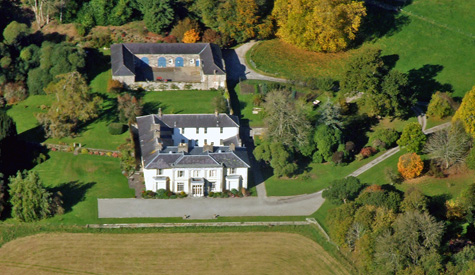
Sir Norman Stronge Bt

DEDICATED TO THE ESTEEMED AND ILLUSTRIOUS MEMORY OF THE RIGHT HONOURABLE SIR CHARLES NORMAN LOCKHART STRONGE, BARONET, MC, JP,  AND HIS ONLY SON, JAMES MATTHEW STRONGE, BRUTALLY MURDERED ON THIS DAY IN 1981

I first had the great honour of meeting Sir Norman Stronge (1894-1981) after a concert in the late seventies, when I was still a teenager.

I was at the Northern Ireland Area British Legion Festival of Remembrance, taking place at the County Hall near Ballymena, County Antrim.

It was usually held at the Ulster Hall in Belfast but, due to "the Troubles," took place at the County Hall for several years. 


Sir Norman was Area President of the Royal British Legion.

He was an old man by then, tall and distinguished with a good head of grey hair; upright with a benign smile; distinguished-looking and wearing a double-breasted chalk-stripe suit.

He always wore a neatly clipped moustache.

Sir Norman struck me as being a true gentleman from a previous era, seldom encountered today.

Sir Norman had had an illustrious life and career.

The baronetcy was first created in 1803, and Sir Norman was the 8th Baronet.

He served as Lord Lieutenant of County Armagh from 1939 till his death in 1981 under two successive monarchs, including GEORGE VI; and sat as a member of the NI House of Commons from 1938-69, including a spell as Speaker from 1945-69.

The late Douglas Deane OBE recalled Sir Norman's passion for wildlife at Tynan Abbey:

He went to live and farm at Tynan Abbey in 1928 and always his interest was in wild things; often he told me about the wildfowl which visited the lake in winter; the groups of Bewick swans; the flocks of white-fronted geese... 

he showed me an incubating woodcock, hidden in a pool of brown leaves by the edge of the main drive at Tynan and told me that his gamekeeper had seen a woodcock carry one of its young, held between its legs, from an open patch in the woods in to cover; and many times had watched a woodcock feed its young in the same fashion as pigeons.

Every year Sir Norman would invite me to Tynan to see the azaleas in colour and the seas of bluebells in the woods and always there was talk of butterflies, painted ladies, peacock and the rest.


Mr Deane continued:

Sir Norman was the envy of his friends, being an excellent shot. He would often finish a day's shooting with close to 200 pigeons...his cousin, Sir Basil Brooke [1st Viscount Brookeborough], had the edge on him and always seemed to finish the day with more.


TYNAN ABBEY, County Armagh, was built in 1750 and enlarged in the Tudor-Gothic style around 1820-30.

It had an imposing two-storey entrance front, battlemented and pinnacled; a battlemented central tower and doorway too, with pointed Gothic windows.

Much has already been written about the Abbey by authors more knowledgeable than myself.


Originally, the estate extended to some 8,000 acres.

One quiet Wednesday evening at around nine o'clock, 21st January, 1981, Sir Norman - by now in his 87th year - and his son, James (48), were having a quiet drink in the library of Tynan Abbey following their dinner, when they heard a loud explosion in close proximity.

Unknown to them, a gang of heavily-armed men had been stalking out the Abbey and its grounds earlier and the explosion had been caused by a hand-grenade thrown at the heavy, wooden front door.

The Stronges would have had a reasonable idea, by this stage, that they were being attacked.

He kept a flare nearby, and opened the window to fire it in an attempt to alert others to the grave situation.

As it happened, a police patrol did notice the flare but, by that stage, it was too late.

The gang quickly located Sir Norman and his son in the library and opened fire on them, at point blank range, killing them instantaneously.

The gang then placed fire-bombs throughout Tynan Abbey and made their escape in a southerly direction into the relatively safe jurisdiction of the Irish Republic.

The great mansion, and its priceless contents, was utterly destroyed; indeed, its ruinous shell had to be demolished later because it was unsafe.

Although there ensued a ferocious gun-battle with the police, the gang fled.

I'd only wish to conclude by quoting from a small article by Turtle Bunbury:

We stopped first in the village of Tynan to view the High Cross, a replica of which now surmounts Bourke and Anne Cochrane's grave in New York.

We could just make out some images - perhaps Shadrach and his brothers hot-stepping it on fire-coals, maybe Adam and Eve contemplating a serpent. The Church where the Stronges are buried stands close by. 

The last baronet, Sir Norman Stronge, and his son, James, were murdered by the Provisional IRA in 1981. Sir Jack, who knew them both, says father and son were quietly watching TV when a hand grenade blew their front door of its hinges.

Sir Norman managed to let off a flare but the police got there too late. The two men were machine gunned to death and the house burned down. The perpetrators all met unhappy ends - either shot by their own comrades or captured and incarcerated.

My father and I attended their funeral at Tynan parish church.


I remember the Duke of Abercorn wearing a heavy, tweed, raglan overcoat.

Notwithstanding the passing of so many years, this vile act has continued to stick in my memory.

The mere thought of such a heinous atrocity still deeply saddens me to this very day.

First published in January, 2014.

James Ussher DD

A voluminous pedigree of this family, and all the various branches, compiled by Sir William Betham, Ulster King-of-Arms, commences with ARLAND USSHER, Bailiff of Dublin, 1460-2, Mayor of Dublin, 1469-71, who married firstly, Alsone Taylor, by whom he had a daughter, Margaret, and an only son, Thomas.

Arland Ussher wedded secondly, Anne Berford, and had further issue,
JOHN, of whom we treat;
Robert, dsp;
Philip, dsp;
Christopher, ancestor of USSHER OF EASTWELL.
The eldest son of his second marriage,

JOHN USSHER, Sheriff of Dublin, 1524, espoused, in 1485, Johanna, daughter of William Foster, of Killeigh, and had issue,
Arland;
THOMAS, of whom hereafter.
The younger son,

THOMAS USSHER, married Margery, daughter of Henry Geydon, and had issue,
John;
Henry (Most Rev), Lord Archbishop of Armagh;
ARLAND, of whom hereafter;
Christopher;
Rose; Ales; Katherine.
The third son,

ARLAND USSHER (c1552-98), wedded Margaret, daughter of James Stanihurst, and had issue,
JAMES, his heir;
Ambrose;
Sarah; Ellinor; Margaret; Mabel; Anne.
The eldest son,

THE MOST REV AND RT HON DR JAMES USSHER (1581-1656), Lord Archbishop of Armagh, Primate of All Ireland, espoused, in 1614, Phœbe, daughter of the Rev Luke Challoner, and had issue, an only child, ELIZABETH (1620-93).

At the age of 13 James Ussher entered the newly founded Trinity College in Dublin and had a distinguished academic career.

He was ordained by his uncle, Dr Henry Ussher (Archbishop of Armagh), in 1602.

Dr James Ussher,  Photo Credit: The National Trust

During the Irish rebellion of 1641 most of Archbishop Ussher's property was destroyed.

His Grace later lived in London and Oxford, and with his only daughter Elizabeth (wife of Sir Timothy Tyrrell) in Wales.

For a short time, while the Dean of Westminster was imprisoned in the Tower of London, Dr Ussher used the Deanery at Westminster.

He attended the funeral of CHARLES I at Oxford, but later also found favour with Cromwell.

Oliver Cromwell, in fact, ordered his burial in the Chapel of St Paul in Westminster Abbey, and paid the funeral expenses.

It is thought that this was the only occasion at which the Anglican funeral service was read in the Abbey during the Commonwealth period.

The present Irish marble gravestone in the Abbey, with brass lettering, was erected until 1904, and the Latin inscription was written by Dr Gwynn (Regius Professor at Trinity College) and others.

It can be translated thus:
In pious memory of JAMES USSHER who was born in Dublin in 1581, entered among the first students of Trinity College, promoted to the archiepiscopal see of Armagh, 
Primate of all Ireland, the hundredth heir of St Patrick the apostle of Ireland, historian, critic, theologian, most learned among the holy, most holy among the learned, 
Exiled from his own in this city of Westminster, he fell asleep in Christ in 1656. 
He was expelled from his sacred see and country by those same seditions which went on to grant him burial in this church among the most honoured. 
This stone was placed by George Salmon, Provost of the same college, 1904.
Ussher's coat-of-arms appears at the base of the stone, surmounted by a mitre.

This shows the arms of the See of Armagh impaling Ussher (azure, a chevron ermine between three batons, or).

First published in December, 2019.

Thursday, 18 January 2024

Baronston House

THE MALONES WERE MAJOR LANDOWNERS IN COUNTY WESTMEATH, WITH 13,715 ACRES 


EDMOND MALONE, of Ballynahown, married, in 1569, Margaret, daughter of Richard Dalton, of Milltown, by whom he had issue, one son,

EDMOND MALONE, of Ballynahown, who wedded firstly, in 1599, Rose, daughter of John Coghlan (The Maw); and secondly, Catherine Pettyt.

By the latter he had a son, John, who was settled at Cartrons, County Westmeath, in the neighbourhood of his father, and a daughter, Mary; and by the former he was father of a son and heir,

EDMOND MALONE, of Ballynahown, who espoused, in 1617, a daughter of Garrett Byrne, and left a son and successor,

EDMOND MALONE, of Ballynahown, who married, in 1644, Mary, daughter of Brazel Fox, of Kilcoursy, and had two sons,
EDMOND, his heir;
ANTHONY, ancestor of BARON SUNDERLIN.
The younger son,

ANTHONY MALONE, of Baronston, married, in 1673, Mary, daughter of John Reilly, of Lismore, County Cavan, and granddaughter of the Earl of Roscommon, and was father of

RICHARD MALONE (1674-), of Baronston, the celebrated lawyer and orator, who wedded, in 1698, Marcella, daughter of Richard Molady, by Mary his wife, daughter of John Malone, of Cartrons, and had issue,
ANTHONY (Rt Hon), MP;
Edmond, MP; father of RICHARD, 1st BARON SUNDERLIN;
Richard, MP;
Anne Jane Frances; Mary; Margaret; Marcella.
The elder son of Edmond Malone and Mary Fox his wife,

EDMOND MALONE, of Ballynahown, High Sheriff of County Westmeath, 1756-7, wedded, in 1674, Anne, daughter of Henry L'Estrange, of Moystown, King's County, and had (with a daughter) three sons,
RICHARD, of Ballynahown;
Henry;
Anthony (1700-76).
The eldest son,

RICHARD MALONE (1706-59), of Ballynahown, espoused, in 1717, Anne, daughter of Sir Thomas Crosbie, of Ballyheigue, County Kerry, and had issue,
Edmond, MP for Ardfert; dsp 1759;
HENRY, his heir;
Anthony (Rev);
Elizabeth.
The second son,

HENRY MALONE, of Ballynahown, married Anne, daughter of Henry Morres Jones, of Moneyglass, County Antrim, and had a son,

EDMOND MALONE, of Ballynahown, who wedded, in 1774, his cousin Mary, eldest daughter of John O'Connor, of Mount Pleasant, King's County, and had issue,
EDMOND, of whom presently;
John;
Henry;
Maria; Anne.
His eldest son,

EDMOND MALONE, of Ballynahown, Captain, Black Horse Regiment, espoused, in 1813, Henrietta, daughter of John Chomley, of Belcamp, County Dublin.

He died in 1818, and left issue,
Edmond, died unmarried, 1836;
JOHN RICHARD, of whom hereafter;
Harriette.
The only surviving son,

JOHN RICHARD MALONE JP DL (1817-94), of Baronston, High Sheriff of County Westmeath, 1852, married firstly, in 1844, Elizabeth, daughter of Colonel Henry Peisley L'Estrange, of Moystown, King's County, and by her had issue,
JOHN RICHARD, his successor;
Henry L'Estrange.
He wedded secondly, in 1868, Anna Jane, youngest daughter of Robert William Lowry DL, of Pomeroy, County Tyrone, and Belmore, County Westmeath.

His eldest son,

JOHN RICHARD MALONE JP DL (1846-), High Sheriff of County Westmeath, 1896, Colonel Commanding 6th Battalion, Rifle Brigade, espoused firstly, in 1872, Charlotte Mildred, daughter of the Hon John Yarde Buller, and sister of John, 2nd Baron Churston, and had issue,
JOHN RICHARD MORDRED HENRY L'ESTRANGE;
Roderick O'Connor Vivian Henry Vere;
Victor Mildred Charles.
Colonel Malone wedded secondly, in 1893, Catherine Cecil, daughter of Major J W Percy, and had further issue,
Henry Anthony Percy;
Richard Maurice Fitzgerald;
Barbara Grace Maria Patricia.

BARONSTON HOUSE, Ballynacargy, County Westmeath, was a late 18th century house consisting of a three-storey centre block joined to two-storey wings by curved sweeps.

The centre block had a seven-bay front with a pedimented breakfront; a three-bay projecting porch; wings of five bays.

Having suffered a series of fires, the centre block was replaced, in 1903, by a large, gabled, Edwardian villa, with the sweeps and wings remaining on either side.

Baronston was sold in 1929 and subsequently demolished.

Sunderlin arms courtesy of European Heraldry.  First published in January, 2012.

Wednesday, 17 January 2024

Salterbridge House

THE CHEARNLEYS WERE MAJOR LANDOWNERS IN COUNTY WATERFORD, WITH 18,165 ACRES

SAMUEL CHEARNLEY (son of Anthony Chearnley, of Kilgrogy) married Mary, daughter of Philip Moore, and had issue,
ANTHONY, of whom presently;
Samuel.
Mr Chearnley died in 1741, and was succeeded by his elder son,

ANTHONY CHEARNLEY (c1716-55), of Spring Park, Affane, County Waterford, who wedded firstly, Anna Gervais, by whom he had a son, Thomas; and secondly, Janet, daughter and co-heir of Richard Musgrave, of Salterbridge, County Waterford, and had issue,
Samuel;
RICHARD, of whom hereafter;
ANTHONY, succeeded his brother;
Christopher;
Joseph;
John;
Christopher;
Janet; Mary; Elizabeth.
The eldest son of his second wife,

RICHARD CHEARNLEY, of Salterbridge, succeeded to his mother's property in 1760, and died childless, 1791, when he was succeeded by his brother,

ANTHONY CHEARNLEY (1761-1842), of Salterbridge, High Sheriff of County Waterford, 1809, who wedded firstly, in 1796, Julia Browne, of Gallstown, County Meath; and secondly, Isabella, daughter of the Most Rev Dr William Newcombe, Lord Archbishop of Armagh, and had issue,

Anthony, died unmarried;
RICHARD, of whom hereafter;
William;
Edward;
Philip;
Philip;
John.
The second son,

RICHARD CHEARNLEY JP DL (1807-63), of Salterbridge, High Sheriff of County Waterford, 1842, espoused Mary, daughter of the Ven Henry Cotton, Archdeacon of Cashel, and had issue,

RICHARD ANTHONY, his successor;
HENRY PHILIP, succeeded his brother;
William John;
Walter Cecil;
Isabella Mary; Frances; Mary.
Mr Chearley was succeeded by his eldest son,

RICHARD ANTHONY CHEARNLEY JP DL (1850-79), of Salterbridge, High Sheriff of County Waterford, who died unmarried, 1879, and was succeeded by his brother,

HENRY PHILIP CHEARNLEY JP DL (1852-1916), of Salterbridge, High Sheriff of County Waterford, 1882,  Major, Waterford Artillery Militia, who espoused, in 1879, Anne Elizabeth, daughter of John Palmer, of Tralee, and had issue,

Anthony Richard;
HENRY JOHN;
Charles Leopold;
Cecil Philip;
Aileen.
Major Chearnley was succeeded by his eldest surviving son,

HENRY JOHN CHEARNLEY (1882-1935), Captain, supplementary list, RFA, who wedded, in 1910, Dora, second daughter of Henry Lamont, of Gribton, Dumfriesshire.


His daughter Janet, who married Anthony Chearnley of Affane, inherited the property, and it remained in the ownership of the Chearnley famly until 1947.


SALTERBRIDGE HOUSE, near Cappoquin, County Waterford, is a two-storey house, built in 1849 on to the front of an earlier house around three sides of a courtyard.

The original house on this site was built in about 1750 by Richard Musgrave on land which had been acquired from the Lismore Castle estate.

The 1849 front comprises a three-bay projecting centre with a parapet and plain pilasters between the bays.


There are two-storey, one-bay wings with eaved roofs and single-storey three-sided bows.

The house has Wyatt windows, some with wooden mullions; a glazed classical porch; many Georgian glazed windows in the courtyard.


The drawing-room is remarkable for its ceiling decoration of scrolls and shields.

The Victorian country house’s grounds are filled with camellias, magnolias, rhododendrons and many other woodland shrubs.

Philip and Susie Wingfield have opened the house and gardens to visitors.

There are many fine trees, including most notably four splendid Irish yews, a cork oak, an Indian horse chestnut and a single leaved ash.

The garden is at its best in the spring.

First published in July, 2012.

Tuesday, 16 January 2024

1st Earl of Donoughmore

THE EARLS OF DONOUGHMORE OWNED 4,711 ACRES OF LAND IN COUNTY TIPPERARY
AND 2,878 ACRES OF LAND IN COUNTY WATERFORD

THE RT HON JOHN HELY-HUTCHINSON (1724-94), an eminent lawyer and statesman of Ireland (son of Francis Hely, of Gortroe, County Cork, by a daughter of Christopher Earbury or Earberry), married, in 1751, CHRISTIANA, daughter of Abraham Nickson, of Munny, County Wicklow, and niece and heir of Richard Hutchinson, of Knocklofty, County Tipperary (in consequence of which marriage he assumed the additional surname of HUTCHINSON), and had issue,
RICHARD, his heir;
JOHN, 2nd Earl;
Francis, of Lissen Hall; father of the 3rd Earl;
Augustus Abraham;
Christopher;
Lorenzo;
Christiana; Mary; Prudence; Margaret.
Rt Hon John Hely-Hutchinson

Mr Hely-Hutchinson obtained a peerage for his wife, CHRISTIANA, in 1783, in the dignity of Baroness Donoughmore, of Knocklofty, County Tipperary.

Christiana, Baroness Donoughmore

Her ladyship died in 1788, and was succeeded in the barony by her eldest son,

RICHARD HELY, 2nd Baron (1756-1825); who was advanced to a viscountcy, as Viscount Donoughmore; and further advanced to the dignity of an earldom, in 1800, as EARL OF DONOUGHMORE.

His lordship died unmarried, when the family honours devolved upon his brother,

JOHN HELY, 2nd Earl (1757-1832), GCB, a general in the army, Governor of Stirling Castle, Knight Grand Cross of the Bath, who died unmarried, when the honours he had inherited passed to his nephew,

JOHN, 3rd Earl (1787-1851), KP, who wedded firstly, in 1822, Margaret, daughter of Luke, 1st Viscount Mountjoy, and had issue,
RICHARD JOHN, his successor;
Margaret.
He espoused secondly, in 1827, Barbara, daughter of Lieutenant-Colonel William Reynell, and had further issue,
John William, b 1829;
Kathleen Alicia; Frances Margaret; Jane Louisa.
His lordship was succeeded by his eldest son,

RICHARD JOHN, 4th Earl (1823-66), who married, in 1847, Thomasina Jocelyn, daughter of Walter Steele, and had issue,
JOHN LUKE GEORGE, his successor;
Walter Francis (Sir);
Patrick Maurice;
Granville William;
Margaret Frances; Mary Sophia.
His lordship was succeeded by his eldest son,

JOHN LUKE GEORGE, 5th Earl (1848-1900), KCMG JP DL, who wedded, in 1874, Frances Isabella, daughter of General William Frazer Stephens, and had issue,
RICHARD WALTER JOHN, his successor;
Nina Blanche; Evelyn; Norah; Margarita Oonagh Isabella.
His lordship was succeeded by his only son,

RICHARD WALTER JOHN, 6th Earl (1875-1948), KP JP DL, who espoused, in 1901, Elena Maria, daughter of Michael Paul Grace, and had issue,
JOHN MICHAEL HENRY, his successor;
David Edward;
Doreen Clare.
His lordship was succeeded by his eldest son,

JOHN MICHAEL HENRY, 7th Earl (1902-81), Colonel, Royal Armoured Corps (TA), MP for Peterborough, 1943-5, who married, in 1925, Dorothy Jean, daughter of John Beaumont Hotham, and had issue,
RICHARD MICHAEL JOHN, his successor;
Mark;
Sara Elena.
His lordship was succeeded by his elder son,

RICHARD MICHAEL JOHN, 8th Earl (1927-), who sold Knocklofty Estate in 1985.


KNOCKLOFTY HOUSE, near Clonmel, County Tipperary, was the mansion of the Earls of Donoughmore.

The estate is almost four miles west-south-west of Clonmel.

The mansion stands on an extensive natural terrace on the left bank of the River Suir.

It commands a delightful prospect of the richly wooded slopes and highly adorned rising grounds of the Waterford side of the valley.

The demesne is - or was - extensive, containing some of the finest old elms and limes in the counties of Tipperary and Waterford.

The 18th century mansion comprises a three-storey central block, with two-storey, gable-ended wings projecting forward on the entrance front to form a three-sided court.

The centre block consists of seven bays, and the wings comprise two bays in their gable ends.


In the early 1800s a single-storey corridor was built along the front of the centre block, joining the wings, embellished with wreathes and Doric pilasters.


The central garden front, overlooking the River Suir, comprises five bays with an exceptionally long, two-storey service wing.

The demesne spreads across the River Suir into County Waterford, including Kilmanahan Castle, formerly a separate property.

The original, intricate gate piers are notable.

The 7th Earl and Countess were kidnapped from Knocklofty House in 1974 by an IRA gang and held captive for four days before being released in Phoenix Park, Dublin.

The family left several years later.

The estate was recently for sale.

Other residence ~ Palmerstown House, near Dublin.

First published in May, 2020.  Donoughmore arms courtesy of European Heraldry.

Sunday, 14 January 2024

New DL

APPOINTMENT OF DEPUTY LIEUTENANT


Mr David McCorkell, Lord-Lieutenant of County Antrim, has been pleased to appoint

Mrs Jacqueline DIXON MBE

To be a Deputy Lieutenant of the County her Commission bearing date the 8th day of January 2024


Signed:

Lord Lieutenant of the County

James Spottiswood DD

Arms of Dr John Spottiswoode
Archbishop of St Andrews
THE RT REV DR JAMES SPOTTISWOOD, LORD BISHOP OF CLOGHER, 1621-45

The surname of SPOTTISWOOD was assumed by the proprietors of the lands and barony of Spottiswood, in the parish of Gordon, Berwickshire, as soon as surnames became hereditary in Scotland.

The immediate ancestor of the family was

ROBERT DE SPOTTISWOOD, Lord of Spottiswood, who was born in the reign of ALEXANDER III, King of Scotland, and died in that of ROBERT THE BRUCE, leaving a son and heir,

JOHN SPOTTISWOOD, of that ilk, living in the reign of DAVID II, King of Scotland, whose son and heir,

ROBERT SPOTTISWOOD, of that ilk, married a daughter of the ancient family of Lichton, of Ulishaven, Forfarshire, sister of the celebrated Dr Henry de Lichton, first Bishop of Moray, and was father of

HENRY SPOTTISWOOD, of that ilk, who died in the end of the reign of JAMES II, of Scotland, leaving a son and successor,

JAMES SPOTTISWOOD, of that ilk, a staunch loyalist and firm adherent to the interest of JAMES III, for which he was forfeited, but reinstated subsequently, by JAMES IV; soon afterwards he died, leaving by his wife a son and heir,

WILLIAM SPOTTISWOOD, of Spottiswood, who fell at Flodden, in 1513, with JAMES IV.

He had married Elizabeth, daughter of Henry Hop Pringle, and had issue (with a daughter and a son, Hugh), two elder sons,
David, his heir;
JOHN, of whom we treat.
The younger son,

JOHN SPOTTISWOOD (1510-85), DD, a man of great learning and piety, espoused Beatrix, daughter of Patrick Crichton, of Lugton and Gilmerton, and had issue (with a daughter), two sons,
John, his heir;
JAMES, of whom hereafter.
Dr Spottiswood's younger son,

THE RT REV DR JAMES SPOTTISWOOD (1567-1645), Lord Bishop of Clogher, was born at Calder in Scotland on the 7th September, 1567.

He was admitted to the University of Glasgow in 1579, and in 1581 entered royal service.

He travelled with JAMES VI, King of Scotland, on his voyage to meet his wife, Anne of Denmark, and in 1598 acted as secretary to ambassadors to Denmark and Germany.

After JAMES VI became also JAMES I of England, Spottiswood was ordained in the Church of England, 1603, and became Rector of Wells in Norfolk.

Dr Spottiswood remained there until 1616, when he was involved in a visitation of the University of St Andrews, from where he graduated Doctor of Divinity.

In 1621 Spottiswood accepted the bishopric of Clogher in Ulster, but fled to England when the Irish rebellion broke out in 1641.

He died at Westminster in 1645, and was buried in St Benedict's chapel in Westminster Abbey on the 31 March.

No record survives of his grave or of any inscription which may once have been on it.

Spottiswood had married before his ordination and left a son, Sir Henry Spottiswood, and a daughter Mary.

The latter married Abraham Crichton, ancestor of the Earls of Erne.

First published in December, 2019.