When I was on holiday recently I spent the day on a little beach near the village of El Cotillo, on the island of Fuerteventura, Canary Islands.
Fuerteventura is renowned for its strong winds, though in my experience this can range from a gentle breeze to very strong, including what amounts to sand-storms on some of the island's beautiful beaches.
Many regular visitors to these beaches bring wind shelters with them.
I have one now myself, called the Quechua Arpenez 0.
This small wind-breaker measures almost three and a half feet in height, weighs two and a quarter pounds (about one kilogram in continental weight).
The bag containing it measures fifteen inches by three and a half inches (38cm x 9cm).
If you're taking hand luggage with you on the flight this bag shall fit easily into your baggage.
DAILY avian visitors to Cotillo Beach are the most captivating little birds, Turnstones, which forage along the beach and rocks for food.
Sometimes they are heard before they are seen because their call is quite distinctive.
I had some bread with me, which they seemed to appreciate, though apparently their preferred foods are insects and molluscs.
I have never seen turnstones literally turning stones over with their beaks in search of food.
Are there any in Northern Ireland?
Showing posts with label Birds. Show all posts
Sunday, 1 December 2019
Wednesday, 27 April 2016
Which Bird?
Although I'm not madly obsessed with wildlife, it does interest me.
La Concha beach lies to the north of El Cotillo.
At this beautiful little beach there is a well-known beach bar called Torino's.
Many years ago, Torino's father-in-law, Bill, often took the food and drink orders and acted generally as Mine Host.
I liked Bill. He had a sort of Cockney charm and affability with customers, especially British ones.
Alas, Bill has now retired and Torino cooks the grub in a tiny galley kitchen behind the beach bar.
I digress.
The principal purpose of bringing the iPad today was to photograph a certain kind of bird on the beach (no, not the 36-24-36 type).
Prey enlighten me.
Labels:
Birds
,
El Cotillo
Thursday, 14 January 2016
Ballymacormick Stonechat
| Female stonechat |
I've been outdoors for most of the day, at Ballymacormick Point, County Down.
This coastline belongs to the National Trust.
It comprises about thirty-three acres and was acquired in 1952 from Thomas Kingan.
Today, as is frequently the case, we were cutting gorse.
I parked at Groomsport and we met at the entrance to the property.
Thankfully it was dry with sunny intervals, though there was a bitterly cold wind.
We spotted stonechats, a sparrowhawk, and lapwings today.
Labels:
Birds
,
The National Trust
Tuesday, 30 September 2014
Blue Tit Nest
I cleared out the blue tit nest-box today.
It's located on a wall at the north side of the house.
As can be seen, one chick didn't manage to fledge.
It's located on a wall at the north side of the house.
As can be seen, one chick didn't manage to fledge.
Labels:
Birds
Monday, 4 November 2013
Bird Nest Removal
I removed the blue tits' nest from the north-facing bird-box this morning.
I heard the chicks in June and, of course, the dutiful parents flying back and forth directly into the box at the blink of an eye.
However, they had all fledged and vacated the nest before I could see them again.
The actual spot where the bird laid its eggs was beside the rear-facing side of the box, at the wall.
I heard the chicks in June and, of course, the dutiful parents flying back and forth directly into the box at the blink of an eye.
However, they had all fledged and vacated the nest before I could see them again.
The actual spot where the bird laid its eggs was beside the rear-facing side of the box, at the wall.
Labels:
Birds
Monday, 10 June 2013
Fledglings
I have a family of blue tits nesting in my box beside the kitchen window. The chicks are now quite vociferous.
The parents have been dutifully popping in and out, their tiny beaks containing soft insects and caterpillars.
However, in the last few days I have discerned that the frequency of the visits to the box, though regular, have lessened.
Are the parents endeavouring to coax their offspring out into the brave new world, by generating hunger?
I expect the chicks to vacate their snug home imminently.
The parents have been dutifully popping in and out, their tiny beaks containing soft insects and caterpillars.
However, in the last few days I have discerned that the frequency of the visits to the box, though regular, have lessened.
Are the parents endeavouring to coax their offspring out into the brave new world, by generating hunger?
I expect the chicks to vacate their snug home imminently.
Labels:
Birds
Tuesday, 9 April 2013
Clandeboye Birds
Anthony McGeehan will give a talk about the birds at Clandeboye estate, County Down, seat of the Marchioness of Dufferin and Ava, on Thursday, 11th April, 2013, at 7.30pm:-
Labels:
Birds
Monday, 25 June 2012
Sparrow & Spider
I was standing at the kitchen window on Saturday morning, looking at a spider on its web at the window.
Outside, on a fence, a little sparrow was perched.
It must have spotted me observing the spider, because suddenly it flew over and hovered at the web, its wings flapping franticly, about four feet from me.
The small bird proceeded to take aim and consumed the spider at once, whilst hovering.
Then it flew back to its perch; a wonderful sight and quite extraordinary.
Outside, on a fence, a little sparrow was perched.
It must have spotted me observing the spider, because suddenly it flew over and hovered at the web, its wings flapping franticly, about four feet from me.
The small bird proceeded to take aim and consumed the spider at once, whilst hovering.
Then it flew back to its perch; a wonderful sight and quite extraordinary.
Labels:
Birds
Sunday, 6 May 2012
Great Spotted Woodpecker
I can confirm that I heard the distinctive sound of a great spotted woodpecker in the woods close to the sea-shore at Delamont Park, County Down, today.
Craig Nash tells me that the first breeding pair in Ireland was at Finnebrogue and they started to breed about four years ago.
Here is link to one of the Finnebrogue Birds:-
http://www.flickr.com/photos/peregrinebirdphoto/3566712478/
Craig Nash tells me that the first breeding pair in Ireland was at Finnebrogue and they started to breed about four years ago.
Here is link to one of the Finnebrogue Birds:-
http://www.flickr.com/photos/peregrinebirdphoto/3566712478/
Labels:
Birds
Tuesday, 27 September 2011
Thriving Red Kite
Having been introduced to Northern Ireland four years ago, it seems that the red kite is thriving.
This brings to 80 the total number of birds released by the Royal Society for the Protection of Birds (RSPB) in Northern Ireland.
Altogether five chicks have fledged from four nests across south Down.
Once widespread across Europe, red kites have suffered from persecution, including shooting and poisoning.
News of the breeding success news was announced by the RSPB at the third and final release of the majestic birds in County Down, part of the reintroduction programme.
The RSPB said it was thrilled that, from having no Red Kites in Northern Ireland four years ago, there was now a fledgling breeding population.
"It has been a real labour of love and so many people have contributed to this process," Adam McClure, RSPB Red Kite officer said.
Since the project began in Northern Ireland in 2008, they have suffered a number of losses due to misuse of pesticides in the countryside.
After an absence of 200 years, red kites have successfully bred in the forests of Northern Ireland.
This brings to 80 the total number of birds released by the Royal Society for the Protection of Birds (RSPB) in Northern Ireland.
Altogether five chicks have fledged from four nests across south Down.
Once widespread across Europe, red kites have suffered from persecution, including shooting and poisoning.
News of the breeding success news was announced by the RSPB at the third and final release of the majestic birds in County Down, part of the reintroduction programme.
The RSPB praised the co-operation of farmers and landowners in achieving the conservation milestone. The birds are now regularly seen across County Down and further afield.
"It has been a real labour of love and so many people have contributed to this process," Adam McClure, RSPB Red Kite officer said.
"The return of Red Kites to our skies is a tribute to all of them. Most important was the co-operation given by local farmers who have been extremely supportive; the fact that the Ulster Farmers' Union now has the Red Kite on their logo is superb."Despite the successes, however, it has not all been good news for Red Kites.
Since the project began in Northern Ireland in 2008, they have suffered a number of losses due to misuse of pesticides in the countryside.
Labels:
Birds
Saturday, 2 July 2011
Pigeons Beware!
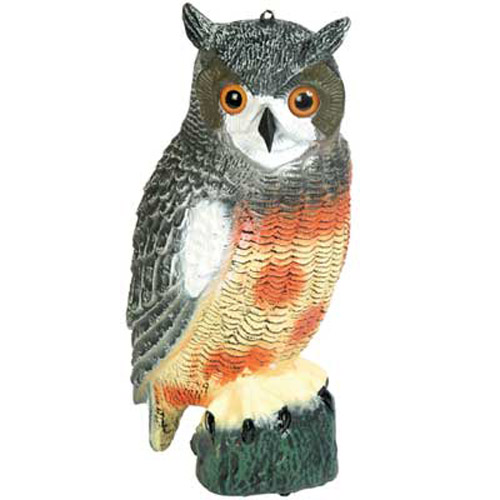
In an attempt to deter feral pigeons below my bird feeders, I have invested in a large, plastic, owl costing £6.99, at a local store called Wyse-Byse.
It shall be interesting to see whether this action produces the desired effect.
Apparently eagle owls enjoy a pigeon or three for dinner, if they can gets their talons on them.
Labels:
Birds
Saturday, 25 June 2011
Goldfinch Origin
CLICK TO ENLARGE
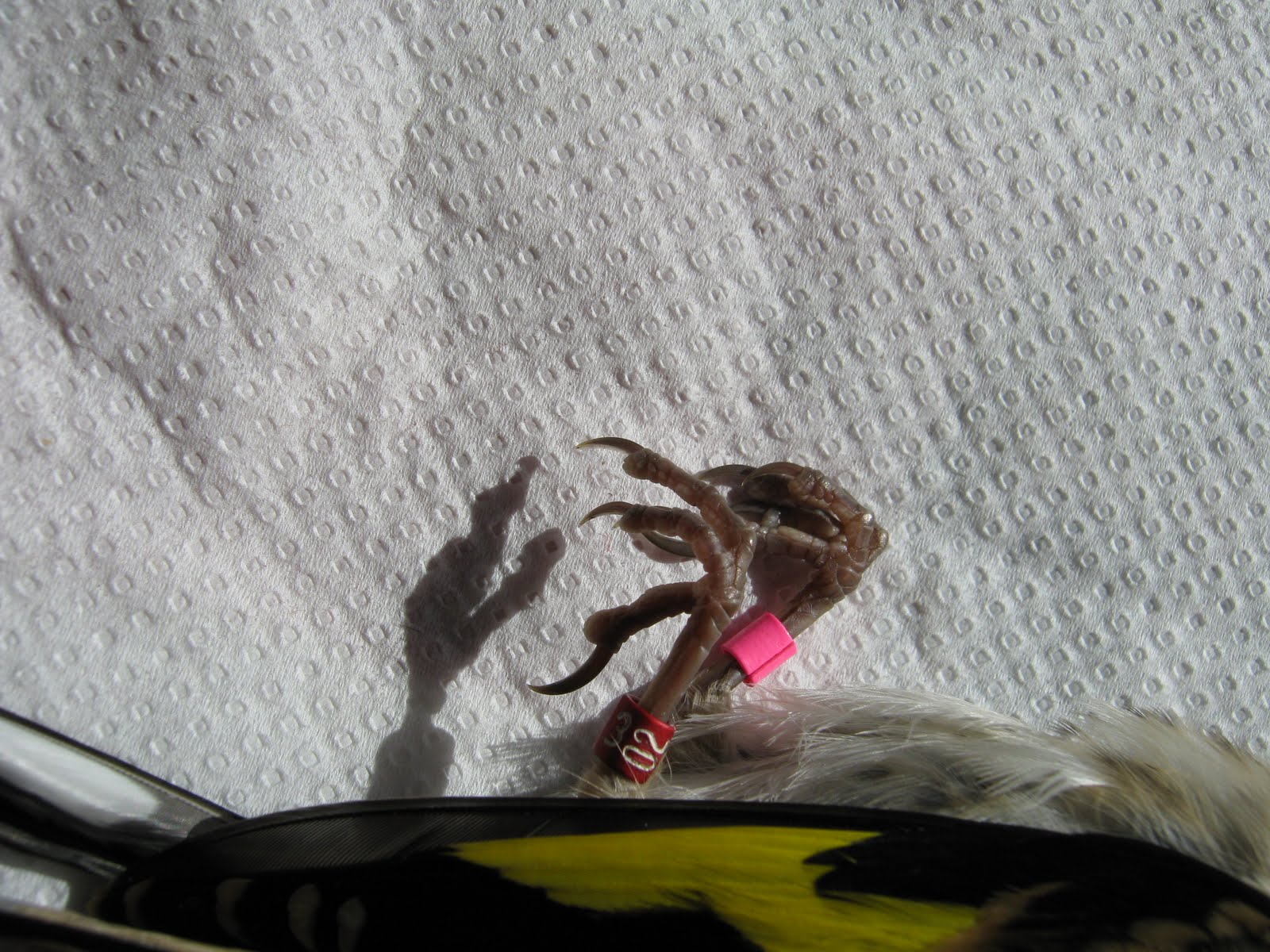
I heard an almighty bang against my bedroom window early this morning and realized immediately that one small bird must have scored a direct hit.
True enough, when I peered out later, there was a juvenile goldfinch lying dead on the ground.
Curiously, it has coloured tags on each leg, viv. red and pink. I have photographed the details.
Can any readers advise or help on how to discover where this little bird was tagged?
Labels:
Birds
Monday, 20 June 2011
Pigeon Pie?
I have a slight problem with feral pigeons. Anyone care to send over a hawk? Seriously, though, a flock numbering about eight come regularly to peck away underneath my feeders. They are hard to eradicate.
I have the feeders suspended from a large, prickly berberis bush and, today, I have taken to cutting several branches and placing them at strategic points along the ground.
I am hopeful that this action shall produce the desired effect! We will see.
I've spotted bullfinches more often lately.
I have the feeders suspended from a large, prickly berberis bush and, today, I have taken to cutting several branches and placing them at strategic points along the ground.
I am hopeful that this action shall produce the desired effect! We will see.
I've spotted bullfinches more often lately.
Thursday, 2 June 2011
Nest-Count Day
Wednesday morning began with a drive to Whiterock, near Killinchy in County Down, where I parked the two-seater and met Hugh, Craig and the others.
We boarded the National Trust's Strangford Lough cruiser Carbo, with its 100 horse-power outboard, and made off towards Round Island, our first destination.
The day was spent nest-counting on Round Island, Bird Island, Drummond Island, Great Minnis's Island and Little Minnis's Island.
The National Trust has special permission to monitor bird numbers on the Lough, even on private islands. As far as I am aware, the general public is not allowed on the islands during the breeding season.
Bird numbers must be monitored on behalf of government agencies. Nest counts do, indeed, disturb breeding birds for a very short period; though, of course, the Trust does it sensitively and with the least disturbance possible.
Most of the nests on these islands belonged to Herring Gulls, Great Black-backed Gulls, Eider Ducks, some Oystercatchers and Common Gulls.
Bird Island, near Kircubbin, has a large colony of cormorants and I acted as a scarecrow in order to deter the gulls from swooping down and taking cormorant chicks, while the others counted the nests.
When we left the island in our boat, one juvenile paddled out and followed us. It was struggling, so we motored along and grabbed it; swathed it in a towel; and took it back to Bird Island, where there are 437 cormorant nests in 2011.
That's me, squatting on the bow above. Our boat, Carbo, is named after Phalacrocorax carbo, the cormorant species.
It was a wonderful day.
Labels:
Birds
,
The National Trust
Wednesday, 1 June 2011
Strangford Cormorants
CLICK TO ENLARGE
Timothy Belmont has had a field day on several islands of Strangford Lough. I will write a full article tomorrow; though in the interim I have pleasure in posting one picture of cormorant chicks on Bird Island (west of Kirkubbin).
We counted 437 cormorant nests on the island.
Labels:
Birds
Saturday, 19 February 2011
Feeder Success
I peered out of the window this morning, as one does, and thought I saw a bird pecking at my apple feeder. This feeder has been suspended from a branch for weeks and nothing appears to have shown any interest in it whatsoever; until now.
I produced my binoculars and, on closer observation, can confirm that the apple-lover is a blackcap!
I am hoping that there'll be more to follow.
Labels:
Birds
Thursday, 30 December 2010
New Apple Feeder
What ho! I have constructed my new avian apple-feeder, having followed the instructions from Craig, Northern Ireland's premier bird blogger, and the result can be seen.
All I need now is a supply of cheap apples! I expect I'll get them tomorrow.
What do you reckon, Craig?
Sunday, 5 September 2010
Long-Tailed Tits
The bullfinches have been regular visitors to my feeders this week. There is a male, a juvenile and possibly a female. They seem to be quite shy and are easily spooked.
Yesterday I was delighted to see three long-tailed tits at the peanut feeder. They remained for a few minutes.
Labels:
Birds
Monday, 30 August 2010
Bullfinch Sighting
I was almost certain that I had spotted a bullfinch at the feeders this morning. Bullfinches are rare visitors to my feeders. I viewed the feeders through the binoculars at eight o'clock, a few minutes ago, and how wonderful it was to see a pair of bullfinches, the male nearest to me and the female at the back.
I wonder when they'll be back...
Labels:
Birds
Subscribe to:
Posts
(
Atom
)