Showing posts with label County Cork Landowners. Show all posts

Wednesday, 22 April 2026

Glengarriff Castle

THE WHITES WERE MAJOR LANDOWNERS IN COUNTY CORK, WITH 16,175 ACRES


The family of WHITE claimed to derive its descent from a brother of the Rt Rev John White, Bishop of Winchester, in 1557. The immediate ancestor of this noble family came to Ireland during the English civil war which commenced in 1641.


This brother's descendant in the fourth degree, 

RICHARD WHITE, of Bantry, County Cork, son of Richard White, of Bantry, married, in 1734, Martha, daughter of the Very Rev Rowland Davies, of Dawston, County Cork, Dean of Cork and Ross, and had issue,
SIMON, his heir;
Margaret, m Richard, Viscount Longueville.
The only son,

SIMON WHITE, of Bantry, wedded, in 1760, Frances Jane, daughter of Richard Hedges Eyre, of Mount Hedges, County Cork, by Helena his wife, daughter of Thomas Herbert, of Muckross Abbey, County Kerry, and dsp, having had issue,
RICHARD, of whom presently;
Simon;
Hamilton;
Helen; Martha; Frances.
The eldest son,

RICHARD, 1ST EARL OF BANTRY (1767-1851), espoused, in 1799, the Lady Margaret Anne Hare, daughter of William, 1st Earl of Listowel, and had issue,
Richard, 2nd Earl;
William Henry Hare, 3rd Earl;
SIMON, of whom we treat;
Robert Hedges;
Mary.
The third son,

COLONEL THE HON SIMON WHITEwedded, in 1801, Sarah, daughter of John Newenham, of Maryborough, and had issue,
ROBERT HEDGES EYRE, his heir;
Edward Richard;
Fanny Rosa Maria; Harriet.
Colonel White died in 1838, and was succeeded by his eldest son,

ROBERT HEDGES EYRE WHITE (1809-), of Glengarriff Castle, County Cork, who married, in 1834, Charlotte Mary, only daughter and heir of Thomas Dorman, of Raffeen House, County Cork, and had issue,

ROBERT HEDGES EYRE WHITE (1836-), of Raffeen House, who espoused, in 1860, Mary Anne d'Esterre, daughter of John Roberts, of Ardmore, County Waterford, and had issue,
Robert Hedges Eyre, b 1862;
Simon, b 1863;
Edward, b 1869;
Anna Mary; Frances Dorothy.

GLENGARRIFF CASTLE, County Cork, is a partially castellated house overlooking Glengarriff harbour.

It has a long, two-storey range with shallow, curved bows and ogee-headed windows.

At one end there is a square tower; the other end having a considerably loftier, battlemented round tower.

The round tower joins the main block to a battlemented wing at an obtuse angle to its end.


The Castle was built in the 1790s by Colonel Simon White, brother of the 1st Earl of Bantry.

It was built in the Gothic style, with a panoramic view of Glengarriff Bay.

The woodlands of the estate encompass a wide variety of trees including Oak, Beech, Japanese Red Cedar, European Larch, Chilean Pine and a variety of shrub and flora species.

Wildlife to be seen include red squirrel, sika deer, seals, fox and pine marten.

Over the years, Glengarriff has extended hospitality to royalty, artists and writers, such as Thackeray, Synge and Yeats; and, when living in the area, George Bernard Shaw is said to have written his play St Joan here.


The actress Maureen O'Hara, who starred with John Wayne in The Quiet Man, for many years kept a holiday home adjacent to Glengarriff Castle.

The castle operated as a resort until the late 1970s, when it became derelict.

In 2020 the Castle was purchased by Peter McGill, of Holywood, County Down, who is restoring the property.

First published in May, 2013.

Thursday, 12 February 2026

Doneraile Court

THE VISCOUNTS DONERAILE WERE MAJOR LANDOWNERS IN COUNTY CORK, WITH 16,400 ACRES

The ancient family of ST LEGER is of French extraction, and derives from SIR ROBERT SENT LEGERE, Knight, as the name was then written, one of the companions in arms of WILLIAM THE CONQUEROR; and, according to a family tradition, the person who supported that prince with his arm when he quitted the ship to land in Sussex. This Sir Robert, having overcome a pagan Dane who inhabited the manor of Ulcombe, in Kent, fixed his abode there; and in that place his posterity flourished for many generations.

The lineal descendant of Sir Robert, 

SIR ANTHONY ST LEGER KG (c1496-1559), of Ulcombe, Kent, went first into Ireland in 1537, being appointed by HENRY VIII one of the commissioners for letting the Crown lands there, and returning into England, was constituted Lord Deputy of Ireland, in 1540.

In 1543, he was recalled to inform the King of his administration of affairs, which gave His Majesty such satisfaction that he created him a Knight of the Garter, and sent him back as Lord Deputy; in which high office he continued until 1556, serving three sovereigns, when, being recalled by QUEEN MARY, he retired to his estate in Kent, and died there in 1559.

Sir Anthony married Agnes, daughter of Hugh Warham, and was succeeded by his second, but eldest surviving son, 

WILLIAM ST LEGER, father of

SIR WARHAM ST LEGER, who was appointed President of Munster in 1566, by Sir Henry Sidney, Lord Deputy of Ireland.

In 1580, he caused James of Desmond, who was denominated a notorious rebel, to be hanged under martial law at Cork.

Sir Warham was killed, 1600, in battle (in single combat), by Hugh Maguire, Lord of Fermanagh, who fell himself at the same time.

He wedded Ursula, youngest daughter of George, Lord Abergavenny, and was succeeded by his son,

THE RT HON SIR WILLIAM ST LEGER (1586-1642), Privy Counsellor, Lord President of Munster, 1627, MP for Cork County, 1634, who was appointed, in that year, Sergeant-Major-General in the Army.

Sir William was subsequently employed against the rebels in Ireland.

He married Gertrude de Vries, a Lady of Lower Germany, and left with other issue (from which descended the St Legers of Yorkshir, and General St Leger),
WILLIAM, his heir;
JOHN, successor to his brother;
Heyward.
The eldest son,

SIR WILLIAM ST LEGER, Knight, MP for Cork County, 1639, who fell at the battle of Newbury, 1644, was succeeded by his brother,

JOHN ST LEGER, of Doneraile, County Cork, who wedded the Lady Mary Chichester, elder daughter and co-heir of the 1st Earl of Donegall, and was succeeded by his son,

THE RT HON ARTHUR ST LEGERof Doneraile, who was elevated to the peerage, 1703, in the dignities of Baron Kilmayden and VISCOUNT DONERAILE.

His lordship espoused, in 1690, Elizabeth, daughter and heir of John Hayes, of Winchilsea, and had issue,
ARTHUR, his successor;
John;
Hayes;
Elizabeth.
He died in 1727, and was succeeded by his eldest son, 

ARTHUR, 2nd Viscount (1694-1734), who wedded firstly, in 1717, Mary, only child of Charles, Lord Mohun (who lost his life in a duel with the Duke of Hamilton), and had an only son,

ARTHUR MOHUN.

His lordship wedded secondly, in 1738, Catherine Sarah, daughter of Captain John Conyngham, but had no surviving issue.

He was succeeded by his only son,

ARTHUR MOHUN, 3rd Viscount (1718-50), who espoused firstly, in 1738, Mary, daughter of Anthony Shepherd, of Newcastle, County Longford; and secondly, in 1739, Catherine, eldest daughter of the Viscount Massereene; but died childless, when the honours reverted to his uncle, 

HAYES, 4th Viscount (1702-67), who married, in 1722, Elizabeth, eldest daughter and co-heir of Joseph Deane, Chief Baron of the Irish Exchequer; but dying without issue, when the titles became EXTINCT, and the family estates devolved upon his nephew,

ST LEGER ALDWORTHMP for Doneraile, 1749-76; and upon succeeding to the estates of his maternal ancestors, assumed the surname and arms of ST LEGER.

He was elevated to the peerage, in 1776, in the dignity of Baron Doneraile; and advanced to a viscountcy, in 1785, as VISCOUNT DONERAILE (second creation).

His lordship wedded Mary, eldest daughter of Redmond Barry, of Ballyclough, County Cork, by whom he had,
HAYES;
Richard, grandfather of the 5th and 6th Viscounts;
James;
Arthur;
Barry Boyle;
Henrietta; Elizabeth; Mary; Louisa Anne; Caroline Catherine; Charlotte Theodosia; Georgiana.
His lordship died in 1787, and was succeeded by his eldest son,

HAYES, 2nd Viscount (1755-1819), MP for Doneraile, 1777-87, High Sheriff of County Cork, 1780, who espoused, in 1785, Charlotte, fourth daughter of James Bernard, of Castle Bernard, and sister of Francis, 1st Earl of Bandon, and had issue,
HAYES;
Charlotte; Harriet.
His lordship was succeeded by his only son,

HAYES, 3rd Viscount (1786-1854), High Sheriff of County Cork, 1812, who married, in 1816, his first cousin, the Lady Charlotte Esther Bernard, second daughter of Francis, 1st Earl of Bandon, and had issue, an only child,

HAYES, 4th Viscount (1818-87), DL, High Sheriff of County Cork, 1845, who wedded, in 1851, Mary Anne Grace Louisa, daughter of GEORGE LENOX-CONYNGHAM, and had issue,
Hayes Warham, died in infancy;
Ursula Clara Emily; May.
His lordship was succeeded by his second cousin,

RICHARD ARTHUR, 5th Viscount (1825-91), who died unmarried, and was succeeded by his nephew,

EDWARD, 6th Viscount (1866-1941), who died unmarried, and was succeeded by his brother,

HUGH, 7th Viscount (1869-1956), who espoused, in 1919, Mary Isobel, daughter of Francis Morice, though died without issue, and was succeeded by his cousin,

ALGERNON EDWARD, 8th Viscount,
The heir apparent is the present holder's son, the Hon Nathaniel Warham Robert St John St Leger.
*****

The 4th Viscount was one of the great Victorian hunting men, and his demise was both ironic and macabre: he kept a pet fox which was housed near the gate at the side of the Court.

The fox became rabid and bit its master.

Lord Doneraile contracted rabies, and was smothered with pillows by the housemaids to spare him suffering and prevent him spreading the disease to others.


DONERAILE COURT, Doneraile, County Cork, comprising three storeys and seven bays, dates from the early 18th century.

A cut-stone front was added ca 1730.


The house has a three-bay breakfront, blocked quoins, crisply-moulded window surrounds with scroll keystones in the two upper storeys, and a door-case with Ionic columns and a scroll pediment.

Later in the 18th century curved end bows were added; and later still, the side elevation was extended by a bow-fronted addition, thus becoming a garden front of three bays between two bows.


On the other side of the house, a wing containing a new dining-room was added in 1869 by the 4th Viscount of the 2nd creation, though this was demolished relatively recently.

During the Victorian era, ninety gardeners were employed to maintain the parkland.

The 7th Viscount died at Doneraile Court in 1956.


The estate and its 400 acres was bought by the Irish state in 1969 from the St Leger family, for the purpose of creating a wildlife preserve.

In 2011, there was a €10m  plan to turn the house and its extensive grounds into a major tourist attraction, focused on turning the historic Doneraile Court into a tourist mecca.

First published in December, 2012. 

Thursday, 4 December 2025

1st Baron Fermoy

THE BARONS FERMOY WERE MAJOR LANDOWNERS IN COUNTY CORK, WITH 15,543 ACRES

The family of DE LA RUPE, or ROCHE, according to the Irish Peerage, and Rudiments of Honour, by Francis Nichols, published in 1727, were materially descended from CHARLEMAGNE; and in the remarkable pedigree of the ancestors of this family, it is shown that they derive their descent from the most illustrious sources, their progenitors being allied, by intermarriages, with the great Counts of Flanders, the Counts of Bavaria, ALFRED, and other Saxon Kings of England; the House of Capet in France, WILLIAM THE CONQUEROR, and other Anglo-Norman kings.

The Roches came to Ireland in the reign of HENRY II, along with other Anglo-Norman chiefs in Strongbow's time; and in the reigns of RICHARD I and KING JOHN, they got large grants of lands in County Cork, in the territory of Fermoy, which, from them, was called Roche's Country, and they erected a castle, and founded a Cistercian monastery at Fermoy, and they had seats at Castletown Roche and other places.


RALPH DE LA ROCHE, son of Alexander de Rupe, alias DE LA ROCHE, was the patriarch of the family in Ireland.

He married Elizabeth de Clare, by the Princess Joan of Acre, his wife, daughter of EDWARD I and his Queen, ELEANOR, of Gilbert de Clare, 7th Earl of Gloucester.

This Ralph was father of

DAVID DE LA ROCHE, father of

JOHN DE LA ROCHE, Lord of Fermoy, County Cork, whose son,

MAURICE FITZ-JOHN DE LA ROCHE, Lord of Fermoy, was direct ancestor of

DAVID ROCHE, Lord Roche, surnamed The Great, who sat in Parliament as VISCOUNT ROCHE, of Fermoy, in the reigns of EDWARD IV and HENRY VII.

He married Jane, daughter of Walter Burke, called MacWilliam, and had issue,
MAURICE, his successor;
Redmond;
Ulick;
Theobald;
William;
Philip;
Gerald;
Edmond;
Jacob;
Helena.
His lordship died ca 1492, and was succeeded by his eldest son,

MAURICE ROCHE, Viscount Fermoy, who married twice; and by Joanna, his first wife, daughter of James, Earl of Desmond, had a son and successor,

DAVID ROCHE, Viscount Fermoy, father, by Catherine his wife, daughter of MacCarthy Mor, of a son and successor,

MAURICE ROCHE, Viscount Fermoy, who wedded Grania MacCarthy, and had issue,
DAVID, his successor;
William;
John;
Helena; Marcella; Catherine.
The eldest son,

DAVID ROCHE, Viscount Fermoy, who succeeded his father in 1566, espoused Helena, daughter of James, 10th Baron Dunboyne, and had issue,
Maurice, his successor;
William;
EDMOND, of whom we treat;
Gerald;
James.
The third son,

EDMOND ROCHE, died in 1540, leaving (with a daughter, Joan, married, in 1508, to David de Courcy, Baron Kingsale) a son,

MAURICE ROCHE, Mayor of Cork, 1571, received an autograph letter from ELIZABETH I, with a patent and collar of sterling silver, in acknowledgment of his services in suppressing the rebellion of the Earl of Desmond.

He died in 1593, leaving three sons, JOHN, Edward, and Patrick, and was succeeded by the eldest,

JOHN ROCHE, who dsp, and the estates devolve upon his brother,

EDWARD FITZMAURICE FITZEDMOND ROCHE, who died in 1626, leaving three sons,
FRANCIS;
Edward;
Maurice.
The eldest son,

FRANCIS ROCHE (c1610-69), High Sheriff of County Cork, 1641, who entertained Sir Warham St Leger, Lord President of Munster, at his seat, Trabolgan, and assisted him for the King.

Mr Roche married Jane Coppinger, by whom he left at his decease (with a younger son, Edmond, an elder son and heir,

EDWARD ROCHE (1645-96), of Trabolgan, who wedded, in 1672, Catherine, daughter of James Lavallin, of Walterstown, County Cork, and had issue (with four daughters),
FRANCIS, his heir;
Edmond;
Maurice and
James, who both died in France.
The eldest son and heir,

FRANCIS ROCHE (c1673-1755), of Kildinan and Trabolgan, died unmarried, when the former estate descended to his elder nephew, Edmond, before mentioned, and the latter of Trabolgan, to his other nephew,

EDWARD ROCHE, of Trabolgan, who wedded, in 1781, Susanna, elder daughter of Sir George Wombwell Bt, of Wombwell, Yorkshire, by whom he had one son, Edmond Edward, who predeceased him in 1803, a prisoner of war at Lyons.

Mr Roche died in 1828, and bequeathed his estates to his nephew (only son of his elder brother, Edmond),

EDWARD ROCHE (1771-1855), of Trabolgan and Kildinan, County Cork, who married in 1805, Margaret Honoria, only child and heiress of William Curtain, and had issue,
EDMOND BURKE, his heir;
Frances Maria.
Mr Roche's only son and heir,

EDMOND BURKE ROCHE (1815-74), Lord-Lieutenant of County Cork, 1856-74, wedded, in 1848, Elizabeth Caroline, daughter of James Brownell Boothby, and had issue,
EDMUND FITZEDMUND BURKE, his successor;
JAMES BOOTHBY BURKE, 3rd Baron;
Alexis Charles Burke;
Ulick de Rupe Burke;
Edmund Burke;
Eleanor Charlotte; Ethel Kathleen; Eliza Caroline.
Mr Roche, MP for County Cork, 1837-55, Marylebone, 1855-69, was elevated to the peerage, in 1865, in the dignity of BARON FERMOY, of County Cork.

His lordship was succeed by his eldest son,

EDMUND FITZEDMUND BURKE, 2nd Baron (1850-1920), JP DL, who espoused, in 1877, Cecila, daughter of Standish, 3rd Viscount Guillamore, and had issue, an only child, ADA SYBIL.

His lordship died without male issue, when the title devolved upon his brother,

JAMES BOOTHBY BURKE, 3rd Baron (1851-1920), MP for East Kerry, 1896-1900, who married, in 1880, Frances Ellen, daughter of Frank M Work, and had issue,
EDMUND MAURICE BURKE, his successor;
Francis George;
Eileen Burke; Cynthia Burke.
His lordship was succeeded by his eldest son,

EDMUND MAURICE, 4th Baron (1885-1955), who married, in 1931, Ruth Sylvia, daughter of Colonel William Smith Gill, and had issue,
EDMUND JAMES BURKE, his successor;
Mary Cynthia Burke;
FRANCES RUTH BURKE, COUNTESS SPENCER; mother of DIANA, PRINCESS OF WALES;
His lordship was succeeded by his son and heir,

EDMUND JAMES BURKE, 5th Baron (1939-84), who wedded, in 1964, Lavinia Frances Elizabeth, daughter of Major John Pitman, and had issue,
PATRICK MAURICE BURKE, his successor;
Edmund Hugh Burke;
Frances Caroline Burke; Elizabeth.
His lordship was succeeded by his eldest son,

PATRICK MAURICE BURKE, 6th Baron (1967-), who married, in 1998, Tessa Fiona, daughter of Major David Pelham Kayle, and has issue,
Arabella Elizabeth Burke, b 1999;
Eliza Lavinia, b 2000.

TRABOLGAN, near Whitegate, County Cork, was a Georgian house comprising two storeys at the front, and three at the rear.

Single storey wings were added during the 19th century, creating a long facade.

The main block comprised two storeys and eight bays, with wings of five bays on either side.

It had a roof parapet and a single-storey Doric portico.

The wings had round-headed windows.

The mansion was approached by an avenue exceeding one mile in length.

Half-way along this avenue there is a triumphal arch; and a tower on the headland between the house and Roche's Point at the entrance to Cork harbour.

The family sold Trabolgan ca 1880 to William Clarke, whose family sold it in 1947.

The mansion house was demolished in 1982.

Trabolgan subsequently became a holiday camp.

Other former seats ~ Kilshannig, County Cork; Park House, Sandringham, Norfolk.

First published in December, 2019.  Fermoy arms courtesy of European Heraldry.

Tuesday, 4 November 2025

Lohort Castle

THE EARLS OF EGMONT WERE MAJOR LANDOWNERS IN COUNTY CORK, WITH 16,776 ACRES 

 The ancient and illustrious house of PERCEVAL is supposed, by many suggestive circumstances, to take its origin from a younger branch of the sovereign Dukes of Brittany in France; out of which province they were transplanted to Normandy before its conquest, and were invested with the hereditary office of Chief Butlers of that duchy.


DAVID PERCEVAL, Lord of Tykenham, Rolleston, etc, Somerset, married Alice, daughter of Thomas Bythemore of Overwere, and died in 1534, leaving issue,
James, dsp 1548;
GEORGE, of whom presently;
Thomas.
The second son,

GEORGE PERCEVAL (c1532-c1601), Lord of Tykenham, wedded Elizabeth, daughter of Sir Edward Bamfylde, of Poltimore, in Devon; and dying about 1599, left, with a daughter Elizabeth, a son,

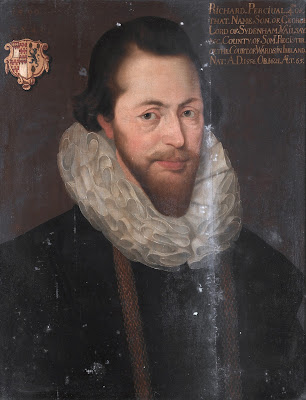
Richard Perceval (Wikipedia)

RICHARD PERCEVAL (1550-1620). The life of this ultimately successful person was chequered and eventful in no ordinary degree.

He was educated at St Paul's School, then the most celebrated seminary in England, whence he was sent to Lincoln's Inn, to acquire some general idea of the laws, esteemed, in those days, an accomplishment of the highest description.

In both his progress was brilliant, but his conduct dissipated and disorderly, so much so indeed, that he incurred the displeasure of his father, who, upon his marriage with Joan Young, entirely abandoned him, observing, that as he had ruined himself by his riots, he might recover himself by his wits.

Thus unnaturally cast off, Mr Perceval found means, by the credit of his reversionary estates, and the assistance of his friends, to maintain himself several years, during which time he three sons and two daughters: but at length, through a failure of resources, and the increasing expenses of his family, he was obliged to quit the kingdom, and travelled into Spain, where he remained about four years.

Being then informed of his wife's decease, he returned to England, hoping, now that principal cause of his father had been removed, he might again recover his good opinion; but that hope proving delusive.

Having subsequently filled the office of Secretary of the Court of Wards in England, for several years, he was nominated in 1616, Registrar of the Court of Wards in Ireland, where, after obtaining considerable landed property, he died and was succeeded by his son (by his second wife),

SIR PHILIP PERCEVAL (1605-47), Knight, a very distinguished statesman, who, having been actively employed in the government of Ireland for a series of years, obtained grants of forfeited lands there to the extent of 101, 000 acres.

He wedded Catherine, granddaughter of Sir William Usher, Clerk of the Council, and daughter of Arthur Usher by his wife, Judith, daughter of Sir Robert Newcomen, of Moystown, County Longford, and had issue,
JOHN, his heir;
George, father of PHILIP.
Sir Philip was succeeded by his eldest son,

SIR JOHN PERCEVAL (1629-65), Knight, was created a baronet in 1661, by patent, containing this remarkable clause that, "the eldest son, or grandson, shall exist a baronet, after the age of 21 years, at the same time with the father or grandfather."

His great-grandson,

THE RT HON SIR JOHN PERCEVAL (1683-1748), who, after becoming a privy counsellor, and sitting for several years in the Irish House of Commons, was elevated to the peerage of that kingdom, by patent, in 1715, as Baron Perceval.

His lordship wedded, in 1710, Catherine, daughter of Sir Philip Parker Bt, and had issue,
JOHN, his successor;
Philip;
George;
Catherine; Anne; Mary; Helena.
John, 1st Earl of Egmont (Wikipedia)

His lordship was advanced to a viscountcy, in 1722, as Viscount Perceval, of County Cork, with the annual fee of twenty marks, payable out of the Exchequer, attached, to support the honour.

In 1732, this nobleman obtained a charter to colonise the province of Georgia, in America, and being nominated president thereof; and was further advanced to the dignity of an earldom, in 1733, as EARL OF EGMONT.

His lordship was succeeded by his eldest son,

JOHN, 2nd Earl (1711-70), who married twice, and had sixteen children, of which his eldest son,

JOHN JAMES, 3rd Earl (1738-1822), espoused, in 1765, Isabella, daughter of Lord Nassau Powlett (son of Charles, 2nd Duke of Bolton), and had issue, an only child,

JOHN, 4th Earl (1767-1835), who married, in 1792, Bridget, daughter of Glyn Wynn, and had issue, an only child,

HENRY FREDERICK JOSEPH JAMES, 5th Earl (1796-1841), who wedded, in 1828, Louisa Maria, daughter of Comte D'Orselet, and had issue, an only child, who died in infancy; when the titles reverted to his cousin,

GEORGE JAMES, 6th Earl (1794-1874), third but eldest surviving son of Charles, 2nd Baron Arden (eldest son of John, 2nd Earl of Egmont), who espoused, in 1819, Jane, daughter of John Hornby; the marriage, however, was without issue, when the titles devolved upon his lordship's nephew,

CHARLES GEORGE, 7th Earl (1845-97), DL, MP, grandson of the 2nd Baron Arden, who married, in 1869, Lucy, daughter of Henry King; the marriage, however, was without issue, when the titles reverted to his cousin,

AUGUSTUS ARTHUR, 8th Earl,
  • Augustus Arthur Perceval, 8th Earl (1856–1910);
  • Charles John Perceval, 9th Earl (1858–1929) (dormant);
  • Frederick Joseph Trevelyan Perceval, de jure 10th Earl (1873–1932);
  • Frederick George Moore Perceval, 11th Earl (1914–2001) (claim admitted 1939);
  • Thomas Frederick Gerald Perceval, 12th Earl (1934–2011).

Following the death of the 12th and last Earl the titles became extinct


LOHORT CASTLE is near Cecilstown, County Cork.

This historic castle is an impressive five-storey fortified tower with rounded corners, standing over eighty feet tall.

The massive walls are ten feet thick at the base, narrowing to six feet.

Around the top storey there is a machicolated parapet that runs unbroken apart for a short section on the eastern side.

There used to be a deep moat around the castle with a drawbridge.

The castle grounds cover more than one hundred acres.

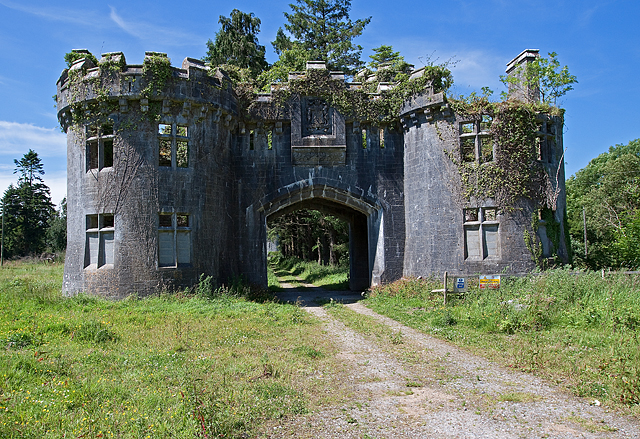
Lohort Castle was built ca 1496 by Donogh Og McDonagh McCarthy.

The castle was taken by the Irish forces during the civil war.

One of the bloodiest battles of the English civil war took place in the grounds of Lohort Castle in 1647, when over 4,500 men were killed in battle.

Lohort was bombarded by Oliver Cromwell's troops in 1650 and captured, but the castle withstood the cannon fire due to the immense strength of its thick walls.

Lohort Castle Gatehouse

The castle as it now stands was rebuilt ca 1750 by Sir John Perceval, 1st Earl of Egmont, and the Percevals lived there until the 20th century, when it was burnt by the IRA in 1922.

Some of the fireplaces from nearby Kanturk Castle appear to have been relocated to Lohort Castle; this was probably done when Lohort Castle was restored in the 18th century.

Lohort subsequently became the home of Sir Timothy O'Brien Bt, a well-known cricketer.

First published in August, 2012.   Egmont arms courtesy of European Heraldry.

Thursday, 31 July 2025

Bantry House

THE EARLS OF BANTRY WERE THE GREATEST LANDOWNERS IN COUNTY CORK, WITH 69,500 ACRES

The family of WHITE derives its descent from Sir Thomas White, of Rickmansworth, Hertfordshire, the founder of St John's College, Oxford, and brother of the  Right Reverend John White, Lord Bishop of Winchester, 1557.

Following the restoration of CHARLES II, Sir Thomas White, of Rickmansworth, settled in Ireland, where he purchased land debentures granted by CROMWELL to his army officers during the civil wars, and had a son,


RICHARD WHITE,
of Bantry (who was maternally descended from the Hamiltons of Armagh), who married, in 1734, Martha, daughter of the Very Reverend Roland Davis, Dean of Cork, and had issue,
SIMON, his heir;
Hamilton;
Margaret.
Mr White was succeeded by his son,

SIMON WHITE, who married, in 1760, Frances Jane, daughter of Richard Hedges, of Mount Hedges, County Cork, and predeceased his father, leaving issue,
RICHARD;
Simon;
Hamilton;
Edward;
Helen; Martha; Frances.
Mr White died in 1816, and was succeeded by his eldest son,

RICHARD WHITE (1767-1851); who was presented with a gold medal by the city of Cork for his spirited exertions on the arrival of the French forces in Bantry Bay, in 1797.

Coat-of-arms of 1st Viscount Bantry

Mr white was consequently raised to the peerage, in 1797, in the dignity of Baron Bantry; and advanced to a viscountcy, in 1800, as Viscount Bantry.

His lordship was further advanced, in 1816,  to the dignities of Viscount Berehaven and EARL OF BANTRY.

He married, in 1799, the Lady Margaret Anne Hare, eldest daughter of WILLIAM, 1ST EARL OF LISTOWEL, and had issue,
RICHARD, 2nd Earl;
WILLIAM HENRY HARE, 3rd Earl;
Simon;
Maria.
His lordship was succeeded by his eldest son,

RICHARD, 2nd Earl (1800-68), High Sheriff of County Cork, 1835, who wedded, in 1836, the Lady Mary O'Brien, third daughter and co-heir of William, 2nd Marquess of Thomond; though dsp 1868, when the family honours devolved upon his brother,

WILLIAM HENRY HARE (1801-84), 3rd Earl, who wedded, in 1845, Jane, eldest daughter of Charles John Herbert, of Muckross Abbey, County Kerry, and had issue,
WILLIAM HENRY HARE, his successor;
Elizabeth Mary Gore; Olivia Charlotte; Emily Anne; Ina Maude; Jane Frances Anna.
His lordship assumed, in 1840, the additional name of HEDGES.

He was succeeded by his eldest son,

WILLIAM HENRY HARE, 4th Earl (1854-91), who espoused, in 1886, Rosamund Catherine, daughter of the Hon Edmund George Petre, by whom he had no issue.

His lordship died in 1891, when the titles expired.

*****

THE WHITES had settled on Whiddy Island across the Bay in the late 17th century, after having originally been merchants in Limerick.

The family prospered and considerable purchases of land were made in the area surrounding the house.

After the failure of the 1641 Irish Rising the Cromwellian soldiers were rewarded with grants of land in the Bantry area, the Earl of Anglesey receiving 96,000 acres.

Many of the settlers became disenchanted with the lonely farming life and the lands granted to Lord Anglsey and his officers were bought by a member of the White family.

The Whites engaged in farming, clearance of the forests, iron ore smelting etc and prospered.

The town of Bantry, at the head of the bay, is associated with the Irish rebellion of 1798 as being the place where an earlier attempt to land launch a rebellion was made by a French fleet, including Wolfe Tone in December 1796.

The French fleet consisting of 43 ships carrying 15,000 troops had divided mid-Atlantic into smaller groups to avoid interception by the Royal Navy with orders to reform at Bantry Bay.

The bulk of the fleet arrived successfully, but several ships, including the flagship Fraternité carrying General Hoche were delayed.

While awaiting their arrival, bad weather intervened and the lack of leadership, together with uneasiness at the prospect of being trapped, forced the decision to return to France.

Tone wrote of the expedition in his diary, saying that "We were close enough to toss a biscuit ashore".

Richard White, having heard about the invasion had trained a militia to oppose the landing as he and his tenants were loyal to the Crown.

Munitions were stored in Bantry House for safe keeping.

Look-outs were posted on Both Mizen Head and Sheep's Head to send warning of an invasion.

In the end the French armada never had a chance of landing.

The weather was too severe, and even ship to ship communication was too difficult.

Ten ships were lost.

One of these vessels, the Surveillante, remained on the bottom of Bantry bay for almost 200 years.

For his efforts in preparing the local defences against the French, Richard White, a local landowner, was created Baron Bantry in 1797.

A viscountcy followed in 1800 and, in 1816, he was created Viscount Berehaven and EARL OF BANTRY.

He was the grandson of Richard White, who had made an immense fortune through his work as a lawyer.

Lord Bantry was succeeded by his son, the 2nd Earl, who sat on the Conservative benches in the House of Lords from 1854-68.

His younger brother, the 3rd Earl, assumed in 1840 by Royal license the additional surname of Hedges, which was that of his paternal grandmother.

The titles became extinct on the death of his son, the 4th Earl, in 1891.

Egerton Shellswell-White, great-grandson of the 3rd Earl, took over the running of Bantry from his mother in about 1978.

It now comprises one hundred acres, mainly woodland.


BANTRY HOUSE (originally called 'Blackrock'), County Cork, was constructed ca 1740 on the south side of Bantry Bay.

In 1750, Councillor Richard White bought Blackrock from Samuel Hutchinson and changed its name to Seafield.


The main block of the mansion consists of a square, three-storey, five-bay house built about 1740 for the Hutchinson family.

A wing was added on one side later in the 18th century after the House was acquired by Richard White, being the same height as the original block, though only of two storeys with a curved bow at the front and rear; and a six-bay elevation at the side.


In 1845, Richard White,Viscount Berehaven and later the 2nd Earl, enlarged and remodelled Bantry House. He travelled extensively throughout Europe, building an enviable art collection.


The 2nd Earl added the long, fourteen-bay front at the opposite side of the original block to the late 18th century wing, comprising a six-bay centre of two storeys over a basement; and three-storey, four-bay bow-ended wings lined with huge Corinthian pilasters of red brick.

The House is entered through a glazed Corinthian colonnade, similar to the one on the garden front.

The Library, sixty feet long, has four scagliola columns which support the compartmented ceiling.

The Blue Dining-room (below) has life-sized portraits of GEORGE III and Queen Charlotte in sumptuous frames, presented to the 1st Earl by royal command.

The two drawing-rooms feature exquisite French tapestries from the Gobelin, Aubusson and Beauvais workshops brought to Ireland after the French Revolution by the 2nd Earl.

The Aubusson tapestries were manufactured for Marie Antoinette following her marriage to the Dauphin, later LOUIS XVI.

The gardens to Bantry House were developed by the 2nd Earl and his wife Mary.

Inspiration was taken from their travels across Europe.

The gardens contain seven terraces; the house is located on the third.

One hundred steps are located behind the house and are built to appear to rise out of a fountain and are surrounded by azaleas and rhododendron.

The gardens are constantly tended and maintained.

By 1997 the grounds of Bantry House were suffering from neglect in certain places.

A European grant was obtained to start the restoration process. Funding ceased in 2000.

Restoration work continues.

First published in April, 2011.  Bantry arms courtesy of European Heraldry.

Monday, 19 May 2025

Warren's Court

THE WARREN BARONETS OWNED 7,787 ACRES OF LAND IN COUNTY CORK


This family was anciently settled in Cornwall.

ROBERT WARREN, of Kinneigh, in the barony of East Carbery, County Cork, an officer in WILLIAM III's army during the Revolution, died in 1662, leaving by Margery his wife three sons and three daughters, of whom the youngest son, 

WALLIS WARREN, of Kilbarry (Warren's Court by purchase, 1688), married, in 1684, Elizabeth, daughter of Thomas Knolles, and had issue (with two daughters), two sons, of whom the elder son and heir,

ROBERT WARREN, of Kilbarry, County Cork, wedded Anne, sister of William Crooke, of Muskerry, and had issue,
ROBERT, his heir;
William;
Elizabeth; Alice.
Mr Warren died in 1743, and was succeeded by his eldest son,

ROBERT WARREN JP (1723-1811), of Warren's Court and Crookstown House, County Cork, High Sheriff of County Cork, 1752, who espoused firstly, in 1748, Mary, daughter of Augustus Carey (or Carré), and had issue,
AUGUSTUS LOUIS CARRÉ, his heir;
John;
Thomas (Rev), great-grandfather the of 8th Baronet;
William;
Robert;
Edward Webber;
Mary.
He married secondly, in 1780, Elizabeth, daughter of John Lawton, and had further issue,
Richard Benson;
Henry;
Alice Augusta.
Elizabeth.
Mr Warren was created a baronet in 1784, designated of Warren's Court, County Cork.

Sir Robert was succeeded by his eldest son,

SIR AUGUSTUS LOUIS CARRÉ WARREN, 2nd Baronet (1754-1821), High Sheriff of County Cork, 1796, MP for Cork City, 1783-90, who wedded, in 1778, Mary, third daughter of James Bernard, of Castle Bernard, County Cork, and sister of Francis, Earl of Bandon, and had issue,
AUGUSTUS, his successor;
JOHN BORLASE, 4th Baronet;
Esther; Charlotte.
Sir Augustus was succeeded by his eldest son,

SIR AUGUSTUS WARREN, 3rd Baronet (1791-1863), High Sheriff of County Cork, 1819, Colonel, Cork Militia, who died unmarried, when the title passed to his next brother,

SIR JOHN BORLASE WARREN, 4th Baronet (1800-63), who espoused, in 1823, Mary, daughter of Robert Warren, and had issue,
AUGUSTUS RIVERSDALE, his successor;
John Borlase, Vice-Admiral;
Robert;
Elizabeth; Margaret; Charlotte; Esther; Rose Catherine; Frances Augusta; Mary.
Sir John was succeeded by his eldest son,

SIR AUGUSTUS RIVERSDALE WARREN, 5th Baronet (1833-1914), JP DL, of Warren's Court, High Sheriff of County Cork, 1867, who married, in 1864, Georgina Elizabeth, daughter of the Rev John Blennerhassett, and had issue, an only child,

SIR AUGUSTUS RIVERSDALE JOHN BLENNERHASSETT WARREN, 6th Baronet (1865-1914), JP, Lieutenant, 3rd Royal Munster Fusiliers, who wedded, in 1898, Agnes Georgina Ievers, and had issue, an only child,

SIR AUGUSTUS GEORGE DIGBY WARREN, 7th Baronet (1898-1958), MBE, Major, 17th/21st Lancers, who died unmarried, when the title passed to his distant cousin,

SIR THOMAS RICHARD PENNEFATHER WARREN, 8th Baronet (1885-1961), CBE DL, Chief Constable of Buckinghamshire, 1928-53.
Sir (Brian) Charles Pennefather Warren, 9th Baronet (1923–2006).
Sir Philip Digby Somerville-Warren, presumed 10th baronet (b 1948).
The presumed heir of the presumed 10th baronet is his cousin, Robert Augustus Michael Mary Warren (b 1948).

The heir apparent of the presumed heir is his eldest son, Dominic Charles Augustus Warren (b 1979).


WARREN'S COURT, near Lissarda, County Cork, was a two-storey Georgian house, with a six-bay pedimented front and single-storey Ionic portico.

It had urns at each corner of the roof-line and an eagle stood at the top of the pediment.

The side elevations extended to four bays.

The mansion was surrounded by a fine demesne with lakes.

There were said to be forty rooms, thirty outhouses, and buildings which encompassed seven stables, six cow houses and numerous other animal houses.

Warrnen's Court was requisitioned by the (British) army during the Irish war of independence.

Lady Warren and Sam Hunter, the estate steward, opposed it on the grounds that the local battalion would destroy the house.

This was proven to be correct when, after a column of soldiers were spotted on the estate, Warren's Court was burnt to the ground on the 17th June, 1921.

Sir Augustus George Digby Warren, 7th Baronet, who by this time was living in India, never returned to Ireland.

He sold the estate to its present owners’ descendants about 1922, thereby ending an association of two centuries between the Warren family and Cork.

Former residence ~ Ballylickey, Bantry, County Cork.

Tuesday, 4 March 2025

1st Earl of Cork

Coat-of-arms of the Barons Boyle
THE EARLS OF CORK AND ORRERY WERE MAJOR LANDOWNERS IN COUNTY CORK, WITH 20,195 ACRES


LEWIS BOYLE, of Bidney, Herefordshire, descendant of Ludowick Boyle (living in the reign of HENRY III), was founder of the Friars in the city of Hereford, and was living in the time of HENRY VI (1421-71).

He married Elizabeth, daughter of William Russell, of Hereford, and had issue, two sons, of whom the younger son,

ROGER BOYLE, of Canterbury, Kent, wedded Jane, daughter of Thomas Patishall, of Hereford, and had, with other issue, three sons,
John, of Hereford;
ROGER, of whom hereafter;
Michael, ancestor of Boyle, VISCOUNT BLESINGTON.
The second son,

ROGER BOYLE, of Canterbury and Preston, by Haversham, Kent, espoused, in 1564, Joan, daughter of John Naylor, of Renville, Kent.

He died in 1576, having had issue, three sons and two daughters, of whom,
John (Rt Rev), Lord Bishop of Cork and Cloyne;
RICHARD, of whom presently;
Mary, m Sir Richard Smyth, of Ballynatray.
The second son,

THE RT HON RICHARD BOYLE (1566-1643), studied law at the Middle Temple; but despairing, from his scanty means, of being able to pursue his studies, embarked for Ireland as an adventurer; and having obtained, after suffering some persecutions from the local authorities, the favour and protection of ELIZABETH I, amassed considerable wealth, received the honour of Knighthood, was sworn of the Privy Council, and elevated to the Peerage of that Kingdom, 1616, as Baron Boyle, Baron of Youghal (whose armorial bearings are atop); and, in 1620, created Viscount Dungarvan, County Waterford, and EARL OF CORK.

His lordship, who was called "The great Earl of Cork," and who left a narrative of his remarkable career, entitled The True Remembrancer, married firstly,  in 1595, Joan, daughter and co-heir of William Apsley, of Limerick, with whom he acquired an estate of 500l a year, but by whom he had no issue.

Richard Boyle, 1st Earl of Cork (Image: National Gallery of Ireland)

He wedded secondly, 1603, Catherine, daughter of Sir Geoffrey Fenton, Knight, Principal Secretary of State for Ireland, and had,
RICHARD, his successor;
Geoffrey;
Lewis;
ROGER, created EARL OF ORRERY;
Francis, created VISCOUNT SHANNON;
Robert, of Stalbridge, Dorset;
Alice; Sarah; Lettice; Joan; Katherine; Dorothy; Mary; Margaret.
The great Earl of Cork, who was Lord Treasurer of Ireland, died at Youghal, 1643, and lies interred in his chapel with an inscription expressing his own marriages, titles and employments, which concludes with this distich ~
"Sic posui tumulum, superest intendere Votis
 Parce animæ, carnem solvito, Christe veni."
The 1st Earl's wife, Lady Cork, died previously in Dublin, 1629-30, and was privately buried in a vault wherein a fair monument is erected, headed with this motto, "God's providence is our inheritance."

Lord Cork's principal country seat in Ireland was Lismore Castle in County Waterford.

He was succeeded by his eldest son,

RICHARD, 2nd Earl of Cork and 1st Earl of Burlington (1612-98), of Burlington House, Mayfair, London, who espoused, in 1635, the Lady Elizabeth Clifford, daughter and heiress of Henry, 5th Earl of Cumberland.

He succeeded his younger brother as Viscount Boyle in 1642, and his father as Earl of Cork, 1643, and was made a Peer of England, in 1644, as Baron Clifford, of Lanesborough, Yorkshire; and, in 1664, was created EARL OF BURLINGTON.

He had issue,
CHARLES, styled Viscount Dungarvan; father of 3rd Earl;
Richard, died at the battle of Lowestoft;
Frances; Elizabeth; Mary Anne; Henrietta.
His lordship was succeeded by his grandson,

CHARLES, 3rd Earl of Cork and 2nd Earl of Burlington, who married, in 1688, Juliana, daughter and heiress of the Hon Henry Noel, of Luffenham, Rutland (2nd son of 3rd Viscount Campden), and had issue,
RICHARD, his successor;
Elizabeth; Juliana; Jane; Henrietta.
His lordship died in 1704, and was succeeded by his only son,

RICHARD, 4th Earl of Cork and 3rd Earl of Burlington (1694-1753), KG, who wedded, in 1720, the Lady Dorothy Savile, elder daughter and co-heir of William, 2nd Marquess of Halifax, and by her, who died in 1758, had three daughters.

His lordship claimed, in 1737, the Barony of Clifford, as great-grandson of the Lady Elizabeth Clifford, daughter and heir of Henry, Lord Clifford; and the House of Lords acknowledged and confirmed his lordship's' right thereto.
This nobleman was eminent as a munificent encourager of literature and the fine arts, and as the friend of Pope he will be ever remembered.
He died in 1753, and having an only surviving daughter, CHARLOTTE, who had married the 4th Duke of Devonshire, and inherited the Barony of Clifford, all his lordship's other English honours ceased, while those of Ireland devolved upon his kinsman,

JOHN (1707-62), 5th Earl of Cork and 5th Earl of Orrery, in Ireland, and Baron Boyle of Marston in Great Britain (refer to Roger, third son of 1st Earl of Cork), who wedded firstly, in 1728, the Lady Henrietta Hamilton, youngest daughter of George, 1st Earl of Orkney, and had issue,
Charles, styled Viscount Dungarvan, dvp;
HAMILTON, 6th Earl;
Elizabeth.
He espoused secondly, in 1738, Margaret, daughter and sole heir of John Hamilton, of Caledon, County Tyrone, and had further issue,
EDMUND, 7th Earl;
Lucy; Catherine.
His lordship distinguished himself in the republic of letters, and was the friend of Swift, upon whom, and whose writings, he published Remarks.

He died in 1762, and was succeeded by his eldest surviving son,

HAMILTON, 6th Earl of Cork (1729-64), MP for Charleville, 1759-60, and for Warwick, 1751-62, Doctor of Civil Law (DCL), Oxford, who died unmarried, when the honours devolved upon his half-brother,

EDMUND, 7th Earl (1742-98), who married, in 1764, Anne, daughter and heir of Kelland Courtenay, of Painsford, Devon, and had issue,
John Richard, styled Viscount Dungarvan, dvp 1768;
EDMUND, 8th Earl;
Courtenay (Sir), Vice-admiral;
Lucy Isabella.
The 7th Earl, whose first marriage was dissolved in 1782, wedded secondly, 1786, Mary, youngest daughter of 1st Viscount Galway.

His lordship was succeeded by his eldest surviving son,

EDMUND, 8th Earl (1767-1856), KP, a General in the Army, ADC to The King, who espoused, in 1795, Isabella Henrietta, third daughter of William Poyntz, of Midgham, Berkshire, and had issue,
EDMUND WILLIAM, styled Viscount Dungarvan, dvp 1826;
George Richard ((1799-1810);
CHARLES, styled Viscount Dungarvan; father of 9th Earl;
JOHN, from whom the 12th, 13th, and 14th Earls descended;
Robert Edward, MP;
Richard Cavendish (Rev);
Isabella Elizabeth; Lucy Georgina; Louisa.
His lordship was succeeded by his grandson,  

RICHARD EDMUND ST LAWRENCE, 9th Earl (1829-1904), KP, ADC to QUEEN VICTORIA, 1889-99, who married, in 1853, the Lady Emily Charlotte de Burgh, second daughter of Ulick, 1st Marquess of Clanricarde, KP, and had issue,
CHARLES SPENCER CANNING, 10th Earl;
ROBERT JOHN LASCELLES, 11th Earl;
FitzAdelm Alfred Wentworth;
Emily Harriet Catherine; Grace Elizabeth; Honora Janet; Dorothy Blanche; Isabel Lettice Theodosia; Bertha Louise Canning.
His lordship was succeeded by his eldest son,

CHARLES SPENCER CANNING, 10th Earl (1861-1925), who wedded, in 1918, Rosalie (Mrs Gray), daughter of William Waterman de Villiers, of Romsey, Hampshire, and dsp 1925, when he was succeeded by his brother,

ROBERT JOHN LASCELLES, 11th Earl (1864-1934), who wedded, in 1890, Josephine Catherine, only child of Joseph P Hale, of San Francisco, California, USA, and dsp 1934, when he was succeeded by his kinsman,

WILLIAM HENRY DUDLEY, as 12th Earl (1873-1967), GCB, GCVO, Admiral of the Fleet, who married, in 1902, the Lady Florence Cecilia Keppel, daughter of William, 7th Earl of Albemarle.

The marriage was without issue, and the honours reverted to his kinsman,

PATRICK REGINALD, as 13th Earl (1910-95), who wedded firstly, in 1952, Dorothy Kate, daughter of  Robert Ramsden; and secondly, in 1978, Mary Gabrielle, daughter of Louis Ginnett.

The marriages were without issue, and the honours reverted to his kinsman,

JOHN WILLIAM, as 14th Earl (1916-2003), DSC, VRD, who wedded, in 1943, Mary Leslie, daughter of General Sir Robert Gordon-Finlayson, and had issue,
JOHN RICHARD, his successor;
Robert William;
Charles Reginald.
His lordship was succeeded by his eldest son,

JOHN RICHARD, 15th Earl, born in 1945, Lieutenant-Commander RN (Rtd), who married, in 1973, Rebecca Juliet, daughter of the Rt Hon Michael Antony Cristobal Noble, Baron Glenkinglas, PC, and has issue,
RORY JONATHAN COURTENAY, styled Viscount Dungarvan, his heir;
Cara Mary Cecilia; Davina Clare Theresa.                                                                                                                                                            
Lord Cork also owned 11,531 acres of land in County Kerry, 3,398 acres in Somerset, and 3,189 acres in County Limerick.

Ancestral seats ~ Lismore Castle, County Waterford; Marston Bigot Park, Frome, Somerset.
Former London residences ~  Burlington House, Mayfair; 68, South Audley Street.
Former Dublin residence ~ Cork House, Dame Street.