Showing posts with label County Galway Landowners. Show all posts

Monday, 8 June 2026

Menlough Castle

THE BLAKE BARONETS OWNED 2,030 ACRES OF LAND IN COUNTY GALWAY

The founder of this family in Ireland, Richard Blake, alias Caddell, is said to have accompanied Prince (afterwards King) JOHN into that kingdom, 1185, and obtained for his military services large grants of land in the counties of Galway, Mayo, Clare, and in the town of Galway.

THOMAS BLAKE, Mayor of Galway in 1545 and in 1562, was the third son of Valentine Blake, who died in 1499.

He died in 1574, seised of the castle and lands of Ballimacroe, now Carnmore, near Galway, which had been granted to Richard Caddle, called Niger, his ancestor.

His eldest son,

WALTER BLAKE, dvp 1573, leaving by his wife, Juliana, daughter of James Browne (FitzStephen), three sons,
VALENTINE;
James;
Robert, Mayor of Galway, 1624.
The eldest son,

VALENTINE BLAKE (1560-1635), married firstly, Margaret, daughter of Robert French, and had, with other issue,
THOMAS, his heir;
Margaret.
He wedded secondly, Annabel, daughter of James Lynch, without further issue.

Mr Blake, Mayor of Galway, MP for Galway, was created a baronet in 1622, designated of Menlough, County Galway.

Sir Valentine was succeeded by his eldest son,

SIR THOMAS BLAKE, 2nd Baronet, MP for Galway Borough, 1645-5, Mayor of Galway, 1637, who espoused Julianne, daughter of Geoffrey Browne, and was father of

SIR VALENTINE BLAKE, 3rd Baronet, of Menlough Castle, MP for County Galway, 1634-5, Galway Borough, 1639-42, Mayor of Galway, 1643, who wedded Eleanor, daughter of Sir Henry Lynch Bt, and had issue,
THOMAS, his successor;
Francis;
John;
Henry;
Julianne; Elizabeth; Annabel.
Sir Valentine died in 1652, and was succeeded by his eldest son,

SIR THOMAS BLAKE, 4th Baronet, who married firstly, in 1649, Mary, daughter of Richard Martin; and secondly, in 1656, Maria, daughter of Robert French, by whom he had issue,
VALENTINE, 5th Baronet;
WALTER, 6th Baronet.
Sir Thomas died ca 1670, and was succeeded by his elder son,

SIR VALENTINE BLAKE, 5th Baronet (1664-86), who fell in a duel, and leaving no issue, the title devolved upon his only brother,

SIR WALTER BLAKE, 6th Baronet, who was the first Catholic gentleman of distinction who joined the standard of the Prince of Orange, and obtained a commission from His Royal Highness to raise a regiment, which he maintained and clothed at his own expense.

Sir Walter, MP for Galway, 1689, wedded firstly, in 1687, Anne, daughter of Sir John Kirwan, and had, with other issue,
THOMAS, his successor;
Mary.
He espoused secondly, in 1706, Agnes, daughter of John Blake, and had further issue, a daughter, Catherine.

Sir Walter died in 1748, and was succeeded by his eldest son,

SIR THOMAS BLAKE, 7th Baronet, of Somerville, County Galway, who married, in 1716, Elizabeth, daughter of Ulick Burke, and had issue,
ULICK, his successor;
Anne.
Sir Thomas died in 1749, and was succeeded by his son,

SIR ULICK BLAKE, 8th Baronet, who wedded Mary, daughter of Richard Blake, though the marriage was without issue.

Sir Ulick died in 1766, when the title passed to his cousin,

SIR THOMAS BLAKE, 9th Baronet, who espoused, in 1730, Eleanor Lynch, though the marriage was without issue, and the title passed to his brother,

SIR WALTER BLAKE, 10th Baronet, who wedded, in 1751, Barbara, daughter of Myles Burke, and had issue,
JOHN, his successor;
Dominick Joseph;
Stephen;
Thomas;
Walter (Brigadier).
Sir Walter died in 1802, and was succeeded by his eldest son,

SIR JOHN BLAKE, 11th Baronet (1753-1834), who married firstly, in 1779, Eleanor, daughter of Edward Lynch, and had issue,
VALENTINE, his successor;
Barbara.
He espoused secondly, in 1800, Rose, daughter of Edward Brice, of Kilroot, County Antrim, by his wife Theodora, daughter of Thomas , 1st Baron Ventry, and had further issue,
John Brice;
Eliza; Jane Margaret; Arabella.
Sir John was succeeded by his eldest son,

SIR VALENTINE BLAKE, 12th Baronet (1780-1847), MP for Galway, 1813-20 and 1841-7, who wedded firstly, in 1803, Eliza, daughter of Joseph Donellan, and had issue,
THOMAS EDWARD, his successor;
John Francis;
Elly; Eleanor; Eliza.
He married secondly, in 1843, Julia Sophia, daughter of Robert MacDonnell, and had further issue, a son,
Valentine Charles.
Sir Valentine was succeeded by his eldest son,

SIR THOMAS EDWARD BLAKE, 13th Baronet (1805-75), who espoused, in 1830, Lætitia Maria, daughter of Ulick O'Brien, and had issue,
VALENTINE, his successor;
Louisa; Eliza Maria.
Sir Thomas was succeeded by his son,

SIR VALENTINE BLAKE, 14th Baronet (1836-1912), JP, High Sheriff of County Galway, 1872, Honorary Major, Galway Militia, who wedded, in 1864, Camilla Eugenia, daughter of Harvey Combe, and had issue,
THOMAS PATRICK ULICK JOHN HARVEY, his successor;
Valentine Joseph;
James Herbert;
Florence Anne; Maude Julia.
Sir Thomas was succeeded by his eldest son,

SIR THOMAS PATRICK ULICK JOHN HARVEY BLAKE, 15th Baronet (1870-1925), JP, Captain, Royal Garrison Artillery, who espoused, in 1903, Evelyn winifred, daughter of Lewes Arthur Stewart, and had issue, an only child,

SIR ULICK TEMPLE BLAKE, 16th Baronet (1904-63), Lieutenant, Royal Artillery, who married, in 1940, Betty, daughter of Arthur Gordon, and had issue, an only child,
THOMAS RICHARD VALENTINE, his successor.
Sir Ulick was found dead in his car after inheriting Menlough Castle.

He was succeeded by his son,

SIR THOMAS RICHARD VALENTINE BLAKE, 17th Baronet (1942-2008).
Sir Anthony Teilo Bruce Blake, 18th Baronet (1951–2014), great-great-great-great grandson of the 10th Baronet through his 2nd son, Dominck Joseph Blake (1754–1843);
Sir Charles Valentine Bruce Blake, 19th baronet (b 1994).

MENLOUGH CASTLE, County Galway, was originally a gabled 17th century tower-house on the bank of the river Corrib, two miles from Galway City.


The building had several additions and extensions during the 19th century, in including battlements, curvilinear gables, Georgian sashes etc.


In July, 1910, the castle was gutted by a catastrophic fire, in which a daughter of the 14th Baronet perished.

Menlough Castle was thereafter abandoned and has remained a ruin since then.

Other residence ~ Saltergill, Yarm, Yorkshire.

First published in September, 2018.

Wednesday, 29 April 2026

Dunsandle House

THE BARONS DUNSANDLE AND CLANCONAL WERE MAJOR LANDOWNERS IN COUNTY GALWAY, WITH 33,543 ACRES

The family of DALY, or O'DALY, is of very ancient origin, deducing its descent from Niall of the Nine Hostages, monarch of Ireland in the 4th century, who was also common ancestor of the O'NEILLS of Tyrone and O'DONNELLS of Tyrconnell, from whom the pedigree of this family is lineally traced in the Heralds' office.


THE RT HON DENIS DALY (c1638-1721), son of James Daly, of Carrownakelly, by his wife, Anastase D'Arcy (niece of Patrick D'Arcy), had a son,

DENIS DALY, of Carrownakelly, whose son,

JAMES DALY (1716-69), MP for Athenry, 1741-68, Galway Borough, 1768-9, married firstly, Bridget, daughter of Francis, 14th Baron Athenry; and secondly, Catherine, daughter of Sir Ralph Gore Bt, by whom he had issue,
St George;
DENIS, of whom we treat.
The younger son,

THE RT HON DENIS DALY (1748-91), of Dunsandle, County Galway, married, in 1780, the Lady Henrietta Maxwell, daughter of Robert, 1st Earl of Farnham, and had issue,
JAMES, his heir;
Robert (Rt Rev), Lord Bishop of Cashel and Waterford;
Henrietta; Katharine; Charlotte; Elizabeth; Emily; Mary.
Rt Hon Denis Daly (Image: Wikipedia)

Mr Daly was succeeded by his eldest son,

JAMES DALY (1782-1847), MP for County Galway, 1812-27, who was elevated to the peerage, in 1845, in the dignity of BARON DUNSANDLE AND CLANCONAL, of Dunsandle, County Galway.

His lordship  married, in 1808, Maria Elizabeth, second daughter and co-heiress of Rt Hon Sir Skeffington Smyth Bt, MP, of Tinny Park, County Wicklow, and had issue,
DENIS ST GEORGE, his successor;
Charles Anthony;
SKEFFINGTON JAMES, 3rd Baron;
Bowes Richard;
Robert;
Margaret Eleanor; Rosa Gertrude Harriet.
His lordship was succeeded by his eldest son,

DENIS ST GEORGE, 2nd Baron (1810-93), DL, Captain, 7th Dragoons, who wedded, in 1864, Mary, daughter of William Broderick, though dying without legitimate male issue, the family honours devolved upon his next brother,

SKEFFINGTON JAMES, 3rd Baron (1811-94), who died unmarried, when the family honours reverted to his cousin,

JAMES FREDERICK, 4th Baron (1849-1911) (son of the Hon Robert Daly, youngest son of the 1st Baron), Assistant Private Secretary to Lord Beaconsfield, 1874-80, Private Secretary to the First Lord of the Treasury, 1885-87, Assistant in the National Debt Office, 1888.

The 4th Baron died unmarried, when the titles became extinct.

Dunsandle House (Image: Irish Times)


DUNSANDLE HOUSE, near Athenry, County Galway, was a five-bay, three-storey country house, built ca 1780, now in ruins and roofless.

It was said to have been the finest house in the county, famed for its neo-classical plasterwork. 

Various visitors commented that it had a good cellar and a fine library.

The basement housed some of the servants, the money room, and the boiler.

On the ground floor were the drawing room, the bathrooms, the function room and one of the sitting rooms.

There was also a spacious hallway which led into a highly decorative interior with neo-classical plasterwork.

Photo credit: Eamonn McNally

The second floor had more sitting rooms, several bedrooms and a very large bath, and the attic was used for storage and for water tanks.

According to The Buildings of Ireland,
Although ruinous, the high quality of construction employed in this country house is clearly evident. String courses, cornice and window surrounds are the work of skilled stonecutters and masons. The associated outbuildings and the fine entrance archway enhance the house. The detailing hints at the formerly splendid architectural quality that has been lost in the ruination of Dunsandle House.
The centre block had three storeys over a basement with five-bay entrance and garden fronts, each with a three-bay pedimented breakfront; joined by long, straight screen walls with pedimented doorways and niches to low and wide-spreading two-storey wings.

The saloon had elaborate plasterwork; a coved rococo ceiling in the morning-room; Adamesque ceiling in the drawing-room.


Dunsandle was sold by Major Bowes Daly MC, grandson of the 2nd Lord Dunsandle, about 1954.

Major Daly was aide-de-camp to the Viceroy of India, and Master of the Galway Blazers.

 A reader has provided me with more information:
Major Bowes Daly divorced his first wife Diane Lascelles to marry a divorcee Mrs Hanbury (whose first husband Guy Trundle had an affair with Wallis Simpson). This created a scandal in Country Galway on a par with the abdication crisis of 1936!

Major Daly was the last of his family to reside at Dunsandle House and the furore over his re-marriage led to the Catholic clergy boycotting the Galway Blazers of which he was Master. He sold up in 1954 and the house was later demolished.

After going to East Africa he returned to Ireland and lived his last years on Lord Harrington`s estate in Co. Limerick. He is buried in Loughrea near his former home. 
The Irish land commission demolished parts of Dunsandle House and sold all the valuable parts of the house in 1958.

They divided the land of the estate between the local farmers.

Dunsandle arms courtesy of the NLI.  First published in December, 2011.

Thursday, 19 February 2026

1st Baron Killanin

THE BARONS KILLANIN OWNED 1,274 ACRES OF LAND IN COUNTY GALWAY

The family of MORRIS is one of the "Tribes of Galway", an expression first used by Cromwell's soldiers in 1652. So far back as 1486 Richard Morris was Bailiff of Galway under a charter granted in 1485 by RICHARD III to the inhabitants of Galway, empowering them to elect a mayor and two bailiffs.

From him were lineally descended John Morris, Bailiff of Galway, 1501; William Morris, Mayor of Galway, 1527; Andrew Morris, Mayor of Galway, 1588; George Morris, Bailiff of Galway, 1588; John Morris, of Galway; Andrew Morris, of Galway; and James Morris, of Galway.


GEORGE MORRIS, of Spiddal, County Galway (son of JAMES MORRIS), served in JAMES II's army.

He married, in 1684, Catherine, daughter of John Fitzpatrick, of Loughmore, in the south island of Arran, whose nephew Richard Fitzpatrick represented Galway in the Irish parliament, 1749-61.

By this marriage the property of Spiddal was acquired.

His only son,

ANDREW MORRIS, of Spiddal and Galway, wedded Monica Browne, of the family of Gloves, near Athenry, and had two sons,
George;
JAMES, of whom we treat.
The second son,

JAMES MORRIS (1732-1813), of Spiddal and Galway, espoused, in 1762, Deborah, daughter of Nicholas Lynch, of Galway, and had issue,
Ambrose;
Michael;
MARTIN, of whom hereafter;
Monica; Mary.
His third son,

MARTIN MORRIS JP (1784-1862), of Spiddal and Galway, High Sheriff of Galway, 1841, married, in 1822, Julia, daughter of Dr Charles Blake, of Galway, and had two sons and two daughters,
MICHAEL, of whom presently;
George (Sir), KCB DL MP etc;
Jane Caroline; Lizzie.
Mr Morris's elder son,

THE RT HON SIR MICHAEL MORRIS QC (1826-1901), of Spiddal and Galway, wedded, in 1860, Anna, daughter of Henry George Hughes, Baron of the Court of Exchequer in Ireland. and had issue,
MARTIN HENRY FITZPATRICK, his heir;
George Henry, father of the 3rd Baron;
Michael Redmond;
Charles Ambrose;
Lily; Rose Julia; Maud Anna; Mary Kathleen;
Frances Anne; Eileen Elizabeth.
Sir Michael rose to become one of the most distinguished judges of his time, as LORD CHIEF JUSTICE OF THE KING'S BENCH FOR IRELAND, 1887-89.


He was created a baronet, in 1885, designated of Spiddal, County Galway.

Following his appointment as a law lord, in 1889, Sir Michael was elevated to the peerage, in the dignity of BARON KILLANIN, of Galway, County Galway.

His lordship was succeeded by his eldest son,

MARTIN HENRY FITZPATRICK, 2nd Baron (1867-1927), PC JP, of Spiddal, High Sheriff of County Galway, 1897.

His lordship was the last Lord-Lieutenant of County Galway, from 1918 until 1922.

He died unmarried, when the titles reverted to his nephew (son of Lieutenant-Colonel the Hon George Henry Morris, Irish Guards),

MICHAEL, 3rd Baron (1914-99), MBE TD, of Spiddal, who espoused, in 1945, (Mary) Sheila Cathcart Dunlop MBE, daughter of the Rev Canon Douglas Lyall Cathcart Dunlop, and had issue,
GEORGE REDMOND FITZPATRICK, his successor;
Michael Francis Leo "Mouse";
John Martin;
Monica Deborah.
His lordship, a journalist, author, and sport official, was renowned for his presidency of the International Olympic Committee.

He was appointed MBE (Military Division), 1945.

The 3rd Baron was succeeded by his eldest son,

GEORGE REDMOND FITZPATRICK, 4th and present Baron, born in 1947, a film producer, who wedded firstly, in 1972, Pauline, daughter of Geoffrey Horton, and had issue,
LUKE MICHAEL GEOFFREY, born in 1975;
Olivia Rose Elizabeth, born in 1974.
He married secondly, in 2000, Sheila Elizabeth, daughter of Patrick Lynch.

The present Baron lives in Dublin.


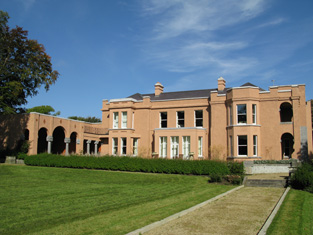
SPIDDAL HOUSE, Spiddal, County Galway, replaced a considerable smaller Georgian house.

The present mansion consists of two and three storeys, in different places.

It was built in 1910 for Martin, 2nd Lord Killanin.

The windows are rectangular, plain, Romanesque-style.

One end of the house features a tower (a belvedere prior to the 1923 fire) with Romanesque columns.

Beside this tower there is a two-storey veranda with further Romanesque columns and arches.

The opposite end has a loggia, joined to the house by a colonnade with an iron balcony.

Spiddal House suffered a fire in 1923 and was subsequently rebuilt in 1931.

The 3rd Baron sold Spittal about 1960.

Former Dublin residence ~ 22 Lower Ftzwilliam Street.

First published in July, 2015.

Tuesday, 11 November 2025

Portumna Castle

THE MARQUESSES OF CLANRICARDE WERE THE SECOND LARGEST LANDOWNERS IN COUNTY GALWAY, WITH 56,826 ACRES


The family of DE BURGH, DE BURGO, BOURKE OR BURKE (as at different times written), Earls and Marquesses of Clanricarde, ranked among the most distinguished peers in the British Isles, and deduced an uninterrupted line of powerful nobles from the Conquest.

HUBERT DE BURGH (c1160-1243), 1st Earl of Kent, was one of the greatest subjects in Europe, in the reigns of KING JOHN and HENRY III.

His uncle,

ADELM DE BURGH, settled in Ireland, and was ancestor of

RICHARD DE BURGH (c1194-1242), surnamed Great Lord of Connaught, who was Lord Deputy of Ireland in 1227.

This Richard rebuilt Galway Castle in 1232, and that of Loughrea in 1236.

He was a man of high authority and power, and died on his passage to France, in proceeding to meet the King of England at Bordeaux, attended "by his barons and knights".

Mr de Burgh espoused, before 1225, Egidia, daughter of Walter de Lacy, and had issue,
Richard, Lord of Connaught;
Waltercr EARL OF ULSTER;
WILLIAM;
Margery; Alice;
two unnamed daughters.
His third son,

WILLIAM DE BURGH, known by the surname of Athankip, from being put to death at that place by the King of Connaught, was succeeded by his son,

SIR WILLIAM DE BURGH, who, having married a daughter of the family of MacJordan, left, with other issue, at his decease in 1324,
ULICK;
Edmond;
John (1350-98);
Walter;
Richard;
Redmond;
Thomas, Lord Treasurer of Ireland, 1331;
John, father of John, Archbishop of Tuam;
Henry.
The eldest son,

SIR ULICK DE BURGH, feudal Lord of Clanricarde, was a person of great power, and distinguished, like his progenitors, in arms.

He wedded Agnes, daughter of the Earl of Warwick; and dying in 1429, was succeeded by his son,

ULICK DE BURGH, of Clanricarde, who espoused Egeline, daughter of Hugh de Courtenay; and dying in 1451, was succeeded by his eldest son,

ULICK DE BURGH, who was succeeded by his son,

ULICK DE BURGH, called "Ulick of the Heads," ninth Chief of Clanricarde 1540-44, who was created, by HENRY VIII, at Greenwich, in 1543, Baron of Dunkellin and EARL OF CLANRICARDE; and obtained, at the same time from the His Majesty a grant of the monastery of Devia Nova, in the diocese of Clonfert, with the patronages and donations of all the rectories etc in Clanricarde and Dunkellin belonging to the Crown.

He married Grania (Grace), daughter of O'Carroll, Prince of Ely.

His lordship did not, however, long enjoy his honours; and dying in the following year, 1544, was succeeded by his only son,

RICHARD, 2nd Earl, called "the Saxon," Lord Lieutenant of Ireland; who overthrew, in conjunction with Sir Richard Bingham, the Scots army, at the river Moye, in 1553.

His lordship married Margaret, daughter of Murrough, Earl of Thomond, and had issue, ULICK, Lord Dunkellin.

He died in 1582, and was succeeded by his son,

ULICK, 3rd Earl, who wedded Honora, daughter of John Burke, and had issue,
RICHARD;
Thomas;
William;
Edmond;
John, 1st Viscount Burke, of Clanmories;
Mary.
His lordship died in 1601, and was succeeded by his eldest son,

RICHARD, 4th Earl (1572-1635), surnamed of Kinsale, from the valour he had displayed against the rebels there.

His lordship was created an English peer, in 1624, in the dignities of Baron Somerhill and Viscount Tunbridge, Kent.

He was advanced to an earldom, in 1628, as Earl of St Albans.

His lordship married Frances, daughter of Sir Francis Walsingham and widow of Sir Philip Sydney, and of ELIZABETH I's unfortunate favourite, the Earl of Essex, by whom he had one son, ULICK, his successor, and two daughters, Mary, wife of Edmund, son of James, Earl of Ormonde; and Honora, married to John Paulet, Marquess of Winchester.

He was succeeded by his only son,

ULICK (1604-57), 5th Earl of Clanricarde and 2nd Earl of St Albans.

His lordship was advanced to a marquessate, in 1644, in the dignity of MARQUESS OF CLANRICARDE.

He espoused the Lady Anne Compton, only daughter of William, Earl of Northampton, and had an only daughter,
MARGARET, m Charles, Viscount Muskerry.
His lordship dying thus without male issue, the marquessate and his English honours expired; while the Irish earldom of Clanricarde and the barony of Dunkellin reverted to his first cousin,

RICHARD, 6th Earl; at whose decease, 1666, without issue, the honours devolved upon his brother,

WILLIAM, 7th Earl, who married firstly, Lettice, only daughter of Sir Henry Shirley, and had issue,
RICHARD, his successor;
JOHN, succeeded his brother;
Thomas.
His lordship wedded secondly, Helen, daughter of Donough, 1st Earl of Clancarty, and had further issue,
Ulick, 1st Viscount Galway;
William;
Margaret; Honora.
His lordship was succeeded at his decease, in 1687, by his eldest son,

RICHARD, 8th Earl, who wedded Elizabeth Bagnell, and had an only daughter, Lady Dorothy Bourke.

He died in 1704, and was succeeded by his brother,

JOHN, 9th Earl (1642-1722), who espoused Bridget, daughter of James Talbot; and was succeeded by his son,

MICHAEL. 10th Earl, who wedded Anne, daughter and co-heiress of John Smith, of Tudworth, Hampshire, Speaker of the House of Commons, and subsequently Chancellor of the Exchequer, by whom he had two sons and two daughters. 

His lordship died in 1726, and was succeeded by his only surviving son,

JOHN SMITH, 11th Earl (1720-82), who was father of

HENRY,12th Earl (1743-97), Privy Counsellor, Knight of St Patrick, Governor of County Galway, who was created, in 1785, MARQUESS OF CLANRICARDE (second creation).

His lordship died without issue, when the marquessate expired, and his lordship's other titles devolved upon his only brother,

JOHN, 13th and 1st Earl of Clanricarde (1744-1808), a General in the army, Colonel, 66th Foot, who wedded, in 1799, Eliza, daughter of the late Sir Thomas Burke Bt, of Marble Hill.
In 1800, Lord Clanricarde obtained a grant, conferring the dignity of countess upon his daughters in succession, and that of Earl of Clanricarde upon their male issue, according to priority of birth, in case of the failure of his own male descendants.
His lordship's eldest son,

ULICK JOHN, 14th and 2nd Earl (1802-74), KP, married, in 1825, Harriet, only daughter of the Rt Hon George Canning, HM Principal Secretary of State for Foreign Affairs.

His lordship was advanced to a marquessate, in 1825, as MARQUESS OF CLANRICARDE (third creation).

Hubert George de Burgh-Canning, second and last Marquess of Clanricarde, born in 1832, died unmarried in 1916, when all his honours became extinct save the Earldom of Clanricarde, created in 1800, which devolved in accordance with the special limitation on his kinsman, the 6th Marquess of Sligo.


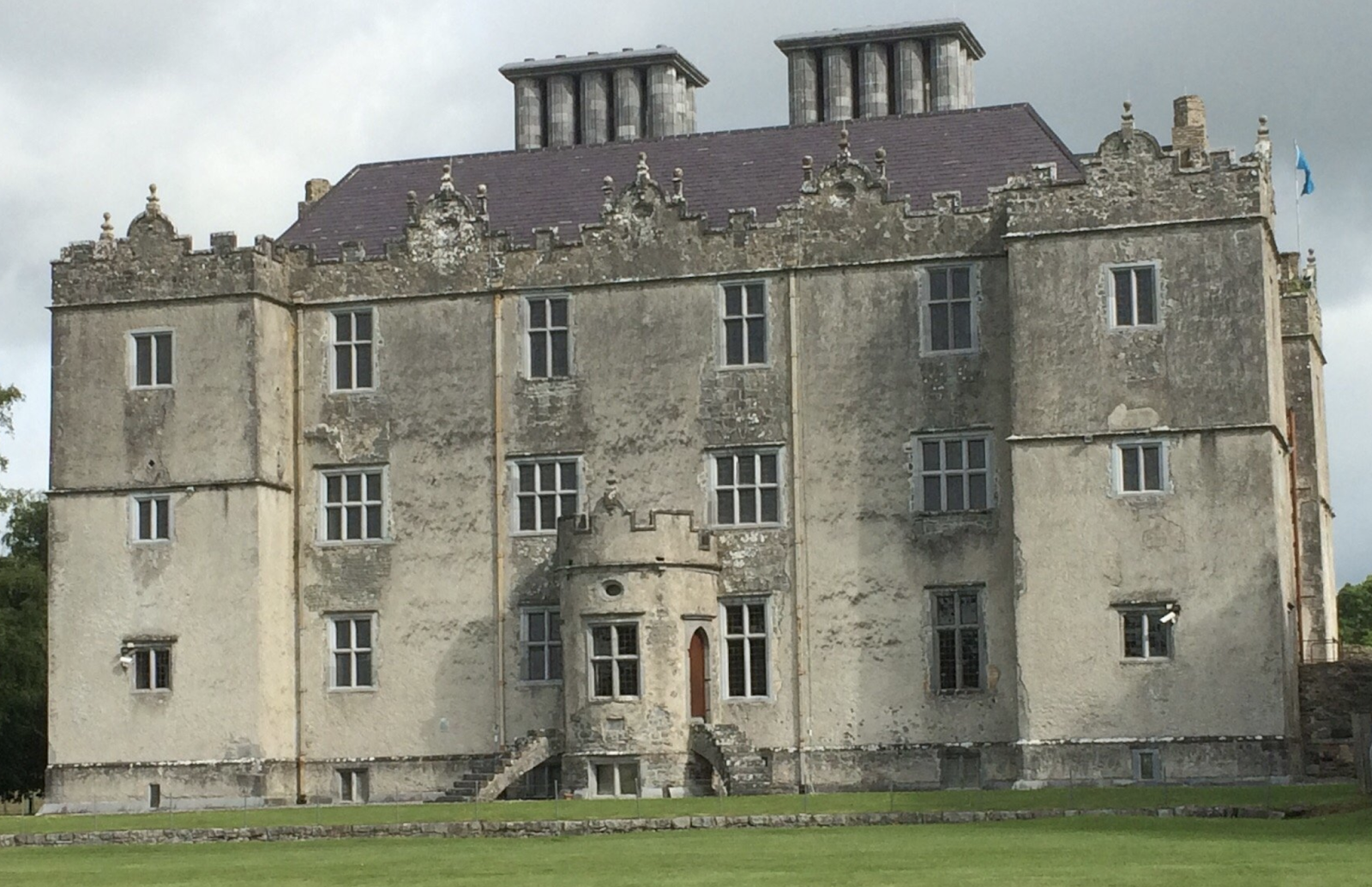
PORTUMNA CASTLE, built near the shore of the northern extremity of Lough Derg on the river Shannon in the reign of JAMES I, was stated to be without equal in Ireland at the time in style, grandeur and distinction.

The elegance of Portumna can be attributed to the taste, experience and wealth of its builder, Richard Burke, 4th Earl of Clanricarde.

It was built between 1610 and 1618 at a cost of £10,000, and Lord Clanricarde also built a mansion at Somerhill, Tonbridge Wells, in Kent.


Portumna was one of the first, if not the first, building in Ireland to admit some of the Renaissance refinements already common in Italy and France for over a century, but which took so long to filter through to Ireland.

The shell of this great mansion conveys an impression of alien splendour, and the overall effect is unique and has a curiously continental air.

The Renaissance features of the exterior of Portumna are - strictly speaking - limited to the fine doorcase of the front entrance and the Tuscan gateway of the innermost courtyard, but the very layout is an expression of Renaissance ideas.


The castle is symmetrical in shape and consists of three stories over a basement with square corner projecting towers.

A central corridor runs longitudinally from top to bottom, supported by stone walls, which contain numerous recesses and fireplaces.

The approach is elaborate from the north with gardens, avenues and three gates.

The formal gardens of Portumna Castle were laid out in the 17th century and were the first Italian or Renaissance gardens to be introduced to Ireland.

It is reputed that the 4th Earl copied the style of Sir John’s garden for his castle at Portumna.


The stately gardens of the 17th century contained formal walks, arbours, parterres, and hedges, as well as jets d’eau, or fountains, artificial cascades, columns, statues, grottoes and similar puerilities.

The inner courtyard, known as the Grianan, was the ladies' pleasure ground.

It contained shrubs, seats, pathways and lawns, where the ladies of the castle congregated, did their embroidery, and discussed womanly affairs.

Fifteen Earls and Marquesses of Clanricarde owned Portumna from 1543-1916.

In the latter years, Hubert de Burgh-Canning, 2nd Marquess, 15th and 3rd Earl of Clanricarde (1832–1916) died. 
He was said to have been a notorious miser and eccentric who dressed like a tramp and spent his life in London; and on his death the estate at Portumna passed to his nephew, Henry Viscount Lascelles, afterwards 6th Earl of Harewood. 
In 1928, Princess Mary and her husband, the same Lord Lascelles, visited Portumna, and by all accounts received a cordial welcome.

They mixed with all the people and visited all the formal schools and institutions in town as well as attending various meetings.

The Portumna estate was acquired by the Irish Government in 1948, with the castle being allocated to the then Office of Public Works, the 1,500 acre demesne to the Forestry Commission and land being given for a Golf Course and sports pitch.

Lord Clanricarde was a friend of Sir John Danvers and shared his great love of gardens.
The castle was accidentally burned in 1826; it was very grand and highly interesting; its staircase, its great hall and its state drawing-room were very handsome; its library was a long apartment in the highest storey.  
Several of its rooms acquired an impressive and venerable air from the presence of old family portraits and a large quantity of ancient furniture; opulent plasterwork friezes; carved armorial bearings; and it commanded a brilliant and very extensive prospect of Lough Derg, the River Shannon and the surrounding countryside.
The Castle remained ruinous until work commenced on its restoration by the Irish State in 1968.

To date, the shell and the internal walls have been faithfully restored, and the roof and chimneys which are in place protect the castle from the elements.

The windows, fireplaces and flooring joists and basement have been restored and elaborate archaeological work has been carried out on the outside.

Once the main staircase and internal floors have been installed, the most difficult of the restoration work will have been achieved. 

First published in August, 2011. 

Wednesday, 13 August 2025

Ballinderry Park

THE COMYNS OF BALLINDERRY OWNED 1,473 ACRES OF LAND IN COUNTY GALWAY

ANDREW COMYN, of Ryefield, County Roscommon, married, in 1786, the sister and heir of Lewis Ward, of Ballymacward and Ballinderry, County Galway, and had an eldest son,

NICHOLAS COMYN (1787-1843), of Ballinderry and Ryefield, who wedded, in 1830, Sabina, daughter of John Joyes, of Woodquay, County Galway, and had issue,
ANDREW NUGENT, his heir;
John Ward;
Mary Ellen; Sabina; Elizabeth.
Mr Comyn was succeeded by his eldest son,

ANDREW NUGENT COMYN JP (1831-1917), of Ballinderry and Ryefield, who married, in 1867, Mary, second daughter of John O'Connell MP, and granddaughter of Daniel O'Connell, of Derrynane, and had issue,
NICHOLAS O'CONNELL, his heir;
Andrew Daniel;
Lewis James;
Elizabeth Mary; Geraldine Mary; Eily Mary.
The eldest son,

NICHOLAS O'CONNELL COMYN JP (1869-1945), of Ballinderry, High Sheriff of County Galway, 1917, wedded, in 1911, Mary Cecilia Hyacinth, daughter of Francis Walter Mahony, of St Helen's, Blarney, County Cork, and had issue,
ANDREW FRANCIS MICHAEL O'CONNELL;
Nugent Gerald Ward;
Arthur;
Reginald;
Frederick;
Marguerite Mary Cecilia; Maureen; Veronica Joan Mary.

BALLINDERRY PARK, Kilconnell, Ballinasloe, County Galway, is a plain Georgian house of ca 1740, rising from the plans of east County Galway.

It originally belonged to Kilconnell Friary, a Franciscan foundation of 1280.

In the late 17th century the land passed to the Diocese of Clonfert and was leased to Henry Stanford, who shortly afterwards leased his house to Lawrence Ward from a local family in the vicinity.

His tenancy was inherited by his sister and passed to her son, Nicholas Comyn.

Nicholas Comyn's descendants farmed this small property, sandwiched between some of County Galway’s largest estates, where they were closely involved with horses and hunting.

They purchased the freehold from the Church of Ireland following its disestablishment in 1871.

Nicholas’s son Andrew married Mary, granddaughter of Daniel O’Connell ‘The Liberator’.

Nicholas O'Connell Comyn was the last of the family to live at Ballinderry and when he died, in 1945, the estate was acquired by the Irish Land Commission, which subdivided the property.

The house thereafter became derelict.

George and Susie Gossip bought Ballinderry in 2000 and began a careful restoration.

They reversed some Victorian alterations to the façade and, by 2005, work had progressed sufficiently to allow them to move in.

The hall, staircase and landings, which take up a third of the house, have been authentically restored; while the principal rooms have been panelled in the early 18th century style and given early chimney-pieces.

The Gossips have filled the house with their collection of furniture, pictures, porcelain and objects.

Much of this was passed down from Susie’s ancestors, the Dillon family from nearby Clonbrock, so that it is, in effect, returning home.

Ballinderry is surrounded by fine specimen trees, including a large and remarkable London plane tree, rarely, seldom found in a parkland setting.

First published in November, 2017.  Select bibliography: Irish Historic Houses Association.

Tuesday, 3 June 2025

Jameson of Windfield

THE JAMESONS OWNED 3,123 ACRES OF LAND IN COUNTY GALWAY

WILLIAM JAMESON, of Alloa, Clackmannanshire, married, in 1737, Helen Horne, of Thomanean, Kinross-shire, and had, with other issue, a son,

JOHN JAMESON (1740-1824), Sheriff Clerk of Clackmannanshire, who wedded, in 1768, Margaret, elder sister of James Haig, of Blairhill, Perthshire, and Lochrin, Midlothian, and had issue,
Robert (1771-1847), died unmarried;
John, of Prussia St, Dublin;
William, b 1777; dsp;
JAMES, of whom presently;
Andrew, b 1783;
Margaret; Anne; Jennett.
JAMES JAMESON (1781-1847)succeeded to the fortune of his immediate elder brother, William, of Merrion Square, Dublin, and purchased the estate of Windfield, County Galway, and the demesne of Montrose, County Dublin.

He married, in 1815, Elizabeth Sophia, youngest daughter of the Rev William Woolsey, of Priorland, County Louth, by his wife Mary Anne, youngest sister of Sir William Bellingham Bt, of Castle Bellingham, County Louth, and had issue,
JOHN, his heir;
William, of Montrose;
James, of Airfield;
Sydney Bellingham;
Robert O'Brien;
Mary Anne; Elizabeth Sophia.
Mr Jameson, a director of the Bank of Ireland and Deputy Governor at the time of his death, was succeeded in his Windfield estate by his eldest son,

THE REV JOHN JAMESON (1816-72), of Windfield, who espoused, in 1845, Isabella Anne, eldest daughter of General Sir Henry David Jones GCB, and had issue,
JAMES FRANCIS, his heir;
Harry William, Lt-Col RIR;
Arthur Bellingham;
Charlotte Elizabeth; Edith Sophia Inkerman.
The eldest son,

JAMES FRANCIS JAMESON JP (1848-96), of Windfield, Major, 4th Battalion, Connaught Rangers, wedded, in 1879, Helen Maud, eldest daughter of William Jameson, of Montrose, County Dublin, and had issue,

MAURICE EYRE FRANCIS BELLINGHAM JAMESON (1888-1950), of Windfield, who espoused, in 1915, Amelia May Moss, and had issue,
JOHN MAURICE RICHARD, born 1917;
Patricia Joan, born 1915.

THE JAMESONS were best known as distillers of Irish whiskey.

Portmarnock Hotel

THE PORTMARNOCK HOTEL, Portmarnock, County Dublin, stands on land which was originally part of the Jameson family estate.

The house itself was called St Marnock's.

EDWARD VII often visited the Jamesons.
On his last official visit in 1907, His Majesty unveiled a plaque which was designed specially for the occasion of the marriage between members of two great distilling families, Jameson and Haig. The plaque is still to be seen in what was the secret south garden.
The Jameson family had a nine-hole golf course on the site over a century ago.

This course is now part of both Portmarnock Golf Club and the Bernhard Langer-designed Dublin Golf Links course.


Sutton House

SUTTON HOUSE, Sutton, County Dublin, was also a Jameson residence.

It is Victorian-Tudor in style, with mullions, gables and huge chimneys.

One end of the mansion has a tower of four storeys.

Sutton House subsequently became a hotel.

*****


WINDFIELD HOUSE, County Galway, was purchased by James Jameson in the 1820s.

The family owned Windfield for over a century.

First published in October 2017.  Jameson arms courtesy of the NLI.

Friday, 14 February 2025

Persse of Roxborough & Moyode

THE PERSSES OWNED 19,623 ACRES OF LAND IN COUNTY GALWAY

THE REV ROBERT PERSSE, Vicar of Caragh and Downings, County Kildare, 1605-12, is believed to have come to Ireland from Northumberland in the very late 16th century.

He died in 1612, and was buried at Bodenstown, County Kildare, leaving issue several sons, the seniority of whom is unknown,
Francis, of Killadirge, Co Wicklow;
Edward (Rev), Vicar of Caragh;
HENRY, of whom hereafter.
His son,

HENRY PERSSE, of Clane, County Kildare, died ca 1673, and was buried at Bodenstown.

By his wife Elizabeth he left issue,
DUDLEY;
Sybil.
The only son,

THE VERY REV DUDLEY PERSSE (1625-99), Dean of Kilmacduagh, Archdeacon of Tuam, etc, matriculated at Trinity College, Dublin, 1641-2, aged 16.

Dean Persse received grants of lands in counties Galway and Roscommon, 1677 and 1678.

He married Sarah, daughter of John Crofton, of Lissadorn, County Roscommon, and had issue, two sons and seven daughters,
HENRY, his heir;
William, of Spring Garden, Co Galway;
Catherine; Alice; Sarah; four other daughters.
The Dean purchased Spring Garden, County Galway, and lived there until he purchased Roxborough, in the same county.

His daughters were married as follows: the eldest, Catherine, to Major Hugh Galbraith, of Capard; the second, Alice, to Captain William Colles, of Co Sligo; the third to Nethercott; the fourth to Ormsby; the fifth to Hickman; the sixth, Sarah, to Blakeney; the seventh to Walsh.

The eldest son,

HENRY PERSSE (1657-1733), of Roxborough, High Sheriff of County Galway, 1701, wedded, in 1688, Mary, daughter of Robert Stratford MP, aunt of John, 1st Earl of Aldborough, and died in 1733, having had issue,  two sons and a daughter, namely,
ROBERT, his heir;
Francis, of Ballymerret, High Sheriff of co Galway, 1734;
Grace, m Col J Blakeney MP.
The elder son,

ROBERT PERSSE (1689-1781), of Roxborough, High Sheriff of County Galway, 1742, espoused, in 1727, Elizabeth, daughter of William Parsons and sister of Sir Laurence Parsons Bt, of Birr Castle, and had issue,
Henry, dsp;
WILLIAM, his heir, of Roxborough;
Robert, m Anne, daughter of Sir Arthur Brooke Bt, of Colebrooke;
Dudley;
Parsons;
BURTON, of whom we treat;
Sarah, m Sir Richard St George Bt, of Woodsgift.
The youngest son,

BURTON PERSSE, married, in 1770, Sarah Pennefather, of County Tipperary, and died in 1829, leaving issue,
BURTON DE BURGH, his heir;
William, CB (Companion of the Order of the Bath), Colonel, 16th Lancers;
Maria; Eliza; Sarah; Frances; Matilda; Grace Anne.
The elder son,

BURTON DE BURGH PERSSE JP DL, of Moyode Castle, County Galway, High Sheriff of County Galway, 1816, wedded firstly, in 1820, Anchoretta, third daughter of Giles Eyre, of Eyrescourt Castle, County Galway, and had issue with a son, born and died 1822, three daughters,
Anne; Eliza; Anchoretta Maria.
He espoused secondly, in 1825, his cousin, Matilda, daughter of Henry Persse, of Galway, by his wife Miss Sadleir, of Cork, and died in 1859, having by her had issue,
BURTON ROBERT PARSONS, his heir;
William Henry, dsp;
Henry Sadleir;
Theophilus, dsp;
Charles Graham;
Dudley Thomas;
De Burgh Parsons;
Sarah Selina; Maria Sadleir; Matilda; Henrietta Burton.
The eldest son,

ROBERT BURTON PARSONS JP DL (1828-85), of Moyode Castle, High Sheriff of County Galway, 1862, who married, in 1852, his cousin, Madeline Eliza, daughter of Colonel William Persse, CB, and had issue,
BURTON WALTER, his heir;
William Beauchamp, m 1898, Emily M McDonnell, of Queensland, Australia;
Arthur Moore;
Theophylis;
Arabella Eliza; Madeline Beatrice;Frances Moore; Maria Tucker.
The eldest son,

BURTON WALTER PERSSE JP (1854-1935), of Mackney, Ballinasloe, County Galway, dsp.

Moyode Castle (Image: Skehana & District Heritage Group)

MOYODE CASTLE, near Athenry, County Galway, Bence-Jones remarks (Burke's Guide to Country Houses, Ireland, page 220), was an imposing 19th century house, with a three-sided bow in the middle of its front, a storey higher than the bay on either side of it, and flanked by two little battlemented turrets.

A higher tower, and a very tall polygonal machicolated corner turret, at one end of the front.

This mansion, erected about 1820, was burned to the ground by the IRA in 1920.


ROXBOROUGH, near Loughrea, County Galway, another seat of the family, was an 18th century house of two storeys over a basement, with a gable-ended front and gable-ended return (Bence-Jones,  Burke's Guide, page 249).

The front comprised five bays, with fanlighted doorway.

It was the childhood home of Lady Gregory (née Persse).

Roxborough was burnt by the IRA in 1922.

Tuesday, 4 February 2025

Woodlawn House

THE BARONS ASHTOWN WERE MAJOR LANDOWNERS IN COUNTY LIMERICK, WITH 11,273 ACRES

The family of TRENCH is descended from a French protestant family, said to have emigrated from the town of La Tranche, in the province of Poitou, to avoid the religious persecutions instituted by LOUIS XIV against those who dissented from the established church.

FEREDERIC DE LA TRANCHE came from France about 1575, and took up his abode in Northumberland.

He married, in 1576, Margaret Sutton, and had issue, with a daughter,
THOMAS, of whom hereafter;
James (Rev), Rector of Clongill;
Adam, settled in Scotland.
The eldest son,

THOMAS TRENCH, wedded, in 1610, Catherine, daughter of Richard Brooke, of Pontefract, Yorkshire, and had issue, with two daughters, an only son,

FREDERIC TRENCH, of Garbally, County Galway, who removed into Ireland in 1631, and purchasing the lands and castle of Garbally, with a considerable estate, established his residence there.

He espoused, in 1632, Anna his wife, daughter and heiress of the Rev James Trench, Rector of Clongill, and had issue,
Frederick, of Garbally, who founded the house of CLANCARTY;
JOHN, of whom we treat;
William.
Mr Trench died in 1669; his second son,

THE VERY REV DR JOHN TRENCH, Dean of Raphoe, wedded Anne, eldest daughter of Richard Warburton, of Garryhinch, in the Queen's County, and had issue,
FREDERICK, his heir;
Alexander;
Richard;
Anne; Judith.
The Dean died in 1725, and was succeeded by his eldest son,

FREDERICK TRENCH (1686-1758), of The Moate, County Galway, who married, in 1718, Mary, daughter and heiress of Richard Geering, Clerk of the Court of Chancery, and had issue,
FREDERICK, his heir;
Anne; Mary; Elizabeth.
Mr Trench was succeeded by his only surviving son,

FREDERICK TRENCH (1724-97), of The Moate and Woodlawn, County Galway, who wedded, in 1754, Mary, eldest daughter and co-heir of Francis Sadleir, of Sopwell Hall, County Tipperary, and had issue,
FREDERICK, his heir;
Francis, of Sopwell Hall, father of FREDERICK;
Thomas (Very Rev), Dean of Kildare;
William, of Cangort Castle;
Charles;
Richard;
John;
Catharine; Mary; Elizabeth; Frances; Anne; Sophia; Mary; Catherine.
Mr Trench was succeeded by his eldest son,

FREDERICK TRENCH (1755-1840), of The Moate, MP for Maryborough, 1785-90, Portarlington, 1798-1800, who espoused, in 1785, Elizabeth, only daughter and heiress of Dr Robert Robinson, and niece of the Hon Mr Justice Robinson, one of the judges of the Court of King's Bench, but had no issue.

Mr Trench was elevated to the peerage, in 1800, in the dignity of BARON ASHTOWN, of The Moate, County Galway.
The 8th and present Baron lives in East Sussex.


*****

THE TRENCHES of Woodlawn were one of a number of Trench families who came to prominence in County Galway in the 17th century.

They were all descended from Frederick Trench who came to Ireland early in the 1600s.

Strategic marriages into the Warburton and Power families led to the acquisition of more lands in East Galway.

Much of the Woodlawn estate was originally Martin and Barnewall lands which were purchased by the Trenches in the early 18th century.

Lord Ashtown was recorded as a non-resident proprietor in 1824.

In County Roscommon he held over a 1,000 acres; and in County Tipperary he held at least 21 townlands in the parishes of Ballingarry and Uskane, barony of Lower Ormond, inherited from the Sadleir family of Sopwell Hall.

In the 1870s, Lord Ashtown's main estate in County Galway amounted to over 8,000 acres and he also held land in seven other counties including County Waterford where he had purchased lands from the Earl of Stradbroke in the 1870s. 

These townlands remained in Trench ownership until purchased by the Irish Land Commission in the 1930s.

In 1852 Lord Ashtown married as his second wife Elizabeth Oliver Gascoigne, an heiress with large estates in County Limerick and Yorkshire.

In the 1870s Lord Ashtown is recorded as the owner of 11,273 acres in County Limerick and 4,526 acres in County Tipperary.


WOODLAWN HOUSE, near Kilconnell, County Galway, is a Palladian-style country house comprising a three-bay, three-storey central block built ca 1760, having slightly advanced end bays and projecting tetra-style Ionic portico to entrance bay.

There is an interesting video clip of the mansion house and ruinous outbuildings here.

The House consists of 30,000 square feet standing on 115 acres of land.

It boasts 26 bedrooms, a walled garden, courtyard, gatehouse, gardener's house and a lake.

Woodlawn was remodelled ca 1860 and flanked by four-bay two-storey wings having projecting pedimented end bay to each wing.

The central block has tripartite openings to end bays, ground floor of each end bay having segmental pediment and engaged Doric columns to slightly advanced middle light, and flanked by Doric pilasters.

The wings have tripartite windows to pedimented bays, ground floor having Venetian-style windows, middle light slightly advanced and having engaged square-plan Doric columns, flanked by Doric pilasters and having with moulded capitals and cornices.

The mansion is set in its own demesne, with outbuildings to west, and entrance gates and lodge to east.


This large house is an elaborate exercise in classical orders, the use of carved and cut limestone extending throughout the front elevation and evidence of both the skill of 19th century stonemasons and the wealth of the Trench family whose seat it was.

An unusual composition, the quoins to the central block give a vertical emphasis that is extended by the pinnacles.

Although the motifs are classical, the extensive use of dark limestone, the variety of textures and treatments, and the use of pinnacles give it a somewhat Gothic appearance typical of the late 19th century.

Extended and remodelled by the 2nd Baron Ashtown in the 1860s to designs drawn up by James F Kempster, the county surveyor for the East Riding of County Galway, it shows little evidence of the Georgian house behind the façade.

During the 1920s, the 3rd Baron was declared bankrupt and, as a result, the house was closed up and its contents sold at auction; at one point, the IRA occupied one of the wings.

The 4th Baron eventually returned to Woodlawn, but in 1947 he sold the estate to his cousin, Derek Le Poer Trench who, in turn, disposed of it in 1973.

Since then, Woodlawn has had two further owners but neither of these have lived in the house.

Michael Lally, a local publican, bought the property ca 1989.

Before that date, in 1982, a fire burnt out the east wing and caused extensive damage to the central block, partly because of the water used to put out the flames.

Much of the original decoration of the house has also been lost, not least the fireplaces in the principal reception rooms.

Woodlawn House (Image: Irish Farmers' Journal)

While all the walls still stand and the pitched slate roof remains, Woodlawn today is a mere shadow of the house it had been 100 years ago.

Other former seats ~ Lansdown, Portroe, County Tipperary; Chessel House, Southampton, Hampshire; Lotherton Hall, West Yorkshire.

Ashtown arms courtesy of European Heraldry.  First published in December, 2011.