Thursday, 12 November 2015

Charles Davis Lucas VC

REAR-ADMIRAL CHARLES DAVIS LUCAS VC


Charles Davis Lucas was born in 1834, son of David and Elizabeth (Hill) Lucas.

His family lived at Druminargle House, Scarva, County Armagh,

His ancestors had originally come from England in the 17th century and were once major landowners in County Monaghan, seated at Castle Shane.

Druminargle House

Charles Lucas enlisted in the Royal Navy, aged 13; and five years later, aged 18, he saw active service in the Burma War of 1852-53, being awarded the India Medal.

The incident for which he was awarded the Victoria Cross occurred during the Crimea War, which broke out in 1854.

Although the main area of the war was the Crimean Peninsula, significant hostilities took place in other places, particularly in the Baltic Sea.

Lucas was a mate on HMS Hecla, a wooden battleship, part of the fleet of warships dispatched to blockade the Russian Baltic Fleet and divert their resources away from the Crimea.

On the evening of 21st June, 1854, HMS Hecla, HMS Odin and HMS Valorous attacked the large fortress on Bomarsund in the Aland islands which guarded the entrance to the Gulf of Bothnia.

During the fierce action, which lasted most of the night, the Hecla closed on the fortress, within the range of the Russian guns.

CITATION
  ...... at the height of the action a live shell landed on Hecla's upper deck, with its fuse still hissing. All hands were ordered to fling themselves flat on the deck, but Mr Lucas with great presence of mind ran forward and hurled the shell into the sea, where it exploded with a tremendous roar before it hit the water. Thanks to Mr Lucas's action no one was killed or seriously wounded.
For his bravery Lucas was instantly promoted to Acting Lieutenant RN, at the time the only method of recognizing acts of bravery for those of his rank.

Lucas's action, together with other individual acts of bravery, was widely reported and in December of that year it was proposed in Parliament
"that an Order of Merit to persons serving in the army or navy for distinguished and prominent personal gallantry to which every grade should be admissible" should be created.
This was supported by the Government and on 26th June, 1857, at the inaugural ceremony, the Victoria Cross was presented to Lieutenant Lucas by The Queen.

In his subsequent career Lucas's commands included HMS Liffey, HMS Edinburgh and HMS Calcutta.

He was later promoted to the rank of Rear-Admiral in command of HMS Indus before retiring from the senior service.

In 1879, he married Frances, daughter of Admiral Sir William Hutcheon Hall KCB, who had been Captain of HMS Hecla in 1854.

Admiral Lucas settled in Great Culverden, Kent.

He died in 1914 and is buried in Mereworth, near Maidstone, in Kent.

First published in May, 2013.

Saturday, 7 November 2015

Ugly Duckling: II


I dined at The Ugly Duckling again last night.

Henrik, the proprietor, welcomed me cordially and I had an opportunity to have a brief chat with him about his plans to relocate to new and improved premises on Calle Pulpo.

I remember the former Café Lounge-Bar, which will be the new location of The Ugly Duckling in 2016.

I used to frequent it a dozen years ago when it was owned by Stefan.

Stefan employed an Australian chef called Sean, quite a character.

Sean told me that he used to live and work in Belfast, at Bonnie's café opposite the Ulster Museum.

In his colourful language he remarked that "Bonnie did a flit" and it became Café Conor.

He lived in a street off Botanic Avenue.

ENOUGH of that. Back to my meal last night.

I started with the delicious Green Salad.


My main course was the chicken, which I had with whole potatoes, spinach, and rich béarnaise butter.

Henrik had poured me a refreshing flute of Cava.

Having settled up I ambled the short distance to Bar Bouganville on Calle Iglesia.

Friday, 6 November 2015

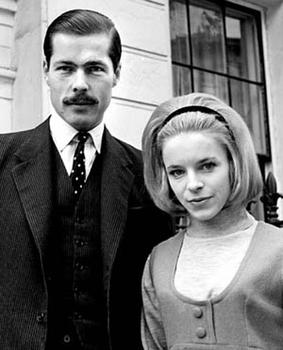
The Lucan Conundrum

BBC's Inside Out progamme, originally broadcast in 2012, investigated new evidence relating to the mysterious circumstances surrounding the disappearance of the 7th Earl of Lucan, and the accusations against him thereafter.
A WRITTEN STATEMENT from Lord Lucan's sister, suggesting another man was at his house around the time of the murder of the family nanny, has been uncovered.

Lady Sarah Gibbs told police at the time that the Lucans' young daughters talked about a "boyfriend" at the home, BBC Inside Out learned.

The 7th Earl of Lucan vanished after the death of Sandra Rivett in 1974 and an inquest found that he murdered her.

His brother, the Hon Hugh Bingham, has called for the evidence to be looked at afresh.

In the statement from November, 1974, Lady Sarah said her four-year-old niece, Lady Camilla Bingham, told of a mystery man who sometimes slept in "nanny's room and nanny sleeps with us" and sometimes slept in "mummy's - she's got a gigantic bed".

Lady Sarah, who died in 2001, said in the statement:

"We were talking about home, that is 46 Lower Belgrave Street and Camilla said the boyfriend always stays upstairs while we have lunch until we ring the buzzer. I said to her 'What's his name?'. She said 'I don't know, he hasn't told me his name. I said 'Where does he live?'. She said 'He lives in the house with us'."
When asked whether the man was the boyfriend of Lady Lucan or the nanny, Lady Sarah said:

"I wouldn't know, I'm assuming she meant the nanny because Frances [10-year-old Lady Frances Bingham] referred to the boyfriend when I told her that the nanny was dead."

Lord Lucan claimed later in a letter that on the night of the murder he witnessed a man fighting with his estranged wife, Lady Lucan, in the basement of the family home, but the man fled.

Speaking from his home in Johannesburg, South Africa, Mr Bingham told BBC Inside Out he was annoyed the witness statement was not presented at the 1975 inquest into Mrs Rivett's death.

The jury found that Lord Lucan had murdered the nanny.

Mr Bingham added:

"It is certainly the first time that I've heard of a second man established in the house. I'm encouraged by the idea that there is a fresh source of evidence and that I feel wants to be given a fair hearing and this seems to me to be one way of achieving that. Let us hope that now with the way in which the evidence seems to be gathering, there is a chance that maybe the inquest result could be set aside. If that happened then the warrant of arrest would fall away and my brother's situation would be restored to the normal situation of a man innocent until proven guilty."

Neil Berriman, who discovered in 2004 that Mrs Rivett was his birth mother, has backed calls for the claims in the witness statement to be investigated.

Mr Berriman, from Haslemere in Surrey, said: 

"As far as I'm concerned, he [Lord Lucan] murdered my mother - and if he never murdered my mother and if there is another murderer I need to get to the bottom of it."

Retired Detective Sergeant Graham Forsyth, who witnessed Lady Sarah's statement, told Inside Out he believed Mrs Rivett may have had a boyfriend who stayed over at the house.

He did not think the man was traced because the police believed Lord Lucan was the murderer "as was subsequently found at the inquest".

Lord Lucan's estranged wife Lady Lucan has not commented on the witness statement.

The new evidence came to light after BBC Inside Out was handed three boxes of notebooks, diaries, tapes and address books found by the daughter of the late Detective Chief Inspector David Gerring, a key detective in the Lucan case.

The documents also reveal that police believed the 7th Earl may have visited a Scottish estate in the late 1970s and could have been in Mozambique up to 2002.

The 7th Earl, born in 1934, has not been seen since the day after Sandra Rivett was found murdered.

His car was later found abandoned in Newhaven, East Sussex. He was officially declared dead by the High Court in 1999.

Since his disappearance at the age of 39, there have been more than 70 alleged sightings of him in countries across the world including South Africa, Australia, Ireland, and The Netherlands.

First published in December, 2012.

Edmund De Wind VC

Second Lieutenant Edmund De Wind VC (1883-1918) was an army officer during the 1st World War and posthumous recipient of the Victoria Cross.

Born at Comber, County Down, in 1883, to Arthur Hughes De Wind and his wife, Margaret Jane, Edmund was educated at Campbell College, Belfast (entered in 1895, number 249).

He chose banking as his profession and worked at the Bank of Ireland's Clones branch.

De Wind moved to Canada in 1911 and joined the Canadian Bank of Commerce, Edmonton, when the 1st World War began.

He served with The Queen's Own Rifles of Canada for a period of six months prior to his enlistment as a private, in 1914, in the Canadian Overseas Expeditionary Force; arrived in France with the 2nd Division of CEF in September, 1915; saw action in the Battle of the Somme (1916) and at Vimy Ridge (1917).

De Wind earned a commission in September, 1917, in the 15th Battalion, The Royal Irish Rifles.

He was awarded the Victoria Cross for deeds committed during the second Battle of the Somme in 1918. He died on that day.

His citation reads:
For most conspicuous bravery and self-sacrifice on the 21st March, 1918, at the Race Course Redoubt, near Grugies. For seven hours he held this most important post, and though twice wounded and practically single-handed, he maintained his position until another section could be got to his help.

On two occasions, with two NCOs only, he got out on top under heavy machine gun and rifle fire, and cleared the enemy out of the trench, killing many. He continued to repel attack after attack until he was mortally wounded and collapsed.

His valour, self-sacrifice and example were of the highest order.''
The first memorial to de Wind is a pillar his mother caused to be carved at the main entrance on the west front of St Anne's Cathedral, Belfast.

The pillar bears his name and the date of his death.

The west front was dedicated to the men from Northern Ireland who died in the Great War. It was dedicated in 1927.

2nd Lieutenant De Wind is also named on Poziers Monument; Mount de Wind, Alberta, Canada; a housing estate in his home town of Comber, County Down, is also named in his honour.

A plaque memorial was erected in his old school, Campbell College, Belfast.

De Wind was officially remembered in Comber on Friday, 14th September, 2007, through the unveiling of an Ulster History Circle "Blue Plaque" in his honour.

First published in November, 2013.

Thursday, 5 November 2015

Sanus Restaurant


I fancied eating at a different restaurant last night.

I'd read the reviews on Tripadvisor and an establishment called Sanus caught my eye.

Sanus is located in Corralejo at Calle Anzuelo, or the Big Ben Centre as it is sometimes called.

I went for a walk earlier in the day to have a look, and first impressions were of a spotlessly clean place, simple and aesthetically attractive.

So at six o'clock last night I walked the ten minutes from my pad to Sanus.

I was the first customer.

I explained that I hadn't booked, though that was not a problem: I could sit where I wished.

I opted to sit outside, given that it was 22c last night in Fuerteventura.


Sanus specialises in gluten-free, vegetarian, vegan, and diabetic diets; though do not be deterred by these stipulations if you have no allergies or happen to be non-vegetarian like self.

There is fillet of beef on the menu.

I chose the fried parcels of goat's cheese with home-made tomato jam as a starter.


This came with a brown paper bag of tiny, warm crusty bread, sliced.

While I was waiting I made full use of the free wifi. 

I was offered black olives. I ate two, though curiously I find them a bit too salty for my taste.

My main course was the tuna, which was perfectly sliced - almost Japanese style - and served with aubergine, again exquisitely sliced and arranged on the plate.


I had two glasses of a nicely chilled local white wine, though it might have been more prudent to order something else because it cost €9 and the measures were not huge.

Still, it was a fine meal and I dare say somewhat extraordinary in this resort, given that the vast majority of restaurants cater for less discerning palates.

The bill came to about €33, including a tip.

I intend to revisit Sanus and perhaps try the pumpkin soufflé, the fungi ravioli, or a hearty risotto.

Tuesday, 3 November 2015

Bombay Masala


Last night I dined at an old favourite, the Bombay Masala Indian restaurant.

This little establishment is tucked away in a sort of alley off Music Square, Corralejo.

I tend to dine early, so most restaurants are quiet at that time.

The Bombay Masala was established in 1998 by Mr Rekha M Jaunkani.

They all greet me cordially every time I darken the threshold, even after six months.

I sit at my usual table. There are about nine tables inside.

This restaurant is very simply furnished indeed, so it's the food and hospitality of the staff that matter in this instance.

I fancied the onion bhajias as a starter, though knew I couldn't do justice to the rest of the meal.


Hence, I went straight for the chicken korma with Pilau rice and some peschwari naan bread.

Needless to say, it was all up to the usual standard. The ancient nose-bag was working flat out.

My bill came to about €17.

Thence I ambled along Calle Iglesia - Church Street - to the Bar Bouganville, where I was again greeted warmly.

Patrons are brought a bowl of crisps. Wifi strength is very good here, too.

Maria, the owner, was off duty last night.

Sunday, 1 November 2015

The Colonels' House


Yesterday the weather was inclement so I decided to revisit one of Fuerteventura's principal cultural and historic attractions, La Casa de los Coroneles, in La Oliva.

This large villa dates from the 18th century. It was the official residence of the Colonelcy, military governors of the island.


Today it features a cultural museum.

The mansion has been largely restored - or its fabric, at least.

The extensive outbuildings, however, are derelict and ruinous.

I watched a video on the first floor of four or five people connected with this house, also known as the Marchioness's House.

Their stories were of interest, explaining life there, the decor, furnishings, large mirrors, and so on.

There was a chapel on the first floor.

On the ground floor, the House had grain stores, a coach-house, and stabling; while the upper storey contained the family's private quarters.


From the terrace outside my eyes were drawn to dozens of little ground squirrels playing in a field and munching food of some sort.


I went downstairs and made my way to this spot.


The squirrels were far from bashful! They were curious of me, hoping for food I expect.