Showing posts sorted by date for query herbert. Sort by relevance Show all posts

Monday, 12 October 2026

Mount Bellew House

THE GRATTAN-BELLEW BARONETS OWNED
10,516 ACRES OF LAND IN COUNTY GALWAY

This family springs from a common ancestor with the BARONS BELLEW, of Barmeath Castle.

MICHAEL BELLEW, of Mount Bellew, County Galway, married Jane, daughter of Henry Dillon, and had issue,
CHRISTOPHER DILLON, his heir;
Mary Catherine. 
Mr Bellew died in 1797, and was succeeded by his son,

CHRISTOPHER DILLON BELLEW (1763-1826), of Mount Bellew, who wedded, in 1794, Olivia Emily, only daughter of Anthony, 4th Baron Nugent of Riverston, and had issue,

MICHAEL DILLON BELLEW (1796-1855), of Mount Bellew, who espoused, in 1816, Helena Maria, daughter of Thomas Dillon, of Dublin, and had numerous issue, of whom
CHRISTOPHER, his heir;
Thomas Arthur, father of 3rd Baronet.
Mr Bellew was created a baronet in 1838, designated of Mount Bellew, County Galway.

He was succeeded by his eldest son,

THE REV SIR CHRISTOPHER BELLEW, 2nd Baronet (1818-67), a Catholic priest, whose brother,

THOMAS ARTHUR BELLEW (1820-63), married, in 1858, Pauline, daughter of the Rt Hon James Grattan MP, and had issue,
HENRY CHRISTOPHER, his heir;
Mary Helena.
Mr Bellew added the name and arms of GRATTAN in 1859.

He was succeeded by his son,

HENRY CHRISTOPHER GRATTAN-BELLEW (1860-1942), of Mount Bellew, who, succeeding his uncle as 3rd Baronet, wedded, in 1885, the Lady Sophia Maria Elizabeth Forbes, daughter of George, 7th Earl of Granard, and had issue,
Herbert Michael, 1886-1906;
CHARLES CHRISTOPHER;
William Arthur;
Thomas Henry;
Arthur John (Sir), Knight, CMG;
Helena Barbara; Moira Jane; Angela Mary.
Sir Henry was succeeded by his eldest surviving son,

SIR CHARLES CHRISTOPHER GRATTAN-BELLEW, 4th Baronet (1887-1948), MC, who wedded, in 1923, Maureen Peyton, daughter of Sir Thomas George Segrave, and had issue,
HENRY CHARLES, his successor;
Deirdre Maureen.
Sir Charles, Lieutenant-Colonel, King's Royal Rifle Corps, was succeeded by his son,

SIR HENRY CHARLES GRATTAN-BELLEW, 5th and present Baronet, born in 1933, who married firstly, in 1956, Naomi, daughter of Dr Charles Cyril Morgan; secondly, in 1967, Gillian Hulley; and thirdly, in 1978, Elzabe Amy, daughter of Henry Gilbert Body.

By his second wife he had issue,
PATRICK CHARLES, b 1971;
Deirdre Sophia, b 1967.
Photo credit: Dr Patrick Melvin & Eamonn de Burca

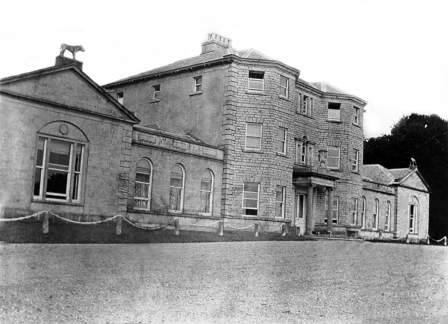
MOUNT BELLEW HOUSE, Mount Bellew Bridge, County Galway, was a house of mainly late-Georgian style.

It was remodelled ca 1820 by Christopher Dillon Bellew.

Mount Bellew comprised a three-storey centre block, with a single-bay entrance front.

The central block had a Venetian window at the top storey of the centre block.

It boasted a notable library which was said to have held one of the finest collections of books during its era.


Mount Bellew was sold about 1938 and subsequently demolished.

The Grattan-Bellews owned a further 10,593 acres in the Queen's County, and 1,895 in County Roscommon.

First published in March, 2016.

Tuesday, 29 September 2026

1st Earl of Clanwilliam

This family have been for centuries settled in the county and city of Cork, and have been landed proprietors from the earliest mention of the name.

 Charles Smith, in his history of that county, mentions that at Meadstown there was formerly a castle built by the Meades; that they had the patronage of the prebend of Lisleary; and that many of this ancient family were interred at Buttevant Friary.

A descendant of this house was William Miagh, consecrated Lord Bishop of Kildare, 1540, and a privy counsellor to HENRY VIII.

JOHN MIAGH, called in Chancery Bills in Ireland "the great John Miagh," was seised in fee of the fishery weir of Lough Mahon, in the Haven of Cork.

His son,

JOHN MIAGH, was called "the younger," and was succeeded by his son,

WILLIAM MIAGH, who died ante 1488, and was succeeded by his son and heir,

JOHN MIAGH, who was adjudged by a decree or deed of arbitration before Maurice Roche, Mayor of Cork, and others, in 1488, the weir in the Harbour of Cork, as heir of his father and grandfather.

He was succeeded by his son and heir,

WILLIAM MEAGH, who is recorded in a Chancery Bill to have been succeeded by his son and heir,

JOHN MEAGH, MIAGH, OR MEADE, elected MP for Cork City, 1559, and again, 1585.

He was Recorder of Cork, the Queen's Attorney for Munster, and was appointed, 1570, Second Justice of the Province of Munster..

He died about 1589, and was succeeded by his son,

JOHN MEADE, of Ballintubber and of the City of Cork; who, in 1611, made a Deed of Settlement of his estates.

He died in 1629, and was succeeded by his eldest son,

WILLIAM MEADE, of Ballintubber, Lieutenant-Colonel in the Army, aged 17 at his father's death.

His wardship was granted, in 1632, to Thomas Maule, of Dublin.

He wedded Elizabeth, daughter of Sir Robert Travers, Kt, and had, with three daughters, four sons,
JOHN, his heir;
Patrick, Brigadier-General;
Robert;
Dominick;
Jocelyn (Ven), Archdeacon of Cloyne.
Colonel Meade, who raised a troop of horse for the service of CHARLES II, died in 1666, and was succeeded by his eldest son,

SIR JOHN MEADE, Knight (1642-1707), of Ballintubber, Attorney-General to JAMES, DUKE OF YORK, who was created a baronet in 1703, designated of Ballintubber, County Cork.

He espoused Elizabeth, eldest daughter of Pierce, 2nd Viscount Ikerrin, and had issue,
William and
James, both died young;
PIERCE;
RICHARD, successive baronets;
Helen; Catherine; Mary; Jane.
Sir John was succeeded by his elder son,

SIR PIERCE MEADE, 2nd Baronet (1693-1711), who died unmarried and in minority, and was succeeded by his brother,

SIR RICHARD MEADE, 3rd Baronet (1697-1744), who married, in 1736, Catherine, second daughter of Henry Prittie, grandfather of Henry, 1st Baron Dunalley, and had an only son,

SIR JOHN MEADE, 4th Baronet (1744-1800), born a few days before his father's death, in 1744, who wedded, in 1765, Theodosia, only daughter and heir of Robert Hawkins Magill, of Gill Hall, County Down, and had issue,
RICHARD, his successor;
Robert, General in the army;
John, Lieutenant-General in the army;
Pierce (Ven), Archdeacon of Dromore;
Edward, killed in Egypt;
Anne; Catherine; Theodosia Sarah Frances; Melicina Adelaide; Rose Maria Arabella Sarah.
Theodosia, Countess of Clanwilliam (Image: Ulster Museum)

Sir John was elevated to the peerage, in 1766, in the dignities of Viscount Clanwilliam (arms at top) and Baron Gillford. 

His lordship was further advanced to an earldom, in 1776, as EARL OF CLANWILLIAM.

He was succeeded by his eldest son,

RICHARD, 2nd Earl (1766-1805), who married firstly, in 1793, Caroline, Countess of Thun, daughter of Maria Wilhelmine von Thun und Hohenstein, and had issue,
RICHARD, his successor;
Caroline; Selina.
He wedded secondly, Margaret Irene, daughter of John Sarney, and widow of John Harcourt, of Ankerwycke, and of Molyneux, 1st Baron Shuldham, and died two months later.

His lordship was succeeded by his son,

RICHARD, 3rd Earl (1795-1879), GCH, who married, in 1830, the Lady Elizabeth Herbert, daughter of George, 11th Earl of Pembroke, and had issue,
RICHARD JAMES, his successor;
Robert Henry;
Sidney;
Herbert George Philip;
Selina Catherine.
3rd Earl of Clanwilliam (Image: the National Trust, Uppark)

His lordship was succeeded by his eldest son,

RICHARD JAMES, 4th Earl (1832-1907), GCB KCMG, of Gill Hall, County Down, Admiral of the Fleet, who espoused, in 1867, Elizabeth Henrietta, daughter of Sir Arthur Edward Kennedy, and had issue,
Richard Charles, Lord Gillford (1868-1905);
ARTHUR VESEY, 5th Earl;
Herbert, Admiral in the Royal Navy;
Edward Brabazon;
Katharine; Beatrice; Adelaide Jane; Elizabeth Selina Georgiana.
His lordship was succeeded by his eldest surviving son,

ARTHUR VESEY, 5th Earl (1873-1953), MC DL, of Montalto, County Down, who married, in 1909, Muriel Mary Temple, daughter of Russell Maule Stephenson, and had issue,
JOHN CHARLES EDMUND CARSON, his successor;
Mary Anne Selina; Elizabeth Louise Margaret.
His lordship was succeeded by his only son,

JOHN CHARLES EDMUND CARSON, 6th Earl (1914-89), of Montalto, Lord-Lieutenant of County Down, 1975-9.
The heir apparent is the present holder's son, John Maximilian Meade, styled Lord Gillford.
*****

I recall seeing the 6th Earl, of Montalto, County Down, at a scout conference in the Slieve Donard Hotel in Newcastle, County Down.

Montalto estate had been acquired by the 5th Earl in 1910.

It was sold by the 6th Earl when he retired in 1979 and became part of a business partnership who replanted the demesne in 1986-89.

The house has been in private hands again since 1995.

Clanwilliam arms courtesy of European Heraldry.   First published in February, 2011.

Friday, 25 September 2026

Richardson of Lissue

THE REV JOHN RICHARDSON, Rector of Warmington, Warwickshire, married Margaret __________, and had issue,
Joseph, of Mollington;
William;
ZACHARY, of whom presently;
John (Rev), Rector of Loughgall;
Joan; Margery.
Mr Richardson died in 1614.

The third son,

ZACHARY RICHARDSON, of Loughgall, County Armagh, had issue, with a son, William, another son,

JONATHAN RICHARDSON, of Eagralougher, Loughgall, who was father of
WILLIAM, of whom presently;
Samuel.
Mr Richardson died in 1691, and was succeeded by his elder son,

WILLIAM RICHARDSON, who wedded, in 1691, Mary Calvert, and had issue,
JONATHAN, of whom hereafter;
William;
Isabella.
Mr Richardson died in 1716, and was succeeded by his eldest son,

JONATHAN RICHARDSON, who espoused Elizabeth Nicholson, and had issue (with a daughter, Alice) a son,

JOHN RICHARDSON (1719-59), of Lisburn, who married Ruth Hogg, and had issue,
James, died unmarried;
JONATHAN, of whom hereafter.
The younger son,

JONATHAN RICHARDSON (1756-), wedded Sarah Nicholson, and had issue,
JAMES NICHOLSON, his heir;
John;
Joseph;
Mary.
The eldest son,

JAMES NICHOLSON RICHARDSON (1782-1847), of Glenmore, Lisburn, County Antrim, espoused A Grubb, and had issue,
Jonathan, his heir;
John Grubb, of Moyallon House;
JAMES NICHOLSON, of whom presently;
Thomas;
William;
Joshua;
Joseph.
The third son,

JAMES NICHOLSON RICHARDSON (1815-99), of Lissue House, Lisburn, County Antrim, married, in 1841, Margaret Maria, daughter of B Haughton, of Banford, Gilford, County Down, and had issue,
JAMES THEODORE, his heir;
Annie, m A Pim.
Mr Richardson was succeeded by his son and heir,

JAMES THEODORE RICHARDSON JP DL (1844-), who wedded, in 1873, Sarah Elizabeth, daughter of Edward Walker, of Springfield Mount, Leeds, and had issue,
James Herbert, b 1874;
Edward Theodore Haughton, b 1885;
Kathleen Marguerite; Mary Cecilia; Dorothy.

LISSUE HOUSE, Ballinderry, Lisburn, County Antrim, was built ca 1807.

Renovations were undertaken during the 19th and early 20th century by Thomas Jackson.

The house is said to have been built by Robert Garrett, “who built the present house about 30 years ago, but from failure was never able to make the designed improvements".

Subsequently, however, Mr Garrett sold or mortgaged the property to a Major McCauley, who in 1830 sold his right of it to Captain Robert Crawford, who proceeded to refurbish and renovate the house and demesne.

The Ordnance Survey Memoirs of that period remarked that
"Lissue, the seat of Captain Crawford, stands about one and a half miles from Lisburn… The house is commodious, stands two storeys high and slated and a handsome fruit and vegetable garden containing about two English acres enclosed partly by a stone and lime wall and partly by a quickset fence. 
The demesne, which consists of about 60 English acres, is chiefly plantations of several kinds of forest trees and the fields of an average size enclosed by quickset fences. 
The house stands on a handsome eminence commanding a most delightful prospect of a wide extent of the counties of Antrim and Down, also of Hillsborough and the improved seats in its vicinity."
Between 1856-64,  Lissue was acquired by James Nicholson Richardson, a son of the founder of J N Richardson, Sons, and Owden Ltd, linen manufacturers.

He and his brothers founded the firm of Richardson Brothers & Co. of Belfast, linen yarn merchants, which in 1840 opened an office in Liverpool for the import of flax, grain and other raw materials and the export of linen yarn and cloth.

They also founded the Inman Line of steamships with the Inman family, though following an altercation, Richardson left Liverpool and settled at Lissue.

John Nicholson Richardson made expansive improvements to the house about 1855, which included extending it to the rear and adding West and East gate lodges, under the direction of the architect Thomas Jackson.

The semi-circular porch, now removed, was also added at this time.

Between 1898 and 1915 a further major scheme of work was undertaken to the house: the semi-circular porch to the front facade was removed and two segmental bows added.

New cottages were also added to the estate.

In 1915 the occupier of Lissue was Joseph Tyney, probably a gentleman farmer.

By 1926 the occupier was John Campbell.

In 1927, Captain Lindsay purchased the house for £4,500 (about £269,000 in 2018) and made numerous improvements.

Accommodation comprised:cellars, dairy, laundry, coals, WC, garages, offices and a 400 gallon petrol tank.

Ground floor: three reception rooms, billiards-room, study, three cloakrooms, three WCs, sun porch, sewing-room, four pantries, scullery, larder, servants’ room.

First floor: five bathrooms, five WCs, twelve bedrooms, sewing-room, four servants’ bedrooms, WC and bath.

There were also two tennis courts and two badminton courts.

During the 2nd World War a section of the house was used by the Belfast Hospital for Sick Children, seemingly as a tuberculosis ward.

In 1946 it had been restored for use as a dwelling; by 1947, however, following Captain Lindsay’s death, it was transferred completely to the hospital.

The ground floor was used for five wards, matron’s office and drawing-room, kitchen apartments and lavatories; and the first floor was the resident nurses’ quarters.

In 1947 there were 35 beds, soon to be increased to 70.

In residence were a matron, sister, eight nurses and two resident maids, with a chauffeur/gardener occupying the gate lodge.

By 1948 all the outbuildings were also in use by the hospital, which vacated the premises in 1988.

In 1996 the house had lain empty for some time, but by 2002 it was occupied by the Livestock and Meat Marketing commission for Northern Ireland.

Lissue House was gutted by fire in 2016.

First published in September, 2018.

Wednesday, 16 September 2026

Ballymenoch Demesne

BALLYMENOCH HOUSE, a Georgian mansion, became the residence of Sir Daniel and Lady Dixon when he purchased it in 1863.

It was situated on the outskirts of Holywood, County Down.

The grounds are now a municipal park.

Mr Dixon received the honour of knighthood in 1892, and was created a baronet in 1903:-

WHITEHALL, September 7, 1903.

The King has been pleased to direct the preparation of Warrants under His Majesty's Royal Sign Manual, authorising Letters Patent to be passed under the Great Seal of the United Kingdom, of Great Britain and Ireland, conferring the dignity of a Baronet of the said United Kingdom upon each of the under-mentioned Gentlemen, and the heirs male of their respective bodies lawfully begotten :—

The Right Honourable Sir Daniel Dixon, of Ballymenoch in the Parish of Holywood, in the County of Down, Knight, Lord Mayor of Belfast.

Sir Daniel's younger son, Herbert, was elevated to the peerage in 1939, in the dignity of BARON GLENTORAN, of Ballyalloly, County Down.


Ballymenoch House (above) and its grounds originally extended down to the sea, close to the present Sea Park.

I have been unable to find the origin of the painting or engraving above, if any readers can be of assistance.

The grounds were bisected by the main Bangor Road.

The house itself was of two storeys with tripartite windows, bow fronts, portico and urns on the balustrade; numerous chimneys, too.

It dated from the late 18th century.

There were two charming lodges, locally known as "ink-wells" owing to their shape.

One of them was knocked down in the 1930s; the other in 1971.

It would appear that the first owners, in 1783, were called Hamilton; then the Holmes'; closely followed, in 1802, by Cunningham Gregg, a prosperous Belfast merchant from Macedon in County Antrim.

The Gregg family sold Ballymenoch to Daniel Dixon in 1863, who also bought the demesne and part of the coastline from Holywood pier to Clanbrassil in the 1880s.

In 1876, Thomas Gregg owned 492 acres at Ballymenoch and London, which provides us with an indication of the size of the demesne.

On the 3rd July, 1914, seven years after Sir Daniel's death, Ballymenoch House was burnt to the ground by the suffragettes.

Lady Dixon had been away from home for several months, leaving the house in the care of John Nevin and Robert Wilson, two caretakers.


The Belfast Newsletter reported at the time:-
BEAUTIFUL MANSION NEAR BELFAST GUTTED: DAMAGE ESTIMATED AT £20,000 (£2.3 million in 2019). 
Ballymenoch House, one of the largest and most stately mansions in Ulster, was totally gutted by fire yesterday - between five and six o'clock yesterday morning it was discovered that the building was on fire. 
Although the brigade remained on the scene until half-past three yesterday afternoon, they were unable to do any effective work after the water supply failed; and when they left, the whole of the roof collapsed. 
About four o'clock, when the fire seemed to have spent itself, huge sheets of flame commenced to shoot up from the cellars, and burnt fiercely until everything of a combustible nature had been destroyed. 
No explanation can be given for the origin of the fire, but two copies of The Suffragette, the organ of the militant women, were found in the grounds, and on the windows of the conservatory, which are painted white, the words 'Votes for Women' had been written.
The Eventide Home, its successor, was erected in a slightly different position by the industrialist, Sir Samuel Kelly.

First published in August, 2010.

Tuesday, 8 September 2026

House of de Ros

THE LORD DE ROS IS PREMIER BARON OF ENGLAND


The ancestor of this family, PETER, having, in the reign of HENRY I, assumed his surname from the lordship of Ros, in Holderness, where he then resided, became


PETER DE ROS, or ROOS, a feudal baron, who married Adeline, one of the sisters and co-heirs of the famous Walter Espec, and was succeeded at his decease by his son,

ROBERT DE ROS, who, during the reign of HENRY II, paid a thousand marks of silver to His Majesty for livery of the lands inherited by his mother from her brother, Walter Espec.

This Robert was a munificent benefactor to the knights templars.

His son,  

EVERARD DE ROS, a minor, and in ward to Ranulf de Glanvill. He married Rose Trusbut, of Wartre, in Holderness, and had two sons.
This gentleman must have been a very considerable personage at the period in which he lived, for we find him, in 1176, paying the then very large sum of £526 as a fine for his lands; and in four years subsequently £100 more to have possession of those which the Earl of Albemarle held.
This Everard died about 1186, and was succeeded by his son, 

SIR ROBERT DE ROS, or de Roos, called Furfan, who, in the reign of RICHARD I, paid a thousand marks fine to the crown for livery of his lands.

In the reign of KING JOHN , that monarch gave him the whole barony of his great-grandmother’s father, Walter Espec, to enjoy in as large and ample a manner as long as he ever held it. Soon after which he was deputed, with the Bishop of Durham, and other great men, to escort the King of Scotland into England. 
About the fourteenth year of KING JOHN’s reign, Robert de Ros assumed the habit of a monk, whereupon the custody of all his lands, viz. Wark Castle, Northumberland, with his whole barony, was committed to Philip de Ulcote; but he did not remain long as a recluse. This feudal lord was the founder of  Helmsley Castle, otherwise Hamlake, in Yorkshire; and Wark Castle, in Northumberland.

He wedded Isabella, daughter of WILLIAM The Lion, King of Scotland, and had issue,
WILLIAM, of Helmsley, of whom presently;
Robert, of Wark;
Alexander;
Peter.
Having assumed the habit of the Knights Templars, Robert de Ros died in 1227, and was buried at London, at the Temple Church.

His eldest son's eldest son,

ROBERT DE ROS, taking an active part against the King, was one of the chief barons, who, after the battle of Lewes, in 1264, where HENRY III and his son Prince Edward became prisoners, was summoned to the parliament, which was called by the barons in the King's name, in 1264, as BARON DE ROS.

His lordship espoused Isabel, the great heiress of William d'Aubigny, Lord of Belvoir, in Leicestershire; and dying in 1285, was succeeded by his eldest son, 

WILLIAM, 1st Baron, who was an unsuccessful competitor for the crown of Scotland in 1292, through his grandmother Isabella, daughter of William the Lion, King of Scotland.

In 1296, he obtained from EDWARD I a grant of Wark Castle, upon its forfeiture by the treason of his kinsman, Robert de Ros.

His lordship wedded Maud, daughter and co-heir of John de Vaux, and was succeeded, in 1316, by his elder son, 

WILLIAM, 2nd Baron, who married Margery, eldest sister and co-heir of Giles, Lord Badlesmere, of Leeds Castle, in Kent.

This nobleman was, during the reign of  EDWARD II, one of the commissioners appointed to negotiate peace with Robert Bruce, King of Scotland.

His lordship died in 1343, and was succeeded by his elder son,

WILLIAM, 3rd Baron, had the glory of leading the 2nd Division of the English army at the celebrated battle of Crécy.

He married Margaret, daughter of Ralph Neville; and dying in the Holy Land without an heir in 1352, the family honours devolved upon his brother, 

THOMAS, 4th Baron, who wedded Beatrice, widow of Maurice Fitzmaurice, Earl of Desmond, and daughter of Ralph Stafford, 1st Earl of Stafford.

His lordship died in 1383, was succeeded by his eldest son,

JOHN, 5th Baron, KB, who was in the naval expedition during the reign of RICHARD II, under Richard, Earl of Arundel.

Dying, during pilgrimage to Jerusalem, at Paphos, Cyprus, and leaving no issue, he was succeeded by his brother,

WILLIAM, 6th Baron, KG; who was constituted, by HENRY IV, LORD TREASURER OF ENGLAND.

This nobleman wedded Margaret, daughter of John, 1st Baron Arundel; and dying in 1414 was succeeded by his eldest son,

JOHN, 7th Baron, who espoused Margery, daughter and heiress of Philip, 2nd Baron le Despencer, but had no issue.

He was killed in France, where he served under the Duke of Clarence, in 1421, and was succeeded by his brother,

THOMAS, 8th Baron, who married Eleanor, daughter of Richard, 13th Earl of Warwick; and dying in 1431, was succeeded by his eldest son,

THOMAS, 9th Baron, was attainted in 1464 and died in the same year.

The barony of ROS lay under the attainder  till the complete triumph of the Lancastrians, by the accession of HENRY VII, when the elder son of the late lord,

EDMUND
, 10th Baron, obtained an act of parliament, annulling and making entirely void, the act by which his father was attainted, and restoring to him all the estates and honours of the family.

His lordship died, in 1508, unmarried, when the barony of Ros fell into abeyance between his three sisters and co-heirs, which terminated in favour of

GEORGE MANNERS, as 11th Baron, the son and heir of Eleanor, the eldest sister, by her husband, Sir Robert Manners, knight (the two younger sisters having died without issue).

This nobleman was never summoned to parliament.

His lordship wedded Ann, only daughter and heir of Sir Thomas St Leger, knight, by Ann Plantagenet, sister of EDWARD IV.

He died in 1513, and was succeeded by his son,

THOMAS, 12th Baron, KG; who was summoned to parliament in 1515, and created EARL OF RUTLAND, in 1525, being also installed a Knight of the Garter.

His lordship died in 1543, and was succeeded by his son,

HENRY, 13th Baron and 2nd Earl of Rutland (1526-63), who was succeeded by his eldest son,

EDWARD, 14th Baron and 3rd Earl (1549-87), who died without male issue, when the earldom of Rutland reverted to his brother, and the barony of DE ROS descended to his only daughter and heir,

ELIZABETH MANNERS, 15th Baroness, who espoused William Cecil, 2nd Earl of Exeter.

Her ladyship died in 1591, and the barony was confirmed to her son and heir,

WILLIAM CECIL, 16th Baron (1590-1618); who died, however, two years later, without male issue (his father, Lord Exeter, still living), when the barony reverted to his cousin,

FRANCIS MANNERS, 6th Earl of Rutland, as 17th Baron de Ros (1578-1632).

This nobleman had previously contested, as heir-general, and obtained on the same day as it was confirmed to his cousin, 1616, a patent, creating himself, and his heirs male, Baron Ros of Hamlake.

His lordship died, however, in 1632, without male issue, when the new barony expired, but the old one devolved upon his only daughter and heir,

KATHERINE, as 19th Baroness de Ros, who wedded George Villiers, 1st Duke of Buckingham; and was succeeded in the barony by her eldest son,

GEORGE, 2nd Duke of Buckingham and 20th Baron de Ros (1628-87).

His Grace died without male issue, when the barony fell into abeyance between the heirs of Bridget, wife of Sir Robert Tyrwhitt Bt, and Frances, wife of Willia, Lord Willoughby, sisters of Francis, 6th Earl of Rutland.

Thus continued the line until terminated in favour of the only daughter and heir of the Hon Robert Boyle Walsingham, youngest son of Henry, 1st Earl of Shannon,

CHARLOTTE FITZGERALD (1769-1831), wife of Lord Henry FitzGerald, 4th son of James, 1st Duke of Leinster, as 21ST BARONESS DE ROS.


Her ladyship had issue (by Lord Henry, who died in 1829), her eldest son,

HENRY WILLIAM, 22nd Baron (1793-1839), of Boyle Farm, Surrey, MP for West Looe, 1816-18, who died unmarried, when the family honours devolved upon his brother,

WILLIAM LENNOX LASCELLES, 23rd Baron (1797-1874), of Old Court, Strangford, County Down, who married, in 1824, the Lady Georgiana Lennox, daughter of Charles, 4th Duke of Richmond, and had issue,
DUDLEY CHARLES, his successor;
Frances Charlotte; Blanche Arthur Georgina.
His lordship was succeeded by his son,

DUDLEY CHARLES, 24th Baron (1827-1907), KP, KCVO, JP, DL, who wedded firstly, in 1853, the Lady Elizabeth Grey Egerton, daughter of Thomas, 2nd Earl of Wilton, and had issue,
MARY FRANCES, his successor.
He espoused secondly, in 1896, Mary Geraldine, daughter of Sir William Vesey Ross Mahon, 4th Baronet, without further issue.

His lordship was succeeded by his only child,

MARY FRANCES (1854-1939), 25th Baroness, who married, in 1878, Anthony Lucius, 3rd Earl of Dartrey, and had issue,
UNA MARY, her successor;
Maude Elizabeth; Eleanor Charlotte Augusta.
Her ladyship was succeeded by her eldest daughter,

UNA MARY (1879-1956), 26th Baroness, who wedded, in 1904, Arthur John, son of Charles J Ross, and had issue,
Peter;
Charles Dudley Anthony.
The elder son,

PETER ROSS (1906-40), Lieutenant-Commander, RN, espoused, in 1929, Angela Ierne Evelyn, daughter of Herbert, 1st Baron Glentoran, and had issue,
GEORGIANA ANGELA;
Rosemary.
Commander Ross was killed in action, and succeeded by his elder daughter,

GEORGIANA ANGELA, 27th Baroness (1933-83), of Old Court, who married, in 1954, Commander John David Maxwell RN, and had issue,
PETER TREVOR, her successor;
Diana Elizabeth.
Her ladyship was succeeded by her son,

PETER TREVOR, 28th Baron (1958-), of Old Court, who married, in 1987, Angela Sîan, daughter of Peter Campbell Ross, and has issue,
FINBAR JAMES, b 1988;
Katharine Georgiana; Jessye Maeve.
Seat ~ Old Court, Strangford, County Down
Former residence ~ Boyle Farm, Kent.

First published in February, 2012.   De Ros arms courtesy of European Heraldry.

Thursday, 13 August 2026

Ely Lodge

THE MARQUESSES OF ELY WERE THE GREATEST LANDOWNERS IN COUNTY FERMANAGH, WITH
34,879 ACRES


The family of LOFTUS, or, as it was anciently spelt, Lofthouse, appears, from the archives of York Minster, to have flourished in Yorkshire as early as the reign of ALFRED THE GREAT. The same records show that Christopher Lofthouse was prior of Helagh, Yorkshire, in 1460. Before the advent of the Normans it held the lands and town of Loftus, in Yorkshire, by thanage, and after the Conquest by military tenure.

EDWARD LOFTUS, of Swineshead, Yorkshire, living about 1480, left two sons, namely,
1. ROBERT, father of ADAM LOFTUS, LORD CHANCELLOR OF IRELAND, 1619;
2. ADAM.
The younger son,

THE MOST REV ADAM LOFTUS (c1533-1605) accompanied, as private chaplain, the Viceroy, Thomas, Earl of Sussex, into Ireland, and was consecrated Lord Archbishop of Armagh, 1562-3.

In 1567, Dr Loftus was translated to the see of Dublin; and six years afterwards we find him Lord Keeper of the Great Seal.

In 1578, His Grace was constituted LORD CHANCELLOR OF IRELAND, and he continued to hold the seals until his death.

This esteemed divine having a principal share in the foundation of Trinity College, Dublin, was appointed by charter its first Provost, which office he resigned in 1594.

He married Jane, eldest daughter of Alan Purdon, of Lurgan Race, County Louth, and by her had twenty children, of whom seven died young.

The survivors were eight sons and five daughters.

The Archbishop was succeeded by his eldest son, 

SIR DUDLEY LOFTUS (1561-), of Rathfarnham, who wedded Anne, daughter of Sir Henry Bagenal, of Newry, and had, with other issue,
ADAM, 1st Viscount Lisburne;
NICHOLAS, of whose line we are about to treat;
Edward;
Samuel.
Sir Dudley's second son,

NICHOLAS LOFTUS, of Fethard (1592-1666), Joint Clerk of the Pells and of the treasury in Ireland, wedded, in 1623, Margaret, daughter and heir of Thomas Chetham, of Nuthurst, in Lancashire, and Hacketstown, County Dublin; and was succeeded by his eldest surviving son,

SIR NICHOLAS LOFTUS (1635-1708), of Fethard, MP for Wexford, 1661-6, Fethard, 1695-9, who married firstly, Susan, daughter of Thomas Adderley, of Innishannon, County Cork, by whom he one surviving daughter, Margaret, wedded to Thomas Mildmay, of Lisburn.

Sir Nicholas espoused secondly, Eleanor, third daughter of Sir Edmund Butler Bt, and had several children, of whom the sons all died issueless, when the estates descended to his brother,

HENRY LOFTUS (1636-1716), of Loftus Hall, who wedded firstly, Annie, daughter of John Gorges, of Coleraine, County Londonderry, and had a son (who died young) and three daughters.

He married secondly, Anne, daughter and heir of Henry Crewkern, of Exeter, by whom he had two sons; and was succeeded by his elder son,

NICHOLAS LOFTUS (c1687-1763), MP for Fethard, 1710-13, Clonmines, 1713-14, Wexford County, 1715-51, who was elevated to the peerage as Baron Loftus, of Loftus Hall, in 1751.

His lordship was sworn of the privy council in 1753; nominated Governor of County Wexford, and advanced to a viscountcy, in 1756, as Viscount Loftus, of Ely.

He married firstly Anne, second daughter of William, Viscount Duncannon, by whom he had issue,
NICHOLAS, his successor;
HENRY, succeeded as 4th Viscount Loftus;
Mary; Anne;
Elizabeth, mother of
CHARLES TOTTENHAM.
His lordship wedded secondly, Letitia, daughter of Sir John Rowley, Knight, by whom he had no issue.

His lordship was succeeded by his elder son, 

NICHOLAS (1714-66), 2nd Viscount, who was advanced to the dignity of an earldom, in 1766, as Earl of Ely.

His lordship married, in 1736, Mary, eldest daughter and heir of Sir Gustavus Hume Bt, of Castle Hume, County Fermanagh; and dying in 1766, was succeeded by his only son, 

NICHOLAS, 2nd Earl, MP for Fethard, 1759-67, who died unmarried in 1769, when the earldom expired, but the viscountcy and barony reverted to his uncle,

THE HON HENRY LOFTUS (1709-83), as 4th Viscount; who was advanced to an earldom, as Earl of Ely, in 1771; and installed a Knight Founder of the Most Illustrious of St Patrick, in 1783.

His lordship espoused firstly, in 1745, Frances, daughter of Henry Munroe, of Roe's Hall, County Down; and secondly, in 1775, Anne, daughter of Hugh Bonfoy, but had no issue.

At his demise, therefore, in 1783, the honours all expired, while his estates devolved upon the son of his sister (the Hon Elizabeth Tottenham), his nephew,

THE RT HON CHARLES TOTTENHAM, who then assumed the surname and arms of LOFTUS, and was created, in two years afterwards, Baron Loftus, of Loftus Hall.

His lordship, Privy Counsellor, Knight of St Patrick, Joint Postmaster-General in Ireland, Governor of County Wexford, was advanced to a viscountcy, in 1789 as Viscount Loftus; and, in 1794, Earl of Ely.

He was further advanced, in 1800, to the dignity of a marquessate, as MARQUESS OF ELY.

His lordship wedded, in 1766, Jane, elder surviving daughter and co-heir of Robert Myhill, of Killarney, by whom he had two sons,
JOHN, his successor;
Robert Ponsonby (Rt Rev), father of CHARLES JOHN.
He was succeeded by his elder son,

2nd Marquess of Ely KP (The National Trust)

JOHN
, 2nd Marquess (1770-1845), Knight of St Patrick, 1807, Privy Counsellor, who espoused, in 1810, Anna Maria, daughter of Sir Henry Watkin Dashwood Bt, and had issue,
JOHN HENRY, his successor;
George William;
Adam (Rev), Rector of Magheraculmoney; father of 5th and 6th Marquesses;
Augustus William Frederick Spencer;
Henry Yorke Astley;
Charlotte Elizabeth; Catherine Henrietta Mary; three other daughters.
His lordship was succeeded by his eldest son,

JOHN HENRY, 3rd Marquess (1814-57), who married, in 1844, Jane, daughter of James Joseph Hope-Vere, and had issue,
JOHN HENRY WELLINGTON GRAHAM, his successor;
Marion Jane.
His lordship was succeeded by his only son and heir,

JOHN HENRY WELLINGTON GRAHAM, 4th Marquess (1849-89), who wedded, in 1875, Caroline Anne, daughter of George Caithness, though the marriage was without issue, and the titles passed to his cousin,

JOHN HENRY, 5th Marquess (1851-1925), who espoused, in 1895, Margaret Emma, daughter of F A Clark, though the marriage was without issue, and the titles passed to his youngest brother,

GEORGE HERBERT, 6th Marquess (1854-1935);
  • The heir presumptive is the present holder's brother, Lord Timothy Tottenham (b 1948).
  • The heir presumptive's heir apparent is his son Scott Tottenham (b 1977).
The Ely Papers are deposited at PRONI.

Ely Lodge, demolished in 1870.

The Loftus family relocated to Ely Lodge from nearby Castle Hume, through the marriage of the Hume heiress to Nicholas Loftus, 1st Earl of Ely.

Work began in 1813, under the direction of the celebrated landscape gardener, John Sutherland (1745-1826), in advance of the construction of a new Georgian house by the Dublin architect, William Farrell.

Located on a ‘greenfield site’ on the north side of Ely Island (171 acres), Ely Lodge (above), consisted of a two-storey, five-bay stuccoed block with Tuscan pilasters and flanking single-storey bowed wings.

Antique print of Ely Lodge ca 1869 (Image: eBay)

It was built for John, 2nd Marquess of Ely, as a replacement for the earlier (1729) mansion that stood 1½ miles to the south on the Ross Inner peninsula.

The park extended into Rossnafarran and Drumcose on the west bank of Lower Lough Erne, with two porter’s lodges on the Enniskillen Road, both apparently by Farrell.

One was based on Blenheim’s Eagle Lodge in Oxfordshire; while the other is a Tudor-Picturesque style lodge of ca 1830, with an associated causeway bridge incorporating flood arches.

Farrell also designed a pump house; and possibly the main landing pier, now mostly high and dry; while Sutherland was probably responsible for the Garden House and the original walled garden, located in the woods on the south side of the island.

Sutherland’s landscape, essentially Reptonian in style, was considered to be ‘a perfect example of the serpentine outlines so much admired by him’.

It was later criticised by some advocates of the Picturesque, among them Edmund Murphy, for harmonizing ‘indifferently with the bold projections and deep irregular lines of the natural woods’.

In 1870, Ely Castle was blown up as part of the twenty-first birthday celebrations of the 4th Marquess, whose intention had been to build a new house.

Doubtless he had expended too much of his income on his principal seat, Loftus Hall.

However, in the 1880s the former stable range, lying on the south side of the old house site, was converted into a residence with good views of the lough.

By this stage, the Elys spent most of their time at Loftus Hall and were mainly absentee landlords in County Fermanagh.

Ely Lodge today

George, 7th Marquess of Ely, sold the property ca 1948 to Lieutenant-Colonel Robert Grosvenor DSO TD JP DL, Lord Hugh Grosvenor's younger son, who subsequently succeeded as 5th Duke of Westminster.

The 5th Duke upgraded the former stable-block into a fine residence about 1965.

The 5th Duke's mother was the Lady Mabel Crichton, of Crom Castle, indeed the Duke spent much of his childhood at Crom.

The 5th Duke's son Gerald, 6th Duke of Westminster, was born at Omagh, County Tyrone. 

The 6th Duke was at that time styled Earl Grosvenor.

Both he and his sisters spent their childhood at Ely Lodge.

Ely Lodge remained part of the Westminster Estates till about 1987, when Viola, Dowager Duchess of Westminster, Lord-lieutenant of County Fermanagh, was tragically killed in a car accident.

In 1994, Charles Plunkett, the Duchess's land agent, inherited the estate on Her Grace's death, and subsequently sold the estate.

First published in January, 2010.

Tuesday, 11 August 2026

BH Memoirs: VI

REMINISCENCES OF LIEUTENANT-COLONEL JOHN MATTHEW BLAKISTON-HOUSTON DL (1898-1984), OF BELTRIM CASTLE, COUNTY TYRONE, AND RODDENS, COUNTY DOWN, BORN AT ORANGEFIELD HOUSE, NEAR BELFAST


HE SERVED IN THE FIRST AND SECOND WORLD WARS; WAS AIDE-DE-CAMP TO HIS EXCELLENCY THE GOVERNOR-GENERAL OF AUSTRALIA, 1929-30; HIGH SHERIFF OF COUNTY DOWN, 1944; DEPUTY LIEUTENANT OF COUNTY DOWN, 1946; HIGH SHERIFF OF COUNTY TYRONE, 1954


I left the Army on the 1st November, 1935, after 19 years service.

The General Election was taking place a fortnight later.

From Chester I rang up Mr J M Andrews, Ulster’s Minister of Finance, in Northern Ireland, one evening to offer my services in the election in any capacity.

Next day I received a wire from Herbert Dixon [later 1st Lord Glentoran] asking me to contest Tyrone and Fermanagh.

It was a two seat constituency and a Lincolnshire farmer called Deane was to be my colleague.

We never had a chance unless there was a split among the nationalist opposition.

Unfortunately elections in Northern Ireland are a contest between the Roman Catholic Nationalists and the Protestant Unionists.

The election agents knew the exact voting strength of each side.

Up till nomination day we thought it might be a three-corner contest, but it turned out to be a straight fight.

Two nationalist abstentionists defeated us by about 52,000 to 46,000 votes.

We stayed at COLEBROOKE with Sir Basil Brooke [later 1st Viscount Brookeborough] for the election.

I had never made a political speech in my life before this election.

Since those days I have had quite a bit of experience in Irish Politics.

I fought a by-election in County Down on SIR DAVID REID's death in 1945, and stood as one of the Official Unionist candidates for County Down in the General Election in 1945.

I never succeeded.

As everyone knows, antagonism between the Roman Catholic anti-British Irish Free State and the Protestant pro-British North has been the dominant factor in every Northern Ireland Election since the passing of the Government of Ireland Act in 1920.

The Roman Catholics in the North with their co-religionists in Eire want Ireland to be one under an Irish Republican Parliament in Dublin; whereas the Ulster Protestants want to retain every tie that binds them to Britain.

The Ulster Unionist Party has been in power since 1921 without a break; Ulster enjoys great prosperity at present.

Agriculture is Ulster’s greatest industry, and while we are represented in Westminster and are constitutionally part and parcel of the United Kingdom, Ulster farmers enjoy the same guaranteed prices for their farm produce as do farmers in England.

From an economic point of view, therefore, we have no desire to join up with Eire.

As Protestants we have no desire to come under the control of a Roman Catholic Government in Dublin.

We are quite happy as we are.

The Ulster Government is strictly impartial to Protestants and Roman Catholics.

Unfortunately there have been one or two cases of local authorities having been not so impartial and uneducated men on both sides are definitely bigoted, but as far as government policy is concerned it is above reproach and why, then, it may be asked is Eire so anxious to absorb Northern Ireland?

On the map of the world Ireland is a very small place and, on the face of it, it seems ridiculous to have it divided into two countries.

The Irishman is intensely proud of having regained the status of Independent Nationhood.

He says “Ireland was a nation when England was a pup” etc.

Now to what extent is this claim true?

It can’t be denied that Ireland kept the flame of Christianity burning at a time when it was practically extinguished in England.

Neither can it be denied that the Penal Laws drove many fine Irishmen out of their native country.

It can’t be denied either, that the severity of those Penal Laws is still responsible for the present day hatred of England.

It is claimed that the Protestants of the North are not Irishmen at all but that they are all descendants of the Scottish and English Planters in the reign of Queen Elizabeth and the early Stewarts.

There is certainly some foundation for this, but purity of race in my belief can only be rightly claimed by a very few Celts who have been driven by a succession of invaders into the mountains and to the Atlantic Coast.

All the Eastern and Southern Counties were subjected to invasions by Danes, English, Scottish and others long before Ulster was touched.

Each invasion left its mark on the original inhabitants but like China, Ireland seemed to absorb them and they in their turn became “more Irish than the Irish”.

They adopted the Irish language and the Christianity of Ireland.

Fundamentally the Northerner is a materialist and the Southerner is a sentimental theorist.

Throughout history, however, except possibly for a very short time, Ireland never was a nation.

It was an agglomeration of three or four provinces or tribes usually warring against each other under rival chiefs.

Being unable to co-operate they never were able to keep invaders out and no one personality arose strong enough to defeat his competitors and to weld Ireland into a nation.

Far the greatest and most important claim Irishmen can make is that Ireland with England and Scotland were the foundation members of the Great British Empire.

Ireland has every right to make this claim.

It is not till one travels in America or in the British Dominions that one realises what Irishmen have done.

An Irishman is only half a man in Ireland.

We have argued the Irish question from many angles and as one always does, when Ireland is concerned, looked back into medieval history.

We have got no nearer a solution, and I’m beginning to think the present partition is the best we are likely to get for many years to come.

In spite of the fact that Eire was started off on her career with no National Debt and that she has been spared sharing in any cost of the two world wars, yet her economic position is not sound.

That is another very strong reason why she is so anxious to join up with the industrious North.

The Southern Irishman is one of the most pleasant companions in the world.

He is kind and full of good cheer and humour and is popular wherever he goes in the world.

It is a great relief to escape from the ever-present materialistic outlook of the modern world and there are few places where this can be done better than in Eire.

My father used to say “an Irishman is a man who honestly believes what he knows to be false.”

I have studied some of them for a long time now and am certain he was right.

First published in January, 2015.  Extracts by kind permission of RP Blakiston-Houston OBE JP DL