Monday, 30 October 2023

Fort William House

THE GUMBLETONS OWNED 4,741 ACRES OF LAND IN COUNTY CORK
AND 2,239 ACRES IN COUNTY WATERFORD

The name GUMBLETON (also written as Gomeldon, Gumbelton and Gambleton) originates from Gomeldon, Wiltshire. The Irish branch is supposed to have come from Kent, but the period of its settlement in Ireland is unknown. Ballygarran Castle and Manor, beautifully situated on the River Blackwater, near Lismore, County Waterford, were purchased about 1695 by RICHARD GUMBLETON.


RICHARD GUMBLETON, of Castle Richard, otherwise Ballygarran, County Waterford, High Sheriff of County Waterford, 1732, married, in 1704, Anne Crook, daughter of Wallis Warren (ancestor of Sir Augustus Warren Bt, of Warren's Court), and had issue,
RICHARD JOSEPH, his heir;
Anne; Elizabeth; Susanna; Mary.
Mr Gumbleton died in 1757, and was succeeded by his only son,

RICHARD JOSEPH GUMBLETON (1721-76), of Castle Richard, High Sheriff of County Waterford, 1772, who wedded, in 1743, Elizabeth, daughter of Daniel Conner, of Bandon, and sister of William Conner, MP for Bandon, 1761-66, and had issue,
WILLIAM CONNER, his heir;
Henry Conner;
Richard, of Castle Richard;
George Conner;
ROBERT WARREN, succeeded his brother;
Anne; Susanna; Catherine; Sarah; Jane; Mary; Elizabeth.
The eldest son,

WILLIAM CONNER GUMBLETON (1750-1815), died unmarried, and was succeeded by his brother,

ROBERT WARREN GUMBLETON (c1753-1834), of Glanatore, County Cork, who espoused, in 1787, Margaret, daughter of John Bowen, of Oakgrove, County Cork, and had issue,
Richard, his heir;
Robert, dsp;
JOHN BOWEN, of whom we treat;
George (Rev), of Belgrove; father of WILLIAM EDWARD GUMBLETON;
Diana; Margaret; Mary Anne; Frances Lavinia; Catherine; Jane; Eliza.
The third son,

JOHN BOWEN GUMBLETON (1796-1858), of Fort William, County Waterford, High Sheriff of County Waterford, 1845, married Ann, daughter of Henry Everard, and had issue,
Robert, dsp;
Henry Everard, died in infancy;
John Henry, died at sea; dsp;
Richard, died in infancy;
Mary; Margaret; Anne; Meliora;
FRANCES, of whom hereafter.
The youngest daughter,

MISS FRANCES GUMBLETON (1837-1914), was the last of the family to live at Fort William House.


FORT WILLIAM HOUSE, Glencairn, Lismore, County Waterford, was built in 1836 in the Tudor-Revival style.

About 1695 the Gumbleton family purchased the estate, beside the River Blackwater, a few miles upstream from Lismore.

William Conner Gumbleton inherited a portion of the estate and built a house named Fort William, following the example of his cousin, Robert Conner, who had called his house Fort Robert.

The estate passed to his nephew, John Bowen Gumbleton, who commissioned a new house by James and George Richard Pain, former apprentices of John Nash with a thriving architectural practice in Cork.

The present house is a regular building of two storeys in local sandstone with an abundance of gables, pinnacles and tall Elizabethan chimneys.

The interior is largely late-Georgian in style and Fort William is essentially a classical Georgian house with a profusion of mildly Gothic details.

Mr Gumbleton’s son, John Henry Gumbleton, died at sea, and his daughter Frances eventually leased the house to Colonel Richard Keane, brother of Sir John Keane from nearby Cappoquin House.

The Colonel was much annoyed when his car, reputedly fitted with a well-stocked cocktail cabinet, was commandeered by the IRA so he permitted Free State troops to occupy the servants’ wing at Fort William during the Irish Civil War, which may have influenced the terrorists' decision to burn his brother’s house in 1923.

Colonel Keane died in a shooting accident, the estate reverted to Frances Gumbleton’s nephew, John Currey, and was sold to a Mr Dunne who continued the tradition of letting the house.

His most notable tenant was Adele Astaire, sister of the famous dancer and film star Fred Astaire, who became the wife of Lord Charles Cavendish from nearby Lismore Castle.

In 1944 the Gumbleton family re-purchased Fort William but resold for £10,000 after just two years.

The new owner was Hugh, 2nd Duke of Westminster.

Fort William is in good hunting country with some fine beats on a major salmon river, which allowed the elderly Duke to claim he had purchased an Irish sporting base.

Its real purpose, however, was to facilitate his pursuit of Miss Nancy Sullivan, daughter of a retired general from Glanmire, near Cork, who soon became his fourth duchess.

His Grace made extensive alterations at Fort William, installing the finely gilded LOUIS XV boiseries in the drawing-room, removed from the ducal seat, Eaton Hall, in Cheshire, and fitting out the dining-room with panelling from one of his yachts.

The 2nd Duke died in 1953, but his widow survived for a further fifty years, outliving three of her husband's successors at Eaton Hall in Cheshire.

Anne, Duchess of Westminster, was renowned as one of the foremost National Hunt owners of the day.

Her Grace's bay gelding, Arkle, won the Cheltenham Gold Cup on three successive occasions and is among the most famous steeplechasers of all time.

Fort William was briefly owned by the Drummond-Wolfe family before passing to an American, Murray Mitchell.

On his widow’s death it was purchased by Ian Agnew and his wife Sara, who undertook a sensitive restoration before he too died in 2009.

In 2013 the estate was purchased by David Evans-Bevan who lives at Fort William today with his family, farming and running the salmon fishery.

First published in January, 2018.  Select bibliography ~ Irish Historic Houses Association.

Sunday, 29 October 2023

Edith, Lady Dixon

Photo Credit: Mid & East Antrim Borough Council

EDITH LADY DIXON DBE: A TRIBUTE


Lady Dixon DBE (1871-1964) was the wife of the Rt Hon Sir Thomas Dixon, 1st Baronet.

The largesse and generosity of the Dixons was renowned and they donated more than £100,000 to good causes.

For this philanthropy, Lady Dixon was appointed Dame Commander of the Most Excellent Order of the British Empire (DBE) in June, 1921, in recognition of her valuable work on behalf of the men of all the services during the 1st World War; and for her generous support and constant interest in the Sailors’ and Soldiers’ Service Club.


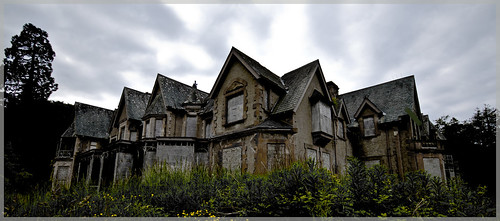
On 27th August, 1918, a grand summer fĂȘte was held at Cairndhu (shown in its present state below) on the County Antrim coast, near Larne, in aid of the Cairncastle Prisoners of War Fund.

The opening ceremony involved Lady Dixon and the Chairman was William Chaine DL.

On the day the heavens opened, resulting in the outdoor activities being somewhat curtailed and the marquees overcrowded.

At the time Lady Dixon said, 

“No cause more appealed to their hearts than the Prisoners-of-war Fund. These men, of their own free will, went out to fight for us, and now that they were in the hands of a cruel enemy we could not do too much to show our gratitude to them”.

The financial result, however, was gratifying with almost £500 being raised.


Her activities during World War II were no less prominent:
She was part of the Central Committee for War Hospital Supply Depots, which was formed in September, 1939, for the purpose of providing clothing and bandages to military hospitals and woollen comforts to brighten the lives of their men-folk in the services, on the seas, in the hospitals or interned in prison camps in enemy territory.
Lady Dixon held high office in many of the great national organisations such as the Royal National Lifeboat Institution and the St John Ambulance Brigade.

She was appointed President of the Larne St John Ambulance Brigade in September, 1939.

For many years she was a vice-president of the Ulster Women’s Unionist Council.

She was also honoured with the Freedom of the Borough of Larne.

As wife of HM Lord-Lieutenant, Lady Dixon took a prominent part in official ceremonies and often helped to entertain royalty, including Princess Margaret, at Cairndhu for lunch in October, 1947, as HRH toured along the Antrim Coast Road.

Although taking part in many official ceremonies during her husband’s lifetime, she was of a quiet and reserved nature and was never happier than when she was escorting friends around her immaculately kept gardens at Cairndhu.

Lady Dixon was particularly interested in nursing:
She was President of Larne District Nursing Society for 30 out of its 55 year existence until its disbandment in 1948; and was president of the “Annie Clark Trust Fund” which had been set up by her mother.
In July, 1928, a fete was organised at Cairndhu on behalf of the Maternity Hospital Building Fund, with Lady Dixon being a long-time member of the Committee of Management.

Activities included dancing, bridge, outdoor amusements including clock golf, a lawn tennis tournament, afternoon tea on the terrace and music from the Royal Ulster Constabulary.

This fund-raising event attracted over 400 people with such dignitaries as the Duke and Duchess of Abercorn.

In May 1947, Sir Thomas celebrated his 79th birthday.

They marked the occasion by announcing a generous gift: After 40 years at Cairndhu, the Dixons donated their 60-room family home, with 100 acres of the estate, to the Ministry of Health and Local Government for use as a convalescent home or hospital.

At the time Lady Dixon said that she was very sorry to be leaving the house that her father built: “It’s too big for us now, though. It was different in the days when we could entertain.”

After Lady Dixon sold their other property, Carnfunnock House, and surrounding land to Larne Borough Council in 1957, the Council allowed her to continue to use the building and her maid, Jean McIlmoyle, remained in the summer-house for a number of years.

Additionally, the Brownlow family rented the farm and land from the Council until the early 1960s, before moving to a house in Larne.

Lady Dixon continued to live for over a decade after Sir Thomas's death.

As they were devoted to each other in life, she felt his loss deeply.

This was shown in a letter to her former chauffeur, William Sutherland: “How broken my life is now, but I have those wonderful memories of all he was. I am very lonely without him.”

On 20th January, 1964, the elderly Lady Dixon, aged 92, died at her residence in Malone Park, Belfast, and was buried at Dundonald Cemetery beside her husband.

She left more than £100,000 to charitable institutions in Northern Ireland.

The majority of her property and effects were divided between her nephews and nieces.

For the full time employees at Carnfunnock she bequeathed £10 for each year of service.

At the time of Lady Dixon’s death, the Mayor of Larne, Councillor J W Sandford said,
Larne has lost its greatest benefactor. Both Lady Dixon and Sir Thomas always had the welfare of the town and district at heart.
In June, 1964, the contents of Carnfunnock House were sold by auction from a marquee on the front lawn with many locals taking the opportunity to purchase a small memento.

Larne Borough Council rented this property out until 1973 when it issued a long-term lease to Larne Lions Club to use the chalet as a holiday home for the elderly and disadvantaged groups.

In 1986, due to lack of sufficient funding, Cairndhu was closed down by the Department of Health and Social Services.

It subsequently lay derelict.

In 1995 the Lord Rana purchased Cairndhu House and the surrounding gardens from the council.

It remained neglected, being heavily vandalised and suffering a number of collapsed floors and water ingress due to holes in the roof.

A public consultation was to be undertaken in May, 2018, about plans to develop the site of the derelict mansion into a "retirement village," including an 80-bedroom nursing home, with the retention and restoration of the stable block at a cost of around £25-£30million.

Today, its future still remains uncertain.

First published in July, 2010.

Saturday, 28 October 2023

Dixon Park

Sir Thomas and Lady Dixon Park is located at Dunmurry, County Antrim, now on the outskirts of Belfast.

This fine civic park, originally Wilmont Estate, was conveyed as a gift to the City of Belfast in December, 1959, by Edith, Lady Dixon, DBE, in order to perpetuate the long association of her husband (the Rt Hon Sir Thomas Dixon Bt) and herself with the City.

It comprises 134 acres.


The mansion house of 1859 still stands, in reasonably good condition; though its future seems uncertain, since it lies disused and apparently unwanted by the city fathers.

The surrounding parkland is delightful, with mature trees and woodland, and the River Lagan.


A large section of the grounds is now used for the international rose trials, established in 1964.

The stable block now houses a ground-floor café.

The walled garden is a haven of peace and tranquillity, with a number of park benches donated by the families of deceased loved-ones, their details on metal plaques.

The fruit and vegetables which flourished here are long gone, though some original paths remain and the garden now thrives with fine flora.


On an outside wall of the walled garden, at one corner, there are three mural memorials to pet dogs.

The canine memorial above must have been erected by the Reade family, who sold Wilmont to the Dixons in 1919.

First published in August, 2015.

Friday, 27 October 2023

The Rowallane Acquisition

SELECTIVE ACQUISITIONS IN NORTHERN IRELAND

PROPERTY: Rowallane Demesne, near Saintfield, County Down

DATE: 1956

EXTENT: 199.34 acres

DONOR: Jane Moore and Kenneth Goodbody

First published in January, 2015.

Thursday, 26 October 2023

Kilrush House

THE VANDELEURS WERE MAJOR LANDOWNERS IN COUNTY CLARE, WITH 19,700 ACRES


MAXIMILIAAN VAN DER LEUR, a Dutch merchant, settled in Ireland in the late 16th century, and was granted a certificate of naturalization, 1603.

His son,

JAMES VANDELEUR, established a mill at Sixmilebridge, County Clare, in 1635.

He died in 1642, and was father of

GILES VANDELEUR (1625-1701), High Sheriff of County Clare, 1665, settled at Ralahine, County Clare, 1660, and was one of the commissioners for allotting quit-rents in Ireland.

He married Elizabeth, daughter of Colonel Sir John Jephson MP, of Mallow, by Elizabeth his wife, daughter of Francis, 1st Viscount Shannon (fourth son of Richard, 1st Earl of Cork), and had issue,
James, of Blane, who left issue;
JOHN, of whom presently;
Boyle.
The second son,

THE REV JOHN VANDELEUR, of Cragg, County Clare, Rector of Kilrush, County Clare, seating himself at Kilrush in 1687, wedded Elizabeth, daughter and co-heir of Thomas Crofton, of Inchirourke, County Limerick, by whom he left, besides a younger son, Thomas, an elder son,

JOHN VANDELEUR, of Kilrush, who married Frances, daughter of John Ormsby, of Cloghans, County Mayo; and had issue,
CROFTON, his heir;
John Ormsby, of Maddenstown;
Richard, of Rutland, father of General Sir J O Vandeleur GCB;
Mary.
Mr Vandeleur died in 1754, and was succeeded by his eldest son,

CROFTON VANDELEUR, of Kilrush, who wedded, in 1765, Alice, daughter of Thomas Burton (uncle of Francis P Burton, 2nd Lord Conyngham), of Buncraggy, by Dorothy his wife, daughter of the Rt Hon John Forster, Chief Justice of the Common Pleas in Ireland, and had issue,
JOHN ORMSBY, his heir;
Thomas Burton, a judge;
Crofton, major-general;
Richard, army major;
Frederick, army captain;
William Richard (Rev);
Dorothy; Alice; Emily; Frances.
The eldest son,

THE RT HON JOHN ORMSBY VANDELEUR (1765-1828), Commissioner of the Customs in Ireland, MP for Ennis, 1802, married the Lady Frances Moore, daughter of Charles, 1st Marquess of Drogheda, and had issue,
CROFTON MOORE, his heir;
Henry Seymour Moore;
Anna Frances; Alice.
Mr Vandeleur was succeeded by his elder son,

CROFTON MOORE VANDELEUR JP DL (1808-81), of Kilrush House, Colonel, Clare Regiment of Militia, High Sheriff of County Clare, 1832, MP for Clare, 1859-74, who married, in 1832, the Lady Grace Graham-Toler, second daughter of Hector John, 2nd Earl of Norbury, and had issue,
HECTOR STEWART, his heir;
Crofton Toler, father of Lt-Col Crofton Bury Vandeleur;
John Ormsby Moore;
Elizabeth Frances; Frances Letitia; Grace Dorothea.
Colonel Vandeleur was succeeded by his eldest son,

HECTOR STEWART VANDELEUR (1836-1909), of Kilrush House, Lord-Lieutenant of County Clare, High Sheriff of County Clare, 1873, who married, in 1867, Charlotte, eldest daughter of William Orme Foster MP, of Apsley Park, Shropshire, and had issue,
Cecil Foster Seymour, DSO (1869-1901), k/a;
ALEXANDER MOORE, his heir;
Isabel Grace; Evelyn Norah.
His only surviving son,

ALEXANDER MOORE VANDELEUR JP (1883-1914), of Kilrush, and Cahiracon, Captain, The Life Guards, espoused, in 1910, Violet Ethel, eldest daughter of Henry Meysey, 1st Lord Knaresborough.

Captain Vandeleur was killed in action, aged 30, in the 1st World War.

He left issue,

LIEUTENANT-COLONEL GILES ALEXANDER MEYSEY VANDELEUR DSO (1911-78).


KILRUSH HOUSE, County Clare, was an early Georgian house of 1808.

From 1881 until Kilrush House was burnt in 1897, Hector Stewart Vandeleur lived mainly in London and only spent short periods each year in Kilrush.

Indeed during the years 1886-90, which coincided with the period of the greatest number of evictions from the Vandeleur estate, he does not appear to have visited Kilrush.


In 1889, Hector bought Cahircon House and then it was only a matter of time before the Vandeleurs moved to Cahircon as, in 1896, they were organising shooting parties at Kilrush House and also at the Cahircon demesne. 

Hector Stewart Vandeleur was the last of the Vandeleurs to be buried at Kilrush in the family mausoleum.

Cahircon House was sold in 1920, ending the Kilrush Vandeleurs' direct association with County Clare.

Hector Vandeleur had, by 1908, agreed to sell the Vandeleur estate to the tenants for approximately twenty years' rent, and the majority of the estate was purchased by these tenants.

************


THE VANDELEURS, as landlords, lost lands during the Land Acts and the family moved to Cahircon, near Kildysart.

In 1897, Kilrush House was badly damaged by fire.

During the Irish Land Commission of the 1920s, the Department of Forestry took over the estate, planted trees in the demesne and under their direction the remains of the house were removed in 1973, following an accident in the ruins.

Today the top car park is laid over the site of the house.

Vandeleur Walled Garden now forms a small part of the former Kilrush demesne.

The Kilrush demesne was purchased by the Irish Department of Agriculture as trustee under the Irish Land Acts solely for the purpose of forestry.

The Kilrush Committee for Urban Affairs purchased the Fair Green and Market House.
 
The demesne, now Kilrush Wood, lies to the east of the town.

The remains of Kilrush House were demolished in 1973.

The site is now a car park and picnic area and all the original stones from the house are now underneath this area.
A number of street names in the town of Kilrush are named after the Vandeleurs: Frances Street after Lady Frances, wife of Hon John Ormsby Vandeleur; Grace Street after Lady Grace Vandeleur; Hector Street after Hector Stewart, son of Crofton Moore; Moore Street after a common family name of the Vandeleurs, probably after Lady Frances Moore, wife of John Ormsby Vandeleur; Burton Street after Thomas Burton Vandeleur.
Former town residence ~ 50 Rutland Gate, London.

First published in July, 2011.

Wednesday, 25 October 2023

The Rathlin Acquisition

SELECTIVE ACQUISITIONS IN NORTHERN IRELAND

PROPERTY: Rathlin Island Kelp Store

DATE: 1998

EXTENT: 0.22 acres

DONOR: Mary Cecil

*****

PROPERTY: Rathlin Manor House

DATE: 1998

EXTENT: 2.9 acres

DONOR: Messrs McCafferty, Cavanagh and McDonnell

*****

PROPERTY: Ballycarry, Rathlin Island

DATE: 2000

EXTENT: 19.37 acres

DONOR: D Cecil

Tuesday, 24 October 2023

Farnham House

THE BARONS FARNHAM WERE THE GREATEST LANDOWNERS IN COUNTY CAVAN, WITH 25,920 ACRES


SIR ROBERT MAXWELL, of Calderwood, Lanarkshire, second son of Sir John Maxwell, of Pollok, was party with his brother Sir John Maxwell to an entail of their estates, 1400.

He married firstly, in 1402, Elizabeth, daughter of Sir Robert Denniston, of Denniston, and had a son and heir,

SIR JOHN MAXWELL, of Calderwood, living 1424 and 1429, father of

SIR JOHN MAXWELL, of Calderwood, who married and had issue,

SIR GAVIN MAXWELL, of Calderwood, who had a charter from his father of all his lands in Lanark, 1486. 

He died in 1492, and was succeeded by his son,

SIR ROBERT MAXWELL, of Calderwood, father of

SIR JOHN MAXWELL, of Calderwood, who wedded firstly, Elizabeth, daughter of Sir James Hamilton, of Finart, and secondly, Elizabeth, daughter of Sir Robert Stewart, of Minto, and died in 1571, having by his first wife had issue,
James, his heir;
ROBERT, of whom we treat.
The younger son,

THE VERY REV ROBERT MAXWELL, went over into Ireland in the latter end of the reign of ELIZABETH I, by command of the Scottish king, JAMES VI, in order to secure an interest for His Majesty in that kingdom.

Mr Maxwell was appointed Dean of Armagh, which deanery, together with other considerable church livings, he held till his decease.

He married secondly, Isabella Seton, of the very ancient house of SETON, in Scotland, by whom he had issue,
ROBERT, his heir;
Henry;
James;
Elizabeth; Phoebe.
The Dean's eldest son,

THE RT REV ROBERT MAXWELL (1598-1672), took holy orders, and obtained the degree of Doctor of Divinity from the university of Dublin.

Previously to the rebellion of 1641, Dr Maxwell was Rector of Tynan, in the diocese of Armagh, and Archdeacon of Down.

In 1643, he was consecrated Lord Bishop of Kilmore; and in 1661, the episcopal see of Ardagh was granted to him, to hold in commendam with that of Kilmore.

His lordship wedded Margaret, daughter of the Rt Rev Henry Echlin, Lord Bishop of Down and Connor, by whom he had, with five daughters, four sons, namely,
JOHN, his heir;
James, of Fellow's Hall, Co Armagh, father of
ROBERT;
Henry, of College Hall, Co Armagh;
father of JOHN, who succeeded his cousin ROBERT in the estates;
William.
The Bishop was succeeded by his eldest son,

JOHN MAXWELL, of Farnham, High Sheriff of County Cavan, 1674, who dsp 1713, and was succeeded by his nephew,

THE REV DR ROBERT MAXWELL; who dsp 1737, and was succeeded by his cousin,

JOHN MAXWELL (1687-1759), High Sheriff of County Cavan, 1757, MP for County Cavan, 1727-56, who was elevated to the peerage, in 1756, in the dignity of BARON FARNHAM, of Farnham, County Cavan.

His lordship wedded, in 1719, Judith, heiress of James Barry, of Newtownbarry, County Wexford, and had issue,
ROBERT and
BARRY, successive peers;
Henry (Most Rev), father of JOHN and HENRY.
He was succeeded by his eldest son,

ROBERT, 2nd Baron (c1720-79), who was created, 1761, Viscount Farnham, and advanced to an earldom, 1763, as EARL OF FARNHAM.

His lordship wedded firstly, in 1759, Henrietta, Dowager Countess of Stafford, and sole daughter and heir of Philip Cantillon, by whom he had one daughter,
Henrietta, m, 1780, Rt Hon Dennis Daly, of Dunsandle, Co Galway.
He espoused secondly, in 1771, Sarah, only daughter of Pole Cosby, of Stradbally Hall, Queen's County, and sister of Lord Sydney; but leaving no male issue at his decease, in 1779, the titles conferred upon himself expired, while the barony devolved upon his brother,

BARRY, 3rd Baron (1723-1800), who obtained a viscountcy and earldom, in 1780, as Viscount Farnham, and, in 1785, EARL OF FARNHAM (second creation).

His lordship married firstly, in 1751, Margaret, second daughter and co-heir of Robert King, of Drewstown, County Meath, by whom he had a son and two daughters; and secondly, in 1771, Grace, daughter of Arthur Burdet, by whom he had two daughters.

He was succeeded by his only son,

JOHN JAMES, 2nd Earl (1760-1823), who wedded Grace, only daughter of Thomas Cuffe, of Grange, County Kilkenny; but dying without issue, in 1823, the viscountcy and earldom expired, and the barony reverted to his kinsman,

JOHN MAXWELL-BARRY, 5th Baron (1767-1838) [refer to Henry, third son of 1st Baron], Privy Counsellor, Colonel, Cavan Militia, who married, in 1789, Juliana Lucy, eldest daughter of Arthur, 1st Earl of Mountnorris.

Her ladyship died in 1833 without issue, when the Barony devolved upon his lordship's brother

THE REV HENRY MAXWELL, as 6th Baron (1774-1838), who wedded, in 1798, the Lady Anne Butler, eldest daughter of Henry, 2nd Earl of Carrick, and had issue,
HENRY, his heir;
John Barry;
Charles Robert;
Edward William;
James Pierce;
Richard Thomas, father of the 10th Baron;
William George;
Sarah Juliana; Harriet Margaret; Anne.
His lordship died within a month of his succession to the title, and was succeeded by his eldest son,

HENRY, 7th Baron (1799-1868), KP, MP for County Cavan, 1824-38, who espoused, in 1828, Anna Frances Esther, daughter of Thomas, 12th Baron le Despenser, though the marriage was without issue, and the title devolved upon his brother,

SOMERSET RICHARD, 8th Baron (1803-84), High Sheriff of County Cavan, 1844, MP for County Cavan, 1839-40, who married twice, without issue, when the title devolved upon his brother,

JAMES PIERCE, 9th Baron (1813-96), Lieutenant-Colonel, 97th Foot, MP for County Cavan, who died unmarried, when the title reverted to his cousin,

SOMERSET HENRY, 10th Baron (1849-1900), High Sheriff of County Cavan, 1877,  Lord-Lieutenant of County Cavan, 1900, who married, in 1875, the Lady Florence Jane Taylour, daughter of Thomas, 3rd Marquess of Headfort, and had issue,
Barry Somerset (1876-97);
ARTHUR KENLIS, his successor;
Edward Sauderson John;
Denis Crichton (Vice-Admiral the Hon Sir);
Zoe Emma; Stella Frances.
His lordship was succeeded by his eldest surviving son,

ARTHUR KENLIS, 11th Baron (1879-1957), DSO DL, who wedded, in 1903, Aileen Selina, daughter of Charles Purdon Coote, and had issue,
Somerset Arthur;
Barry Charles William (1909-16);
Arthur Edward (1913-16);
Marjory Florence; Verena Aileen.
His lordship's eldest son,

THE HON SOMERSET ARTHUR MAXWELL (1905-42), Lieutenant-Colonel, Middlesex Yeomanry, espoused, in 1930, Angela Susan, daughter of Captain Marshall Owen Roberts, and had issue,
BARRY OWEN SOMERSET, 12th Baron;
SIMON KENLIS, 13th Baron;
Sheelin Virginia.
Colonel Maxwell died in Egypt as a result of his wounds.


Lt-Col the Hon Somerset Arthur Maxwell

His father, the 11th Baron was, consequently, succeeded by his grandson,

BARRY OWEN SOMERSET, 12th Baron (1931-2001), who married, in 1959, Diana Marion, daughter of Nigel Murray Eric Gunnis, and had issue, two daughters,
Harriet Virginia; Sophia Mary.
His lordship was succeeded by his brother,

SIMON KENLIS, 13th Baron (1933-), who wedded, in 1964, Karol Ann, daughter of Major-General George Errol Prior-Palmer, and has issue,
Robin Somerset;
Mark Erroll;
Lorna Suzanna Katherine.

FARNHAM, near Cavan, is one of the largest houses in County Cavan.

The lands were originally granted to the family of Waldron, though some years later the estate was acquired by Bishop Maxwell, whose cathedral was nearby.

The Bishop's son, John Maxwell, built a new house here about 1700, which was improved ca 1780 by Barry, 3rd Baron and 1st Earl of Farnham.

The 1st Earl added a library designed by James Wyatt.

About 1802, the 2nd Earl rebuilt the house, comprising two three-storey ranges at right angles to each other; one of which incorporated Wyatt's library.

It consisted of an eight-bay front, a breakfront, and a single-storey portico.


The other front was of nine bays, with a three-bay pedimented breakfront, prolonged by one bay at the end of the adjoining range.

In 1839, the 7th Baron enlarged Farnham by building new offices.     

It was built ca 1810 and was designed by Francis Johnston, a leading Dublin architect. 

About 1960, Lord Farnham found the house to be infested with dry-rot and demolished the range where the former entrance had been located.

The pedimented front remains the garden front; while the back range is the entrance front, with the portico re-erected at one end of it.

The house was redesigned in the 1970s.

The demesne has long been celebrated for its great beauty, a landscape of woods, panoramic mountain views, lakes; all part of the network of loughs and islands stretching southwards from Upper Lough Erne.

It was sold by the widowed Lady Farnham to Mr Roy McCabe, who purchased the agricultural estate shortly after the demise of the 12th Baron in 2001.

The house and estate are now part of a luxury hotel and leisure complex under the Radisson SAS international hotel group. 

First published in April, 2011.

Saturday, 21 October 2023

Grand Opera House Ceiling


Every time I visit the Grand Opera House in Belfast I always admire the ceiling.

It originally had six painted ceiling panels, the blue sky with stars above the oriental balcony with its small potted palms.


When the opera house was being restored in the 1980s, an artist was sought who could recreate the scene in a sympathetic manner.

Cherith McKinstry was selected.

It was felt that her re-interpretation complemented the four surviving painted roundels, which were re-mounted on fibreglass saucer domes, and the cartouche of female musicians inside the segmental arch over the proscenium opening.

The roundels and cartouche were restored and cleaned by Alexander Dunluce (later the 14th Earl of Antrim).


THE GRAND OPERA HOUSE was used as a cinema for many years then closed after bomb damage.

It reopened as a theatre in 1980, after undergoing a successful scheme of renovation and restoration.
The magnificent auditorium is probably the best surviving example in the UK of the Oriental Style applied to theatre architecture - largely Indian in character with intricate detail on the sinuously curved fronts of the two balconies and an elaborate composition of superimposed boxes surmounted by turban-domed canopies.
The ceiling, which is divided into several richly-framed painted panels, is supported on arches above the gallery slips, with large elephant heads at springing level.
Proscenium, 39' 8"; stage depth, 45'; grid increased to 60' from 52'; a new, enlarged orchestra pit, the sharp single radius curve of the orchestra rail providing the only slightly jarring note in this superb auditorium. The exterior, of brick and cast stone, is in a free mixture of Baroque, Flemish and Oriental styles - typical of Matcham’s earlier work.
Frank Matcham made good use of the corner site by building up the composition of his design in stages, linked by strapwork scrolls, to the triangular-pedimented central gable which is flanked by domed minarets.

The Grand Opera House, Belfast, in 2021

The relatively recent projecting glass extension to the former first floor bar (the Crush Bar) is said to be in the spirit of Matcham’s architecture.

It's reminiscent of an elevated conservatory or glass-house.

In 1982, it was made complete by the addition of the visually important column supports.

In 1991 and 1993, the theatre was damaged by terrorist bombs.

This necessitated considerable rebuilding of the Glengall Street dressing-room block and stage door.

Fortunately the auditorium suffered only superficial damage. 

In 2006, an extension was added to the original building on the site of the former Hippodrome/New Vic cinema, costing £10.5 million.

In January, 2020, the opera house closed in order to carry out a major £12.2 million restoration of its interior, including new seating, stage and auditorium curtaining, carpeting, air conditioning, and crush bar.

The 2006 extension was virtually rebuilt, with a completely new façade and interior.

Following the 2020-21 refurbishment, and a delay caused by the Covid-19 pandemic, the opera house reopened on the 6th October, 2021, with performances of the musical Six.

Paul Coleman has provided several images of the ceiling.  First published in May, 2010.

Friday, 20 October 2023

Dunleckney Manor

THE NEWTONS WERE MAJOR LANDOWNERS IN COUNTY CARLOW, WITH 5,134 ACRES


This family, originally from Lancashire or Cheshire, accompanied WILLIAM III to Ireland in 1688.


The first settler was Bartholomew Newtown, whose son,

JOHN NEWTOWN, wedded, in 1730, Elizabeth, daughter of Francis Lodge, of County Kilkenny and the city of Dublin, and founded the family residence at Bennekerry, a short distance from the town of Carlow, which, though still in the family's possession, was not then the family seat.

He died in 1748, leaving an eldest son,

BARTHOLOMEW NEWTOWN (d 1780), of Busherstown, County Carlow, who married, in 1767, Anne, daughter of Philip Bernard (by whom he acquired considerable property in the town of Carlow), and had issue (with a daughter, Catherine) two sons,
JOHN, Colonel, Carlow Militia, High Sheriff of Co Carlow, 1797; d unm;
PHILIP, of whom we treat.
The second son, 

PHILIP NEWTON (1770-1833), married, in 1785, Sarah, daughter of Beauchamp Bagenal, of Dunleckney, and had issue,
WALTER, his heir;
John;
Henry;
Philip;
Beauchamp Bartholomew. 
Sir Nicholas Bagenal came to Ulster as Marshal of ELIZABETH I's army, settled in County Carlow and founded Bagenalstown.

The family's first house at Dunleckney was built ca 1610, but a new house was built for Walter Newton, who inherited the estate from his mother, the Bagenal heiress, about 1850.

Mr Newton was succeeded by his son,

WALTER NEWTON (1790-1853), of Dunleckney, County Carlow, High Sheriff of County Carlow, 1827, who married, in 1817, Anne, fifth daughter of the Hon George Jocelyn (second son of Robert, 1st Earl of Roden), and had issue,
PHILIP JOCELYN, his heir;
Thomasina Jocelyn.
Mr Newton was succeeded by his only son,

PHILIP JOCELYN NEWTON JP DL (1818-95), of Dunleckney Manor, High Sheriff of County Carlow, 1846, who married, in 1841, Henrietta Maria, daughter of John Kennedy, of Dunbrody, County Wexford, and Cultra, County Down, and had issue,
Maria Charlotte;
ANNE HENRIETTA, of whom hereafter;
Adeline Sarah.
Mr Newton died without male issue, and was succeeded by his second daughter,

ANNE HENRIETTA, MRS W M VESEY (d 1927), of Dunleckney Manor, whose elder son,

SYDNEY PHILIP CHARLES VESEY CBE JP (1873-1932), Captain, King's Royal Rifle Corps, married, in 1902, Edith Blanch Power.

Dunleckney was sold in 1942.

It was subsequently owned by Mr Thomas Donnelly, who re-sold in 1958.


DUNLECKNEY MANOR, Bagenalstown, County Carlow, is a 19th century Tudor-Gothic house by Daniel Robertson of Kilkenny.

An early Irish example of the Tudor-Gothic style, the manor house, built about 1850, incorporates parts of an earlier house.
Robertson was a talented architect with a large country house practise, who worked comfortably in a variety of styles, from Classical to Gothic. His major buildings are at All Souls, Oxford, Johnstown Castle and Castle Boro, both in County Wexford.
Robinson's work at Dunleckney is certainly of a very high order.


The smooth ashlar surfaces make a superb foil to the crisp, delicately carved tracery details of the tower, door-case and oriel windows.


The interior has fine plaster fan vaulting in the late Perpendicular-Gothic style, and an elaborate wooden staircase which incorporates number of medieval wooden carvings ‘rescued’ from St Canice's Cathedral in Kilkenny.


Helen and Derek Sheane purchased the house in 1989, and have spent the ensuing years in restoration.

They have carried out considerable works to the garden and parkland though the superb, straight, 18th century lime avenue was a casualty of long neglect.

First published in November, 2012.

Thursday, 19 October 2023

Portstewart Strand Acquisition

SELECTIVE ACQUISITIONS IN NORTHERN IRELAND


PROPERTY: Portstewart Strand, County Londonderry

DATE: 1981

EXTENT: 225.82 acres

DONOR: Philip McIntyre

First published in January, 2015.

Tuesday, 17 October 2023

Powerscourt House

THE VISCOUNTS POWERSCOURT WERE THE SECOND LARGEST LANDOWNERS IN COUNTY WICKLOW, WITH 40,986 ACRES


The surname of Wingfield is derived from the manor of Wingfield, Suffolk, where the progenitors of this family are stated to have been located before the Conquest; and the place of their abode was denominated Wingfield Castle.

It has been said that this manor gave both a name and seat to a large family in those parts, famous for their knighthood and ancient gentility, which brought forth an abundance of renowned knights, and among them two celebrated companions of the Order of the Garter under the reign of HENRY VIII.

SIR ROBERT WINGFIELD (c1403-54), Knight, of Letheringham, Suffolk, was MP for Suffolk.


SIR RICHARD WINGFIELD (1550-1634), lineally descended from the Wingfields of Letheringham, Suffolk, a person of high military reputation, began his career under his uncle, Sir William Fitzwilliam, Lord Deputy of Ireland, in the civil wars in Ireland.

He was afterwards engaged upon the Continent; and returning to Ireland, was appointed by ELIZABETH I, in 1600, Marshal of Ireland; and by JAMES I, for his subsequent achievements, twice joined in the government of Ireland.

At the same time he was called to His Majesty's privy council.

Sir Richard was elevated to the peerage, in 1618, in the dignity of VISCOUNT POWERSCOURT, but died without issue, in 1634, when the dignity expired; while the estates devolved upon his cousin,

SIR EDWARD WINGFIELD, a distinguished soldier under the Earl of Essex, and a person of great influence and power in Ireland.

Sir Edward married Anne, daughter of Edward, 3rd Baron Cromwelland had issue,
Lewis;
RICHARD;
Francis.
Sir Edward died in 1638, was succeeded by his second son,

RICHARD WINGFIELD, who wedded, in 1640, Elizabeth, daughter of Henry, 1st Baron Folliott, and had issue, an only child,

FOLLIOTT WINGFIELD (1642-1717), in whose favour the viscountcy of POWERSCOURT (second creation) was revived in 1665.

His lordship wedded the Lady Elizabeth Boyle, eldest daughter of his guardian, the Earl of Orrery; but dying without issue, the peerage again expired, while the estates passed to his cousin,

EDWARD WINGFIELD (1659-1727), barrister-at-law (son of Lewis Wingfield), MP for County Sligo, 1692-3, 1695-9, 1703-13, who espoused firstly, Eleanor, second daughter of Sir Arthur Gore, of Newton Gore, County Mayo; and secondly, Miss Lloyd, daughter of William, Lord Bishop of Killala; by the former of whom he had one son and two daughters, viz.
RICHARD, his heir;
Isabella; Sidney.
The only son,

THE RT HON RICHARD WINGFIELD (1697-1751), of Powerscourt, MP for Boyle, 1727-44, was elevated to peerage, in 1743, in the dignities of Baron Wingfield and VISCOUNT POWERSCOURT (third creation).

His lordship married firstly, in 1721, Anne, daughter of Christopher Usher, of Usher's Quay, Dublin, but by her had no issue.

He wedded secondly, Dorothy, daughter of Hercules Rowley, of Summerhill, County Meath, and had issue,
EDWARD, 2nd Viscount;
RICHARD, 3rd Viscount;
Frances; Isabella.
His lordship was succeeded by his elder son,

EDWARD, 2nd Viscount (1729-64); at whose demise, unmarried, the honours devolved upon his only brother,

RICHARD, 3rd Viscount (1730-88), who espoused Amelia, daughter of John, Earl of Aldborough, and had issue,
RICHARD, his successor;
John;
Edward;
Martha; Emilia; Harriot.
His lordship was succeeded by his eldest son,

RICHARD, 4th Viscount (1762-1809), who married firstly, in 1789, Catherine, second daughter of John, 1st Earl of Clanwilliam, by whom he had three sons,
RICHARD, his successor;
John;
Edward, father of RICHARD.
He wedded secondly, in 1796, Isabella, second daughter of the Rt Hon William Brownlow, and had further issue,
William;
Catherine; Emily.
His lordship was succeeded by his eldest son,

RICHARD, 5th Viscount (1790-1823), who espoused, in 1813, Frances Theodosia, eldest daughter of Robert, 2nd Earl of Roden, and had issue,
RICHARD, his successor;
Catherine Anne.
His lordship married secondly, in 1822, Theodosia, daughter of the Hon Hugh Howard, and niece of the Earl of Wicklow, but had no further issue.

He was succeeded by his only son,

RICHARD, 6th Viscount (1815-44), who married, in 1836, his cousin, the Lady Elizabeth Frances Charlotte Jocelyn, daughter of Robert, 3rd Earl of Roden, and had issue,
MERVYN EDWARD, his successor;
Maurice Richard;
another son.
His lordship was succeeded by his eldest son,

MERVYN EDWARD, 7th Viscount (1836-1904), KP, a Privy Counsellor, who wedded, in 1864, the Lady Julia Coke, daughter of Thomas, 2nd Earl of Leicester, and had issue.
  • Mervyn Patrick Wingfield, 9th Viscount (1905–73);
  • Mervyn Niall Wingfield, 10th Viscount (1935-2015);
  • Mervyn Anthony Wingfield, 11th Viscount (b 1963)
The 8th Viscount was the last Lord-Lieutenant of County Wicklow, from 1910 until 1922.


POWERSCOURT, near Enniskerry, County Wicklow, is one of the most beautiful country estates in Ireland.

Situated in the mountains of Wicklow, it was originally an important strategic site for the Anglo-Normans, who came to Ireland in the 12th century.

By the year 1300 a castle had been built here and was in the possession of the le Poer (Power) family from which it takes its name.

The succeeding centuries saw the castle held for different periods by powerful families such as the O'Tooles and the FitzGeralds, Earls of Kildare.

In 1603 Powerscourt Castle and lands were granted to a new English arrival in the area: Richard Wingfield.

Following a successful military career in Ireland, Flanders, France and Portugal, Wingfield was knighted and in 1600 was appointed as Marshal of Ireland.

His descendants were to remain at Powerscourt for over 350 years.

Powerscourt was much altered in the 18th century when famous German-born architect, Richard Castle, remodelled the castles and grounds.

The work was commissioned by Richard Wingfield (1697-1751) and involved the creation of a magnificent mansion around the shell of the earlier castle.

Entrance front

The central courtyard was converted into an entrance hall beneath the remarkably beautiful ballroom.


The north front was adapted to present a grand entrance in the Palladian manner, while the south and front faced the gardens and was initially only two storeys in height.
Powerscourt House was extensively altered during the 18th century by the German architect Richard Cassels, starting in 1731 and finishing in 1741: On a commanding hilltop position, Cassells deviated slightly from his usual sombre style, to give the house something of a 'castle air'; a severe Palladian façade bookended by two circular domed towers. 
GEORGE IV was the guest of Richard Wingfield, 5th Viscount, in August 1821.

The 7th Viscount inherited the title and the Powerscourt estate, which comprised 49,000 acres of land, at the age of 8 in 1844.

When he reached the age of 21, he embarked on an extensive renovation of the house and created the new gardens.

Main attractions on the grounds include the Tower Valley (with stone tower), Japanese Gardens, winged horse statues, Lake, Dolphin Pond, Walled Gardens, Bamberg Gate and the Italian Garden.

The Pepper Pot Tower is said to be designed after a favoured three-inch pepper pot.

Of particular note is the pets' cemetery, whose tombstones have been described as "astonishingly personal".

Inspiration for the garden design followed visits by Powerscourt to ornamental gardens at the Palace of Versailles, Schönbrunn Palace near Vienna, and Schwetzingen Castle near Heidelberg.

The garden development took 20 years to complete in 1880.

In 1961, the estate was sold by the 9th Viscount, Mervyn Patrick Wingfield, to the Slazenger family, who still own it to this day (2010).

Tragically in the early hours of 4th November, 1974, a fire broke out on the top floor and by the morning the main part of the house was a roofless shell.

No one was injured, but all of the principal reception rooms and bedrooms were destroyed.

The Saloon

The walls of the main house, revealing stonework dating back to the 16th century, stood as a stark reminder of the fire for over twenty years.

Then in 1996 a process of regeneration began with the re-roofing of the house and the restoration of the windows as they were before the fire.

The entrance hall now features an exhibition describing the fascinating history of Powerscourt, while shops, a terrace café and other visitor facilities are also located in the house.

Wendy Anne Pauline Slazenger (daughter of the late Ralph Slazenger), married the 10th Viscount, Mervyn Niall Wingfield, in 1962. The marriage was dissolved in 1974 and Lord Powerscourt remarried.

Through her children, the Hon Mervyn Anthony Wingfield and the Hon Julia Wingfield, there remains a strong family connection between the two families and the Powerscourt Estate.

Only two rooms are open to the public as they once appeared while Powerscourt had residents, while the rest of ground floor and first floor are now retail units.


THE GARDENS at Powerscourt were laid out in two main periods.

When the house was rebuilt in the decade after 1731, the surrounding grounds were laid out in a series of formal rides and parkland to the North, with carefully planned gardens and terraces to the South. 

The design reflected the desire to create a garden which was part of the wider landscape.

To the north formal tree plantations framed the vista from the house, while a walled garden, fish pond, cascades, grottoes and terraces lay to the south. 

Walks wound through the wooded grounds and a fine tree lined avenue was created.

A century later the 6th Viscount instructed his architect, Daniel Robertson, to draw up new schemes for the gardens. 

Robertson was one of the leading proponents of Italianate garden design which was influenced by the terraces and formal features of Italian Renaissance villas and perfected in gardens in France and Germany.

Robertson designed the terrace nearest the house.

He is said to have suffered from gout and directed operations from a wheelbarrow, fortified by a bottle of sherry.

When the sherry was finished, work ceased for the day!

The death of the 6th Viscount in 1844 meant that alterations to the gardens ceased until his son resumed the work in the late 1850s. 

Using a combination of Robertson's designs and the plans of the other landscape experts, the terraces were completed, enormous numbers of trees were planted and the grounds adorned with an amazing collection of statuary, ironwork and other decorative items.

By the time of his death in 1904, the 7th Viscount had transformed the estate.

Further generations of the Wingfields maintained the grounds, adding the Japanese Gardens, Pepper Pot Tower and continuing to plant specimen trees. 

First published in November, 2011.  Select bibliography: The Powerscourt Website.